Oops! It appears that you have disabled your Javascript. In order for you to see this page as it is meant to appear, we ask that you please re-enable your Javascript!

Amphipolis.gr | 18 April-international day of monuments and sites

As international day of monuments and sites 18th April has been established by Unesco and the International Council of monuments and sites (ICOMOS), which every year propose a specific topic for the emergence of its meaning.

In this context, events are carried out by the national and international scientific committees of the Council, with the main objective of the awareness of public opinion and the State heritage matters. This year, completed 50 years from the founding of ICOMOS, the scope of activities is wide and covers a variety of aspects of the protection and promotion of heritage architecture.

Specific, on Tuesday 21 April, the festive event that will be held in the building of the International Council of monuments and sites (Piraeus 73, Athens), at 6 in the afternoon, will be dedicated to the international day of monuments and sites, on the anniversary of 50 times, and the award of the distinguished members of ICOMOS: Petros Themelis, Nicholas Moytsopoyloy, Nicholas Agriatwni, Dionisio Ziva and Anastasios Portelanoy.

At a date to be announced shortly, will be presented the book ' The Protection of Archaeological Heritage in Times of Economic Crisis» ("The protection of the archaeological heritage in times of economic crisis"), with the announcements and the conclusions of the International Conference organized by ICOMOS Greece in Athens 2012, While on Monday 15 June 2015 will be held at the Auditorium of the Ministry of education, Culture and religious affairs (Bouboulinas 20 – 22) scientific Colloquium: "The ICOMOS and protecting cultural heritage. Cultural Internationalism and Greek national policy in the 21st century».

In June (expected date of communication) the event at the National Technical University of Athens will be dedicated to the celebration of 40 anniversary of the Declaration of Amsterdam (1975) for the protection of architectural heritage, While in September (16 until 21) the ICOMOS will go in Syros, where is co-hosting an event with the International Scientific Committee on historic towns.

ANA-MPA/PANTELIS SAITAS

The International Council of monuments and sites, ICOMOS (International Council on Monuments and Sites) It is the most authoritative international professional, non-governmental organization, that promotes the theory of methodology, technology and media for the protection and enhancement of historical monuments and sites of the countries of the world. It has members specialists from around the world and operates in 104 countries and at 5 continents. Is the technical consultant of Unesco on the protection of cultural heritage, capacity in which examines the proposals of the countries – members of Unesco for registering national monuments on the World Heritage list (Natural and cultural).

At The Same Time, with 21 international special scientific committees, studying specialized subjects, as the fortifications and defensive architecture, the management of cultural heritage, the protection of historic cities and settlements, cultural tourism and other.

Source: naftemporiki.gr

Amphipolis.gr | Gold wreath from Amphipolis, Serres lost to… warehouse

An ' unknown ' archaeological treasure that comes from four tombs of the early Hellenistic period (end 4th b.c.. century) -the two with rich funeral gifts, the third monumental entrance and the fourth, a small sylimenos- in the old military airport of SEDES in Thessaloniki, He had revealed the 1938 from the great archaeologists Kotzia and Charalambos Makarona Niko and a large part of it remained until now in chests in the storerooms of the Archaeological Museum of Thessaloniki, brings to the surface the head of, Polixeni Adam – Veleni, together with the archaeologist Annareta Toyloymtzidoy…

Full gold olive wreath, already exposed in the showcases of the Archaeological Museum of Thessaloniki. Thought that comes from the tomb of Sedes, But from the tomb B in Tsagezi

(FOTO: Full gold olive wreath, already exposed in the showcases of the Archaeological Museum of Thessaloniki. Thought that comes from the tomb of Sedes, though comes from the tomb of Tsagezi in area b of Amphipolis)

The publication of the excavation was only 1956 with rule of law. Kotzias in commemorative volume 100o Archaeological Journal, but the details of the findings were limited, Since the four tombs one (Tomb (a)) epichwthike during the construction of the airport's water tower being restored. and others ((B), (C), (D)) katachwthikan.

A small part of the findings are from years at displays of the Archaeological Museum of Thessaloniki, but many remained in boxes,, even without maintenance.. Among them are gold jewelry,, 40 Gold Myrtle leaf from wreath but it is not easy to restore,, Golden threads,, a spear with iron-tipped spear, a bronze mirror, female terracotta busts, but parts of… artidio, a kind of dough with flour, oil and honey, finding unique to Greece.

The Tomb belonged to a woman, brought the golden leaves of Myrtle wreath, gold jewelry and gold fabric yarn. The Tomb b was the most sensational, belonged to guy, He had only three findings, one spear, a clay lamp and a vase.. The Tomb belonged to a woman, c, probably old,, not burned-up and found her teeth- and brought rich finds,, jewelry, Accessories,, but a bronze mirror.

Segments from the gold wreath Myrtle found in the Tomb (a). Found 40 leaves, < span class = "tr_" id = "tr_47" data-token = "zqTOvyDPg8-EzrXPhs6szr3OuSDOtM61zr0gzq3Ph861zrkgzrHOvc6xz4PPhc-Dz4TOsc64zrXOrw,," data-source = "" >  visible traces of combustion with the wreath doesn't have reconstitute). with

(FOTO: Segments from the gold wreath Myrtle found in the Tomb (a). Found 40 leaves, < span class = "tr_" id = "tr_47" data-token = "zqTOvyDPg8-EzrXPhs6szr3OuSDOtM61zr0gzq3Ph861zrkgzrHOvc6xz4PPhc-Dz4TOsc64zrXOrw,," data-source = "" > visible traces of combustion with the wreath doesn't have reconstitute). with)
An interesting element is that in a carton box with items from the grave (a) there was a group of elefantosteinwn tiles and decorative elements which had not been taken all these years archaeologists. After research and study, concluded that these are decorative elements from two kibwtidia, of which the most elaborate, almost a miniature Golden larnakwn of Vergina, they brought probably the lid two female figures between columns, Persephone, saved, and possibly Dimitra.

"This is a cluster of tombs inside tumulus, for members of the same family, they had some economic area», said «nation» Ms. Toyloymtzidoy, while Ms. Veleni spoke of "joy and the thrill of the archaeologist who discovers a great artifacts inside boxes».

  The small Tomb kybwtioschimos (a), the Sedes. Contained gold Stephen parts, < span class = "tr_" id = "tr_67" data-token = "zpcgz4bPic-Ezr_Os8-BzrHPhs6vzrEgzrXOr869zrHOuSDPhM6_z4U," data-source = "" >  jewelry and scrap gold pyre photo is of. Gold 1938.

(FOTO: The small Tomb kybwtioschimos (a), the Sedes. Contained gold Stephen parts, < span class = "tr_" id = "tr_67" data-token = "zpcgz4bPic-Ezr_Os8-BzrHPhs6vzrEgzrXOr869zrHOuSDPhM6_z4U," data-source = "" > jewelry and scrap gold pyre photo is of. Gold 1938.)

The wreath

Until today at the Thessaloniki Archaeological Museum showcases exhibits a full gold olive wreath, that thought comes from the tomb of Sedes. The new study showed that comes from the tomb of Tsagezi in area b of Amphipolis, Serres. Also, not derived from the Sedes and a gold disfigured and mutilated an eartag with Antelope head. Although depicted in the publication of the graves from the n. Kotzias, There is no mention in the article of the, While boxing is included in the list of metallinwn 1941 also referred to as origin the Stibresi Kilkis. "In addition, typologically belong to following mid-3rd b.c.. century times, that is incompatible with the dating of the other findings of the tomb and the content of gold is much lower than the jewelry of the Tomb in Sedes», reported Ms. Veleni.

Clay lamp found in the monumental Tomb b Sedes

(FOTO: Clay lamp found in the monumental Tomb b Sedes)
The tomb was a small, kybwtioschimos and contained two gold parts Stephen.. Other sections of this wreath found with the remains of the pyre over the coverage of the Tomb, together with a bronze mirror, Golden chain Department, 40 Gold Myrtle leaf with visible traces of burning and related deformities. The wreath this has similarities with two similar, one of the Liti, Thessaloniki and one from Potidea CHALKIDIKI, dating back to the early 3rd BC. century.

From the findings of a tomb, archaeologists estimate that the dead burned a wooden bed with bronze lentigines- decorative elements similar to the nail heads- wearing chrysoufanto clothes and gold jewelry that have remained disjointed. Mangled by burning was the Golden yarn-fabric lemallae, as shown by the examination with microscope. The bronze mirror with a bronze bucket throwing them at the stake, While as showed similar mirrors are known from Alexandria, kydonia, Athens, Eretria etc.. The oldest is two mirrors from Athens and Apollonia of Pontus and dated to 360-350 BC.

  Spear with iron-tipped spear from the monumental Tomb b, in which there was burial husband and bronze mirror (mirror) found in the personal belongings of the old buffer of the Tomb (a)

(FOTO: Spear with iron-tipped spear from the monumental Tomb b, in which there was burial husband and bronze mirror (mirror) found in the personal belongings of the old buffer of the Tomb (a))

Eight women's clay busts "entynan" outside the Tomb a. A new guy belonged the Tomb Ii, the most impressive of the four. The monumental Tomb thalamwtos, 2Ch3 measures dimension, with a ridge roof and large thyraion opening, It was sylimenos and found only one spear, a clay lamp and a crock-pelike. The spear with iron-tipped Spear is difficult even to preserve, attributed to hunting and not polemic dishes, suitable for big game hunting. As for the Red pelike, race with tethrippo expression brought, While integer found the Castor abafes clay lamp, exhibited at the Museum.

The rich man, The Griffins and the great battle

Arguably the most rich in discoveries was the grave c, who was caught in July 1938. Apart from the elefantosteina objects that surround both kibwtidia and mentioning in miniature by Golden URNs of Vergina, impressive is the spindle of the dead elefantosteino, a few fragments of which have been found, While from the same material was the scallop of. According to Ms. Veleni, the increased use of ivory in Macedonia noted after the conquests of m. Alexander in Asia.

On the main side of the bed there was combat Arimaspwn show-mythical nation, Scythian origin, trigger-happy, one who had their hair tied with gold- and grypwn, namely, four pairs of Arimaspwn and probably grypwn, with elefantosteina the heads and the shields of styles and the heads and wings of grypwn, While the remaining parts were gold plated mortar. This is the first time that recognized this issue (Arimaspi and griffins) to utilitarian bed cremated with decoration – a similar theme is known only from a single Tomb in Agios Athanasios, Thessaloniki, but the forms are from clay and decorated burial bed usage.

Purple bedding

The dead were probably elderly, He was buried on the bed, with purple bedding, It was covered with fabric that had sewn 40 stoneware discs-gold plated knobs and in each of the four corners of the bed was passed by a gold wreath, Myrtle and Ivy, and gold-plated necklaces from clay beads. The ritual that is known from other wealthy burials in Macedonia, men and women during the early Hellenistic era.

It should be noted that the new interesting items were recently presented by the two archaeologists at the archaeological Congress in a work titled "Sedes 1938: addenda ((additions)) and correcciones ((corrections)) the findings of the tombs (a), (B) and (c)».

MARIA RITZALEOY
ritzal@pegasus.gr

Source: ethnos.gr

Amphipolis.gr | The death of the ancients

The death of the ancients

(Of Kosti Palama)

And the triple doors Golden
and the doors trixane chalkenies
Squeak as boggixan
and without any ggiximo,
seems enchanted, diaplates,
from their own anoixan.
And TextBox below the walls double
with the dynamaria t ' aparta,
and TextBox below it from the side that Geraniums
and green and roympinia around rising,
spank the waters of the Marmara Sea,
the kalochtista ports. CONTINUE THE READING

Amphipolis.gr | Archaeological excavations at Heraclea Sintiki

.. in today's Bulgaria

Petritch-Bulgaria.
Repeated from today- 26 September- the archaeological excavations of the great ancient city of Heraclea of Sintiki, According to the Director of the historical Museum in Petric, Sotir ibanof.
The ibanof spoke in Bulgarian ' Fokoys ' Agency for the work of excavations in the area and for the ancient city.
FOCUS: Tell us k. Ibanof for the ancient city and what has been found during excavations made near Petric.
Sotir Ivanov: The city is called Heraclea Sintiki. The name comes from Hercules and region Sintiki, where lived the Thracian tribe of Sintwn. An interesting Thracian tribe mentioned in the early exploratory work of Greeks in the region.
Firstly, this tribe lived on the island of Limnos, around the eighth century before Christ. The Greeks of Homer and then began to write for the Sintoys.
It is clear that the Sintoi under the pressure of Greek colonization along the coast, climbed further north and captured the area which we define as Middle Struma Rupel pass – that separates the South from the North of Kresna and specifies the strimon Valley.
Identified as a part of the pelasgikis tribe. The Pelasgians, According to the ancient Greeks and their authors, He was the oldest population. Pelasgians, THRACIANS and Greeks come then during the latter part of migration.


Of Course, There is also the theory that Sintoi of Lemnos with the Middle Struma Sintoys not had any connection, just be coincidence of names. But referred to in 8the and 7the century BC. and we cannot be absolutely sure, haven't done any research based on inscriptions monuments, historical inscriptions and archaeological monuments of the city itself.
FOCUS: What are the Sintoi and how much interest there is for this city made excavations;
Sotir Ivanov: The Sintoi are interesting because they cut their own currency and depicting Hercules and writes IRAKLIA and underneath SINTIKI, This indicates that there were large business-oriented.
As the town Heracleia Sintiki is referenced by the 4the century BC. until the 6the century a.d. Flourished over 1000 years. In the historical Museum there is inscription of Petric 308 with the Emperor Galerio visited Ercolano Sintiki, referring to the judicial officials of this city. The inscription is in Latin to 24 lines and there referred to the city as Herculaneum Sintica. Before the inscription revealed that many believed that the site belonged to the ancient city of Petra.

FOCUS: From where emerged that was the Stone;

Sotir Ivanov:: The French Consul in Thessaloniki before the great French Revolution of 1789, Maria Sprikozineri, made a trip to the Valley of the Struma. Found in the area, saw the Antiquities and said that town Stone associated with the course of Philip v. Since then the 1789 until the 2002, investigators were told that was the ancient Stone. The 2002 the inscription was discovered by the real name of the ancient city. This is Herculaneum Sintica, Eraclea Sintiki, one of the oldest cities in the region with great historical significance.

FOCUS: When excavations began and what transpired;

Sotir Ivanov: Excavations began in 2007. Revealed an archaeological area 500 until 600 measures, with teichismata which were restored and is an archaeological site open to visitors. The archaeological site is an ancient workshop, roads that are almost horizontal with the East-West , There is a road with direction North-South, which leads to the Hill by landing.

FOCUS: Found something from architecture or the Organization of the city;

Sotir Ivanov: Yes. At the time of Philip II of Macedon began to conquer new territories, the 346 the Sintioi was predominant and it seems from the Ember King Sitalkis who campaigned against Macedonia, through the Valley of the Struma River, Although there was a more comfortable route from the upper Valley of Struma, but he preferred the current Maliskebska and Blachina while hiking through the wild vegetation of the mountains as the street was no obstacle for the Sintoys.

Later when Philip Ii started with the idea of the conquest of the Balkans, the Sintiki Heraclea was on his way. After the 346 e.g.. the Heracleia was conquered by the Macedonians and later on Kassandrou was one of 10 Royal cities.

As a royal town was the city with the criteria of the ancient Greek city, annual judicial power, with the relevant local court. The city had a clean architectural character and according to the ancient writers had a population of 30 until 40 thousands of people. Probably followed his system Ippodameioy Centre (as in Miletus) with landscaped roads that met downtown.

FOCUS: What buildings have anabrethei until today;

Currency of 1th century BC. from the findings in Eraclea Sintiki- illustration of Nemesis
Sotir Ivanov: We found a laboratory for creation of terracotta masks and related items. Were ancient masks for use in theater. Most likely imported from Athens or Corinth, It's exceptional mastery. However, We are confident that in the ancient laboratory discovered produced masks, having found the matrix that built them.
We found IE molds that were placed to create mask, which then were being baked in a kiln South, outside of the conurbation of the city.
This is due to the fact that the ancient cities have very strict rules for the prevention of fires of the ovens, the who were usually near river. Visor is found distressing and masks that are hilarious.
This workshop in Eraclea the Sintiki, requires City Theatre. Also, actresses who were male and had to play the female character in theatrical work, then I had to put a visor. After all how could represent the God Dionysus;
The workshop was from proswpidwn 2the century to the 4the century then made foreign invasions which eventually brought the fall of the Roman Empire.
Known hackers are the Goths that are associated with the emperors and the military crisis in the Roman Empire. The attack of Goths was in 248 a.d. and the second the 268 a.d. The Goths were defeated by the Roman army however caused serious disasters in all regions.
At 26 September 2012 the excavations have continued with a larger group of Dr. Ludmil Vagalinski, National Archaeological Institute, Professor Ivo Cholakov and other colleagues. This year is divided into two excavation seasons. The first was in July that the job was done with American archaeological team and now the second, in September, that will keep until October the occupations will be the preservation and storage of artifacts and the publication of archaeological work in the scientific world, that is an important aspect for the visitors of the region.

Transportation in Greek:
© mikres-ekdoseis- Yorgos Echedwros
http://www. mikres-ekdoseis.gr


Amphipolis.gr | The "blonde" mummy of the age-old campaign Loylan proof of Dionysus in China;

Loulan

Fact that the ancient Dionysus campaign in China was perhaps is the famous mummy of Loylan, After going to a Kaykasia woman who comes from an era in which simply should not be located in present-day China, at least the inaccuracies that we teach in schools.

Dinysoy's campaign in China and India, refers to the ' Dionysian ' of Nonnoy, and mallista there is in China the Yunnan province which means "Ionia", where vines are grown and produced wine! It is noted that Dionysus was the God of wine.

The Loylan died before 3.800 years during a commercial voyage, the legendary "Silk Road", but it was known once 1980. Silk Road called the path followed by merchants and importers of goods between Europe and China.

The dryness of the climate and saline lands retained Loylan and the other mummies in excellent condition. The mummy was named "the sleeping beauty", because vivid's facial features were retained even after death. Unfortunately the area found the Tarim mummies are politically unstable and so their discovery was considered as a cause of destabilisation and inciting riots.

The natives are called Uighurs, more similar to Europeans than to Asians and claim to be descendants of Loylan. Even say that the mummy is a strong proof that they lived in the area before the Chinese.

Beauty came from the ... Siberia

This discovery seems to exacerbate the controversy and the Chinese authorities forbade access to the archaeological area, because mummies enischyan allegations of Uighurs seeking political autonomy. Professor, University of Pennsylvania, Victor Mair, was instrumental in the study of artifacts when along with geneticist, Paolo Francalacci, managed to get genetic material 1993 and to examine the DNA from the hairs of the head.

The findings revealed that the mummies were indeed of European descent. In Particular, were ancient Celtic origin, but probably had gone from Siberia and not related to the Oyϊgoyroys! The Chinese Government has allowed research only 2007 and two years later the findings verified the relationship with Siberia, and also that there was trade between peoples of Mesopotamia, Indus River Valley and Europe.

The fabrics brought Europeans in the East

The research concluded that the Loylan and the other mummies found at the heart of a modern nationalist controversy, at the expense of the historical truth that noted that Europeans arrived in China at least 1000 years earlier than write history books. Until today we taught that the ancient peoples moved and lived in isolation, while now shows the exact opposite.

The Loylan and the other mummies found buried together have Caucasian ancestry and gems in the graves indicate that it probably was a textile and leather merchants. Buried with many clothes, While a man was found with ten different hats. The colonies near the road of silk was meeting points of dealers who exchanged products from the West and the East. Pliny the elder, Roman writer, Describes merchants as tall, blonde with blue eyes.

The beautiful breed with tattoos

The Loylan died around 40, rather than suffering from lung problems that caused the toxic mixture of sand and inhale smoke from the fires in the camps. Buried shrouded with nice woven on the loom. At the time she died historians told us that there were no Europeans in Asia. But the Loylan are definitely Caucasian. The characteristics of leave no margin of doubt .

The blond hair is neatly braided into Plait and she was tall and stately with nice cheekbones and fine nose. But what was the Loylan and why he died so far from home; What it looking for this and the other in the inhospitable desert of China ;

All of these mummies found in Tarim area, belonged to the European race Tsertsen. It was a rather peaceful breed judging from the few weapons found in similar memorials. Most had tattoos like these were the Scythians and Thracians, with a technique that resembles the modern methods. The result was a wide range of colors and intense score. A woman had tattooed the Crescent on the face indicating that she wanted to display it, or maybe to work like a kind of identity. He also had several tattoos on the hands for reasons symbolic or decorative.

A man, around 1.80, He had a tattoo of a Sun on the temples, fleshy lips, long nose , Auburn hair and reddish beard. It was wrapped in a red tunic and leggings were of striped fabric like Scottish fabrics. So maybe in tattoos hide their secrets. A more detailed investigation for the method that made, other and designs they chose, to reveal an intercultural relationship between the peoples of Europe and Asia. When a man at that time chose to do tattoo was a big decision.

The tattoos were associated with the magic, the power and prestige. The region's Tarim mummies have caused turmoil in the Western scientific world after is proof that 4000 years ago, people travelled, traded and exchanged ideas and products, which perhaps explains why some forms of art and myths are common in seemingly different cultures and civilizations.

Read more: http://elnewsgr.blogspot.com/2014/05/blog-post_2124.html#ixzz31btgt1xM

Amphipolis.gr | The shooting star SIRIUS and Macedonians

Returns to illuminate Greece again;


Sirius. The Super-bright Star, the shooting star who ruled the spirit of ancient Macedonians, xanastrefei the person in Greece, now that we are entering in Aquarius. Egyptians, Babylonians, Assyrioi,…. Sumerians, Etruscans and Romans have in their Pantheon one post for the star that, more than t’ other, shining in the sky bradyna.

Mystical cults and symbolism that hide lost secrets in the night time. Can we anasynthesoyme the marquetry of a large knowledge that was lost or perhaps still remains between us in places we don't imagine; A code waiting to be deciphered…

The heavenly body of Sirius


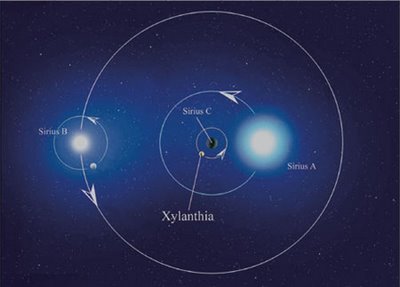
Astronomically we define the Sirius as the brightest star of Big Dog aplani. Belongs to the type of white stars and is just…8,4 light years from Earth. Is double star and together with the chaperone, the Sirius b ', rotate around a common center of gravity. The average mutual distance is the range of 3 billion km. and their orbital period lasts 50 years. SIRIUS has a mass 2,3 times larger than the Sun, but smaller density. 0(a) argue that resembles a Nebula.

The periodic variation in the brightness of each 25 years accompanied by powerful tidal waves, because of his neighbourhood with the chaperone. In accordance with the opinion of many astronomers, SIRIUS is located in "downtown" almost of our Galaxy. Etymologically, the word "Sirius, -(a), -being "meant the kaiwn, the· kaiwn, the vitriolic, warm and it was an adjective of celestial bodies, which emit a lot of heat. «Sirius» was called multiple times and the Sun, which created along the way a lot of confusion surrounding the separation of the two stars. (For’ This and others talk about ' Macedonian Star» and others for the "Macedonian Sun", referring to the well-known Macedonian symbol). Are the words "Omorrizes seiriokaytos", that meant he made from solar heat or from the Sirius and the "Siren", mythical creature that anaparistanontan allrte that as a woman-fish and sometimes as a woman-bird and originally meant "the fanerwnoysa of the dynamin by heatwave sunset at mesimbrian».

According to legend, "Siren" was the sister of Alexander the great (siren and depict the Dogon as Mermaid is the same for the delayed). Hung around on the seas and wrecked ships who dared to say that the King died (Live King Alexander;) Looks really funny, but also surprising how a myth – either as a parable or as a creation of the collective unconscious – to skillfully transform and protect one momentous truth…

In Egyptian and in Greece


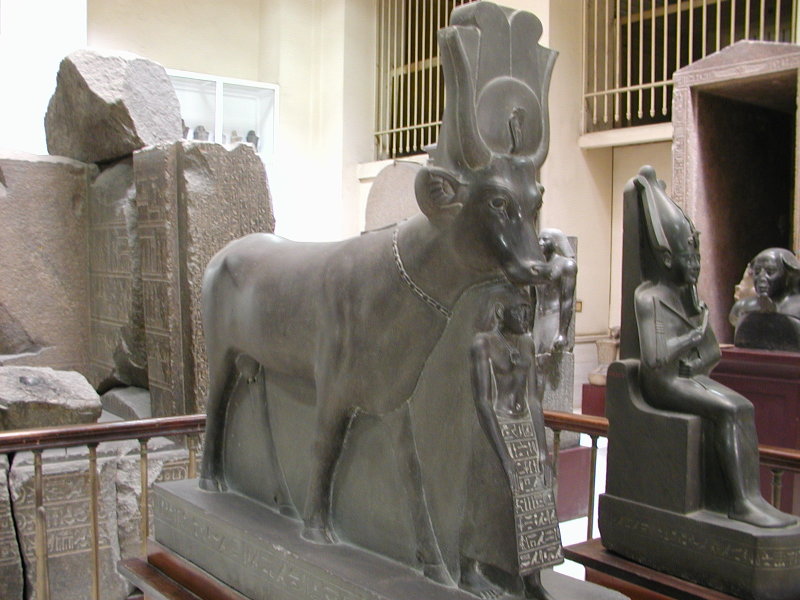
In ancient Egypt, in accordance with the opinions of scholars, SIRIUS corresponded with the goddess Isis, that anaparistanontan as a cow lying on’ a ship, and (f)’ the statues are often depicted with cow's horns and the hairdo like a fish tail. Many times brought as Crown an eight-pointed star. Brother and husband of Isis was Osiris, the worship seemed too with that of Dionysus. With that the Isis gave birth to Horus. According to other sources, however, he gonimopoiise the Isis was the Ammon or Amun-Min-Ra, the same God who later called Amun-Zeus and that, According to the Olympiad, He was the father of Alexander.

SIRIUS(Canis in Latin). Tsakalioy or Wolf form and had the God Anu soymeriakos, It seems that he was also associated with the star it.

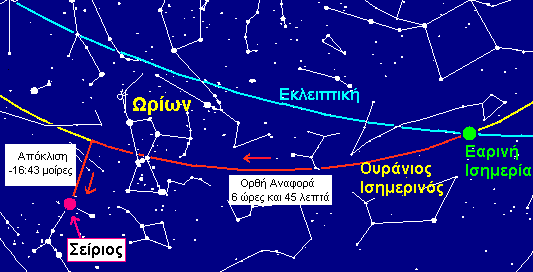
For Greek mythology, SIRIUS is the star that, the constellation of the great Dog, in which he had transformed his dog Orion. This of course is not random, as constellations of the dog, of Orion and Slow are th IUU in another.
The Orion was the son of Poseidon and Eyryalis, daughter of Minos and famed Hunter. Usually wore a lion's pelt and clutching the hands of bat (These symbols and of Hercules). There are many stories around the face and the faithful dog Sirius's.

Orion is associated with King Oenopion (or Oeneus in Boeotia), that had been the wife of (or daughter) the Merope, which raped the Limits under the influence of intoxication. The Winopiwn, outraged, the blinded, with the partnership of the father of Dionysus. But the Orion, with the help of an Oracle managed to rediscover his light. Specific, the Oracle saying that they will, If you move towards the East and expose the eye cavities of licenses at morning sunbeams. So aided by the noises made by the blacksmiths of Hephaestus, arrived in Limnos, where the Kidaliwn (the teacher of Hephaestus), the koybalise on his shoulders and brought him in front of the Sun.

-Some believe that this myth has some connection with Sun-Sirius, that is done once a year, but with the mysteries of the Cabeiri. We know that the marriage of Philip and Olympias was the result of their meeting in Samothrace, where were running the Cabeiri mysteries "or", otherwise, the "mysteries of the great gods". Philip was initiated early in these mysteries (rather in Thiva), While Alexander's mother was a priestess.

Cabeiri also regarded as deities of fire – the word "Kabeiros" has etymological connection with the verb "burn; – though their symbols, e.g.. agistri, having to do with water and encounter later in almost all religions. According to one view (Herodotus, Strabo, Pindar) they are descendants of Vulcan from his marriage with Kabeirw, for’ This and always found near volcanic areas, While often represent the boundary or ypochthonies deities. The heart of worship was kabeirikis in ancient Macedonia, in Mount Athos.

As though called the Cabeiri at various locations, considered ancestors of the human race. Indeed, mentioned that one of the persons of the mysteries of Samothrace was called "Adamas" and considered man-archetype, the first male in order of creation. According to tradition, Artemis killed Orion out of jealousy for the hunting of art and Zeus made him next in the constellation Pleiades, While in another version died from the deadly sting of a Scorpion, view grounded apparently f’ astrological data, as it had been observed that the constellation of Orion and the Big Dog disappear from the horizon where rises the Scorpion. But the wriwn and Sirius were hunting wild animals and to the Kingdom of Hades (as described in the Odyssey), Although she must be a foreign delivery, Maybe Egyptian influence that was associated with the mysteries and the cult of the dead.
The Ntogkon, the Ark and the fifty "Nommos"

(Two-way e in their head – the encoding of the Seirioy)
In Africa and in particular in Mali, There is a people, that is literally amaze the modern astronomers with his knowledge on the subject of Sirius. They seem to know everything about the nature and the properties of the star, He and his escorts, I think it is two, not just one, something that the astronomy just now investigates and discovers. The Dogon, s who claim that related to the star who literally worship. The largest is the God Amma, a kind of residual Jupiter- Jupiter passed to them by the Oracle of Sivas and, According to their tradition, He created the universe and biota, but the same people, they originally eftiaxe as amphibious beings, with the name "Nommos".(The faith she resembles that of Sumerian and Babylonian).
«ater KUBILE», i.e. the Cybele of Cretans. The Isis seems to have a direct relationship with the Cretan goddess with snakes, but it is at times and with many other Greek deities such as Artemis, Dimitra, Venus, the Hecate etc. In Samothrace believed the Cabeiri were the only ones who were saved from the terrible cataclysm struck the island when aoy, According to tradition, the Black Sea overflowed and broke the dam that formed the Symplegades and the rocks of the Hellespont.
The most famous and familiar traditions that arrived to our days around the theme of Noah's Ark is such, but Deucalion and Pyrras. The latter stopped in Dodóni, where there was and periwnymo Oracle, that too often consult the Olympiad and which even prophesied the coming of Alexander. Iasonas took wood from there and made the helm of Slow to launch from Boeotia the Argonautic expedition along with the 50 relatives of (as the first "Nommos" Dogon) in the direction of the flag of Kolchidos.
The most ancient saga of the East, in Assyrian mythology, We meet the hero Gilgamesh, who begins an aerial trip with a boat taking with him 50 companions. But there are other similarities between Jason and Gilgamesh. One of these is the planting by Jason Dragon's teeth in the soil, Re’ They trotted 50 Warriors. Something similar done and the Gilgames to gain strength. But the coincidences do not stop here. Danaos, the King of Slow the primogenitor of the Greeks had 50 daughters, that their nymfeythikan 50 sons of their father's brother, Egypt. With all the Danaides had erwtotropisei and Hercules, the mythical progenitor of dorians and founder, When the legend, Macedonian dynasty. Many traditions indeed flying Hercules as head of argonautic expedition even not the Jason… (Hercules, Anyway went from Crete to Libya).
The constellation of Orion is next to Slow and the big dog. If SIRIUS symbolizes the great mother and the matrix or the Ark, where larvae are kept, then it surely Orion is the moment of nomination and of the hero's andrwmatos and Argo ' the journey ', that is the mission, the hero must perform for the spread of his tribe and its features. If you look at the "Demi" Alexander under this light, then I understand that he knew very well the role that ought to embody, the name of the values of those who were the only institution and guarantor, due to the direct connection with the divine. Note that the constellation of Orion is next to Slow and the big dog. The sacred importance of the number 50 has been attributed by many scholars in Egyptian mysticism and if you remember that the orbital period of Sirius lasts 50 years, then maybe the emphasis given to this number is not at all random.

Macedonians, Sons Of The Gods


Herodotus (Cleo, ch. 56) speaks of the «nation» Makednon, arguing that dorians and were named so by the time that resided in Greece, in Pindos. As we all know, the dorians considered their progenitor Hercules, something that he himself believed Alexander, who is often portrayed as one of the Dioskouroi alongside another Hero, bearing the features of Hercules or Achilles (stepchild from his mother's side). According to legend the name "Macedonia" is due to the Macedonian, NIO of Zeus and Thyias, Deucalion's daughter. Diodorus Siculus, though, He writes that the Macedonian was the son of Osiris and brother of ' Annoybi, thus leaving some suspicion about the divine origin of this nation.

Under Orestida, When the 700 e.g.. officially starts, the history of Macedon. Even in this region is said to have started and the history of the Macedonian dynasty, named as then "Argaiades" or "Timenides". First name brings to mind the ' Argaio the '» (652 – 621 e.g.), the second King of the Macedonian dynasty (first was the Perdiccas, a descendant and that of Hercules). The second belongs to someone Heraclid "Timeno», they captured the Slow. This not-so-random coincidence of names indicates perhaps the relationship of the Macedonians with the Peloponnesian Argos. If we associate with the myths of Viruses and danao and with the version of Diodorus for Macedon and if we consider the history of Alexander, is easy to assume that there is some mystical touch of Macedonia with the happenings of Egypt. (Note that in Thessaloniki and elsewhere have found many elements of Egyptian worship, like Serapeia etc.. Various inscriptions found in Delos testify that the Egyptian religion prevailed mainly in northern Greece. At the same time there are Egyptian sanctuaries in Tithorea next to Delphi. Delos, in sanctuaries of Isis, tributes to found the Egyptians gods, which had offered Macedonians. The goddess Isis in Philippi had a leading role. They even have found recorded and the names of the priests of).

According to another version yet, Macedonians have nothing to do with the Slow of the Peloponnese, but with the Slow Orestiko of Western Macedonia. The presence of primitive peoples in Macedonia confirmed by the latest excavations. In fact, history of the Macedonians is unknown. Many scholars argue that gender is native, Maybe "Pelasgian". But of particular interest presents the history of Thessaloniki. By cassander (315 e.g.), the place where today there is a city called «Thermes», Hence the name "Thermaikos Gulf». In Thessaloniki, well, was accepted with great enthusiasm the worship of a demon named «Thermaios». The paradox is that the area has never been hot springs. However the demon he was identified later by the Thracian Dionysus…

The secret history of the birth of Alexander


Many traditions, as well as a series of oracles entwined with both birth, and the life of Alexander. His mother Olympias was said to have snake enchantress. The night before her marriage to Philip, the Olympiad dreamed that entered the body of a lightning bolt that filled fire. Ο Φίλιππος, from the other, after their wedding he saw in a dream that sealed the body of his wife with a seal that had the image of a lion.

Plutarch mentions that the Olympiad he gets in bed of serpents and, Indeed, that Philip had seen one night goes to bed with a snake, that might be one God transformed.

KaerstBerveHamiltonBelochHammond, etc.) date of birth of Alexander the 6th day of the month Aoos, that corresponds to the beginning of July, i.e. the period that started the flooding of the Nile and the ancients called "dog days". Alexander's relationship with the Amun-Zeus was also confirmed by the priests of the Oracle, When he arrived at the oasis of Siwa. There the child of Zeus proclaimed "and left indirectly hinted that he is the son of Philip. The Oracle was consulted and Hercules, He is considered the ancestor of the Macedonians. The Olympiad also believed that her son was destined to save Egypt from the barbarian Persian conqueror. Alexander adopted as key symbols of the horns and the Thunderbolt of Zeus-Ammon and the Crown of Isis with the three oktaktina stars, and even in honor of built Temple in Alexandria, in the city that brought t’ name of.

The star of Vergina


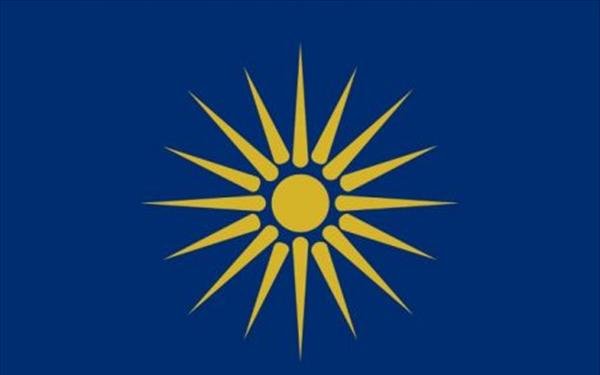
The 1977 Manolis Andronikos unearthed Royal Tombs of Vergina. Among the other treasures found and a golden Larnax the bones of Philip and which brought as decoration the 16ktino star and three plates with 8ktina stars. Was well clear, how the stars they were the emblem of the Macedonian dynasty. So began and the whole literature around the importance and meaning of the symbol.

In principle, It must be said that there are many kinds of stars with different numbers of rays, but most commonly encounter stars with 8,16 and 32 rays. This was the emblem 2500 e.g., Babylonia and later in Chalkidwna. The 18″ century. in Assyria and Syria during the 1700 -1300 e.g.. in the Phoenician, Chittiko and Minoan civilization. Mid-6th BC. century. It is now known in Greece, While a little before 5 ° c.. begins to circulate and in currencies. A century after spread in Italy, Alexander the great arrived later with the Romans on the Iberian Peninsula.

Depending on the perspective of each researcher, the star symbolized when the Sun and when the Sirius. The fact remains that all forms that occasionally escorted were deities directly or indirectly associated with the worship of Sirius, όπως: the Isis, the Istar, Dionysus, the Nappy, the ocean, cabeiri, Cybele, the Castor and Pollux (which for some are identical with the Kabeiroys), Artemis, the triple Hecate, Hephaestus, Juno, Hercules and Sirius, Lucifer and Hesperus (deities associated with the worship of Kaveiroi, of ISIS and Mithras), Jupiter with duplex (Heavenly or dionysiakos), the double-headed Ammon-Zeus, the Minotaur, etc.. In currencies of Aegean Islands we find the star next to Jupiter and’ a dog that turns out rays. Babylonia there are too many seals and gems that have carved them up a star 8aktino. In these illustrations, the star is located near’ a man-fish. This is the amphibious God Oannes. In Egypt again we often see three 8aktina stars in the hair of ISIS. Indeed, the Crown has, at the top of the , a larger and sideways two smaller stars, that may symbolize the escorts of Sirius.

SIRIUS was trying to expand his power and at the same time uniting the Greeks (Athinaioi, Laconia, Macedonians) under one authority. This emergence and the homogenization of all elements of each separate City-State was, something was happening only in Greece and never happened in Egypt, But even in the Latin world. SIRIUS and the cult of the great mother» in Greece were enriched, parallachtikan and formatted based on Greek philosophy and reality. An entire complex mysticism there is around the Star Makedoniko, that has too many ramifications, always around the Sirius satellite, the constellation that still keeps kept the secrets of the night sky…

~~~~~~~~~~~~~~~~~~~~~~~~~~~~~~

of GEORGIA KOYMPOYNI, EMMANOUIL SYMEWNAKI, CHRISTINA KOYMPOYNI
THE C. KOYMPOYNI is author, graduate of the Department of philosophy, University of Athens, with post-graduate studies in Italy.
O E. SYMEONAKIS is a researcher-translator
and the x. KOYMPOYNI philologist.

erevna-enimerwsi.blogspot.com, (TX scans 22. January-February ' 98)

www.afipnisi.org

Amphipolis. gr | Money finally to Amphipolis;

Amphipolis


What I understood from the statements of the Minister of culture, Lord Xydakis, that ... "money finally to Amphipolis», is that Amphipolis is linked from the "for first time ' left-wing Government with the sinful past of Government mnimoniakis Samara-Venizelou.

The Prime Minister strongly peirachtike by the fact that the Hill Kasta, where they became the archaeological excavations in Amphipolis, having visited the then Prime Minister Antonis Samaras. The ironic fact of style ... "The digger (means without the mentioned Ms. Peristeri) is obliged in accordance with the Agency's Protocol and archaeological law to make an announcement within the next nine months period "implies and a threat that complements it... "To learn all the scientific community and the Greek public opinion more commonly what is found in Amphipolis». Minister, all the planet since last August was learning everything about Amphipolis and clutching undiminished interest in excavations, Now you're saying ... "to learn what has been found in Amphipolis».

The visiting room, be aware and then made again ironic statements – admittedly with tact- "we did not find Larnaca with Golden mask». Minister, at such a critical period, that is from everywhere the Makedonia, does the new line is not to irritate some neighbors with the archaeological findings of Macedonia;

Than,What seems have opened several fronts in the space of culture and well do, After all – as you say – were rotten and worn. At the site of archaeological excavations, from the Prespes until Maronia, It should show more sensitivity, as for and for others – very properly – topics, When diakonoysate journalism from your serious column.

Indeed it's meagre finances of your Ministry. Undoubtedly the liquidity problem has affected our culture, but the millions of foreign tourists come to our Antiquities. The results you see at the Archaeological Museum of Athens.

The small moyseiaki of Amphipolis has ekatontaplasiasei visitors. Don't apaxiwnete this great dig, associated somehow with the Vergina.

Your Ministry needs the excavations in the northern area not to confuse with the politics, past and present. The phrase in your latest statements for Amphipolis... "there is nothing more to see», Maybe it was a tombstone for the historic site of Amphipolis;

Thousands of years ago, the events of the Peloponnesian War had arrived and until Amphipolis. To consider then – now – say between southern and Northern. The world believes that the State is indifferent and the topics of culture of Macedonia!

FAIDWNA'S GIAGKIOZI

Amphipolis.gr | The largest toils of history that staged the Olympics;

of Stavrou Papantoniou

The unknown person- key who executed the design of Alexander's mother

The story doesn't always mentions those who pull the strings. Many times forget , forgets and leaves forever in oblivion details, but in their time were those that may have changed the course of the entire History.

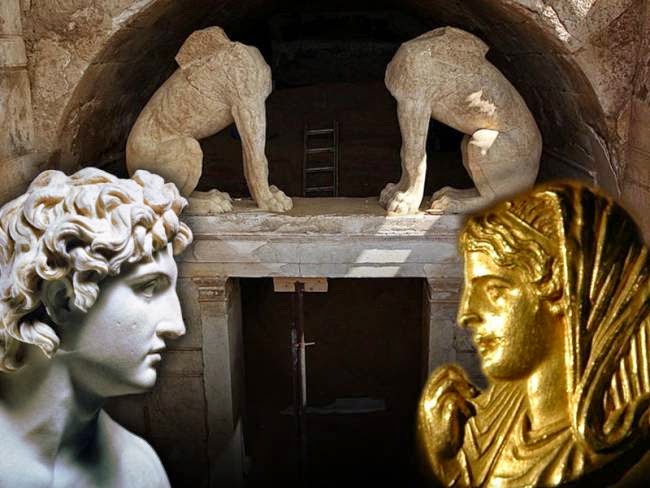
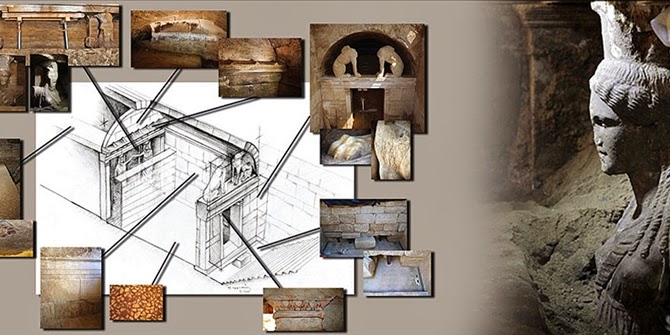
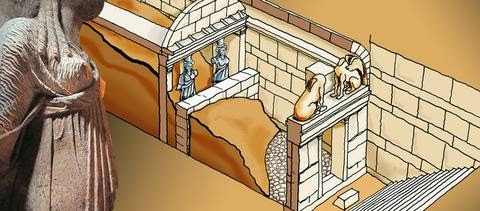
While the impressive monument of Amphipolis begins gradually and breaks the silence of manifesting the well-hidden secrets of, the same is not true with the history of the era.

The almost nonexistent sources leave us in the dark about the What can followed the death of Alexander the great, a period identified chronologically with the monument, as we are around 320 p. X. The controversies and the battle between successors took rampant, After the death of Commander, the presence of a security section in the vast Kingdom of.

At this point deserves a highlight: O Alexander for most successors It wasn't until the "booty" for their own power. The dead as important and if it does not cease to be dead. On his own doings, others wanted to build their own little glory and others simply sought to pass as quickly as possible in oblivion, as what had been accomplished would far outweigh any new effort that would become in the following, After the conquests had already begun to dress with the veil of myth.

The only one that was really the death of Alexander and only interested in Macedonia is to return to her son, was the Olympiad. And apparently they did everything to return.

HISTORICAL FACTS TIS EPOHIS:

During that period take place a lot political events in the form of thunderstorms. For a strange reason era sources, cut, lost and confused and conflicting with each other. S.If someone wanted to "verify information" of the era and downstream to looking to find the sequence of events. It is no coincidence that the subject of burial of Alexander the great, is until today one of the biggest mysteries in the world, Since this is the first "kosmokratora".
Let's make a splash in time trying to compose some puzzle pieces with what our sources say few.

Ptolemy I SOTER dubbed, stealing bunch of Alexander the great, apparently wanting to gain time vs. Perdikka, who was the ' official ' power. The reason I did this was probably to prevent the Rwxanni to give birth and become heir to the throne Alexander d ', son of Alexander the great.

Its worth noting that Perdiccas was the Official Trustee of the Empire and had grown in the protagonist of the first phase of competition of successors. Something which is not liked at all in Antipatro (his father Kassandrou) that he was losing the "train" of succession. For this and drawn with the "rebel" Ptolemy the Savior, who held the bunch. It is also worth noting that Antipater was a confidant of Philip II , who used to say that ' I sleep quietly, Why is xagrypnos the Antipater ", While Alexander when he started the campaign , the commissioned the Viceroyalty of the Kingdom of Macedonia and the State "bailiff duties the Makedonian GF and laboring in Greek Antipatrw epitrepsas". In this post, the Antipater remained throughout the great Alexander's campaign in Asia. Them to understand the alliances of the time, but they haven't had anything else as an incentive, only the power left behind by Alexander the great.

ARISTONOYS: THE FACE – KLEIDI TIS AMFIPOLIS

Perdikka's campaign against Ptolemy with the purpose to recover the bunch of Alexander the great, fails miserably. Perdiccas himself was assassinated by his officers , who aytomoloyn on the side of Ptolemy. And the officers of the Perdikka have no better luck and killed.

But one survives. The name of the unknown in history. This is the Aristonoa the Pellaio . Minimum information we have for him, but we are perhaps the most important. That the Aristonoys the Pellaios the DIORISTIKE DIOIKITIS TIS AMFIPOLIS 321 p. X. , While he maintained excellent relations with the mother of Alexander the great , the Olympiad, which instructed all warfare against Kassandrou.

Of the few reports that reach us on Aristonoa is from Arriano (6 Book, 28 Chapter, 4 paragraph) and by Diodorus the Sikeliotis (19 Book, 50 Chapter) . On informs us that “the Aristonoys, one of the bodyguards of the Greek Commander, got under the control of the Amphipolis. The mother of Alexander the great, Olympiad, had commissioned the warfare against Kassandrou. He sent his army against Amphipolis under the leadership of General Krateya. The Macedonian General invaded Bisaltia. The Aristonoys, experienced strategist, initially taken aback by the troops of Kassandrou and in the final battle to Bedyndia of Visaltias, Krateya's Army disbanded. Krateyas himself fell in the battle»

The information is very important: We learn that at a time when it is very likely, According to the excavators have made the tomb of Amphipolis, i.e. the 321 p. X , It takes the reins of the city a former bodyguard of Alexander the great and his mother's confidence man Olympiad, who was to open against with cassander. The sources indicate the Aristonoa, as aristocratic descent and loyal in Macedonian customs. He was probably also the reason why he had gone to the side of the Perdikka and not of Ptolemy, as the latter was the "guerilla" with current conditions.

THE PLEKTANI OF OLYMPIADAS

The placement of the Aristonoa as administrator of Amphipolis should not at all random and is likely to have the seal of the Olympiad.When, however, can be taken this decision and why;

After the end of "echropraxiwn" between Perdikka – Ptolemy, the meeting in Triparadeiso, at that time, for which we do not know at all what it was decided, after missing the ancient sources. Apparently there was some agreement to "fall tones» , He shared in the Empire and pieces the minimum that we have been saved by Diodorus the Sikeliotis, We know that decided the return of the Kings in Macedonia.

The facts, however, have a sequence and a temporal link between them that allows us to do the following guess:

The meeting was the key demand of the Olympiad for return of the deceased Alexander in Macedonia. For the implementation of the given project was appointed commander of the Aristonoas, who had a close relationship with the mother of Alexander. In the same meeting it was decided to build the mound of Amphipolis with "enforceable" Ptolemy and designer Deinokrati. If the Loveth eventually moved to Amphipolis don't know. However, it is very likely that the mound was created for him.


WHY MAKING THE TYMBOS IN AMFIPOLI AND NO STIS G.O.A.T.;

The case may have a great base if you consider the placement of the Aristonoa , as Commander of Amphipolis and her desire to return Alexander Olympias in Macedonia, something I had as a goal in itself until you die.

The question that arises is why in Amphipolis and not at Aiges;

And here we can easy to answer if we take into account our POLICIES opsin developments.

Macedonia at the time I was single and talanizotan from great enmities. The Kingdom of goats the controlled Philip Aridaios who had come to an agreement with cassander (the agreement was with his wife Eurydice, as Philip the King movement was Aridaios as intellectually retarded) and became regent.

To understand even better the political balances of the era, so Philip Aridaios and his wife foneytikan mandate of the Olympiad 317 e.g., which had holed up until that time in the Kingdom of the molossians of Epirus and had gotten under the protection of both the Rwxanni and her grandson Alexander d '.

Hence the Aigai were totally foreign to the Olympiad, that if any Alexander returned to Macedonia would have to find another place to become the burial of. For this she appointed Governor a trusted her man , the Aristonoa, He had been honored by her son with the high rank of bodyguard, in order to perform the secret plan of burial of Alexander.

0000003

It was the port and will not become perceived high deadweight and transfer will not cause new passions, as I was passing at all some funeral procession by land.
Amphipolis served another purpose:

Anyone who has visited Amphipolis today, I have found that the port is only minimally from the point that has made the tumulus.

To all this we must take into account another element: The Olympiad, It was a woman painter was always what I wanted. So is described from historical sources and has been linked to many intrigues, like the murder of her husband, the Philip of Aridaioy poisoning, He left and intellectual disability, While she was Priestess to the Cabeiri mysteries for which little things we know , as covered by intense mystery. Apparently to return Alexander in Macedonia would do everything , even such a high-level conspiracy.

WHY THE TAFI SECRETS;

The Olympiad was unaware that her son had already gotten huge reputation throughout the then known world. Obviously the more interested to return to Macedonia and to be buried as she wanted, Despite his tomb becoming pilgrimage through the centuries. Moreover the Exchange to transfer in Amphipolis, likely to be kept secret, as this boleye and their successors both in Macedonia and in Egypt. Don't forget that Ptolemy Soter was Ptolemy son of Filadelfo, who claimed that ruled Egypt with the power that give the body of Alexander the great , He was buried in Alexandria, According to the thryloymena. So we are talking about a perfect conspiracy , perfectly executed from the Olympiad with a single objective: To return Alexander in Macedonia.

A highlight worthy: When we say secret burial mean, not reflected in the sources, which apparently fell in “censorship” . Not explain otherwise that no source is not mentioned in the construction of the mound. The secret burial does not include backfilling as apparently in the first stage the Olympiad would want the monument to be visited, at least from the same. Another element that ties in perfectly with the speculations of the excavation team. That the monument was at the outset and not sand it later. However, dates coincide once more. As the Olympiad without any apparent reason suddenly returns 317 p. X in Macedonia. Let's look at the facts of the return of

THE RETURN OF OLYMPIADAS IN MACEDONIA

The specific scenario, bolstered by yet another fact. The Olympiad had returned to Macedonia, the 317 p. X after 13 years in “hers” Kingdom of the molossians of Epirus, which even had completely reorganize.
Why he returned to Macedonia in 317 BC and in which city went , After the Aigai were impossible to "accommodate"; Apparently he returned because he had completed the construction of the mound of Amphipolis , I received the dead son and she naturally went in Amphipolis, which was friendly to this, After he had commanded by Aristonoa.

The arrival of Macedonia strikes Olympics again the political passions and undertakes proactive kassandros, the who fears that will permanently lose the train of power (don't forget that he was the son of Antipater, of “absolute Regent” of Macedonia during Alexander's campaign), so addicted to power. Our sources illuminate historical happily at this point, confirming the theory.
Kassandros returns dynamically in the spotlight. Make an agreement with Aristonoa to deliver the Amphipolis and despite the fact that he had come to an agreement with him and had guaranteed his safety in Exchange for (Διοδ. 19.50.8), tricked him. The Aristonoys handed over the city, but eventually the Kassandros defaulted the agreement and killed the 315 e.g., reducing the risks to the power of. The relevant passage reads:

The 315 e.g.. and with the assistance of members of the family of Krateya, is murdered and the Aristonoys and Amphipolis finally passes under the control of Kassandrou.
It had preceded the murder of the Olympiad which was the biggest danger the arrival in Macedonia for some conspiracy. Kassandros the hunts (apparently out of Amphipolis ) and this resort in Pydna. There dies by stoning the 316 e.g..

The Rwxanni stays with Alexander d '. Their imprisoned kassandros in Amphipolis (Διοδ. 19.52.4) where it remained, up and killing them from the Glaykia (Διοδ. 19.105.1-2, Pays. 9.7.2) the 313 e.g..

Excluded based on POLITICAL developments and the hatred between Cassander and Olympiad, Alexander of Rwxannis and d ' the Tomb to be made in their honor on Basel Cassander.

The tymbos of Amphipolis was ALREADY FTIAChTEI BETWEEN 321 p. X and 317 e.g. , on Aristonoa, until you take action the Kassandros, who having finished consecutively with the whole family of Alexander the great, Finally got the power in his hands.

Not excluded however kassandros to buried inside the Tomb that was intended for Alexander the great and Olympias and Rwxanni and his son or any of those members of the Royal family. After they were placed in all dead, the tomb was located approximately 10 years after its construction to definitively pass in oblivion and Kassandros dominate Macedonia ,away from the irritating myth of Alexander the great and his family.

LOGIN HISTORY – ARCHAEOLOGY:

This theory is based on a combination of a few historical sources and logical sequencing of events , It seems to coincide with the archaeological Department of communications. The large marble door seems to have opened many times. This can be done either to placed above dead, either to enter the Interior of the tomb the Olympics to see the dead son. Also the backfilling seems to be later, something that can be justified by Cassander's desire to rid itself once and for all from the “annoying” Monument and along and by the King for whom he made: Alexander g’ Philip.

http://archaia-ellada.blogspot.gr

Amphipolis.gr | Look at this tall mountain that Grandma, This wild sea that calmed down, This rising moon that fell!!

tile-php

Reasons for philosophers and other scholars for the dead Mega Alexander in anonymous Ethiopic text and in the Arabian tale that lists the historian al-Tha'ālibī (961-1038 m ch.)

After consulting the Earth's surface was not considered enough for you, How can now be satisfied within this narrow box.

The Arabs of abbasidikis period istoriografoi (750-1258 m ch.) produced the image of Alexander the great in the ' perceived ' or House of ktisews the world their stories, drawing material from a variety of sources. It is likely to be raised about the heterogeneous narratives from some lower categories Arab translations of the story of Alexander the great, as the life and Deeds of Alexander the great Makedonos of Pseudo-Kallistheni in the 3rd century AD., medieval fortresses with Persian (pahlavī) texts of Bion Kings, Syriac texts, but cultural traditions and Islamic, legendary stories and comments in the eighteenth chapter of the Qur'an.

CONTINUE THE READING

Powered by Tempera & WordPress.
>

By continuing to use the site, you agree to the use of cookies. more information

The cookie settings on this website are set to "allow cookies" to give you the best browsing experience possible. If you continue to use this website without changing your cookie settings or you click "Accept" below then you are consenting to this.

Close