Amphipolis may reveal Alexander the Great's DNA

Amphipolis may reveal Alexander the Great's DNA

Detail from the Amphipolis tomb.

Academic predicts tomb holds remains of Olympias.

As Greek authorities are reportedly poised to announce the identity of the occupant of the Amphipolis tomb, a British academic says the bones found are likely to be those of a Macedon queen, most probably Olympias, the mother of Alexander the Great.

Andrew Chugg, author of The Quest for the Tomb of Alexander the Great and academic papers on the same subject, has been reporting his analysis of the tomb's findings since excavations began in August 2014..

Mr Chugg told Neos Kosmos that by cross-referencing information in historical texts with the evidence found so far at the tomb, his findings pointed to a very real chance that Amphipolis is Olympias ' last resting place.

The discovery of a skeleton inside the tomb – which can be DNA tested – Mr Chugg says is a game-changer for identifying the person for who the tomb was built.

Scholars have predicted a female occupant because the mosaic uncovered last year shows a woman being led to the underworld, Experts have said that the tomb could also hold the remains of Roxane, Alexander the Great's wife.

Both women were put to death by Alexander's general Cassander as he secured the throne of ancient Macedonia.

"DNA will not identify Olympias specifically,"said Mr Chugg, "but it will discriminate easily between Olympias and Roxane.

"It is also the blueprint for the individual. It tells you a lot about their gender, appearance and ancestry. If it is Olympias, then this will be tantamount to having the DNA of Alexander himself ".

Mr Chugg, who has made a number of successful predictions as the Amphipolis tomb has been revealed (such as the presence of a Persephone character in the tomb's mosaic) – says that analysis of the bones – including carbon dating – will confirm gender and age, and that tooth enamel tests will provide further information on the deceased's life.

"If it is a woman in her fifties that will confirm that it is Olympias, subject to the archaeologists having got the dating of the tomb right, and all indications are that they have.

"If the occupant is Olympias, then that will be a large part of the DNA of Alexander. It is tantamount to finding his body, and would make this the most important archaeological discovery since Tutankhamun ".

Media in Greece have reported that the Greek Ministry of Culture will make an announcement concerning the identity of the tomb's occupant on January 20.

source: Neos Kosmos

IT WAS TRUE THE TROJAN WAR;

DIMITRIOS – TZEHM IN MANOS

oxuschariot

It is surprising because these archaeological findings are not known not only to the general public, But even in many archaeologists. A my known historian said that “There is nothing for which they hadn't been spoken or discovered first the ancient Greeks”. The contribution of ancient Greece is huge in building Western civilization and the expression of Greco-Roman culture reduces a little the contribution of ancient Greek civilization that the Romans copied (spoiled). Don't forget that and down Italy and Sicily were colonized first by the Greeks.

In the Renaissance, but and the enlightenment, the ancient Greek goods constituted a source of inspiration in all areas of culture, from art (Renaissance) as philosophy, the sciences, the arts and letters. Maybe today there is envy for the ancient civilization where ushered in democracy, of theatre, of art, of Sciences (Let's remember the Democritus who discovered the person!), of philosophy, of sport (Olympics) and generally all those who today take for granted. Besides the repelling of the Persians (but the Turks in modern history) has huge importance and Europe would be different today if they had knocked out the Persians (the Turks and Ottomans). It is no coincidence the emblem of the Acropolis with Parthenon of Athens as a UNESCO World Heritage symbol.

That today foreign scholars spit bile saying that the ancient Greeks were gay offends them because first of all the ancients were bisexuals (like all ancient peoples), but the celibacy was disgraceful. Secondly, I do not understand what evil exists and what reproach if indeed he was gay. And what was; Stress that Alexander the great was homosexual, Although historical data is incomplete, We had several women at his side (as Roxanne). Ditto say for Achilles with patroclos, Although it was mythical persons (or maybe not; We will see below). At The Same Time, There are many generalizations of style Alexander was butcher, Although in fact ekpolitise the entire South-Western Asia and Egypt who later brought Islam to primitive levels. Also saved Europe from the Persians.

At The Same Time, in the History Channel documentary accentuated the Roman supply e.g.. on martial tactics, weapons and structures (though indeed invented the cement), but in fact the ancient Greeks were the ones who first developed the above martial tactics (e.g.. Sacred Band of Thebes, the Macedonian sarissa, siege engines) and constructions (from bridges and aqueducts as high-rise buildings and even prehistoric as in Santorini) and generally they developed all the sciences, Arts and letters.

Nevertheless, the same Hollywood often has as its theme the ancient Greece as in recent films Troy, Helen of Troy, Alexander, Argonauts, Hercules etc. At The Same Time, March 2007 Warner Brothers launched the movie “300” referred to in 300 Spartans of Leonidas who fought the Persians at Thermopylae. The movie, filmed entirely in the Studio, presents fairly heroic Spartans fighting almost naked, Finally escaping from the pseydopoyritanismo, Although in reality the ancients had armor, Greaves etc. The film is perhaps not just remake of old film (that was filmed in Greece: in Lake Vouliagmeni in Loutraki), but is associated with the impending u.s. attack on Iran (Persia). But again, stresses the contribution of the Greeks to repel the Persians and the protection of Europe.

Apart from the Persian wars which describes very nice Herodotus (the father of history) the ancient Greek literature has plenty to showcase. Well known is the Trojan war described in Homer's Iliad. This text has inspired generations – generations and even today have filmed movies (recently the “Troy”with Brad Pitt) with this topic. However, based on the story of the Trojan war in facts;

Analyzing the text this archaeological evidence about whether it was true the Trojan war or not, We will start from the German capital. In Berlin there are written references to the Trojan war. There is a file with letters to Agamemnon. As mentioned in the Iliad, Agamemnon, King of the Greek city of Mycenae, head large campaign came on against Troy (City of Asia minor, near the Dardanelles) that had to be punished for the snatching of the Greek Queen Helen of the Trojan King Parry. Agamemnon had allies from all over Greece and the Islands. After ten years siege Troy fell. Can the above love story it was cause war between superpowers of antiquity;

In the 13th century b.c.. There were large Empires in the Near East: the Babylonians (now in decline), the Assyrians, the Egyptians and the Hittites in present-day Turkey (M. Asia) that their sovereignty was up the Aegean. The bronze age capital of the Empire of the Hittites were the Chattoyses (Hattusas). In the 13th century b.c.. It was one of the largest cities with temples (Chief God was God of the storm), residences and a large Palace. Under Boghazkou (200 miles east of Ankara) was a breakthrough: a diplomatic archive written on clay tablets. Found 7 files in Boghazkou and the 1983 found a file Temple. The last traces of fire that devastated the region in 1180 e.g.. It is noted that the Hittites from the Assyrian people have fallen.

The 1906 German archaeologists have found 2500 clay tablets with cuneiform writing in Boghazkou. It was the chettaϊkoy Foreign Ministry files during the period was the Trojan war. The plates were transferred to Berlin and apokwdikopoiithikan after the first World War. In the Pergamon Museum emlich Forer, a Swiss engineer, He worked in the translation of the plates where he discovered names familiar from Homer, with repeated references to Troy, the Atreus (his father Agamemnon), Alexander (Homeric name of Paris) etc. Billboards recognize rather Greece as an important State.

In parallel with the kingdoms of the Middle East, that proanaferthisan above, There were polychryses Mycenae of Sliman was the richest Kingdom of Greece. At Mycenae had ruled a great King, Agamemnon, and this is probably the Chettaios Emperor had called in a letter “brother” and “equal”. In the 1950 's 1930 Forer's theory was rejected by the academic community. Though, the Greeks were in chettaϊka texts and the myth of the Trojan war is based on real events that recorded the Chettaios Emperor Chattoysilis the 3rd.

After decoding of linear writing texts II the 1952, We know that the Greeks the bronze age had diplomatic relations with Egypt. At Thebes, Egypt (current Karnak) There were commercial exchanges with Cretans and Greeks. Egyptian diplomats, as has been found in Egyptian inscriptions, they knew the Greek cities, notably Mycenae.

When Homer, Agamemnon was a great King of mainland Greece and islands such as Crete and Rhodes. This (that was a great King) recorded by the chettaϊko Ministry of Foreign Affairs. Homer calls the Greek Achaeans. The Hittites, in their inscriptions, refer to a powerful Kingdom in the West the: the Achiaba, meaning obviously the achaeans (Greeks). For that was the Achiaba (to which the chettaϊkes inscriptions) There are theories as that was in Thrace and Anatolia or Rhodes or mainland Greece (based in Mycenae). The Achiaba, indicate the chettaϊkes inscriptions, was a sea state with wide-ranging contacts and relationships with the Hittites sometimes friendly and sometimes hostile. The Governor of Achiaba (Greece;) referred to as “Great King” (Agamemnon;).

There is chettaϊki inscription describing a treaty between the Hittites and the Syrian State Amoyroy which was compiled for the Emperor Toyntchalis the 4th (son of Chattoysilis), After the Trojan war (12century BC). There the Toyntchalis naming the kings who were in the same category with him: the Kings of Egypt, of Babylon, of Assyria and finally the King of Achiaba. Though the inscription the word “Achiaba” It was diegrammeni and that means the King of Achiaba was no longer in the same category as other Kings or that the terms of the Treaty did not refer to him. Nevertheless, Some researchers take these findings from Greece and Agamemnon.

However, There is a large Kingdom in the West of the Hittites involved militarily and diplomatically with them and maintains trade relations with Syria and other States. And even called Achiaba. The description matches the achaeans (Greeks), Although there are archaeologists who compare the fact that there was no large Mycenaean rule, but many small fighting between them. Besides the ancient Greece was not a unitary State, but a patchwork of towns – States often fighting among themselves, but unite when they had to face a common enemy (Persians). Nevertheless, these archaeologists do not warrant a reference of the Chettaioy Emperor Chattoysilis of the 3rd he calls in his letter the King of Achiaba “brother”. Was the King of Achiaba Agamemnon, the King of Mycenae and Commander in Chief of the achaeans; Some scholars oppose again that even in Homer's Iliad Agamemnon played second fiddle in front of Achilles, the King of the Myrmidons.

Archaeological evidence confirms the presence of the Greeks in Asia minor, on the outskirts of the State of the Hittites. Greek vases found in 30 areas. In linear II listed 6 toponyms from I where the Greeks took Asian girls Drudge, While in 3 parts of southwestern Turkey, found evidence that inhabiting Greeks with main area of Miletus (We always talk about the bronze age). Miletus was then wall and Palace and into a graveyard of found objects imported from Mycenae. Miletus was a Mycenaean colony or a meeting of many neighbouring peoples area. In linear writing II signs the Miletus as import Asiatiswn area slaves by Greek rulers.

Though, When the Foreign Ministry chettaϊko, There was a city on the western coast of Asia minor who was under the control of Achiaba (The Achaeans – Greeks;) and it was called “Milabanta” and later “Milabata”. There was great conflict between the Hittites and the Achiaba city Milabanta. Miletus was the Milabanta; If Yes, then the Achiaba is the mainland Greece. Chettaϊkes signs described in copy of the letter of Emperor Chattoysilis of the 3rd Chettaioy to the King of Achiaba, with no names, around 1250 e.g., the era of the Trojan war. It is known as letter “Tabakalaba” and refers to a villainous named Piamaranto who was rather pushy Royal descent with action off the West Anatolia (in Asia minor) and they came into conflict with the Achiaba (Greece;) and with his brother: King of the Greeks (called by the Hittites as) Tabakalaba.

The Piamarantos their tromokratoyse allies of the Hittites to the West. Focus of discord was the city Milabanta or Milabata on the western coast of Asia minor who was under the control of Achiaba (Greeks;). The King of Hittites Chattoysilis the 3rd, to clarify things, wrote a letter to the King of Achiaba where he mentions the places passed traveling West, by which we recognize the capital of the Hittites: Chattoyses (Hattusas). Around 1250 e.g.. the Chattoysilis, starting from the capital of the Hittite Chattoyses, began the westward. In a week arrived in town Sallaba (current Sivrihisar, 100 miles west of Ankara in Turkey;). There the son brought non-reconciliation with the message Piamaranto. After the Chattoysilis reached the chettaϊko fortress Hapanuba (Afion) and from there went to Troy or Smyrna or on the coast opposite the island of Kos.

The Chattoysilis asked for help from the people of Lucca, the people who resided in Lycia in Asia minor (current Lysia) and who made raids in various regions, including Cyprus. The rather twisted Chattoysilis South Vilivanda city (Alabanda) and probably continued arriving at the Iyalanda fortress which was attacked by strikers folks whom eventually defeated. In the same city (as Alinda) There are earlier fortifications. There the Chattoysilis sent a letter to the King of Achiaba (Greece;) saying that: “We ran out of water and left their froyroymenoys 7000 captives whom, though, got the Piamarantos. When my brother's emissary, didn't bring friendly greetings and gift (as is customary) from thee, but that instructed the Governor of Milabanta to deliver the Piamaranto.”

The Chattoysilis probably got course Northwest towards the sea, parallel to today's Lake BAFA nature reserve which the bronze Bay formed. The mouth of the Maeander River was a large Bay where stood the city Milabanta (Miletus;). The Chattoysilis found reaching the Milabanta that the Piamarantos was gone and that the great King (Agamemnon;) did not allow him to capture the Piamaranto.

The dominance of Hittites in the West of Asia minor was unstable. Troy is located on the Strait of the Dardanelles in northwestern Turkey and there were originally excavated by the Germans Sliman and Nterkfelnt and the American Blegen. The Nterkfelnt discovered Troy No. 6 which was the capital of a Kingdom that had trade relations with Mycenae and destroyed at the time of Chattoysilis by earthquake or war. The Homeric Troy was probably Troy No. 7 (a). Homer mentions Troy as Ilion. The inscriptions there indicate as Taruisa and Wilusia. The era of the Trojan war, When the Emperor Chattoysilis the 3rd Chettaio, in Wilusia the Hittites came into conflict with the army of Achiaba (Greeks;). It was finally the Wilusia Troy;

The British Museum Store Treaty between the King of Wilusia and his brother Chattoysilis, Maybe the era of the Trojan war. The Chattoysilis asks for help from the Western ally. The Egyptians knew that the allies of the Hittites belonged and the people named Dardanoi, name that gives Homer the Trojans! The condition is referred to as Prince of Wilusia Alexander, name that gives Homer in Paris, Prince of Bilioy of Troy and her lover Greek Queen Helen (wife of King Menelaos of Sparta, his brother Agamemnon) which grabbed and was the occasion of the siege of Troy by the Greeks. Eventually the Wilusia ruined. Was the destruction of Troy or another city; It was the Chettaios ally Paris;

In the chettaϊko file which is preserved in the Museum of Berlin we conclude that just before climbing the Chattoysili of the 3rd on the throne of the Hittite 1263 e.g.. some in the Western protectorates of Hittites ceased to declare allegiance, based on the great King of Achiaba (Greece;). The Wilusia (probably the Troy) He was faithful to the Hittites. So, was attacked and destroyed by the Greeks. The 1982 discovered piece inscription that tie with his letter of 4th Toyntchalis, son of Chattoysilis. Refers to the space 1220 – 1230 e.g.. (After the Trojan war) . The inscription says that Alexander (Parris;), Prince of Wilusia (Troy;), had died and that the position of the Hittites laid a kiss on those adjoining the name Balmoy which later ekthronisane. The area of Wilusia (Troy;) was attacked and the Hittites soldiers moved west.

Was the city Wilusia, He remained faithful to the Hittites, Troy; The Hittites will recognize that the site Milabanta (Miletus;) It was under the sphere of influence of Achiaba (Greeks;). Though the kingdoms of Wilusia and Arzabas was in the sphere of influence of the Hittites. The crisis probably peaked between 2 era's superpowers. Was Troy No. 6 – with fine walls (I have uphill slope which describes and Homer) – or Troy No. 7A – with the parapigmata – the Homeric Troy; After Troy fell by Greeks or by Hittites; And what Troy; Me personally the whole story causes me a lot of questions. Worth to mention that I feel Agamemnon literally something like my ancestor, Since the origin of my family is from Mycenae and my last name is ancient (“manos” means sparse, Hence the Mani that has sparse vegetation, If and when other “manos” is he EC Manis). In my room I have to frame photo Golden funeral mask found in a tomb at Mycenae and attributed (Maybe wrong by Sliman) in Agamemnon.

GENIKOTERA INFORMATION ABOUT TROIA, THE ACHAIOYS AND THE TRANSMISSION OF GREEK CULTURE

It is worth mentioning that the Greek mythology provides many components for the transmission of Greek culture. In ancient Greek tradition is known the epics of Homer: Iliad and Odyssey, as well as various stories about the fate of the achaeans (tribe of ancient Greeks) heroes who participated in the Trojan war. One example was the King of Argos, Diomedes, son of the King of Aetolia, Tydea. In the Trojan war, Diomedes was involved with 80 ships (!) and it was the most valorous hero, After Achilles. Diomedes after the Trojan war returned to Argos. Though, betrayed by his wife, forced to leave his homeland and to leave with his comrades in Italy, in the Greek colony of Puglia where he became King. Apulia is a region in southwestern Italy. In ancient times in Apulia there were many Greek colonies and even today in many villages of the area residents speak Greek with a local idiom! In Puglia the Diomedes duel Aeneas encountered in.

Was a mythical hero Aeneas of Troy and 2nd largest after the Trojan hero Hector. After the kyrieysi of Troy by the achaeans, the Aeneas – According to tradition – He fled with his companions in Lazio, a region of Central Italy in which later built Rome. I.e. the Aeneas was the mythical and perhaps the real progenitor of the Romans and the founder of Rome. The Romans mention as founders of Rome the Rwmo or Romulus and Remus who like Tarzan the galoychise a Wolf! The Romans also had another legend that mentions that Rome was founded by the Sabinoys, an ancient people of Central Italy (Lazio) they resided near Rome. Obviously Roman myths are fictional and were created by the envy of the Romans who didn't want to admit that their country colonized first by the Greeks. That's because Aeneas was a Greek, After the Trojans were in fact Greeks!!! Nobody says that Troy was a Greek colony in the Troad region m. Asia! The Greeks called Troy: Ilion. The name Ilion comes from the King of Troy ilo who was son of Ilus and Kallirrois and grandfather of Priam. Priam was the son of King Laomedon of Troy, and was King of Troy during the Trojan war. He was killed by Achilles's son Astyanax.

Troy was founded by the mythical hero (the mythic doesn't always mean fantastic) Dardano of Thrace. From this the colony received its original name Dardania or Dardanus. However, the Dardanus, historical, was a colony of the Greek tribe of Aiolewn who descended from the cannon in the 21st century BC. By Dardano comes and the name of the Dardanelles (List Of Bleach Episodes). According to archaeological studies, the establishment of Troy dating 3200 e.g.. So, This reinforces the view that the Greeks had their settlements very early launch areas. Troy was named after the King of the Trojan. The son of Ilus and nymph Kallirrois was the Ganymidis, brother of the King of Troy, Group (see. before). Ganymede was the most beautiful new land which fell in love with Zeus and transformed to Eagle the kidnapped to Olympus where he welcomes you (He nectar) of the gods!!! Eventually, Zeus transformed him into a constellation which now call Aquarius. Ganymede is named and the satellite of Jupiter. But the Trojans made group of asteroids that are affected by the pull of the Dia!

Returning to Troy, It was a prosperous Greek colony that had developed the maritime trade. He had trade relations with Mycenae from the 13th century b.c.. In the middle of this century was and the war Allied Greek cities with the Trojans. General, wars between Greek cities was accustomed. The leader of the achaeans in the Trojan war Agamemnon was who was the brother of the King of Sparta, Menelaos [ see. Notes the (84) ] whose woman kidnapped from Sparta Paris (84), giving rise to the Trojan war. Agamemnon is probably a real person – King of Mycenae – who lived space 1200 – 1150 e.g.. (at Mycenae has found funeral mask attributed to Agamemnon). Participated in the Trojan war and King of magnesia (an ancient city in Thessaly) Philoctetes, who after the fall of Troy went to Italy where he founded many cities!!! Behind the myth that distinguished the colonization of Italy by the Greeks that began in the 13th century b.c.. and perhaps more before.

On this occasion Philoctetes was the one who killed Paris with one of the poisoned arrows had given Heracles. The Trojan war was a real event that was probably the 1250 e.g.. among the Greeks (The Achaeans) and Trojans, in Ilion (Troy). In mythology, in Sicily and Daedalus arrived with his wings (glider type) from Crete. It should be noted that there was a developed civilization in Crete by the 2800 e.g.. (age of bronze), maybe even more before. Sicily is perhaps the island of the Cyclops describing Homer's Odyssey. In this work reflected the explorations and the establishment of colonies by the ancient Greeks in the Mediterranean (Under Italy, Northern Africa) in the 13th century BC.. The difficulties at explorations himself reflects Trojan war. Behind the various stories and myths, revealed the fact that very early the ancient Greeks had founded colonies and were visited mainly coastal areas of the Mediterranean (M. Asia, Italy, Spain, France and North Africa), and of the Black Sea. The ancient Greeks called it “Hesperia” the Italy and Spain. These stories show, well, that the ancient Greeks had conquered the world as early as the 13th century BC., Although the author believes that they did before, the 3000 e.g.. ! Following, the colonization that will be reported as “second colonization” and will be placed in the 8th century BC., is the “official” colonization of the Greeks. In fact it started maybe 22 centuries before!!!

Before the 2000 e.g.. the Greeks were called “Pelasgians” and the Islanders “Aigaioi”. Known by the 3000 e.g.. (age of bronze) was the cycladic and Minoan (kritikos) culture. However, the oldest Greek civilization began. Archaeological excavations discovered developed culture in the Neolithic age (6000 – 2800 e.g.) in many Greek settlements, as for Apple's example. Oldest, though, Archaeological findings date back to Palaeolithic times (700000 – 8500 e.g.), with oldest find the world-famous “man of petralona” found in the cave of petralona in CHALKIDIKI. It was a skeleton of a man around 30 – 35 years (old at the time of) who lived approximately 600000 e.g.. (Although there are disagreements about the precise dating of the skeleton and whether indeed belongs to the man of Neanderthal considered isolated species from modern “man wise”). Also, the cave Fragchthi of Andhra Pradesh found human remains that date back approximately 17000 e.g.. the end of the Paleolithic era, and specifically in the last phase of “Boyrmias period” that is the last period of glaciation.

In and around Gytheion Mani found skull dating back to 150000 e.g.. Paleolithic artifacts found elsewhere such as tools on the banks of the river Pinios River louros and dating between 50000 – 35000 e.g.. A major finding is ripping “axe of Siatista” that belongs to the 100000 e.g.. Siatista Kozani Prefecture city is. Paleolithic artifacts found in ancient Thessalian city of Feres.

The above shows that Greece was inhabited by the 700000 e.g.. (beginning of the Paleolithic era) and recorded matter developed from culture 3000 e.g.. (the beginning of the bronze age) in Crete and the Cyclades. The Greeks since the Neolithic times they used weapons and tools.

From the Division of Indo-European populations arose omoethnias moved across Europe and Asia (Celts, Latinos, Medes, Persians, Indians, Prwtoellines). Later in Greece came from the North and the achaeans who created the Mycenaean (ysteroelladiko) culture (1600 – 1000 e.g.). General, fall of Indoeyrwpaiwn – Prwtoellinwn was accompanied by the transfer of their culture as their pottery type Kurgan graves (lakoeideis) etc. Was Accompanied, though, and with conflicts such as the destruction of Argissa of Lerna and the 21st century b.c.. Also, the achaeans have gone into occupation of Crete 1450 e.g., taking advantage of the island's destruction by earthquakes and by the great eruption of Santorini, which created enormous tidal waves. In the 15th century BC. the achaeans invaded and Cyprus which was in the hands of many – non-Greek – conquistadores, before you understand the achaeans.

As mentioned in ancient Egyptian text, in the 15th century BC. the achaeans with their Tyrsinoys their Ssakalass helped (see. following, rather, residents of Greece or Greek island of m. Asia), the Lykioys (the Lycia was in m. Asia) and Ssardanoys, in their campaign against Egypt – in the reign of Meneftha. The above Nations landed in Libya and helped the King of Mermagioy to face Egypt. Eventually, they lost the battle of the generals of Meneftha. In ancient Egyptian texts listed, on King of Tuthmosis III II (blessing. 1448 e.g.), as residents of Greece the Danaoi (as “Danaoyna”) who called elsewhere Achaeans. In the 12th century BC. the Danaoi and Tyrsinoi, as mentioned in Egyptian text, rallied with Teykroys (Cypriots), the Lykioys and the Philistines (ancient people of Palestine) and battled against Egypt by land and sea, in the reign of Ramses II's c (1198 – 1166 e.g.). The Ramses II c II effectively rebuffed “people of the sea”.

In earlier Egyptian texts the achaeans are referred to as “Aigaiwasch” (Akaϊoybas) as most Egyptologists were rather the achaeans of Greece or of… Caucasus!!! The last mentioned why there is the theory that the achaeans arrived up the Caucasus and formed the population of Hai that is Armenians, Since Armenia is Chaϊestan!!! Besides, There is also a legend that says that some Achaeans after the Trojan war to the Caucasus apoplanithikan. Maybe it is random and myths initially reported (Prometheus, Hercules, Argonauts) and speaking for the Caucasus! The Hai is a corruption of the word Achaeans. However, the correlation of Danaon and on of the achaeans to the names “Danaoyna” and “Akaϊoybas” the Egyptian inscriptions are from many scholars arguably. With regard to the relationship of the achaeans with Egypt, It is no coincidence that in the Iliad and the Odyssey by Homer much talk on Phoenice and Egypt (Homer referred to even in the construction of the pyramids), which shows the cultural influence of the Greeks with these folks. Repeats that in the Iliad described the Trojan war that was probably the 1250 e.g..

The theory that Greek Danaoi were attacked in Egypt, According to the Egyptian texts, confirms and Greek mythology. In Greek mythology the founders Danaon was Danae (daughter of the King of ARGOS Akrisios which became Jupiter Perseus) or according to another tradition it was the Danaids. The Danaides were the 50 daughters of Danaos. Danaos was son of the King of Egypt and of Agchirois Biloy, daughter of the Nile (the Neileas was King of Egypt). The Belus was the son of Poseidon and Libya and twin brother of Agenor who was King of phoenice. The Agenor with Telephassa acquired Cadmus and Europe. The Cadmus was the founder of Thebes. Danaos in Europe (his cousin) aquired 50 Danaides.

Danaos had a twin brother named Egypt and was King of Egypt. The above names indicate the cultural relations of the ancient Greeks with the neighboring peoples. The Egypt had 50 sons of whom decided to marry with the 50 daughters of Danaos. Though, the Danaids did not want to marry the sons of Egypt and escaped with their father in Argos, where he gave them asylum, the King of the city, Pelasgus. Though, the 50 sons of Egypt arrived in Argos in order to get the Danaids. To avoid the war, the Pelasgus begged the Danaids to agree to marry them. The Danaids pretended that accept, but the same night of the wedding – with their father's order – they killed their husbands, except the Ypermistra which Danaida fled with his son Egypt, Lygkea. The rest were sentenced to hell to fill a bottomless pithari. The Danaides were the nymphs of fountains, in Greek mythology.

At the time of delivery after the Danaids exagnistikan syzygoktonia from Athena and Hermes and married Argeians (inhabitants of Argos). So, the Danaides were founders Danaon who, When Homer, were the inhabitants of Argos. Danaos was King of Argos and taught the locals the irrigation, the cultivation of land and the letters. The above legend confirms that the Danaoi arrived in Egypt, in the context of cultural knowledge and within war described by Egyptian texts. In the above mentioned the Danaoi texts and the achaeans. Though, the Danaoi were not only name of a neighbouring city, but generally the Achaeans (and when Homer if you remember the words of Laokownta – “Beware the Greeks even when they bring gifts and bearing”). Also, the name of the King of Argos, Pelasgus, It is no coincidence.

Homer mentions as Achaeans sympantes Greeks and especially the residents of an area in Fthiotida. It is recalled that the other 3 Basic Greek tribes were the Ionians, the Aeolians and dorians. Though, Homer does not mention the Aeolians. Also, as Ionians calls the Athenians, While the dorians – in the Odyssey – the places in Crete!!! Maybe, in a groundbreaking theory of the writer, Homer called Achaeans to the Pelasgians who initially dominated in Greece at the end of the 3rd millennium b.c.. The most likely, though, is called Achaeans sympantes Greeks, implying that the achaeans were the dominant Greek tribe. According to another view, Homer does not mention as Achaeans all Greeks, but the race of the achaeans who originally settled in Southern Thessaly, the Sterea Greece (Hence the placement of the Achaeans from Homer in Fthiotida) and in the Peloponnese.

Before mentioned that Pelasgians prevailed in Greece in the late 3rd millennium BC.. and predominated in Thessalia. Ancient people of Thessaly was the Dolopes, and who was also known pirates based in Skyros. However, It is worth noting that the ancient Thessaly came, upon delivery, EC of Epirus. I.e., There is a link of the inhabitants of the continent (see. before Dodóni) and the Pelasgians of Thessaly. The 1st Millennium b.c.. the Pelasgic Argos in Thessaly was called. But even in the Argos in the Peloponnese was reported above the city's King Pelasgus. The legend says that Pelasgus was the Danao city with 50 daughters of, the Danaids, When escaped from Egypt. The Danaids married Argeians and they were founders Danaon who was not only the inhabitants of Argos, but the achaeans in General. I.e., against the myth that, the Pelasgians preceded the Achaeans.

More likely is the Pelasgians being redesignated Greeks even when they bring, IE Achaeans. According to the historian Herodotus (18) as Pelasgians out (I, 56, 58) notably iones, Unlike the Greeks called with this name the dorians in the Peloponnese!!! Thucydides (4) mentions that the inhabitants of Aetolia omiloysan, mostly, an unknown language. And yet, in the Homeric years (in the 13th century) the Aitwleis were Greeks! The answer to the whole question is simple. The inhabitants of Greece before the 2000 e.g.. were the Pelasgians and Aigaioi. By the 21st century b.c.. downloaded in Greece, from the North, the prwtoellinikes tribes who belonged to the Aryan (Indo-European) clan.

In what, What concerns the Pelasgians, the descent in the 21st century BC. from the North of the Aryans tribes and later the Achaeans had as a result the Pelasgians eliminated or reduced in some areas such as Aetolia and in general the Sterea Greece and Thessaly. Besides, these areas were originally prevail the Pelasgians. So, According to this view interpreted and one of the theories of the writer referred to the fact that Homer puts the Achaeans in an area in Fthiotida, so perhaps refers to the Pelasgians. Homer, also, indicate the Myrmidons. They were residents of Thessaly with their leader Achilles. The name Fthiotida comes from the mythical hero Fthio who was the son of the Achaean, progenitor of the achaeans.

In antiquity the Fthiotida called “Fthiwtis Achaia”, because inhabiting the achaeans. The question is why Homer puts the Myrmidons in Thessaly and the achaeans in Phthia. The answer is that probably in the history of Homer included the Pelasgians who came to Greece in the 3rd millennium BC.. and the achaeans who came to Greece after the 19th century BC. So, Homer mixes facts about the prwtoellinikes tribes and refers to a period in which the achaeans were Greece and occupy the Pelasgians were curtailed in Thessaly and Central Greece. Can hardly give a clear position on the issue, Once in Thessaly and Central Greece initially dominated the Pelasgians, but in the same areas (and in the Peloponnese) settled down later and the achaeans!!! Therefore, the Myrmidons that Homer mentions maybe were Pelasgians, While the achaeans of Fthia referred rather hadn't compared with pelasgous. Can, though, and had! Everything is possible, After the Pelasgians were martial race like the achaeans.

Mythology gives its own position on the issue. Deucalion, described before as the survivor and the progenitor of the human race, He became the King of Fthia in Thessalia!!! His children were the Greek Deucalion, the Amfiktywnas (founder of amfiktioniwn) and Protogeneia. Hence the Greek from the mythology is placed in Thessalia and thus becomes a reference to the Pelasgians who dominated in Thessalia. The Greek with the nymph Orseis acquired Aeolus, the gift and the Xoytho. Aeolus was the headman of Aiolewn and dorus of the dorians. The Xuthus with Creusa acquired IONA and Achaeus, the founders of the achaeans and Ionians, respectively! The inhabitants of Argos and Grand achaeans referred to as Danaoi. Danaos, as stated above, He was the progenitor of the neighbouring city and father of Pit.

The Myrmidons referred to by Homer were inhabitants of Thessaly. In mythology, their origin was from Aegina (!) and their progenitor was Peleus who was the son of Eakos, the King of Aegina. His brother Pileas, Telamon, became King of Salamis. The Telamwn was the father of AJAX of Telamwnioy who took part in the Trojan war and founded the colony Tefkrou Salamis in Cyprus. The hero Achilles was the son of Peleus and Thetidos and was King of the Myrmidons with whom was campaigning in the Trojan war. His mother Thetis was – in mythology – Nereid. The Nereids, the calm sea deities, were the daughters of Nereus (son of the Earth and of the Sea) and Doridos (daughter of Oceanus). Here's matching Gift can be observed and Doridos and aligning them with the dorians who descended in the 11th century BC. in Greece. Peleus was the son of the King of Aegina, Eakos. Peleus was King of Fthia Thessaly which reigned and Deucalion!!! The heart friend of Achilles, Patroclus, He was son of Menoitioy and were by the Opoynta of Locris (area of the Thermopylae until the Lake Copais). Menoetius was the brother of Titan Prometheus (son of Iapetus who was son of heaven and Earth). The son of Prometheus was Deucalion, the progenitor of the human race!!! About Achilles, descended from the Royal lineage of the molossians. The area of ancient Greece “Molossis” It was located in the area occupied by the current Epirus and southern Albania that was the Greek North Epirus. In Northern Epirus was originally the Greek tribe of Paronaewn. The Molossis area was named after mythical King Molosso, who was the son of Neoptolemus and Andromache. The Kingdom of Epirus, Neoptolemus founded the. We do not have here a link to the Dodona in Epirus, which was extensive reference above;

So, everything in Greek mythology associated with each other, as well as with Greek history. Homer refers to the Trojan war, who was in the middle of the 13th century BC. (rather the 1250 e.g.) Though, It appears that Homer stirs – like the Greek mythology, but historians and writers of antiquity – the history of the emergence of tribal prwtoellinikwn that occurs without historical sequence. But for whom Homer once referenced there is the “Homeric question” about the real author of the Iliad and Odyssey and whether Homer was a real person ; It is strange a, upon delivery, blind man (even the name Homer means blind) to outlining historical facts and myths associated with the colonization of the Mediterranean, the voyages of the ancient Greeks and also lists a number of ethnological and folklore items. When the writer the two epics are compilations of traditions and historical events that have been alienated by the mythology. Besides, in these epics shows the same phenomenon in Greek mythology: various historical events (Greek tribes and regions, wars, founding the colonies) presented alienated, mixed and the myth has been tied inextricably with the historical reality…

Very early, the Greek cities – States founded numerous colonies in the wider Mediterranean region and the Middle. Asia in which metalampadeysan the virtues and ideals of Greek culture. The ancient Greeks always have the fireplace (the sacred fire) and the bones of their ancestors when their colonies set up trading. Also, transferred and their culture and developing the sciences, the arts and letters. From time immemorial the Greeks sailed – as Herodotus says: “in emporian and thewrian II”, i.e. for the trade and the exchange of material and spiritual goods with foreign peoples. The Greeks were masters of the seas. They had greater strength in commercial and later in Navy.

The ancient Greeks founded colonies throughout the Mediterranean, in the Black Sea (Black Sea) and in North Africa. The cities of Minoan Crete and the Cyclades were, already from the 3000 e.g., conquer the Mediterranean, long before the “official” settlements and are sure they had established colonies in the broader Mediterranean coast. The Cretans, as early as the second millennium BC., they had conquered the Eastern Mediterranean with their ships – before the Phoenicians – and had reached even in Egypt, in Lebanon, in Mesopotamia and other parts of Southwest Asia. E Also, There are Minoan (of ancient Crete) effects in Afghanistan!!! General, in Mesopotamia had expanded the Greek trade and in subsequent years. Mycenae in the second half of the 15th century were trade and trading posts and colonies in the western coast of m. Asia (for example in Cilicia – region of southeastern m. Asia), in Egypt, at syriopalaistiniakes shores, in southern Italy and Sicily.

It is certain that the ancient Greeks had extended, with the colonies, from the Caucasus, as Gibraltar and as Plato: “the colonies looked like frogs around a pond”. Indeed, the Pytheas from Marseille (Greek colony of Fwkaewn) at the end of the 4th century BC. passed Gibraltar (Hercules the ancient Greeks) by ship and then circumnavigated the England! Then sailed the “Thule” (was the Iceland or Norway) and then sailed to the Baltic and arrived on the island of Heligoland and at the mouth of the Elbe River in Germany and the Vistula River in Poland!!! The Pytheas charted the area and also measured the length of the coast of England!!! End, the ancient Greeks may have arrived to the shores of America.

Mysterious and Energy sites in Greece today


There are many people in the world who prefer, visiting and sites that have some special meaning, historical, Archaeological, even metaphysics. For all of these will present a "metaphysical travel guide», Greek sites of interest and mystery justified or unjustified.

The Greece is full of strange places and the choice of only a few of them in order to cover here was difficult. For this reason selected sites
mainly based on their type and the absolute or relative ease their access while two or three of them access is very difficult to impossible

Peloponnisos
The artificial island populated by about a million people scattered in 7 counties of. At least access from Athens is easy and takes a few hours to get to the furthest points, by favouring in this way even a one-day excursion.

Pyramid Taygetos (Laconia). Strong antignwmies has caused one of the boynokoryfes of, for which many argue that it is in fact a huge artificially carved pyramid which is visible from miles away. They are not few those who visit the pyramid first to see if indeed this is artificial project, unknown from what people made and when or for a simple natural phenomenon due to the action of air. Others consider him a place of power and run there to benefit ...

Church of Saint Theodora-The miraculous Church of Saint Theodora is located near the village of Avast of Megalopoli (Arcadia). One of the strangest churches in Greece is located a few kilometers outside of Megalopolis in Arcadia. On the housetop have sprouted around 17 big trees, whose roots don't look anywhere and give the church a disproportionately large for its size, weight, He said that is a conundrum for specialists.

Mounted inside a gorgeous, green landscape, has many times called "miracle of nature": from the roof of the springing 17 trees, the roots of which go through the walls and end up on the ground!…This natural phenomenon is related to a legend concerning the blessed Theodora, where is dedicated the Chapel: Theodora, 17 year-old girl, He was forced to leave her home and join the army disguised as a young boy, to help the family finances. A series of events, though, the martyr's death drove out of the village of. The last wish, before you take, It was to be the years of the trees and blood of water for watering. So was ...

Tradition says that it is actually the body of Saint Theodora martyred unfairly and her body was the temple, her hair and blood of trees River. It is a magnificent location with a lot of positive energy, worth to visit.

Asclepieion Epidayros

Asclepieion Of Epidaurus (Argolida). Lucky anyone even once in his life has visited one of the largest hospitals of ancient Greece, the place that God healed the faithful of Asclepius. In a verdant setting, who once were running streams and fountains, the infirmary adjacent to the theatre of Epidaurus. Many are the stories from around the region.

Asclepieion Epidayros

Positive energy, sightings of unknown flying objects and creatures, legends and traditions are standing next to the archaeological site that now has turned into a massive construction site.

Sterea Greece
The Sterea Greece, full of mountains and forests, is full of the stories and traditions of the thieves and armatolon, While it is one of the most favorite places for fans of en elladi Koyfias Earth theory.

Attiki

Davelis Cave (Attiki). Perhaps the best known metaphysician place in Greece, Penteli cave that is belted with legends and mystery. Sanctuary of pan and the nymphs sometime, Today the Greek focal point neomythologias for the which has been written and said so what may not be said about anyone else place.

Davelis Cave

Strange electromagnetic phenomena, stories about ghosts, Hollow Earth, Bril, synchronicities, conspiracy theories, outlandish creatures, secret underground bases, distortion of continuous spatiotemporal, underground arcades, the legend of H., sightings of flying and not only objects, powerful surveying fields, borderline phenomena, and what is not recorded, objective and not for the weird this place to which access is forbidden nights.

Ipeiros
The absolute magic of nature meets the continent with forests, Lakes and rivers, in a land that still remains largely Virgin.

Acheron

Acherousia. One of the more well-known places of antiquity, the famous entrance to hell with dire rivers. The Charontas, the terrific boatman, ferried the souls of the dead across the river Acheron, in the Kingdom of the underworld. The grim scene was supplemented with a series of gaps, fumes, roars of rivers.

There was a famous Oracle of antiquity and the energy even today is strange, While many otherworldly stories called even today. The visitor will feel weird when I visit the site ...

So there are places in the world that have gained (or create) the reputation of the mysterious and live off this reputation, taking advantage of their land for tourism purposes. A well-known example is the Loch Ness monster with Monster and they are not few those that compliment the ingenuity of people in,What concerns the profit. The truly mysterious places, though, not found in tourist maps and is usually not mysterious for this attributed to them.
Continuing our journey in the metaphysical Greece, introduce you to mystery sites from other geographical regions, keeping in any case our reservations about whether in fact hides mystery and not an ordinary rumors.

Thessalia
Olympus (Pieria). The sacred mountain of the Olympian gods, Perhaps the most famous mountain in the world, by which Jupiter, father of gods and men laid down the two genera. The Olympus, Apart from antiquity, still today be awe-inspiring in Greek, While there are few and the bizarre stories that accompany him.

Olympus

Have reported sightings unidentified flying objects and mysterious lights in the steep ravines of, While much has been said and for the site Kalagia, which in my opinion is too and paratrabigmena, as include ' dematerialisation ' of a cliff and the exit and entry of flying through this. Theories want the sanctuary Term to be associated with the literature of Koyfias and synomwsiologia, as they assume the existence of huge bases inside of ...

Macedonia
Mount Athos. The most known sanctuary in the world, the peninsula of Mt. Athos in Halkidiki is interspersed with odd, cloisters, hermitages and caves they inhabit modern anchorites in complete isolation from the rest of the world. The garden of Virgin Mary, as it known today, It seems that from old constituted intellectual exercise website, only that in antiquity the avato was true for men and not for women.

¨ Mount Athos

Many are the stories that sound for hermits and their own experiences as well as some visitors. Here are some of the most important askiteysan paterikes forms, as the Paϊsios and the Sofrwnios, While a tradition the Term of Mary to run by nine invisible monks who closely resemble the bodisatbas of Eastern mystical tradition.

I M Vatopediou Fot. Nick Grigoropolos.
Astrofwtografos Luke Chapsis fot

According to a view, Mount Athos is one of the three places in the world where it will not be possible to move the Antichrist. All three of these "the Antichrist" abata, One interesting observation, It is dedicated to the Virgin of ...

Crete

Tsoutsouros. A modern mythology, from those variations found in almost all nations of the planet, is the famous story of the cave tsoutsouros, which as far as I know is in an accessible area but unknown exactly.

According to the story, a shepherd who had lost his goat, found inside a cave, they saw underground pyramids, self-propelled statues and flying vehicles matched with the fall of Arpyiwn on the island, as a result of their tracking of the sons of Boreas, Question and Kalaϊ.

Every year in late May, with the morning dew displayed the "Drosoulites", the ghosts of dead warriors of Hatzi Michali Daliani who defended the castle of Frangokastello by Turkish

The sequel of the story involves conspiracies and all the characteristics of a good movie. Otherwise, though, Crete is full of mystery, by the drosoulites, the mysterious Minos with his accomplishments to the sad Spinalonga with the tormented of ghosts.

Thraki

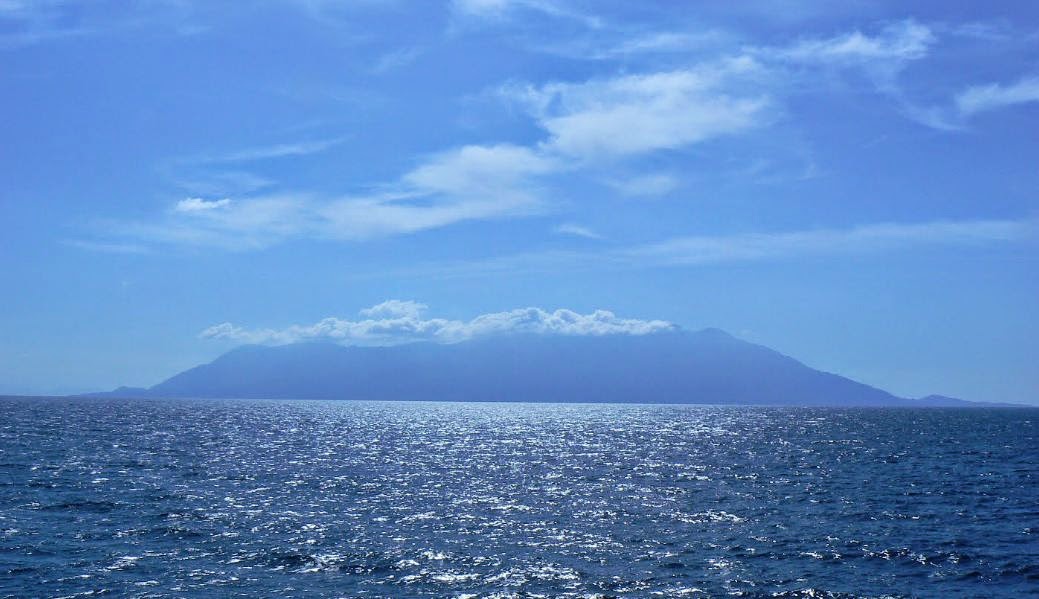
Samothraki. A powerful energy hub, for fans of the sacred Geography, the mysterious island is one of the most powerful energy sites in Greece and in Europe. Here was the seat of the famous Cabeiri Mysteries, about which we know little.

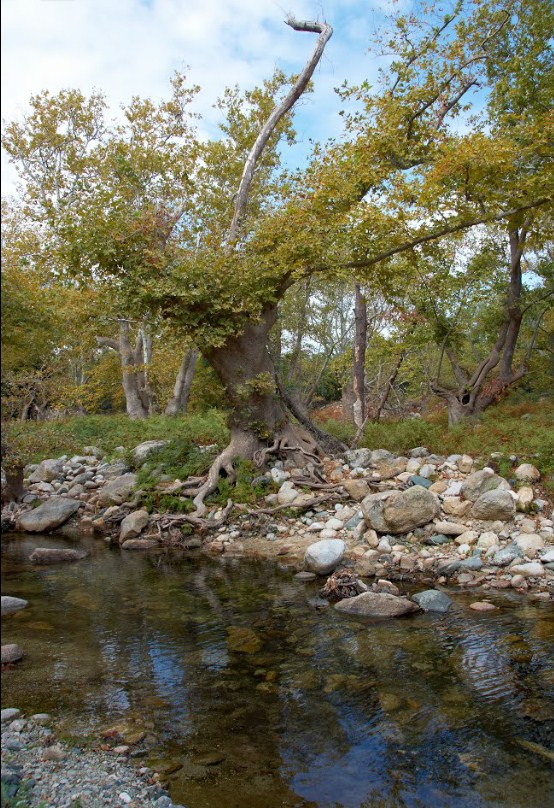
The island attracts those who like in alternative tourism and usually, It is said that avoid camping near the stream of killer, where there may be powerful energy field, which one finds from the bizarre way in which sprout the trunks and branches of trees. It is also said that the visitor would ascend to the top of Mt Saos will come into contact with strange phenomena, While it can still be seen and the terrible forms of Cabeiri onto rocks.

PERIDIABAINONTAS THE "FONIA"

PARAXENES ISTORIES …

Theogefyra- diabologefyra
Diavologefyro in Divri
“…is Devil's work, who fooled the Miller Yiannaros dibriwtis "

People of ancient times were trying to interpret giϊna and celestial natural phenomena. But could not identify and understand them and for this reason that the attributed to supernatural powers.
The stone bridges scattered, gorgeous, integral pieces of technical culture and the Greek landscape, blend harmoniously with nature and lend a special charm to the rivers, over which haughty stand.

“Diabologefyra” the stream of timios Prodromos,
in Serres. (Foto: AGP)

E is linked inextricably with folktales, jokes, Proverbs, battles, buzzwords, historical events, Testimonials, legends and traditions.
The disasters during or after their justification, developed world's imagination, that placed in supernatural powers, enemies of Masons especially but also of bridges, you to soothe and soften committed many times to human sacrifice and related persons.
The darkness for the Greek was considered unseemly for the character of, distant and connected with bizarre and strange beings who had supernatural characteristics and abilities, with night creatures, demons or gnomes and vampires.
Fairies that will…get parafylagan in the canyons and in shady places with running water and bridges and I didn't have to talk because I'll get been speechless.
The fairies, the Elves, the aerika was so connected with the life of Greek, so many villages have the prefix fairy.
The dragons are mythical monsters residing mainly at sources of rivers (drakoneria). There are many Dragon myths that prevent the use of water and other heroes where they try to kill them.

Theogefyro (gods bridge) in kalamas. Pogoniani. (Lum v. Boucouvalas)

Sometimes the gnomes of rivers soften, presented very sensitive and romantic, as in the following folk song:

Tragoydage blonde daughter at stone bridge
and from the sad purpose, the sad song,
and the bridge broke and the river estathei
and the River on the edge of GNOME epetachthei
and a pedestrian shouted over the dorsum.
Changed the icho and daughter tell another song,
to move the river, to mingle the bridge
and the poltergeist of the River at the place to go.

Typical are the legends for the bridge of Arta (There are 333 variants of the song) with the sacrifice of his wife Master Builder, LaDon (Bridge Kera) that was haunted because in its foundations were sacrificed two people to hold, lantern in Andritsaina, of hair in Trabzon of Pontos k s.

A legend tells us about how he built "the bridge of the devil" in the river Chrysorroa ethra, on the road from Galatas to Nafplio.

Beneath the Devil's bridge crosses the River Farm (the material of the ancients). The Pasha of the region, in order to go comfortably to hunt, commissioned in’ a craftsman to bridge the river of Damala, the Chrysorroa. The point, however, had great difficulty because the two rocks that you rested the bridge was too far between them. After two failed attempts and with the risk of decapitation by Pasha, the master builder agreed with the devil who appeared in front of, and selling of his soul, steriwse bridge. The Pasha of dwrise a jar gold florins, but the master builder was unable to be happy over six years because a day crossed the bridge, to go to the place where he hides the treasure, fierce wind to pick up and away. At the same time lightning burned the House and family of this, who sold his soul to the devil. They Say, that the cliffs around the bridge traces resemble goat is the Devil's footprints, and so created the myth.
A myth, that happened almost everywhere believable and referred to by law. Citizen on "Traditions" of, says that: "The underworld the psychais must go through a bridge, from the Trichino bridge. This is fteno like hair, and shaken very. Any soul can not pass, the river's falls that runs TextBox below and lost ".

Diavologefyro in Tsagkari Souli. (Foto: AGP)

The nature, sometimes functioning as excellent craftsman, slowly, without haste, slowly but surely, with excellent technique and Giacosa, everlasting durability and perfection, gave him many times in the brisk man relentlessly art lessons, making few but wonderful bridges without the slightest involvement and intervention.

Amazing these natural structures the wisdom of our folk tradition named "Theogefyra", Although few are scattered in’ all Greece.

Near Zitsa Ioannina, stoThyami (Kalama), the diavologefyro of Belentziko Moyrmoyritsas in Arta, in Pogoniani, in Kladeo near the village of Lust in the Peloponnese, in Souli below the village Tsagkari, the Diavologefyro in Damala Ethra, or Diabologefyra the stream of timios Prodromos near Serres and diavologefyro in Dibri of Ilia is some of the above, that our people cared to ntisei and to invest with myths, legends, traditions, superstitions and superstitions enabling them vitality and eternity.

Feature is one of hundreds of folk songs, variation of previous, referred to "gnomes":

Korasion from on bridge
and the bridge broke, and the river Stathis
and the river that stoicheion aside ebgike
~ my daughter, stop the achon and say another song.
~ Ah, How to cease the achon and another to say song
I have a male m’ arrwston Ki arrwstikon I am searching.

Such bridges made the nature, the world said "Theogefyra". What made the man in difficult areas, that seemed unlikely to make the world named "Diabologefyra", because you believed that was Devil's projects.
With the passage of centuries, however,, because of the difficulty of construction of both, the above concepts concurred and called Theogefyra or Diabologefyra.

Arta Moyrmoyritsas in diavologefyro Belentziko. (Foto: AGP)

The "Diavologefyro" in Divri is known in Greek, through the "Traditions" of the ethnographer Nicholas Citizen (Athens 1965) browser and Xr. Korylloy the 1891.

It is a natural passage of water of Dibriwtikoy River or stream of Klompokis, that has eroded the rock and has created a natural bridge, a Theogefyro (gods bridge).

But the local legend wants the bridge this is Devil's work, who fooled the Miller name dibriwtis "Υannaros", as narrated in the dibriwtes n. Citizen before the 1900. the narrative of the citizen says:

"The dekaimera turning diaboloi, that the Kallikantzaroys or Katsi Len-mpoycheroys, and the stamnais olais magarizoyn and balls and whatever else would be's home. ΄S the mills have all eleytero to do whatever they want, why the devil ediataxe how to help people the grinder, that alone is not ixeyran. For’ This must not go dwdekaimera ' ò laboring Mills people, If luck indeed and suffer from aerika. And the sacrifices there imerais Mili pollais forais grind their alone, without Miller.

A Miller from dibri, Yiannaros told him, had the mill near the Diavologefyro ' ò, before you fteiasti, and once the dwdekaimera went apobradioy for n’ grinding. Errixe talesma of Afoy, ΄s the grinder, esoyblise a piece of pork he had with him, and he's setting fire to psithi. Your poem and ekei shows a devil like man, where he's a wood demenon a mpakaka, and m’ This aleife pork, k’ saying that stirs the thick with tachamna to eat together. What Miller women that he was the devil, pollais omiliais came along and ' ò eginane mprazerides the following’ the inquired the devil that they say, and he said’

"Kaik’ my right ".

Afoy milled grinding, gave soygla's the devil to gyrizi. And he uploaded taleyri, and then got the soygla from the hands of the devil, to disposal of meat tachates if epsithi, and gave him a loud ' eyes., and immediately kaballise the live of, rammed between the two side's, and road! The devil put per fwnais, ran the syntrofoi and asking who the burned. And their told keinos:

"My atos Kaik '.

Then well happened to you!"the Romanian, k'efygan and swearing and mallwnan why can't eproseche.

With the many though, like saw his perseverance and per fwnais of, they understood that burned him and someone else took him gyreyontas. They arrived talogo, two side and saw the man as he was coiled looked for bag, and they got to the misogomi, and they said:

"To the horse, a the a rib, Li and the other ' to the misogomi. And this Cuckold back comes ".

Made so forais pollais the street from talogo's the grinder and’ from the mill's talogo, as that roosters k lalisan’ they left, without eyroyn. Took courage from’ This feat the Miller, and once again the devil front paroysiasti, wrote with his hand ' s zerbo the HT ΄na Cross and so clinched the anthrwpini form's.
The presented's wife that was tachates slave, and ordered him to barrel projects not mporeige to the barrel man. And did. Made in’ Groove between's the rocks to potizoyntai fields, efteiase and diabologiofyro along with other Devils. But when Miller's misery, the megallo Saturday, his wife having esygyrise and ekatharise Ula well, ithelise to cleanse and slave, and washed it, and so ebgike the cross.
The devil thus became a devil like first, eklase k’ He said ' where my pordi, there and his works. And promptly spoiled his works, spoiled and taylaki, and only where and where seem signs overview’ It's laboring rocks. Only the diabologiofyro and stayed until the now ".

WHAT,But what nature and man with excess enthusiasm built, was the neoellinas on the pretext …progress finishing.

Source: Magazine “dibri”, issue 135

This is because in the area of Diabologefyroy, in Dibriwtiko gully, Working Small hydroelectric plant (MYE), resulting in the destruction of the natural landscape, the complete writedown and the annihilation of Diabologefyroy. EC OF THE Archive Bridges The Peloponnese

Mysterious, energy sites in Greece

Mysterious energy sites in Greece, that inspire awe, raise questions and sometimes cause "shivers". Houses, land, temples, villages, Islands, with "bizarre actions». In each country, on every continent, throughout our planet, but just a few meters away, There are areas that are reference points-places, for the people who live there.

Whatever their "background", These sites have something special and often exude a mystery, a riddle. The forces of those sites relative to humans and on activities of. Their influence is positive or, sometimes negative, While many times is still "lucky" or therapeutic!


MYKONOS AND ARACHOVA

Won't you go away. Take for example two of the most tourist attraction ' poles ' of Greece. Mykonos "international jet-set ' and arahova, the «winter» Mykonos. What audiences had both places; Firstly, that their inhabitants were not in "Sun fate». Some struggled with the winds of the Aegean, that rarely allowed them to go fishing and the pagwnies and the snows of Mount Parnassus. Though, they were very close to two of the most powerful energy centers of Greece: Mykonos ' next ' on Delos and arahova in distance from Delphi! You tell me why this has not been the case in other places "adjacent" with Delphi or Delos; First of all it happened, but to a lesser extent.

All Cyclades (they are so named because they form a circle around the sacred island of Delos) constitute a point of reference for lovers of Greece around the world and the most adored destination Earth (and not only!). The same applies to the villages or sites located in the vicinity of Delphi and Arachova.

AMORGOS AND SANTORINI

Speaking of Greece would like to emphasize a "weird" fact or better a "statistical", I've found from friends and friends of friends. Many of the couples who spent vacations in Thira (Santorini), they lived a kind of crash-test in their relationship and were not few those who divorced! Instead, the island of AMORGOS, It is a place of tranquility, serenity and positive sexual energy!

ATHENS

But let's get even closer. Such places are everywhere, Some even are beside us, the encounter on our daily paths. Before long , Grigoris Arnaoutoglou, through the broadcast of the "beautiful world 2», in dedication for haunted houses, He made reference to the Hill of evening jogging, located in the center of Athens, adjacent to the Kallimarmaro. «Weird» happening there aspects, stressed residents and certainly have no unfair.

The point is located in a very central location in Athens. In front of the national swimming pool, over the road that leads from the street Kallirrois in Kallimarmaro, There are ruins of the Temple of Artemis Agrotera. The houses are demolished and there no one takes their trading. The "atmosphere" that exudes space is quite unpleasant for most people.
Another such region identify in tinos, in Falatados, and granite Gelidokamaras Gallery, from which allegedly went by the Gelidoydes (fairies).

CRETE

On the plateau of Omalos, in Crete there is dark and scary Cave of Tzani. It is called so because there was someone with this name, While it is speculated that in lost's labyrinthine galleries and many others. The sensation caused when someone enters in this, It's frightening. This is a highly charged with negative energy part that causes panic and intense stress to visitors.

In Crete, again, tsoutsouros, a small and unknown village in the wider area of ierapetra, It is a very negative part with heavy atmosphere and strong ' unionized» sea. Maybe, It is no coincidence that many of the children living and growing up there is, Unfortunately, late.

However, some areas of Crete are especially rich in both archaeological finds and legends. One of them is the ancient Inachus, current Tsoytsoyras, featured in TV shows metaphysical and paranormal nature as one of the most mysterious areas of our country, and maybe the planet.

It is not excluded that this is due to the name of, which is directly linked to the cave of ancient fertility goddess Eilithias, that was different and Inati. According to researchers of ancient languages the etymological analysis of the Word includes the "th" as in "not" gets accusative and mean power, the "to" which means temple and the "the" that determines the space.

Inati well means "space with Temple featuring power" and thus likely to explain some great energy power available to the erstwhile Tsoytsoyras and Inachus, name that also comes from the depth of time, from the time that the Cretans maintained trade with the Egyptians and means "father and son of RA».

All of the above of course is interpretations can be arbitrary, and the only sure thing is that the great strength of Tsoutsouros lurks in archaeological treasures amythitoy value found in the subsoil of the, for years, causing the looters. Typical is the case of, 75time today, Manolis Kefalaki, who brought to the surface some of the major findings that came out so far in Tsoutsouros, order course in their own, something that cost him seven years prison. Excavations of the paid, but his findings were lost along the way and definitely some cashed remaining intact… Source: stigmes.gr “

Many of the areas with intense energy usually host churches, buildings dedicated to deities, or just some boulders several tonnes that are fitted with a separate way. Many of the recent dating thousands of years, While even today their placement is a mystery, after allegedly people of those times had no such transport possibilities. Just bear in mind that we now have similar machines! "Horrific" example, the Easter Island:
The ancient peoples and of course, the ancient Greeks, They considered the Earth as a living organism. It was believed that our planet has "sources" that other offered for human survival and other eliminate all,What is not useful, just as it does and the human body. Consequently, the ' waste land ' is harmful to humans, but also for any other organism lives there.

SITES WITH POSITIVE ENERGY

Let's see, now, some sites with good and positive energy for humans. In Athens there are several, We must bear in mind that in too many places today is oikodomimenoi parishes. Very simply, too many churches, mainly, of past centuries, are built up in the remnants of ancient shrines. The reason was that they tried to take advantage of the power of such sites. Modern churches, do not follow this rule, Despite little. A walk up to the Church of Zoodochou Pigis Street Academy will convince you. See ancient columns that adorn the temple and the marble "table" in the back yard!
The Acropolis there is Asklepieion, located near a source of. The spring water from the ancient years considered miraculous and thermal. Even today, that in place, was built Church of Zoodochou Pigis. The area retains a hers "performed" air and water gives vaccines to over with power, those who drink.

In maroussi is a small white chapel with courtyard, dedicated to AI Yannis. Dating from the 15th century and is built on the foundations of the ancient temple of Artemis Amarysias. Once approaching someone there immediately begins to feel serenity, rejuvenation and relaxation. As if lost in an all problems. The Ai Yannis in maroussi, offers not only positive energy and healing.

The Parnitha region characterized by the positive energy that emits. The mountain is full of sources. The waters of Mount Parnitha is digestive, and thermal, because they contain large amounts of soda, calcium and iodine.
Many legends and stories about fairies and elves figuring out the source of "kera" near the top of the mountain. Located at an altitude of 1.164 measures. Anyone who has the courage to climb up there and drink from the water of, It is said that you will succeed in life of many. You will feel a higher power to the floods, After first being able to "coordinate" with the vibration of the ground and managed to ' see ' the ' magic ' power of the source, which literary, you could say that appears like an elusive fairy. Hikers should drink and bathed with water the source of kera.

Many of you will have heard of or would have been the point in Penteli where cars get ... more parakroysi. Climb uphill by themselves! The same phenomenon is observed and at Livithra Pieria…

Just outside Athens, After the marathon Lake there is the monastery of Vrana, over at Mount Aphorism. The monastery is built on the ruins of the ancient temple of Demeter and Chthonias at the opening of a cave, sealing the entrance of. From this cave flowed and continues to tumble, σήμερα, from the height of the Bell Tower, myrrh! Myrrh has been uplifting properties of spiritual forces, Les and gives us the impetus to unite with God!

In Evia, on the north side of Oktwnia village, in a natural environment of rare beauty, the monastery is built Waterfall, in the name of Saint Dimitriou. The waterfall near the monastery there are many miraculous properties.

In warm or Baths, in Samothrace, the hot Sulphur Springs, is famous since ancient times for its healing properties. The miraculous waters of the Fountain Ypereias, in Velestino, help too in gynecological diseases and postoperative situations.

Especially miracle is and some fountains in Portaria in Pelion's milies. The water quality is such, that surpasses the reputation of Serbia's water. Talking about "water of immortality", that gladdens the heart and regenerates man.

The small island across from Palata Naxos town, is the door, (or "Portara"), the only part that remains of the ancient temple of Apollo. The place exudes intense positive energy that fills the place.

On the island and in the region of Chalara, located in the North of the island, the mountainside is torn in countless slices. When the cross, We feel our showers to a vast power and while we walk quite not feel any fatigue.

Fot : El. Kalogera Syros

A nazitwntas power places in Syros, sooner or later will lead to X alara. T a X alara is very common name in the toponym of Syros map. Y there are at least four sites with this name. T a X alara located north, at a distance 600-700 meters from the fountain Syringe, is an extremely captivating and strange place, that seems to be hiding a sacramental power. This is a mountainside, torn in countless slices. We could assume that these fissures have been created by someone earthquake or by soil movement. A difference of lla sensation when we enter in the cracks and the chaotic modulation of natural environment in’ These, leave us with the impression that this place is not created by natural causes: E is made from the material that made the myths… A count and when we are near that area or look from the top of the mountain-about 30 with 40 metres tall- We cannot understand the existence of the site. A lthough most fissures have width over 2 meters, the traffic in them is done with difficulty. E ld Europe still has it is possible to go climbing and descending from one slot to another, We can hardly find out where we will be able to go through this natural labyrinth. T the height of rocks that create the slots starting from 3-4 meters and reaches a lot more. M painoyme p’ this peculiar place always from the same point: a hole in a light-colored rock, who we erpontas. M just look inside, Here's a strange shock. E is like to abandon the entire known world and to attempt an attempt of exploration in a new world… M painontas the maze of ruptures, with the entrance hole just a couple of metres behind us, the first thing you discover is that we have become dominated by a strange feeling: N iwthoyme the presence of a primeval force. However, We realize that there is no Flash no indication of life in’ these fissures! There are no insects or bugs or reptiles or small animals or birds in the sky (Although the region is a known place for hunting…). The vegetation is limited to a few yellow Lichen on the rocks. M although the humidity is excessive and wet rocks, There are no weeds or other plant traces. Due to the specific nature of the landscape the rays without touching the ground only a few minutes during the midday, Although between the slits is bright. Moving, We too many rocks whose tops are perfect natural pyramids, While the fissures are dispersed by holes and Burrows undefined depth and direction. A n do bother to look at the clock, We understand that time flies differently in there… Often, to move 500-700 measures within the fissures, Reinventing amazed that under our watch have spent almost two hours. K I this is not the case because of the difficulty in walking… Beyond the feelings of AWE that overwhelm us, We fill a vast power. Suddenly, We understand that there is no trace of tiredness in our body, While none of our problems we followed in the slits… N iwthoyme for awhile that we travel in’ another space and’ another time, but eventually we discover that we are not elsewhere… but “nowhere”… O attentive reader will surely be noted from the above description that X alara have all the elements that characterize a “neraϊdotopo”. The area could be characterized as “aornos stone” According to the definition given by the ancient sages in areas with special power, because of that birds avoid flying over their lands. The behavior of birds associated with the natural instinct of orientation, which lost in areas with intense physical magnetic activity. It is interesting to make some additional remarks, which can help any wants to investigate more, to draw their own conclusions. The region around X alara called Strobilia, something that we suspect that refers to strobilismoys and disturbances resulting from the existence and studied the currents. According to the Pythagorean â rithmosofia, the lexarithmos of the word Λ APA is XA 733, and the lexarithmoi of phrases in AIA YPIH and c A c IA p YPIH… EC OF THE www.paranormap.net

On our visits to these sites should be taken seriously, that should not get there with the bias that I feel something specific. Must not reach the places of power like the subject that will confirm or disprove their truth. Our feelings must be pure.

Create : BY ERRIKOS
LAND OUT POWER AND GEOMETRY

All the places of power marked by shrines and temples, connected to each other with imaginary lines and form isoskeli or equilateral triangles, polygons, or other geometric shapes. The most known triangles are formed between Delphi in Olympia and the Citadel, the Afea (in Aegina) sounion and the Parthenon.

The houses and towns developed around the places of power are designed so, in order to ' work ' like halls of temples, associated with other temples – power sites, other cities and all along, temples and cities – buildings, It was these small land force.
Each building, from the simplest houses and public buildings, built to work and they like small land force. Constituted, i.e., mediums of Oikodynamis, the ancient Greek ' Feng Shui ' and forwarders health and bliss to all the inhabitants. All homes have met the Entelechy the, and Entelechy in one dwelling is the bliss of people living within this. For bliss, Besides, and not for the malaise, made all.

The ancient Greeks, well, After having studied and experienced nature and all places of power, identified the "vibrations" of dwellings and their positions among the, and the fitting-out of premises, so that these things that exist within these to have the appropriate class, mood, functionality, symmetry and comeliness, in order to seamlessly connect with the remaining buildings and cities and all together with nature, to provide strong power sites.
In other words the buildings, even the simple houses was placed in specific locations, with the aim to create a perfect musical instrument»: initially the town and cities the Greece and its colonies! The houses, like a great Orchestra musical instruments, ' playing ' and ' been coordinated "with nature that directs this Orchestra, so the Entelechy to "returns" or "that resonates" a harmonious Oikodynami.

THE PLACES OUT POWER AND THEIR SECRETS

What is, But what makes the places mentioned special and so very positive; Because these sites are full of power and why others give us feelings of anxiety, depression or us ill;
As I said originally, our planet is a living organism, I see now some specifics of this organization. Most of the places of power are characterized by intense terrain and by the tectonic abnormalities of the Earth's crust, like Meteora. It has also been observed that important role plays the magnetic field, but the earthly and cosmic radiation!

The Earth is surrounded by a huge energy grid lines, forming pentaedra, looks like IE with a huge soccer ball. The nodes located on the associations identified the major shrines and monuments of humanity, as is the Parthenon, the great pyramid in Egypt, the Stooynchents in m. Britain.

You still need to mention the telloyrika currents, which is of course electric currents, flowing over horizontal surfaces found on Earth. When a telluric currents meet an underground water vein, then the magnetized water and medicinal properties.
Many of the actions that are released, work negatively for humans, particularly in the intersecting points. Though, in ancient times many folks, but the Greeks, they had found a way to neutralize the negative energy of a place, just by putting in very precise triangular formations, "dolmen" to "cleanse" the area. The same result has been the construction at the heart of negative pyramid or canopy sites, that refract the negative radiation.

«Dolmen» means «stone table». Something we encounter in AMORGOS. The locals call it trapezopetri or God's table. Worth at this point to note that the Amorgos, with Delos and Keros, are the strongest land force in Cyclades, with an abundance of positive energy. The ancient Greeks even, they had gone even farther, by neutralizing the negative sites. The energy and the power of space, had found the way and the exploited therapeutically. All asclipia are built with special ways in very specific places of power. The layout and cutting of stones were alternately positive and negative charge, Thanks to their molecular composition.

With specific hymns and invocations to reinforce the region's vibrations pulsing and the patient cured faster. This happen, because, as nowadays has proven, the man has his own natural electricity. When this is reduced due to some disease, slowed and treatment. But if the patient "acquire" the electricity that it lacks, then the immune system is working normally and the patient quickly finds the health of. Something was happening and at Epidaurus, the most well-known unknown by asclipia! Yes! Epidaurus was a huge Hospital of antiquity, where the Theater played the role of "spiking" and resuscitation via the ' vibrating ' speech, from the "works" of large addition!

THE "MAGIC", THERAPEUTIC EPIDAYROS

Here, you quote an interview to the writer of the Greek national theatre actor Sotiris Vagia, that gives answers to the "mysteries" of the theater of Epidavros.
"I had just graduated from the dramatic school of the National Theatre, When I phoned my teacher of dance inspired by interpretive, Maria Chors, and suggested me to join the dance project "Oedipus at colonus", that would drive up at Epidaurus Alexis Minotis.
A magical landscape of our theatre, that no one could deny his size and his wisdom in the area of ancient drama. It was a challenge for me (a new actor then) the cooperation at the ancient theatre of Epidaurus and this historic performance.
Entering the space of the Orchestra (So said the scene) and watching the theatre below, do you think that is a huge Eagle, that or I'll get him to fly or I devoured.

The Epidavros, the theatre of Epidaurus and the whole area has a magic power, an action almost extraterrestrial, a calm in the landscape and at the same time a frightening intensity. Playing nine consecutive summers there with the "Auditorium" of Spyros Evangelatos small but leading roles, as the "Jonas" by Euripides, I felt and realized (After these years) that the actor onstage is like flies over the theatre and over the heads of spectators. Don't feel that you're down to Earth, but in the air.
Before each performance sounds the Eurasian scops owl, This bird that I just dropped the Sun, gives the signal, or rather is the Bell of the show, for many centuries. A chirping at regular intervals, that puts it in the process of stage fright and self-reflection.
The theatre of Epidaurus is very "cooperative" with the actors, but also very dangerous if the claims and endorsements yourself superior to this catalytic, sacred space.

A world-famous actor and Star (from her movies), He played there said: "There are no sacred places, There are holy people ". This was the first and last time I played in the ancient theatre.
I'm sure that the theatre should be made looking from above (i.e. from top to bottom), Maybe not built by human beings. The unique acoustics still remains a mystery for many archaeologists. Alexis Minotis became furious when a press the actress thymeli. The considered sacrilege.
Going to the theatre space don't see from anywhere, Despite only reaching over (at the entrance). Like to be hidden inside the mountain, to protect his sacred presence over the centuries.

In the expression of "Iona", coming out in the Orchestra felt the 8.000 viewers are with me down and not at their posts. A feeling weird, where time and place are lost, the theatre is except time and off-season, like to be empty of spectators. That there is audience understand just finished the show (from the applause). Leaving the scene, at the end of the show, you want a few moments to epaneltheis in your normal state (What happens to spectators, many times).
When the theater is empty from the world, looks like a huge fan, like a great, warm embrace, like a spaceship that travels through spacetime. When filling out the world, again it's not like there's anyone.
It's so intense its structure and landscape, that even 10.000 people perish in this magical ship time. There are a few times that I felt to fly at least half a metre over the scene or to sit together with the world (next to it) or to see myself from above.
I'm sure all these have felt and other fellow actors, as though afraid to confess, whether or not the felt, definitely understood that something is not normal and reasonable in this space, where is lost and found everything.
In this space that travels, thou shalt thou shalt not nearly, in the universe, but at the same time press and very sturdy in the sacred soil of the Orchestra, serving the vision of an ancient poet who wrote the work.
All ancient tragedies were written about this theater and played yet, have in the gods and humans, such as Epidavros: Divine and very human, magical but also very cooperative, Unreal but also strongly present through time.
Perhaps our only contact with another world, that exists at the edge of our minds, a world of imaginary, a world unique, full of emotions, full of values, full of mystery.
A theater unique to our planet, that sends messages in the hallway of the universe, that opens up avenues of thought for the wise men of all time.
A theater that maybe made from above and that will surely exists in space-time forever. A colleague, with which we played together, had told me: "we Sotiris, We don't have to fear nothing from now on, because we saw God in the face».
The ancient theater is one link that unites the today and tomorrow with today. A unique contact with another world, with another sky, with other "beings", you might as well be created, leaving their marks, everywhere!»

OTHER SOURCES-WITHOUT LIMITATION

  1. Thodoris Chamakos Archive Bridges The Peloponnese
  2. George Matsagos – myastro- www.kefalonias.gr/
  3. amaroussion.blogspot.gr
  4. www.ragkavas.gr
  5. www.paranormap.net/article/898
  6. PANORAMION ARCHIVE
  7. ARCHAIOGNWMWNA ARCHIVE


Source: hellenes-romaion.blogspot.gr

Ο Ελληνικός “χρυσός της Ατλαντίδας’ ανακαλύφθηκε σε ναυάγιο 2.500 years!!

Orichalcum

(Photo : Wikimedia)

A rare metal, believed to originate from Atlantis and was used by the ancient Greeks was recently discovered off the coast of Sicily in Italy.
This die-cast metal called brass apparently found in an ancient shipwreck 2.600 years located about 1.000 feet down off the coast of southern Sicily Gelas.
According to Sebastiano Tusa, the Superintendent of Maritime Bureau, the wreck is dated from the first half of 6 e.g.. where divers total found 39 lumps of metal inside the wreck.
Scientists believe that the ship was en route to Gela from Greece or Asia minor, also known as Anatolia, where they encountered a major storm and sank before they managed to tie.
The Tusa says that there aren't any existing metals similar to brass. Brass vaguely refers to ancient texts and is written in decorative heirlooms.
Brass also believed to be invented by the Greek mythological personage called Phoenician Cadmus, as also mentioned in the 4th century b.c.. from the renowned philosopher Plato in the Critias dialogue.
In this dialogue, Atlantis is described as a beaming with red light brass. The Temple of Neptune and it Klitou in Atlantis apparently was gilded with that metal, where a pillar of brazen stood in the center of the temple.
Brass can be described as a gold alloy of bronze from the zinc core sysfeixi, charcoal and copper. Analysis of these rods gave a score 75 percent of copper, 15-20 percent of nickel together with lead and iron.
The Tusa adds, also, that these findings confirm that about a century after the 689 e.g., The Laugh has evolved into a wealthy city that filled with craftsmen workshops dealing with the production of precious exhibits that shed light on the economic history of Sicily

' Atlantis Gold’ Discovered in 2,500 Year Old Shipwreck

Orichalcum

(Photo : Wikimedia) 'Atlantis gold’ was found just off the coast of Gela, Sicily.

This cast metal called orichalcum was apparently found in an ancient shipwreck off 2,600 years that is located some 1,000 feet below the coast of Gela in southern Sicily.

According to Sebastiano Tusa, the superintendent of the Sea Office, the wreck was dated from the first half of 6 B.C.E. where divers found a total of 39 lumps of metal inside the shipwreck.

Scientists believe that the ship was en route to Gela from Greece or Asia Minor also known as Anatolia, where it encountered a big storm and sunk before it was made to dock.

Tusa says that there aren't any existing metals similar to orichalcum. Orichalcum was vaguely mentioned in ancient texts and inscribed in ornamental relics.

Orichalcum was also believed to be invented by the Greek Phoenician mythological personality named Cadmus as it was also mentioned in 4th century B.C.E. by the famous philosopher Plato in his Critias dialogue.

In that dialogue, Atlantis was described as beaming with the red light of orichalcum. The Temple of Poseidon and Cleito in Atlantis were apparently gilded with the said metal where a pillar of orichalcum stands in the center of the temple.

Orichalcum can be described as a golden bronze alloy from the cementation of zinc core, charcoal and copper. Analysis of these ingots yielded a result of 75 percent copper, 15-20 percent nickel along with lead and iron.

Tusa also adds that these findings confirm that about a century after 689 B.C.E., Gela developed into a wealthy city that was filled with artisan workshops that are involved with producing valuable artifacts that sheds light to the economic history of Sicily

More ancient structures found at Amphipolis tomb!

More ancient structures found at Amphipolis tomb!While people across the globe are standing on their toes waiting for the DNA analysis results on the skeleton found in Amphipolis tomb, a scientific team from Aristotle University of Thessaloniki is currently mapping the geophysical situation of the area around the tomb.

The team, led by Professor Grigoris Tsokas, has built a digital model of Casta Hill during ancient times, before the construction of the dome.

The model comparison with the hills present situation and the situation before the recent excavations revealed that the majority of Casta hill consists of natural formations. According to the Aristotle University the model will be completed after the integration of data collected for geotechnical purposes.

Meanwhile, the images of Casta Hills interior, which were revealed through the electrical geophysical mapping, showed static structures that may in fact be ancient constructions. Therefore, further archaeological examination is required in the areas where they appear.

The structures in question are located west of the dome. According to the scans the resistivity distribution detected a high range area which requires further excavation and investigation.

hellasforce.com

12 Great Facts About Alexander the Great

  1. The day he was born was a big day

Alexander_the_Great_mosaic

The day Alexander was born, his father (King Philip) was off preparing a siege on the Greek city of Potidaea. On the same day Alexander was born, his father got news that one of his generals (named Parmenion) had defeated the combined armies of Illyria and Paeonia, and that his horses had won at the Olympic Games. Strangely, the Temple of Artemis (one of the seven wonders of the ancient world) apparently burned down on that day. One historian mused that this probably occurred because Artemis herself was off attending Alexander's birth.

  1. He had a serious crush on his horse

When Alexander was 10, a trader came to see King Philip. He offered to sell the horse to the king, but when people tried to mount the horse, it fought, refusing to be mounted. Philip, a busy King, ordered the horse away. However, Alexander asked to tame the horse, correctly thinking that the horse was afraid of its own shadow. Eventually, he succeeded, Philip bought the horse for him, and Alexander named it Bucephalas, meaning "ox-head." When the horse died (of old age at 30 years old), Alexander named a city after him – Bucephala.

  1. His childhood tutor was Leonidas

Sorry, not that Leonidas. Image from the 300

This was Leonidas of Epirus, who may have influenced Alexander's later conquests. Once, when Alexander threw large amounts of incense into the fire as an offering to the gods, Leonidas told him to be more sparing unless he had conquered the country where the incense came from. Later, after conquering much of Asia, Alexander sent his teacher 600 talents ' worth of incense.

  1. He learned from Aristotle

Yes, that Aristotle. When Alexander turned 13, his father looked for a tutor for young Alexander. In return for his services, Philip rebuilt Aristotle's hometown Stageira (which Philip had destroyed) and repopulate it by buying back all the people who used to live there, but had been sold as slaves.

  1. The first thing he did in power was repel an invasion and found a city... named after himself

When Alexander was 16, his father left for war against Byzantion and left his son in charge. The Thracian Mahdi revolted against Macedonia, and Alexander reacted quickly, driving the Mahdi from their territory and filling the area with Greeks in a city which he called Alexandropolis.

  1. His relationship with his father was... complicated

Image by Ny Carlsberg Glyptotek

King Philip was not a very good father. He was often away at war, leaving young Alexander behind in Macedonia. Things seemed to look up when Alexander helped his father defeat the combined armies of Athens and Thebes. However, after his father united Greece (except for Sparta), he remarried a woman named Cleopatra Eurydice, ousting Alexander's mother Olympia, and by extension, him. Should Philip have had a son with Cleopatra, that child would have been a more legitimate heir than Alexander. He and his mother were forced to flee Macedonia until a family friend reunited father and son.

  1. Alexander took power at age 20, and it was not easy

King Philip was assassinated in 336 B.C. at his daughters wedding. Shortly after, Alexander was named the king. This led to many people dying. These included threats to his power (three Macedonian princes who could have contested his claim), his mother-in-law Cleopatra and half-sister Europa (his mother Olympia had them burned to death) and the leader of Macedonia's advance guard into Asia, who was considering defecting to Athens. Beyond those specific deaths, several city-states, on hearing of Philip's death, took the opportunity to rebel, forcing Alexander to retake each.

  1. Alexander had hackers

Your mother was a hamster.

During the revolts, Alexander stopped in Thermopylae, where he was met by many noblemen and dignitaries. However, one man was missing – Diogenes of Sinope, a famous philosopher who was unfazed by the arrival of Alexander. Alexander went to meet him, and asked him what he wanted, to which Diogenes replied something to the effect of "for you to step out of my sunlight."

  1. He just couldn't seem to catch a break

From the beginning, Alexander seemed to intend to invade Persia. After retaking many of the city-states in Greece, he was given the authority to do so on behalf of the members of his league of city-states. Before he could do so, however, he needed to march north and conquer the Thracian Triballians to secure Macedonia's northern border. After he had accomplished this, he found out that the Illyrians and Taulantians were in open revolt, forcing him to march to reconquer the groups. Then Athens and Thebes rebelled again, making him march south. Only after razing Thebes did he finally turn to Asia.

  1. He was generous to the families of the fallen

Alexander rewarded his own fallen soldiers ' families with immunity from taxation and obligation for public service. Alexander also erected statues and honored the fallen soldiers of his enemies.

  1. After invading Persia, he picked up some Persian habits

While invading Persia, Alexander began a policy of adding the native Persians to his existing army. However, this was not the only pro-Persian change he made. He also took the Persian title of "King of kings,"began dressing in the Persian fashion and began having his subordinates either kiss his hand or prostrate themselves on the ground before him. To the Greeks, these were troubling signs, especially making his subordinates prostrate themselves before him – to the Greeks, this was sacrilegious, as a person was only supposed to prostrate themselves before a god.

  1. He may have been poisoned

Alexander's death is shrouded in argument. Accounts differ, but they either say that Alexander fell ill with a fever or had a sharp pain after drinking undiluted wine, before falling to weakness and dying. Several historians, given that Macedonians often died due to poison, possibly fingering a recently removed Macedonian viceroy named Antipater.

phactual.com

25 Ancient Greek Cities that No Longer Exist or Are No Longer Greek

Εικοσιπέντε Ελληνικές πόλεις που δεν υπάρχουν πια ή δεν ανήκουν στην Ελλάδα τη σημερινή εποχή.

By taking a look at the world map today you would never believe that Greece, which is nothing but a small country, currently known as a beautiful tourist destination in southern Europe, had once dominated and colonized most parts of the then-known world. For those who love history though, Greece is without a doubt one of the most significant and influential nations of all time with amazing contributions to human culture including philosophy, various sciences, architecture, the Olympic Games, and democracy just to name the most prominent few. CONTINUE THE READING

The Apotheosis of Homer

Στην “apotheosis of Homer” (1827), located in the Louvre, Homer is crowned as immortal. His legs are distinguished, the Iliad (with red) and the Odyssey. Around him, tributes tribute some of the largest Western artists and writers, including Pindar (with the Lyra) and Sophocles (with Papyrus)

In The Apotheosis of Homer (1827), on display in the Louvre, in Paris, the bard is crowned as immortal. At his feet are figures representing The Iliad (red) and The Odyssey (green)