Τι συμβολίζει η αρπαγή της Περσεφόνης από τον Πλούτωνα;

amfipoli-arpagi
The amazing Macedonian tomb of Amphipolis found the mythological expression that shows the abduction of Persephone by Pluto. Same with the expression of Royal Tombs at Aigai! Only at Aigai is painting in Amphipolis mosaic. It should, however, like to emphasise another important difference: In relation to all the respective performances of this myth, not only at Aigai, but in vessels or elsewhere, only in Amphipolis Riches is the laureate! It may be no coincidence that! If therefore implies a glorious death, I suggest the endoxotero of all deaths.

With each commitment to humility of an unskilled, This article was written shortly after the revelation of Persephone in the mosaic of Amphipolis. Participate in the discussion of unskilled, no special, and, as such, does not address at all the archaeological work, Alas! But he wants to make some comments on ... observations and published by specialists and non-, always in everything,What is the myth of Persephone and the reason parastainetai in Amphipolis, We don't want to say anything about the actual tomb, only t "necessary connecting factors matter:

Although they have excavated more than a hundred Macedonian tombs, only at Aigai and Amphipolis shows the representation of Persephone! So to be "hallmark" of a certain dynasty. As the laureate Pluto, This means something, It cannot be a coincidence. Clearly define a dividing line between the tombs of Kings and, from the other, the graves of generals, of officials or of the rich. So if the expression implies that the "abduction of Persephone" is used only in the Tomb by members of the Royal family of the Macedonians, will be confirmed or disproved in the end of excavation.

For the moment, even thinks or hopes, No one dares to say that it is the tomb of Alexander, because historical sources nowhere report transfer of remains of Macedonia.

Our theme is: What job does the "abduction of Persephone by Pluto" in a funerary monument and even in "replay; That the show is not on another Macedonian Tomb, but it is in Amphipolis, does that mean the lodger belongs to the Royal family the Temenids; If Yes, why in Amphipolis and not at Aigai;

The answer is not at all easy, at least for now. Impression indeed cause countless "kotsanes" that incident involving countless locals and foreign specialists, archaeologists or teachers of reputed universities, articles or analysis of which host famous newspapers and magazines. Impression causes the sebastiki and view these "scientific opinions" from the domestic media who (chazocharoymena, you would think) show the one and the other theory cultivating supposed magic and awe that causes the monument, but cultivating the overall confusion. Not only is that they all have ruled before finishing the work of excavation (act constituting an unscientific, and unethical behavior, Anyway) is that in practice they proved their incompetence in the reading of ancient Greek Thought. Do linear view of history, Unlike the philosophy of Hellenism that is circular. The aposymbolismos of ancient legends and paintings or mosaics expressions illustrating the ancient myths, is, as it seems, unknown to the scientific community, unknown even to lovers of ancient Greece! In this case, in the face of Persephone who grabs the Pluto, looking at the ... Roxane. Other, After, says that, not, Roxane descended from today's Afghanistan, Hence cannot be kokkinomala, Therefore it is the Olympics that descended from the continent and was the mother of Alexander the great! Other sees in the face of mercury the same Alexander at a young age. WHAT,what being "Yes! Scientist is, What,what they're saying! Who will challenge;

The General Secretary of the Ministry of culture, Lina Mendoni explains that this show has symbolic importance and may indicate some relationship of the deceased in the grave with the Macedonian Royal House. "We find the scene of the abduction of Persephone in the mural of the so-called tomb of Persephone, in the Royal Cemetery of Aigai. We have a second display with Pluto and Persephone, in a scene the sacred marriage, the marble throne, the tomb of Eurydice, Philip's mother, στις Αιγές. The political symbolism is very powerful in all seasons. The clean burial theme with Persephone is linked to the cults of the underworld and the Dionysiac rites in which the priest was the head of the House of Macedon "stressed the Secretary General.

Very properly! Only that "the abduction of Persephone" does not relate only to the Dionysiac rites, as Mrs Mendoni notes, connected with the Orfikes. It was the main topic in the eleusinian Mysteries, where worshipped Ceres and Persephone along. Also no coincidence, After the Kings of Macedon, Therefore and Alexander, He was privy to the Cabeiri Mysteries, which was not at all different from the eleusinian, proof that "the abduction of Persephone" is common. The Cabeiri Mysteries the Macedonian Kings member served as high priests. Very important information! The question now is: Could join "the abduction of Persephone by Pluto" in a (Macedonian) Tomb, the lodger which wouldn't be high priest of the eleusinian mysteries Kaviria or; The answer is categorical: Not. Thus the tomb of Amphipolis definitely belongs to the tenant in the Royal family of the Temenids and, definitely, sigoyrotata, It is not some general, is not Ifaistiwna, Neither Nearchou, Neither Roxanne, Neither of Cassander, nor other. Did the Olympiad; Could be in the Olympics, If there wasn't in the middle of the Leo. Does, then, his son Alexander; Could the small tomb was the son of Alexander, If he had he could become high priest of Kaviria Mysteries! It is clear, however, that he did not, After amoystako child murdered. So is neither indeed.

That being the case... Let's take things from the beginning and let's remember the ancient legend that recounts the abduction of Persephone by Pluto. From the narration that something can come out ...

The myth of Persephone

Persephone was the daughter of the goddess Demeter and Zeus. Zeus decided to make his own Dimitra that, Although Belle, disregards for men, If it is possible! What to do and he; Transformed into a bull! Sue says, not content with half measures the Lady, exceptional qualifications are needed here, not interested in men the woman, (e), cannot, a bull will sit ntabrantismeno, will tell me a song. The calculation of proved infallible. What would God incidentally if they could not see into the depths of the mind! Abyss of the soul of a woman, even for a God, ναι, but for a mpermpanti God like Zeus, such was certainly something knick knack... The bull ghastly Dimitra, He was given more pleasure, body and soul, as they say, a sunny day, There's something solitary meadows. Put now scene! Nowadays the bestiality is a criminal offence. Em, the opposite, What was supposed to be; Anyway,, as always happens with the divine love, the Nice Dimitra became pregnant. Nine months later he was born a girl, named Persephone.

As grew Persephone, grew and the beauty of. The Riches and sees suffers psychic tralala. God of Hell like fell in love and decided to steal. I could ask her hand like a gentleman, But what mother would give her blessing to a marriage with the ruler of the underworld; The legend in the bosom of the will to evaporate from in front of the exapodw. According to the Homeric hymn to Demeter, the young Persephone was gathering flowers in Nysio field. The syntrofeyan Athena, Artemis and the Oceanid nymph. Carefree Persephone, moved away from the company of, seeking the most beautiful flower. When he bent down to catch a Daffodil, the land was divided in the middle and from the bowels appeared a chariot. Driver was the Pluto that with one hand clutching the reins of horses and the other grabbed the gorgeous girl. The cries are not heard by anyone and Persephone found Queen in the black Kingdom of the underworld.

Vain Demeter was searching for her daughter by day and by night. Than sorry, the land and the crops began to languish. After long, the Sun you see everything from the sky, pitied the inconsolable goddess and told her where her daughter was. Susan demanded to return Persephone, otherwise they would leave the Earth to xananthisei. Zeus, motivated by the prayers of people who were hungry, ordered Pluto to release Persephone.

God of Hell had no other choice than to obey, but, Sly and deceitful as it was (in front of Satan does not work trick) first gave Persephone to eat a pomegranate. And, do you think IE ... well, so long was not eating anything the girl, foodless had the bum; Details! The Pluto knew that, If the girl consumed food in the Underworld, I was then tied with him and could not leave. (E); Something like magic potion IE ... Persephone ate six seeds and thus sealed the fate of. When he learned the Dimitra, was furious (the law is the law, Sue says, even for the gods) and to tide over Jupiter, He suggested a compromise: For every seed that Persephone ate, I lingered a month in hell! Scalpel-like solution: Half outta, half from then! Well, the girl you spent half the time next to her mother and the other half with Pluto. Susan accepted the judgment, but it never overcame the loss of her daughter.

Since then six months that Persephone was in Hades, Demeter mourning and with mourning and the nature. The trees lose their foliage, asthenoysan crops and severe winter fall on Earth. Though, When Persephone returned to her mother, the joy of Demeter prasinize the Earth and plants blossom.

vergina-arpagi

At this point I would borrow them one published a wonderful description of the mural of goats (We do not know the author):

The mural at Aigai

The mural with the abduction of Persephone has been found in a tomb at Aigai kibwtioschimo with dimensions of 3 x 4, 5 m. who is dating around 350 e.g.. and who belonged to a young woman about 25 years old who have died in childbirth and was buried here along with the infant of, which is believed to be one of the seven wives of Philip II, probably nicesipolis of Feres, the mother of Thessalonica. On the North wall of the Tomb lies the stunning fresco. In the middle of the image dominates the chariot with four white horses. Hades, more great than "all other forms of, grabbed the prey and jumps in the chariot. At the right hand of the King of the dead tightens the scepter of power and the reins of horses, shaken with the front legs in the air, starting already in their frantic Gallop. Between his legs, imprisoned in the dark bosom of the, the Pluto keeps tight Persephone. The daughter is naked. Her dress slipped and fell. Only stayed the lanyard that clutched on her shoulder and her purple cloak hides the IVI, it becomes the background for soft hips and lost his smigontas with purple drape of Pluto. In a last-ditch attempt to escape, her daughter shaken backward, her body stretched, tender like flower stalk, get away from the demands and the arm that clench like pincer. Perfectly weak, stretching out the armrests, desperately begging for help that will not come. The wind gets her hair, the eyes of the reign, the person becomes a mask of despair. The daughter's refusal to accept her fate, the desire to hook in the world who is forced to leave and "aversion to Hades it becomes obvious through the movement of the body of which is totally contrary to his own and through the removal of their heads. With an extremely dynamic and extremely bold design, Open composition, based on intensity, but to balance that produce two intersecting diagonals, a finding that rather he introduces in the traditional iconography of Rapture, the artist manages to "get all the dramatic tension of the confrontation with the Hunter's prey, the male with the female, of life with death.

Behind the chariot, in the eastern corner of the image, misogonatismeni in soil, a friend of Persephone is watching the drama, petrwmeni of fear. Her dress slipped and her breasts are naked, but the imatio of the golden brown in baggy menexelia edging the wraps still, forming a warm wreath, inside, which stresses the seductive whiteness of her skin. Bent in two lifts a hand to preserve, looks like it wants to leave and cannot, frozen like a nightmare, involuntary witness of abhorrent. Her eyes designed completely sparingly, two grammoyles and a boylitsa all and yet manage to express perfectly the ineffable terror ...

Like morphological, but conceptual counterpoint to the passivity of the daughter's syntrofissas, that with terror accepts the fatal, on the other side of the show appears Hermes. With the Caduceus, the magic wand that giteyei the souls of the dead, the only traditional and recognizable symbol of the show, at hand, the dark is here nymfopompos psychopompos wedding & running, almost flying on tiptoe of, leads the chariot in the West, in the land of the dead.

The interpretation of myths

If the modern reader or researcher could exculpate "n, even temporarily, from the Orthodox or Catholic christianokentriki reading East and West or, even better, and by the counterpoint of the Olympians gods with God of the old and New Testament, could identify a focal conceptual point, useful key to decoding of the myth:

In "West reading", but in "Eastern reading", Zeus is an incorrigible flirtatious and whatever hottie "of gyalize", the stalked up to make his own. But the "Greek reading", a number of both, says that any love of Zeus (every one love from innumerable erwtes of) It symbolizes the meeting of two natural forces, one fertilizes the other in order to obtain always a new physical strength. No love of Zeus is not "arid". You could say that no love of Zeus is not just for pleasure or, How would say some today, "on the bed". All the encounters resulted in the birth of a hero or a heroine, a new God or a new goddess, panapei, the birth of a new physics force. So: The physical force that fertilizes, symbolized with the male (Jupiter, who is the original, the primary power) and physical strength that is impregnated (every time one further physical strength) symbolized with the female. The known word "hybrid" means the intersection of the two elements to produce a new, which will be stronger component of parenting. But if this intersection is made by human rather than divine hands, the "hybrid", that means: Hubris Zeus. I.e., hubris in God. I.e., violation of nature. So Zeus is the nature.

All are symbols. And these symbols were taught in the eleusinian or Cabeiri Mysteries, where was high-priest says, the King of Macedonia! Hence the persistent representation for the abduction of Persephone by Pluto "in Royal Tombs. Zeus, Dimitra, Persephone, the Pluto. Is Holy, It's archetypal symbols by themselves mean something very important and all together, at their meeting, something very important. But ... What;

With the revelation of the funerary monument of Amphipolis discussions and publications worldwide. Eminent archaeologists and university professors are trying to interpret what that highlights a little-bit the hoe of k. Peristeri. We have listed here some sample excerpts of publications:

Ian Goyordingkton, Professor of classics, University of Missouri, believes that the excavators are in a tomb belonging to a woman, as the mosaic shows a woman driven to the underworld. If proven, Adds the Goyordingkton, then the Tomb might host the Roxane, wife of m. Alexandrou, or his mother Olympias. Both women were from cassander, one of the generals of Alexander the great, When he ascended the throne of ancient Macedonia», complements.

"Based on classical texts kassandros burried the Roxanne and her son in Amphipolis the 310 eg, so it's likely to be that the mound dweller ", noted Professor, According to the magazine. "But other evidence suggests the Olympiad. Alexander wanted to deified his mother, like the woman in the chariot of Hades. Extra, the Olympics continued to retain political power and after the death of Commander. Although murdered by cassander and his allies, "I think that could be honored with a tumulus ', highlighted by Philip Freeman, Professor of classical studies at Luther College in Iowa.

The author Andrew Tsagk speaks at Discovery and analyzes his opinion because the inlay this might be the most complete portrait of Alexander the great at a young age. Through this view Chang believes that strengthened the theory that the tomb is buried the Olympiad, mother of Macedonian King.

"The mosaic depicts Hermes, the Pluto and Persephone. In fact the representation of Rapture Persephone has human matches "argues Andrew Tsagk, author of the book "in search of the tomb of Alexander the great".

"I believe that Persephone represents the face of the woman who is buried in the Tomb, which led to the underworld "notes the author.

This means that there is some major Queen of Macedonia, which died somewhere between the 325-300 e.g.. probably in Amphipolis, so we can assume that this is the Olympics or Roxanne.

Andrew Tsagk considers it more likely that the grave be located the Olympiad since archaeologists discovered the female statues and Sphinxes of Karyatidon inside the Tomb.

Roxane, the wife of Alexander the great, came from the area of today's Afghanistan, something that makes it extremely rare chance is in reality redhead. In contrast the Olympiad originated from the Molossoys of Epirus, where the red hair was something ordinary, "says author in Discovery. However, in its analysis of the Chang go one step further and claims that the other two persons of mosaic, Mercury and Pluto, have significant similarities with both "protagonists" of life of Olympiad. Pluto has a form that looks pretty in Philip II ", her husband and father of Alexander Olympias. It's uncrowned king and has filmed like the right side of his head. The right eye of Philip were mangled because of a wound from an arrow during the battle.

Another approach

The abduction of Persephone by Pluto is a grave issue that comes straight from the Orphic and Eleusinian philosophy or the Cabeiri Mysteries. It may not be a coincidence that Philip's mother was called Evridiki, just like the beloved wife of Orpheus descended into Hades. The story of Orpheus Evridikis House closely resembles the story of Persephone, Demeter. "Grave matter" means that the expression does not represent persons who descended into Hades, as the Honourable Prof claim "all teachers around the world, but symbolizes the deeper substance of death, parastainei mythological soul and highs of the soul from the spiritual to the material world and vice versa. In the expression of Amphipolis, where for the first time we meet Pluto dafnostefanwmeno, indicates a glorious death, the endoxoteros of all deaths. And such was the death of Alexander. Consequently, the tomb of Alexander, either inside of his great Commander, or not. This at least through the use of symbols tells the mosaic of Persephone!

The architecture of the monument "tells" and something else important: The Sphinxes, the Caryatids, After the mosaic with the abduction of Persephone, represent a climactic sequence myitikwn levels, each higher than the previous, with its own booth each. The tomb of Amphipolis the halls are more than any other Macedonian tomb and this means that the lodger is the more versed than "all, someone who possesses the maximum degree of initiation, in other words, high priest of the mysteries, superior property and from the Royal, so here we have a Macedonian King, No General of Alexander, Neither Roman or Romans, If, Anyway,, regarded as correct the case of some archaeologists that the tomb is a downstream. It is not and that is why "downstream!

At the end of the excavation will learn why the tomb was in Amphipolis and not at Aigai. For the moment, We can make the case that, most likely all be, the Macedonian empire built by Alexander, to have a new capital, a large port, right next to the chrysoforo Pageo and huge granary of Struma. Amphipolis was then a city much larger than the glorified Athens, the wall was 7,5 km, of Athens was only 6 km! Where else could a better seat for the Navy of the great King, in force which was based the land campaign against the Persians; Moreover, we know from historical sources that Alexander was interested in the West and had begun preparations for the campaign of the West. How I did it without Navy; Could Alexander n "ignore the experience of (Very Amfipoliwti) war Nearchou; Excluded! The transfer of the capital to Amphipolis could therefore be the first strategic step for the campaign that has already begun to prepare Alexander against the West.

But let's see in more detail the mythological theme: Where it comes from the word "Persephone" and what it means;

Persephone. Persefassa. Fersefassa. Ferefassa. Ferefatta. Fersefaassa

As the ferolbios, the bearing eytychian or feroplos, the bearing arms. Trustworthy. Promising. Mouthpiece. For the first part and the second synthetic: Decision. Contradiction. Affirmation.

Fersefaassa well. The bearing the ancient reason was said to be valid forever. The connoisseur of ancient Speech. The adept. For "this and the Temple of Persephone was called Ferrefattion.

Persephone was the daughter of Zeus and Demeter. Dimitra = Ca Mother = Earth Mother. On the relationship of Zeus with Dimitra Zeus represents the celestial world and Ceres represents the earthly world. Their daughter Persephone represents life that is born from the conjugation of celestial and earth things, It implies that life on Earth contains uranium and the underground element. Life on Earth is a conjugation of celestial and earth elements. This shows the "love" of Zeus and the Mother, the Earth Mother, Demeter. In the Homeric hymn which meets and as a daughter of Cronus and Rhea. He namely symbolism, absolutely he: Commingling again of the heavenly and the earthly element. Love of Zeus to Earth. Persephone, secondary to this love, represents the Union of the heavenly and the earthly element, as a carrier and two elements knows the ancient Reason, knowing the fate and has (or should have) consciousness of spiritual beings trapped in matter.

Persephone lives six months into the upper world and six months in the underworld. This symbolizes the births and deaths sustained by the daughter of Father Zeus and Earth Mother (Demeter) until it reaches back into the prior theosis, She had until I grabbed the Pluto. And which will rediscover, When will escape from Pluto. But until then I will go back and forth from the upper to the lower world and vice versa.

If Persephone eat the seeds of the pomegranate, trapped forever in the underworld and "it incites the Pluto. The seeds of the pomegranate symbolize the countless number of lives, the countless number of births and deaths, the countless i.e. number of incarnations of the soul, you will need to escape the Nice daughter, i.e. the soul, from Pluto's dark clamp, i.e. of matter. Persephone momentarily fooled and eats only six spores, for "this and descends to Hades only six months a year. The number six here and six symbolizes "Heaven" that correspond to the underworld, the six levels of spiritual elevation is required until the conquest of the seventh. The soul that ascends in "seventh heaven", relieved from the pain of multilayer and painful births and deaths. The seventh seed of the pomegranate symbolizes the next sky, which also consists of six tiers. If Persephone ate seven seeds of the pomegranate, would offload the captivity of Pluto. Like the "apartments" that has the pomegranate, each of which has many seeds, so are the many spiritual layers that must traverse the soul to unite again with God, as it once was.

So, the months that Persephone is in the upper world, the goddess Dimitra rejoice and there was good weather, While the other six months there was bad weather. The joy of Demeter corresponds to the release of the soul that has hardware offload body. Respectively the regret corresponds to the period that the soul is imprisoned in material body. The youthfulness of Persephone corresponds to the eternal youth of soul, i.e. in the immortality of the soul. That, though, some time trapped in matter. Is the time within eternity that begin births and deaths, incarnations and aposarkwseis.

Pausing a bit in "that phrase: "Susan has accepted the decision, but it never overcame the loss of her daughter ". To stand, because this means that God did not forget about ever drop of the soul to the underworld. "Sleeping and wakes" with anticipation to turn the immortal soul in the eternal heavenly dwelling of ...

Conclusion

The myth of Persephone encapsulates the entire Greek philosophy on life and death. So do many other Greek myths, everyone from "which illuminates in the same context, different applications. The decoding of the myth of Persephone reveals all the Orphic teaching for the before and the after life, reveals all that knowledge you have hidden from people religions, each in her own way and for reasons of.

In what,What is the funerary monument of Amphipolis, the abduction of Persephone by Pluto "testifies occupant of the same Royal clan with the occupant of the tomb of goats. The lodger he knows the maximum truth, in other words, Privy, knows the full aposymbolismo of legend, because it is high priest of Kaviria Mysteries, that has risen to the fullest extent of initiation, i.e. hold, Cosmic, of Knowledge yperkosmias. He too, in this period of time dating back to the grave, only Alexander. There may be other, not even the Olympics, because she was not high priest, Apart and left at the foot of leaving for his campaign, "but in this case, the fact that he was murdered by cassander, excludes such price performance. Such a majestic monument built only for the powerful of the day, never for the loser. The policy has its limits... But strong of the day, even dead, then and until today, none other than Alexander.

And if you make a mistake in this, never mind. The important thing is not in any case, the discovery of the tomb of Alexander, in Amphipolis or elsewhere, and the salvation of the country once again from the dead,, the tourist exploitation of the monument for the sake of the unemployed of cheimazomenis Greece, would a new hubris, Chiron of the first. It is clear: Most important of all is the revelation of maximal knowledge about what encoding and what wants to say to humanity the secular myth of Persephone. This, only this, will shatter the darkness prevailing on Earth.

http://agriniovoice.gr

Alexander The Great-era tomb discovered

tomb discovered
In August, a team of archaeologists has uncovered the entrance to a tomb in Amphipolis, in northern Greece, in an area that was once part of the ancient kingdom of Macedonia. Very quickly, the tomb is dated to the time of Alexander the Great.

Since then, scientists, supported by the workers, working to excavate the tomb, revealing the secrets gradually. First of all, we have seen a remarkable pair of sphinxes guarding the entrance. Then came two caryatids, female-columns statues. More recently, door leftovers, and a sumptuous mosaic depicting the abduction of Persephone by Hades, god of the underworld.

There is still much work to complete the excavation, which raises an important question: who is buried there? For Greek archaeologists near certainty: it is a member of the Macedonian royal family, so a member of the family of Alexander. But which one? The answer is still the subject of speculation.

The family of Alexander the Great, worthy of "Game of Thrones"

Alexander the Great is one of those historical figures around which a myth is built, surrounded by theatrics and mystery.

King at age 20, a student of Aristotle, he died at 33 years (probably disease), in 323 BCE, after having made himself master of an empire from Greece to India. He left a family, an official heir, and generals who were eager to share his empire. He survived his mother, Olympias, his wife, Roxana, and his posthumous son, Alexander.

A family also worthy of "Game of Thrones" Olympias would hand in the assassination of her husband Philip, Roxane have killed his two other co-wives, wife Cassandra Alexander's half-sister and is in stride murder Roxanne and her son a few years after stoning Olympias... A real Greek tragedy.

The 7 "candidates" to the grave

– Alexander the Great himself, it should be part of eliminated automatically. History records that in fact his embalmed body, back from Babylon, place of death, was simply "hacked" by one of his lieutenants, Ptolemy. The latter, in charge of Egypt, has also subsequently founded his own pharaonic dynasty, which ended with the famous Cleopatra VII. Ptolemy would have wanted to recover the body of his lord, no doubt hoping political advantage. Alexander would have been buried in Alexandria, a city he had founded and which bore his name. However, we never found the tomb nor the mummified remains, which would have had many adventures before disappearing in the various natural disasters that devastated the ancient city of Alexandria in late antiquity.

– Philip II, father of Alexander was already discovered his tomb in 1977 in Vergina, also in the north of Greece, 170 km of the current excavations of Amphipolis. The tomb was intact, and many indices (including a facial injury whose story reported) were the body to match that of Philip. A controversy has yet smoldered for years, challenging the identity of the body, but a recent anthropological study would confirm that it was indeed the father of Alexander. Note that his face was modeled in the early 80s, a feat at a time when the facial reconstructions computer could still appear like science fiction.

– Alexander, son of Alexander posthumous son and theoretical heir to an empire already divided between the general of the king, he was taken in Macedonia by Roxane, his mother. Both under the protection of Olympias, Alexander's mother, they ended up being killed on the orders of General Cassandra, a few years after the death of Olympias. Cassandra did not want to have any legitimate heirs may challenge its rights to the Macedonian throne. Alexander IV was then 12 or 13 years. One theory is that his body would be part of those found in Vergina tomb complex with that of Philip II.

– Olympias, Alexander's mother: She is reputed to have belonged to a Dionysian worship, having engaged in orgies and sleep with snakes. On the death of her son, she supported the Cassandra opponent to the throne of Macedonia, and eventually stoned. Cassandra is said that denied him the right to a funeral, which would exclude it from the list because of Amphipolis, though his followers could bury semi-clandestinely. Other clues would point towards him: the caryatids, the fact that some Dionysian symbols were discovered, and even mosaic which represent kidnapped by Philip II, with Alexander leading the procession Hermes. This is certainly the view taken by Andrew Chugg, author of "Alexander the Great: The Lost Tomb ".

– Roxanne, wife of Alexander native of Bactria, located north of present-day Afghanistan, she took his son and heir in Macedonia, where it ends murdered, probably at the age of 33 years. It may well be the occupant of the tomb of Amphipolis. Caryatids and mosaic Persephone removal are symbols that would point more towards a female royal rank, corresponding to Roxane.

– Cleopatra, sister of Alexander: She was murdered in 308 BC. After the kings death, she was sought in marriage by those who wanted to legitimize accession to the throne of Macedonia. It could also be buried at Amphipolis.

– Half-brothers, cousins...: the family was extended. Examples include Philip III, half-brother of Alexander and who succeeded him in title as king of Macedonia. Cassandre, the former general who had married Thessalonike, half-sister of Alexander, it would be buried in one of the new tombs discovered in the spring in Vergina.

Archaeology reality TV version?

Probably in a few weeks we will have the answer to the question of a hectic emergency: who can occupy an old tomb more than 2,300 years old? The ancient history enthusiasts hold their breath, but archeology can it end up well under media pressure?

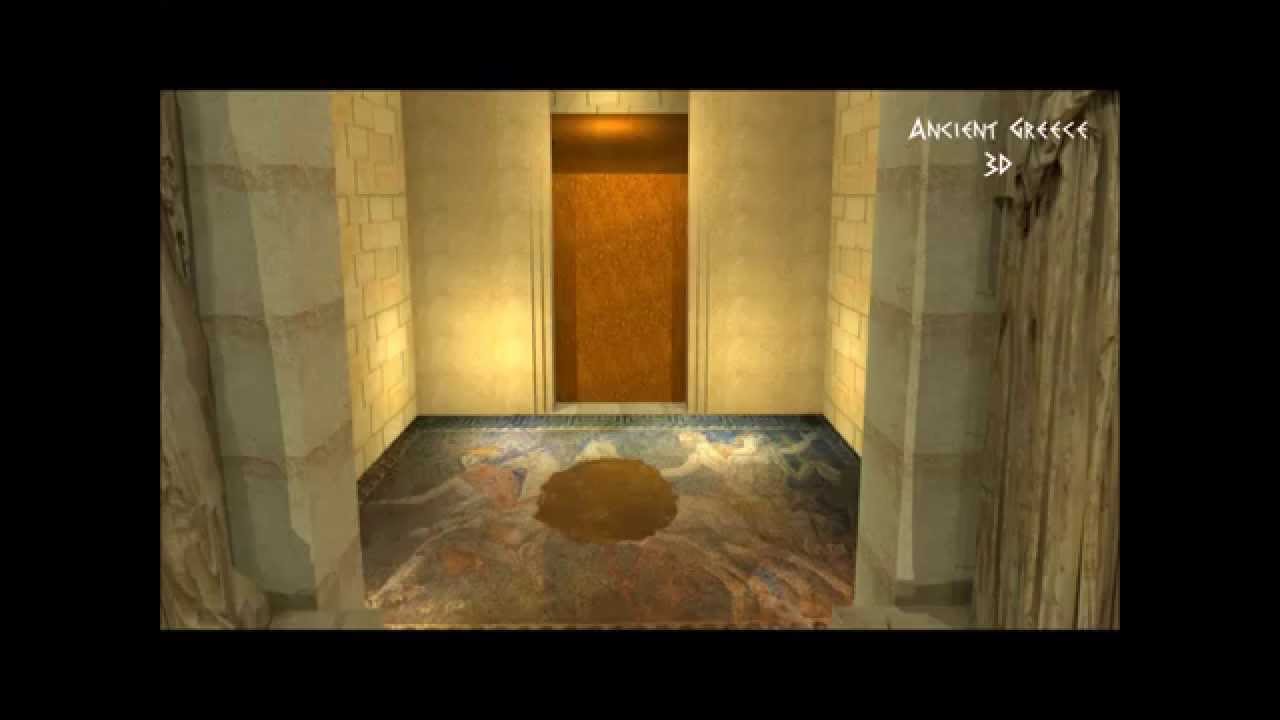
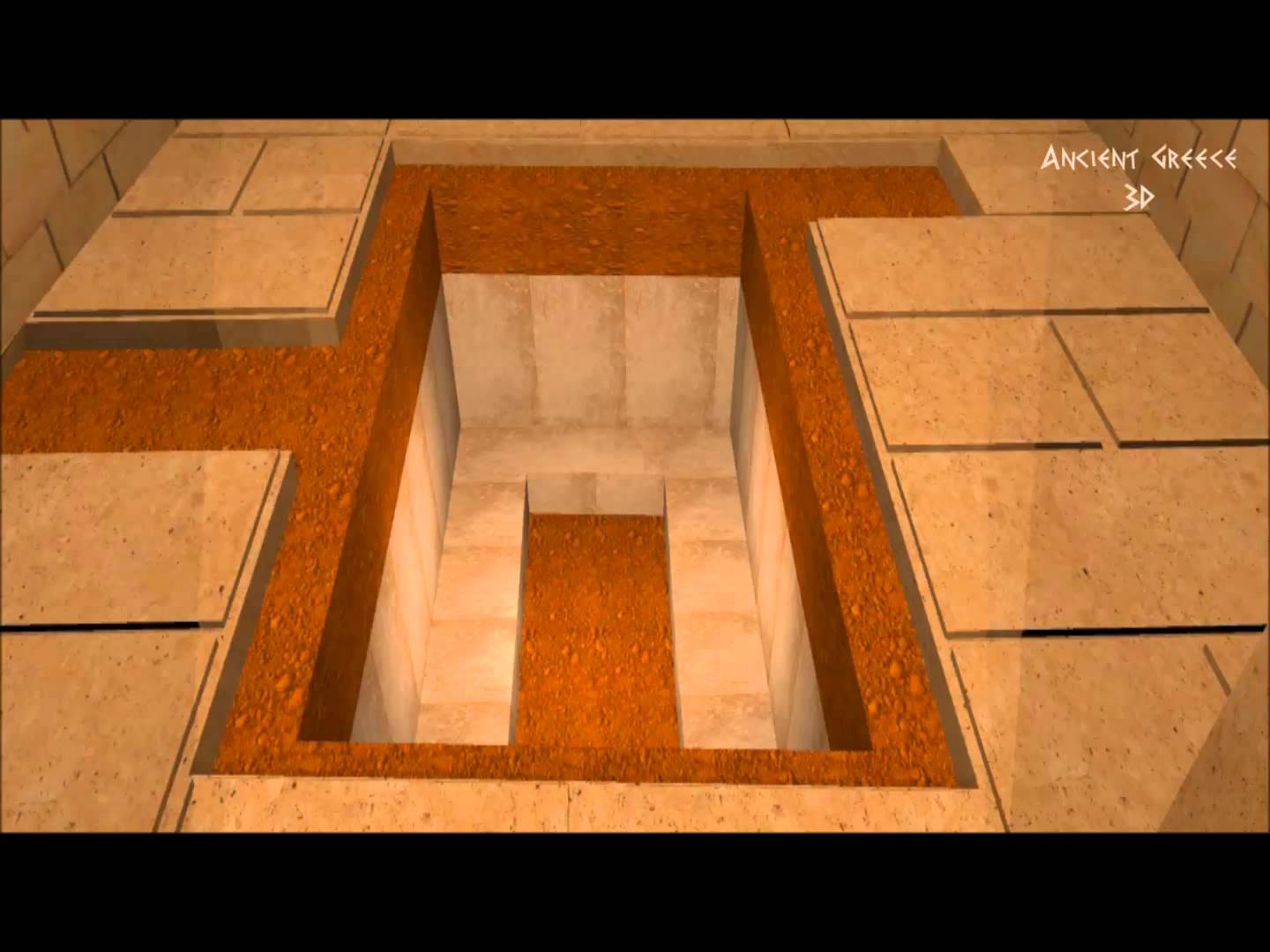
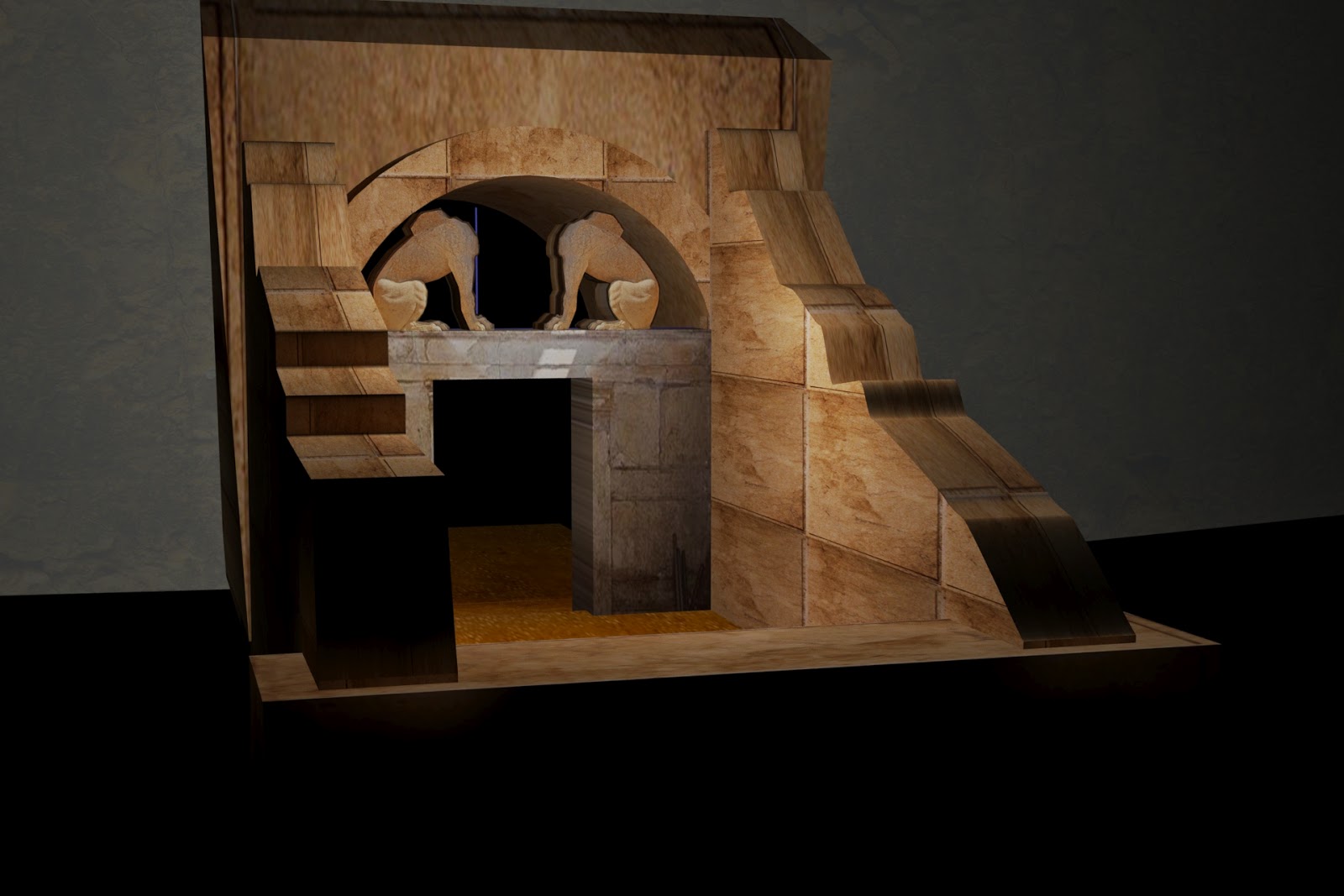
The 3D view of the tomb

To dig such a monument, it takes time, patience. The walls and ceiling must be strengthened so that nothing collapses, searches must be done sensitively to avoid damage (or lack) an object of importance. But today, the tomb is under siege, not by looters, but by the media, who want every day new information.

This is understandable, of course. Personally, I am this "soap opera" since mid-August, while we would not look at me do even one episode of "Secret Story". We live in a fleeting curiosity of civilization and immediate, and the suspense of this major archaeological discovery is the one to serials twists.

However, it is hoped that those in charge of the excavations manage to resist this pressure, and that we deliver in due time the identity of the (or) occupant (s) of the tomb of Amphipolis. If I had to make a prediction, I would go for Roxane

http://hertfordshire-archaeological-trust.co.uk

THE “Varia” Alexander's memory in Macedonia

On five hundred years after his death – write annals of era- Macedonians thought that Alexander lived among them. Klagges weapons, Shield gdoypoi, Cavalry podobolita, and heavy steps warriors, listened to every so often on the mountains and in the plains of. Had zimwthei both are of, so it was impossible to believe that they had left and disappeared.1507695_10201473514826344_1577614065_n

Alexander the great in the narratives of the Koran

Writes the Valia Papanastasopoulou // *

The mysterious Dhu al-Qarnayn (= Doo Al-Karnaϊn)

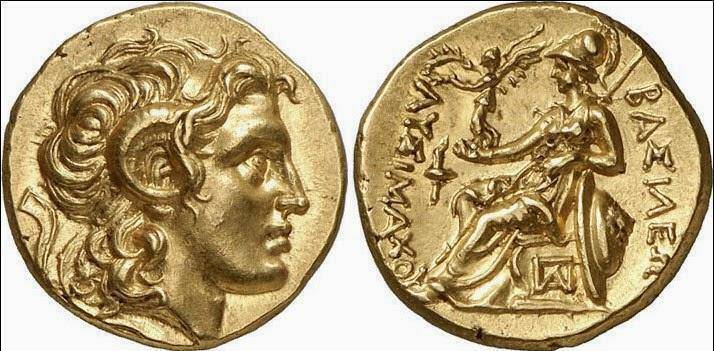
Gold Stater (297-282 e.g.) by Alexander horned head on one side and the inscription VASILEOS Lysimachia to another.

Much talk was in previous months for the monumental tomb of Amphipolis in Kasta Hill and the identity of the deceased or of the dead that was hiding for centuries within the bowels of. Speculations in the media have enormous dimensions and already written many texts on the subject and while the archaeological process was still underway. The revelation of the tomb – the existence of which was known in the scientific community since the 1960s, When the late d. Lazaridis made a first excavation – sparked, as expected, the popular imagination of modern Greek and led many to stimulate again the story of the lost tomb of the great Macedonian Commander.

The charm of the person and the conquests of m. Alexander is not a new case, but one fact that spread in literature and the imagination of peoples with whom they had contacted the Macedonian King and not only. Within this context, not surprisingly, the presence of Alexander and the literature of the Arab world, But what you may not be well-known in the broader Greek audience is a possible reference to the face of m. Alexander inside the Koran.

The Koran is the sacred book of Islam and in surah Al Kachf (= Cave) a mysterious person named – certainly symbolic nickname – are Dhu al-Qarnayn (ذو القرني ن ) (= Doo Al-Karnaϊn). The narrative (18, 83-98) mentions that there was once a mighty hero, who traveled to both ends of the world, Eastern and Western, i.e. in points, where the sun rises and sets. This was the Dhu al-Qarnayn, who, continuing his journey to other parts of the Earth, arrived in front of two big mountains, in the shade of which lived a peculiar breed. The people of this tribe are characterized by the recitation of the Koran as sub-human and animal behavior, but nevertheless seek the help and protection of Dhu al-Qarnayn in order to repel the Gog and Magwg, who lived beyond these two mountains and frightened this breed. The Dhu al-Qarnayn will give the solution to their problem, constructing a giant wall of iron and fire blocking the unclean Nations Gog and Magwg to enter. According to the Koran this wall still exists even today and will be destroyed only during the day of judgement. Then hordes of Gog and Magwg will stream and will torment the whole world.

The Gog and Magwg, already known from the book of the old testament, presented in the book of the Apocalypse of John as enemies of humanity. The keeping of them behind a firewall from the m. Alexander first mentioned by Jerome, While it was known this story and in the 6th century. in some Syrian versions of the legend of Alexander.

Who is but the Dhu al-Qarnayn in the Qur'an and how it could be identified with the m. Alexander; The phrase Dhu al-Qarnayn in Arabic means "the bearing two horns». Comes from the word dhu and binary number of the word karn (= Horn). The identity of the Dhu al-Qarnayn has been the source of much speculation over the years. Although opinions vary, the classical Muslim exegetes of the Qur'an considers as the most common identification of Dhu al-Qarnayn with Alexander the great person.

Really, the name itself Dhu al-Qarnayn (= bearing two horns) It is particularly revealing the sources of the text of the Koran, as the title was actually a commonly used adjective for the m. Alexander since antiquity. In fact this title is the result of Alexander's connection with the horned sygkritistiki Egyptian deity, known by the name Zeus-Amun, which led to the depiction of the Macedonian king with two horns of a RAM to protrude from his head. The iconography of the god Amun will continue to be associated with Alexander, even after his death. The god Amun had become particularly important for Alexander after his visit to the sanctuary of God in Siva of Egypt at which point Alexander himself to call God many times his father. After the death of Alexander, people of his close environment incorporated horns of Amun in the iconography of Alexander, as seen for example in the currencies, an illustration that has been preserved for many centuries in art.

Nevertheless, It is not only the name of Dhu al-Qarnayn that identifies that person with the m. Alexander, but the fact that the story of Dhu al-Qarnayn in the Qur'an shows a large degree of similarity with the myths and legends developed around the m. Alexander in the centuries that followed his death. More specifically, the narration associated with travel in the West and counter the Gog and Magwg precede the Koran during many centuries and has its roots in an ancient legend about the m. Alexander.

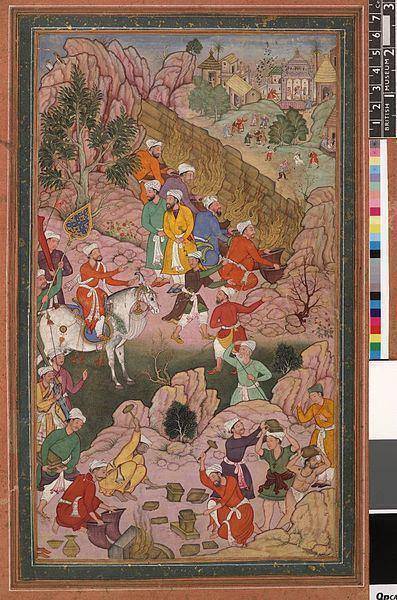
Painting imaging Alexander to construct the wall against Gog and Magog. Thumbnail probably from the manuscript of Nizami (p. 1590-1600). British Museum.

According to Greek and Latin tradition, Alexander built gates in the Caucasus to keep out intruders. As early as the 1st century BC. e.g.. the Roman historian, Pliny the elder mentioned in this tradition, While in the Middle East region, the story gained a more elaborate way of storytelling, as connected with popular apocalyptic biblical legends, as it ascertains and the Jewish historian Josephus Flavius. Therefore, as early as the first century Alexander presented one to construct a giant iron stronghold in the mountains of the Caucasus and in Central Asia in order to keep away hordes of bad Gog and Magwg.

When at the end of the 4th century. a.d. Oynoi appear to carry out raids and destroy Syria and northern Mesopotamia, the memories are triggered by the biblical Gog and Magwg threat, which helped to further develop the tradition around the m. Alexander. The latter occurs in the traditions of the season as a patron, who with the help of God builds a dam to protect humanity this time from the Huns.

Without doubt it is so obvious that the above narrative comes from the novel of Alexander, a collection of legends recorded by an unknown author in us, who is called conventional "Pseudo-Callisthenes». The novel of Alexander seems to have crystallized literary in Alexandria, Egypt at the end of the 3rd century. a.d. The text very soon became very popular with the result to be rewritten and adapted both to the cultural and national data of individual readers. Hence, the novel of Alexander popularized in many versions and languages in East and West with oldest Latin (4century.) and the Armenian version (5century.).

Though, Basically it was the Syriac version of the novel of Alexander, that brought all these different traditions into a single narrative, adding to the text a number of unknown until then for other traditions stories. In this way, the episode of the construction of the wall against Gog and Magwg, not seen in the oldest versions of the novel, but is originality of Syrian version, probably as a coalescing of the pattern of the wall of Alexander with the biblical tradition of revealing Gog and Magwg peoples. The Syriac version of Alexander's Novel is written in 629-630 a.d. In this narrated Alexander is determined by the known ancient epithet "the bearing two horns», one property that construed literally, as the Macedonian hero is described as having the head of horns.

This myth continued to exist for more than a Millennium in Persia, where the famous poet Ferdowsi in his epic masterpiece in Shahnameh titled devotes a section to this story. There is no doubt that the story of Dhu al-Qarnayn is a direct loan of pre-Islamic stories and legends associated with Alexander the great. These myths come from the 1st century a.d. and widely spread throughout the ancient world till the appearance of Islam. And it is especially interesting that the prophetic activity of Muhammad (610-632 a.d.) coincide with the Syriac version of the novel of Alexander (629-630 a.d.), Although many of these stories had already become well known in the Arabian Peninsula before Islam. No one can deny that the m. Alexander is an important figure in Arabic literature. Even in pre-Islamic poetry we encounter references to his face, the prosfwnwntas either as al-Iskandar either as Dhu al-Qarnayn, like for example the poets Maymūn ibn Qays al-A'sha and contemporary of Muhammad, Hassan ibn Thabit, He composed verses relating to the episode with the Gog and Magwg.

Summing Up, We conclude that it is no surprise the identification of Alexander with the Dhu al-Qarnayn from classical exegetes of the Qur'an. The ancient biblical narratives associated with Gog and Magwg merged them into a single myth with ancient non-historical narrative about Alexander and the construction of a wall in the Caucasus iron: THE M. Alexander built a huge wall in the Caucasus to imprison the Gog and Magwg. Follows, o I Oynoi that invaded in the 4th century a.d. their concurred with Gog and Magwg and would remain imprisoned behind a wall of Alexander until the day of judgment.

This story was further developed during the coming centuries through the various versions of the novel of Alexander of Pseudo-Kallistheni up to the 7th century a.d. – display time of Islam -, so in the Koran the story adapts to the data of the new religion with the help of the Syrian version of the novel. In Accordance, well, with the recitation of the Koran Alexander the great as Dhu al-Qarnayn was a God-fearing theist, who traveled to the ends of the Earth and built a huge wall of iron and bronze to imprison bad Nations Gog and Magwg till the day of judgment, When the Gog and Magwg will break the wall and will stream free spreading fear and havoc on Earth. It is very likely that Muhammad or a later editor of Koran seized the pre-Islamic legends and incorporated in the Koran, adapted to the data of the new monotheistic religion.

Alexander's face had started getting mythic proportions since the reign of, and after his death the oral narratives spread in various peoples. This unique personality was destined to leave its mark on the world and exert a huge influence for hundreds of years after his death, touching even the holy books of various religions, as Islam. Would be overkill, If we say, how Alexander starting from Aigai of Macedonia for all around the world, κατάφερε τελικά να αγγίξει εκείνο που τόσο πολύ ονειρευόταν και δεν ήταν άλλο από το ίδιο το θείο.

Ενδεικτική Βιβλιογραφία

Budge, Ernest A. W. (ed.), The History of Alexander the Great: Being the Syriac Version of the Pseudo Callisthenes, Cambridge, UK: Cambridge University Press, 1889.

Donzel, Emeri Van, & Andrea Schmidt, Gog and Magog in Early Syriac and Islamic Sources: Sallam's Quest for Alexander's Wall, Leiden, Netherlands: E. J. Brill, 2009.

Fildes, Alan & Joann Fletcher, Alexander the Great: Son of the Gods, Los Angeles, CA: Getty Publications, 2002.

Goldsborough, Reid, ‘Alexander the Great Numismatic Portrait’, 2010, at http://tinyurl.com/66g3r7x, όπως ανακτήθηκε στις 05/01/2015.

Panayotakis, Stelios, Maaike Zimmerman & Wytse Keulen, The Ancient Novel and Beyond, Leiden, Netherlands: E. J. Brill, 2003.

* THE Βάλια Παπαναστασοπούλου είναι Αρχαιολόγος-Θεολόγος MS, Υποψήφια διδάκτωρ Α. Π. Θ.

The magic of Amphipolis: The artists who created the 3D video

The magic of Amphipolis: The artists who created the 3D video [images&videos]
When virtual reality fills the gaps… actual reality may not cover. With the exception of the special group of Katerina Peristeri, at the moment, Nobody else can admire up close the amazing discoveries of Amphipolis. There Is, though, Yes, technology is not a substitute for the prettiness of the mound, However makes it more tangible in the observer.

The Livescinece spoke with the two Greek authors who created a series of 3D video in which depicted the Interior of the Tomb, According to the discoveries of archaeologists and what gave the publicity through photographs.

As stated in article, the alluring ruins of Amphipolis caused media frenzy in all of the world that made consecutive live links from the site. The same happened in social networks and with the videos that were made to represent, as more details become, How exactly was the Tomb several centuries before. It is no coincidence that if anyone on YouTube typed the name "Amphipolis ' will find numerous videos – other amateur and other worked up to the last detail as their creators have used all the latest achievements of computer science. It is characteristic that none of these videos "virtual world" is not linked to the Ministry of culture. Everything came from the enthusiasm and interest of their creators.

One of them is Nick Alexandrou who lives in Rome, but echeri born in a nearby area with Amphipolis. Speaking at Live Science explained how the first video he did for personal use. Last July the Alexander graduated from the University of L'Aquila in Italy by master. It is now a civil engineer specializing in architectural works. The same period Greece stirred by a cheery new that focused the Amphipolis and there finds. Alexander says that before he made the video for Amphipolis, had created three-dimensional renderings for buildings, but never for archaeological ruins. This, combined with the impressive ruins of Amphipolis gave him the motivation to try. "I thought it would be something great for promoting our Greek heritage. So I decided to fix it and upload it on YouTube. I'm happy with the score and I thought that surely will find plenty that will be interested to see my model ". The first video was posted in mid-October and until now has 200.000 views. Indeed, accepted requests from fans of his work, try to do recovery of broken arms Karyatidon and complement of the section of the amazing missing mosaic. So he entered into this process as far as possible by restoring the monument and give some modern touches to the existing creature.

The second attempted to do a professional job was the artist Dimitris Tsalkanis who resides in Athens. The Tsalkanis created a website (www.ancientathens3d.com), through which it shared with the world his own depictions of ancient Athens. For him the Amphipolis was an interesting challenge and so on 13 December loaded the first video. In accordance with its own Visual models are an artistic rather than archaeological representation. So it worked more freely and added some touches of color on the statues of Sphinxes and Tomb. However, pointed out that his choices were based on studies about the colors used by the Greeks during the period.

When Dimitri Aggeloydi, web developer, This trend shows the interest of the Greeks to see the monument under another light. He worked closely with amfipoli-news.com site, in which there are 3D representations of the mound, and virtual tour. The site "climbed" in October in collaboration with Panagiotis Panagiotou, student, University of Thessaloniki.

The Tsalkanis acknowledges that the controversies surrounding the Amphipolis weighed in as he was making the video. "It shocked me the situation, However the effect that had the monument in society was interesting. I think the video shows how it was made, But how discovered the monument». The Alexander prefers another aspect: "If we do not use these discoveries now, When I do; Κάθε αρχαιολογική ανακάλυψη είναι ένα βοήθημα προς εμάς από τους Αρχαίους Έλληνες».

Source: The magic of Amphipolis: The artists who created the 3D video [images&videos] | iefimerida.gr http://www.iefimerida.gr/news/187114/i-mageia-tis-amfipolis-oi-kallitehnes-poy-dimioyrgisan-ta-3d-vinteo-eikonesvinteo#ixzz3P1UCp8b7

Κομμαγηνή: Το Μυστήριο Μαυσωλείο του Αντίοχου !

Antiochos, a just, eminent god, friend of Romans and friend of Greeks, c. 86 BC – 38 BC, ruled 70 BC – 38 BC) was a king from the Greek Kingdom of Commagene and the most famous king of that kingdom.
The ruins of the tomb-sanctuary of Antiochus are magnificent to behold even today. The site of his interment atop Mount Nemrut, a.k.a. Nemrut dagi, was named to the UNESCO World Heritage list in 1987. Several sandstone bas reliefs discovered at the site contain the oldest known images of two figures shaking hands.

«Στην κορυφή του Νεμρούτ Ντάγκ, up to Antitayro, in n. a.. Turkey, is a strange monument, at a height of 2.500 measures.
For the first time discovered a germanotoyrkiki joint archaeological expedition, the 1882. It is strange, However that since, as today, It was possible to investigate the inside of. Is the mausoleum of Adiochou 1st , the King of Commagene, a tiny Kingdom, that wasn't long life, and I just stood, the last echoes of the great adventure of Alexander in Asia.
"This is a stunning monument, very reminiscent and Persian works, but Egyptian together. The resemblance, on the other hand, with the Egyptian monuments by early researchers, they still had not noticed how everything, What monumental was constructed in East, mimicked much of Egypt's projects.
In Persepolis, the monuments of Artaxerxi and Darius, carved on the rock, totally reminiscent of the temples of the Valley of the Nile.
In Nemroyt Ntagk, the colossal statues were erected over the tomb of the Adiochou of the first, closely resemble the colossi of the temples of Thebes ".

The name Kingdom of Commagene

Researching various sources about the name of this Kingdom, we discovered that the name originates from the words party-genus which means part or part of a larger generation (genus). In a Turkish text says that it is from the words Kommoyn and Genes, who says as Greek words. The small land came after the decay of the Seleucid Empire (known as the Greco-Syrian Kingdom) the 162 e.g..
Other historians say that there is the name of the Assyrian texts Kummuhu, that is associated with the Kingdom of Commagene,.
First King of Commagene was the former satrap (Commander) When it ceased to be under the Seleucid Empire.
With the dissolution of the Greek-Syrian Empire proclaimed the Kingdom of Commagene independent with capital Samosata (who had previously built the Sami on the banks of the Euphrates-Turkey's current town of Samsat). In his Kingdom incorporated Greek and Persian peoples of the region.

The establishment of the Kingdom

The Ptolemaios according to an inscription found in the tomb of Mount Nemroyt was a descendant of King Darius I of Persia. His son succeeded the Sami b ' dubbed ' Theosebis ' Dikaios. From the later reign of Mithridates Callinicus of A΄toy (100 until 69 e.g.) the Kingdom of Commagene had miscarried the Persian past of, After being dominated in all levels of the Greek civilization. Established as an official language of the Greek State.
Mithridates married the Princess of ellinosyriakoy Kingdom Laodice Vii the Goddess and their son Antiochus 1st the ' God of Commagene ' took over the Kingdom the 70 e.g., until his death, the 38 e.g. Photo: The stone heads they have height 3 measures!

Huge sizes
Archaeologists have been impressed by the mausoleum of, which has a circumference of 30 measures and punctuating inscriptions.
The choice of venue for the project, made by the same King, in order to do meditation and Memorial place of pilgrimage for the people of. At the foot of mount this his father Mithridates founded the town Arsemeia.
According to the inscriptions Antiochus himself was proud of his ancestry after he stated that he was a descendant of Alexander the great and Darius!
In the eastern embankment of the monument there is an altar, While at the top of the project were erected 25 colossal statues in which only heads were worked with meticulous detail. In them we distinguish him Antiochus and around him the Sun God, Apollo of Greek, the Midas of Persians, the Fortuna, the goddess of fertility, the Malda Achoyra, the father of the gods, personification of Zeus, Hercules etc..
Today the stone heads are strewn around the mound. It is huge, over three meters each, and impress guests.
The vanity of Antiochus with the erection of the monument is open, After he proclaimed himself a representative of the gods on Earth! Theopoiise, Indeed, himself before he died and identified every worshipful detail around his grave.
"I believed always that piety is the most important asset and this gives the sweetest joy to mortals ' writes in an inscription on the monument of.
It is believed that an earthquake dropped the huge statues of the monument that reached the 15 meters high.
The archaiokapiloi, of course, over the centuries ,searching frantically for a coveted treasure, erected all devotional utensils were made of precious metal.
But they failed to catch up in the Interior of the monument, in order to loot the inside of. The stone is asikwtoi and volumes in these remote parts, for now at least, It is impossible to use modern mechanical means. Some effort was formerly bore no result because it rolled dangerously above rocks.
In an inscription seem to be written by Antiochus:
"Conceived the plan to raise close to celestial Thrones and foundations inaccessible and immune from the time this ' orothesion ' monument dedicated to the gods where my body, After old would sleep the eternal sleep, apochwrismeno from my soul reverent, you will fly to the celestial realms of Zeus-Achoyra Magda».
While in another you made:
I Antiochus, I set up this monument to glorify myself and my gods».
Typical is another inscription located as one ascends towards the entrance of the mound:
"This is the road to the sanctuary. Those who have bad intentions should leave immediately ".

Until today I have walked through the Tomb archaeologists. You might expect the first to dare archaiokapiloi!
So though, We will be able to learn the mystery of the tomb of an ancient King.
George Echedwros

H Iστορία του Παγγαίου κατά τους αρχαίους χρόνους

IMGP0985

(Summary quote from lawyer Theodore Lyberaki lecture given in Eleftheroupoli the 1996 with the theme "The paggaio mountain and his contribution to the Greek and world culture”)

Long before the arrival of the Greeks in the Greek peninsula and therefore also in the area of Pageos, lived here the pre-Hellenes known, otherwise and so-called Pelasgians, for the existence of which in our area spoke of Aeschylus in’ a wonderful choral tragedy of IKETIDES.
Homer among the thrakopelasgikoys peoples who fought on the side of the Trojans during the Trojan war defines the Briges or Phrygians and Paeonian, two people who were affiliated with each other and with the Trojans and who lived in the proomiriki era in Macedonia, Although the Phrygians in the region of Vermio in today's Western Macedonia, the Paeonian at the top of the Valley of Axios, where they were for the capital Amydwna. But the bulk of the Frygwn emigrated to m. Asia before the era of the Trojan war, already by the end of the 9th century BC. the Doric origin Macedonians began to displace from present-day Central and Western Macedonia all genders residing there, themselves gradually until reaching the coast, where they had begun to arrive and the Greeks of southern Greece and founded the colonies. Two of the tribesmen who expelled were the Phrygians that were left in the area after the migration of their people in m. Asia and Paeonian. A part of Frygwn and all the Paeonian forced so under the pressure of the Macedonians to move northwards and t’ East, where besides Strymonos remained for centuries, (Sintiki, Odomantiki, Idwnis), where they found them and Herodotus to reside, to hold the bulk of pediados of Serres and to have their cities on the Strymon River, but anameichthentes with the Thracians and Greeks colonists of the coast formed the background of Paggaio population in historical times.
But important though was the role of Paiones, of Frygwn and other ancient tribes of our region in shaping the history of the region, Another great service from people who already’ archaic years constituted the bulk of the population in General and of Elevation between the Strymon and Nestos country, the Thracians, It was he who gave the Pangeo and its unique historical identity, It was he who brought the Pangeo, the gods and the cults of so close to the Greeks and influenced so much philosophical thinking.
This great nation, composed of a multitude of individual tribes, has always been the entire between the strymon and Nestos region and consequently the Pangeo, that until the time of King Philip II of Macedon’ ethwreito Thrace, the first historically not years (7the and 6th St. e.g.) Here are various phyla of, Paionika and Frygika mixed with remnants of the past, While on the coast are already starting to set up the first Greek colonies of Greeks, the Neapolis of Thasos and the coastal cities of Perea or continental Thasiakis.
Already well from the 7th b.c.. century jostling around Sacred Mount of antiquity a racial and linguistic mosaic, the grounds now its existence is very known and appeared many times in the history of mankind. They are the same reasons that the previous century prompted crowds of Europeans and Asians to move to the western part of the U.s., for the search of gold. It is in other words the spirit of adventure and the human desire for easy enrichment, that makes him n’ always seeks the mythical Eldorado.
Indeed, beyond the great advantage of providing geographically wonderful place, This privileged area had in ancient times extremely riches. But products that produce the fertile Earth and t’ vast forests of was nothing compared with the treasures of the mines of. For centuries the rich mines of Paggaio provided in great abundance of gold and silver, the search which was the most important issue for the region throughout the centuries and is the secret of the entire history of.
Around the 7th b.c.. the two most important Phrygian century genders played a prominent role in the events of that period in historical times, the Idwnes or the Edoni Pieres, still inhabited at ancestral home, the first Strymonos in excess of Mygdonia, and second in the foothills of Mount Olympus, the till today called Pieria. But already from the 7th century onwards, and especially around the late 6th and early 5th BC.. century were expelled from the first Macedonian Kings, some Pieres by Partridge the Ios, the Edoni or Idwnes by Alexander the Ios and were forced to move to the edwthe of the Struma region and settle, some Pieres in South Pieria Valley stretching pangeo, East until the current Eleftheroupoli and South up the sea, they got their name and since then named Pierikos Gulf, like all t’ Thucydides mentions in the 2nd book of the history of.
Parallel to the North of Paggaio area inhabited by other tribes Phrygian, first whose Odomantes, between the lower reaches of the Strymon and the massif of Pageos, While North of Pageos and the plain of Serres lived the Panaioi, (Thucydides puts them "th far Amphipolis"), the Dersaioi or Derraioi, in’ others in the area of Philippi and in particular on the Western side of the mountains of the basin, Re’ they were evacuated to the North, When they occupied the whole region and the Edoni’ others in the area of Lake doiran, etc..
Around the Pangeo also in small numbers and’ North of Serres synwthoyntan, as already mentioned ahead, remnants of Paeans, that seems to have belonged the Sirropaiones, the Doberes, the Paioplai etc.. While on the same sacred Pangeo lived and dominated a hard-edged martial race, the Satres, who were those that mainly, (without lag and Pieres and Odomantes) exploit the minerals of Pageos.

GREEKS IN THE REGION OF PAGGAIOU

As early as the Neolithic age and the bronze age but main during the iron age the island of Thassos was culturally with prehistoric settlements of the opposite coast, as the village of Orfani, of Akropotamos, of Galipso, the Ntikili Tash, of Sitagron etc..
In the last centuries of this period and in particular before the 7th century BC., so in Thassos Phrygian tribes inhabited and palms colonists, their relationships with the opposite shore is confident and up to the first quarter of the 5th b.c.. century all of these exploit themselves freely and the mines of Skaptis Material in the area of Pageos (or when younger historians in the region of the mountains of the basin).
In the second half of the 7th century b.c. y. and after the colonization of Thassos from Parioys, Parioi and Thasioi jointly appear on the opposite coast of Thassos, having their eye chiefly on the wealth of minerals of Pageos, colonize the entire coast this, that call Thasos Continent or Peraia, and establish, around 650 e.g.. neapoli, today's Kavala, While slowly and especially during the 4th Santa. complete the Thasos Trades, i.e. the coastal routes fortified settlements – their colonies, built on posts older settlements, much of Thracian origin. Such trades that evolved into real cities States and stood on the beach of’ where is the current national road Thessaloniki-Kavala was Galipsos, Apollonia and Kavala, but the pieriki city Fagris, in place of the current village of Orfani and other anonymous settlements.
But until at least today is generally accepted that the Thasioi never managed to penetrate with permanent installations (colonies) inside of their Sun, to spend in other words the coastal ridge of the symbol and to settle permanently in the area around pangeo, which remained under the absolute rule of hardline extremists THRACIANS that inhabited. Only the 356 e.g.. the orator Kallistratos of Afidnes in Athens ordered unfairly to death and takes refuge in’ all in Methoni, Macedonia and from there on Thassos, where it enters the head of a group of colonists which thasos comes in old Thracian settlement Datton or Krinides and founds the first and unique as shown thassian colony inside the region of Pageos, making reality, even for only a few years, as we will see then, the dream of generations of entire Thasos to settle permanently in their hinterland of Perea.
But let us come back again in Pangeo. The 513 e.g.. established beside the river Strymon from 1453 settlers under the tyrant of Miletus Myrkinos city Istiaio, to whom else; the exploitation of minerals of Pageos.
During the Ionian revolt, and in particular the 497 e.g.. the new tyrant Aristagoras of Miletus Milisiwn rebel leader comes in Myrkino, aimed at the occupation of the Thracian village of Street Ennewn, (of the later Amphipolis) but the business of fails, because the would-be colonists slaughtered by local residents.
At the same time, the King of the Persians Darius, taking advantage of the quarrels of the Kings of Paeans of Pageos, He sent his general Megabazo to attack inside of their country, where he found their cities anochyrwtes and captured. Then the Paeonian were forced to disperse, those not arrested, (Siriopaiones, Paeonian resident up to the Prasiada Lake, the current Dojran and above this term Dysswron), led by the Persians in Asia with their families, Re’ where they managed to turn around a few years later, with the help of the tyrant of Miletus Aristagora.
After suppressing the Ionian Revolution follows Mardonioy's campaign in Greece, η οποία, regardless of the inglorious end of Athos, yield in 492 e.g.. to the Persians Thassos, Macedonia and the Thracian coast. Though, Fri’ all guards mardonius installs everywhere, the Thracian tribes of Paggaio retain their lands and certain, even their independence.
The 480 e.g.. launched the campaign of the new Persian King, of Xerxes, in Greece. The latter, passing with t’ countless troops from the area, force all genders and all Phrygian city dwellers than’ where he spent, n’ follow the troop of, submissive in the same. So passed from our site, even from our city, crossed the Pieria Valley where he spent outside the walls of the Thracian Holy p, the Pergamon and the Fagrita, (It was there where are now respectively the Moustheni and Orfani), as for all that informs us of Herodotus, It reinforced the Persian garrisons in cities, but he was unable to subdue all Thracians pangeo and especially the months of peak Satres, who, as Herodotus says "nothing man egenonto nationals".
But the wealth of the same area already coveted by very early season and the Athenians. Already in the 6th century b.c.. the exile in Pangeo Peisistratus, subsequent tyrant of Athens, He has enriched many of the mines of the misthodotisei mercenaries and to prepare his return to Athens.
Miltiades, the winner of the Persians at Marathon, from his marriage with Igisipyli, daughter of Ember King of Pageos, Olorou, had acquired rights to the gold mines of Mount, first he wanted to lead the Athenians in Pangeo, but prevented the failure of the Athenian expedition against Cyclades.
The son of Cimon, maintaining the rights of the father in the goldmines of Pageos, Head of Athens came to make reality the dream of his father and the 475 e.g.. He managed to occupy the first city of the region, the old Thracian town Column, (between the Beach today Ofrynio and at the mouth of the Struma), to use as a basis for business to conquest of the Thracian hinterland. In the capture of Iionas seems to take part and the great Athenian tragic poet Aeschylus, because in the tragedy of the "Persians" describes the area as the knew very well.
But those successes of the Athenians brought them into conflict with the Thasioys, which were most clearly the economic interests and for’ This 465 e.g.. the apostatisan from a Thasioi’ Athenian League. The Athenians sent then powerful forces to poliorkisoyn Thassos (which subjugated after two years of siege), While at the same time sent and 10.000 Athenian colonists, headed by generals Leagro and Swfani, to understand the rich Thracian hinterland. But those settlers, Although conquered the Thracian town Nine Roads, (the later Amphipolis), ultimately were defeated by the United forces of mountain and the region's hardline extremists Thracians and all katesfagisan from the past in Drabisko (current Drabisko of n. Serron).
The Athenians, shocked by this unprecedented disaster, could not reach the area until after 28 years. Then, (in 437 e.g.) Athenian colonists m’ led by settler Agnwna captured the Nine Streets and in their place created the colony of Athens perifimoteri, the Amphipolis, thus obtaining more direct access to Pangeo and rich area of.
Amphipolis, located in a privileged area, on high hills that periebreche the Struma, controlled the mouth of the latter, He had direct access to the sea through the coastal port of, of Iionos, in the fertile valley of Struma, at an elevation of Plains north of the current n. Serres and of course in the same pangeo, the objective of all efforts by then conquest of the region.
But the settler ' Pure, Although the Amphipolis and teichise made a wonderful city, though he committed a fatal error. Installed in’ This, Apart from Athenian colonists and residents of the neighboring and hostile towards Amphipolis town Clay, colony of Andriwn, (the excavations are now immediately after the Kerdyllia, on the highway Thessaloniki-Kavala) from Halkidiki, who were enemies of Athens soon and this hatred, in combination with the skills of the Spartan General Brasidas, brought the ultimate in Amphipolis in 424 e.g., 13 short years since its foundation and even without a fight, After the city handed over to the Spartans themselves residents of.
The late intervention of the Athenian fleet under the historian Thucydides, Athenian general, failed rather than bail out for the Athenians the Iiona. Two years later the Athenians to recapture campaign of Amphipolis under Cleon led to a clash the last with brasidas and new destruction of Athens, who permanently lost anymore this area so matches had made to conquer ' and so little they managed to delight.
Though, the attraction that was causing the Greeks this area still remains strong. The 382 e.g.. the Chalcis of Halkidiki, After synaspisthikan between the, entered into relations with the Thracian tribes that still remained undisturbed then exploiting pageOn and took part in the exploitation of.
Moreover, forty years after the loss of Amphipolis, the Athenians were still dreaming of this area. So in 371 e.g.. These, having gained freedom of movement in Thrace, send successively the Ifikrati and Timothy, to be exhausted in unsuccessful attempts to take the city from the Macedonians, I had already installed there guard.
But Philip had already begun to reign in Macedonia. The 359 e.g.. withdrew the Macedonian garrison of Amphipolis, for the sake of the Athenians, the declared a free city and promised to deliver it to the Athenians, but defaulted on his promise and 357 e.g.. appeared before the walls of, the besieged and oblivious to the negotiations suggested the Athenians, the captured and kept for himself.
The next year 356 e.g.. Philip penetrates in Thrace and occupied all around the country of the Thracians Pangeo, whom and repels, (those who do not subordinate) addition of Nestos, following the invitation of the townspeople themselves of krinides, (that was, as already mentioned mostly, Thasioi colonists), who have suffered greatly from the frequent raids of the addition of Philippi and Nestos martial Thracian tribes, it comes after first occupies the Amphipolis and destroys the will-Galipso genetic resources or traditional colonies and Apollonia, enters the thassian colony (of krinides), of changing the ancient name in Philippi and gives a brief period of autonomy lasting 15 years, during which enables it to issue its own currency and, but then, having already completed the occupation of the whole of the Strymon and Nestos region between, the mounts, along with this whole area in his State Makedoniko, the 344 e.g..
At the same time annexation of Philippi and all around the area in Macedonian sovereignty Pangeo, Philip, as saith the Diodorus Siculus, from the systematic exploitation of recently then to identify talented people around Philippi overflow, but those pangeo, turns out both gold, so can no longer carry out all its objectives, to prepare a mercenary army, to redeem consciousness among crowds of Greeks and to pave the way for the glorious course of Alexander's son in history, whose campaign as well by the same mines sponsored.
The entire Pangeo and its area, with the cities and settlements remained under Macedonian domination throughout the centuries being of Macedonian state. With the walls of Philippi to prevent extension of the aspirations of peoples beyond the river within the limits of the Macedonian sovereignty, the region passed to General life blissful few centuries.
When's the Roman domination and expanded throughout the region, from the 167 e.g.. and after, the Philippi had lost their significance anymore, Perhaps because they had run out of ore that was used around them, and the whole area between the Strymon and Nestos was the first of the 4 portions (provinces) the great Roman province of Macedonia, with capital of the Amphipolis, He continued to maintain with its autonomy and all the glamour and edge and to issue the coins of the entire portion, until the 146 e.g.. they cease to exist the portions and Macedonia becomes a whole Roman province.
The 42 e.g.. but the fate of earmarks under a preferential treatment, which seals indelibly in the history of. Outside the old walls of ancient Philippi played the last act of the drama of the Roman Republic, Once there the Democrats Romans with generals Cassius and the Broyto are fans of Monarchy in Antony, Octavian (later Caesar Augustus, the first Emperor of the Romans) and Lepidus, in the famous battle of Philippi, where nikwntai the Democrats, These leaders commit suicide and starts for Rome the Imperial period of governance of.
The 42 well e.g.. Antony and Octavian perceived the importance of the area and immediately installed first Antony Romans apomachoys and founded the first Roman colony of Philippi, which Octavian, genomenos Emperor of the Romans after the battle at Actium the 31 e.g.. and the disappearance of his opponent, Antoniou, the 30 e.g.. turned on imperial colony, that brought apomachoys of Roman legions and colonists from Italy, Greek and Italian descent and endowed it with brilliant constructions, and the 27 e.g.. He named it Colonia exeteine Lulia Augusta Philippensis and the area of responsibility of the throughout around pageOn region, without to forget and Amphipolis, which declares free city, (civitas libera), i.e. city with its own internal autonomy and self-government. Thus begins the illustrious history of another city of Pageos, This of Philippi.

The libraries of ancient Greece

In a country that was born the spirit of science and philosophy, the art reached its pinnacle of, the theater was a high-level school for all ages, in a country where there was no town without theater – a unique phenomenon in the history of culture – it would not be possible not to have been there and loved and libraries. There were libraries in the ancient Greek cities; Apart from sporadic cases, the ancient writers were not mentioned in this topic. But there are, Fortunately, epigrafikes sources that come to fill in blank.

The ancient Greeks who both cultivated the arts and letters, was coming to appreciate the invention and use of the alphabet to the point, so the Sophocles to put in lost tragedy of "Amphiaraos" an actress forms with dance moves the letters, While in another tragedy also missed – of Athenian Callias, 24 dance were the members as many letters of the alphabet, Besides characteristic charm that it had in ancient Greek use of letters is the ODE of Pindar in letter s. From former times first tyrants were interested in the dissemination of the Homeric epics, which the machinery mobilising and cared to rescue. In these times and even during the tyrannidas, in Athens, of Peisistratos, must be placed and the Foundation of the first libraries in Greece.

When it talks about libraries in ancient Greece, our thoughts usually refers to the known libraries of Alexandria, of Antioch, the Pergamon and perhaps very – very at Pantainoy and libraries of Hadrian in Athens. But both in Athens and other Greek cities, not only of the metropolitan and colonial Hellenism, There was a very large number of libraries, for which we do not know almost nothing except their existence. The existence of these libraries affirm more epigrafikes and less literary sources.

The existence of libraries in Athens testifies to the historian Polybius also ancient history with Timaio. That Polybius says that, When the Timaeus of Locri was forced to leave the Syracuse, to avoid the pressure of tyrant Agathocles, fled to Athens, where he lived 50 (!) years researching the city libraries of Cecrops. From other sporadic information found in literary sources, it is concluded that there was again a large number of libraries in Greece Greeks outside Metropolitan.

Specifically in Asia were the Greek cities Ephesus libraries, Militos, Alikarnassos, Heraclea Pontus, Knidos, Mylasa, Nisa, Pergamos, Priene, Bursa, Sinope, Σμύρνη, Former, Antioch, Aphrodisias, Cesarea, Tarsus. Magnesia on the meander, Magnesia Sipyloy, Iasus, Thyatira, ACE and Lampsakos. Such libraries must have had and the Greek colonies in the West and on the coast of b. Africa. By some strange coincidence, however, is not mentioned in surviving literary sources and library epigrafikes other than that of Syracuse.

In Greece in particular there was no town without library or at least without a public file, including most small towns. And it is typical that the first library science textbooks were written by Greek Artemonas, that came from Kassandreia. The Artemwn wrote two such writings, they had titles on the synagogue "and" Books On books of use».

(B) I SEE I OTHIKES OF ATHENS.

As mentioned by Polybius narrated for the exported indirectly Timaio concluded that in "kleino asty" there was a large number of libraries. However, the relevant information is very few. The oldest library in Athens dates back to times of Peisistratos, who outside of the interest expressed for meditation and for the classification of the Homeric Epics, founded first in Athens, and public library. The Athenians on epayxisan later with great diligence and care. When Xerxes took Athens, the 480 e.g., plundered the library of Peisistratos and the books moved to Persia. But in the years of his successors m. Alexandrou Seleucus, Nicanor, He managed to aneyrei the books of the library of Peisistratos and resend in Athens.

In the town of Palladas was renowned library and during times of Demetrius, of Falireas, They showed great interest and zeal for books. Pausanias mentions the establishment of library in Athens by the emperor Hadrian. In establishing this library referring and Eusebius. The library of Hadrian in Athens was rich, the stately and luxurious. The ruins and the size will impress and today the visitor's space, located at the end of the road Aeolus. From ancient sources epigrafikes, confirmed by the excavations of the site of the market of the classical period is known the existence, on the official site, Pantainoy library. This is for 2 inscriptions that refer to each other on the establishment and functioning of this library. The first inscription reads:

«Athena Pyliadi... The Athenians the Mouson philosophers ierey t. Flavius Pantaenus successor son Menandrou TAS Flabioy out lodge, the peristylon, the book of bibliothikin after, always aytois the world, of the own ... more anethike.»

The other inscription. that was part of the regulation of the library lists:

"Quite a exenechthisetai Book wmosamen anoigisetai by time epei first until the sixth".

The inscription of the 1st century b.c., published in Inscriptiones Graecae II, 1029. informs us of the existence and operation and other library in Athens, known as "en Ptolemaiw", While the inscription Ι. g. 11.1009 offers evidence that existed in Piraeus library.

Libraries in other cities in mainland Greece.

In addition to the libraries in Attica, There were libraries. as shown by sporadic always information, both literary sources and at epigrafikes in the following cities: In Delphi, as noted by Delphi inscription, stating public library Foundation of Amphictyons (Bulletin de Correspodance Hellenique. 20, 1896, s.. 720), but at Epidaurus was the library, which had been dedicated to the God Asclepius.

Also, the inscription has been found on the island of Delos, which mentions Andriwn Iguazu, where there was a collection of the works of the poet Alcaeus. Apart from Delos had libraries and the Islands Samos, Rhodes, Kos, Crete and Cyprus. The existence of the library at Rhodes shows again the inscriptions from directory containing snippet around 50 writings. Among them are listed and 2 writings with titles "towards Cyprus ' Eyagoran (two copies) «Praise» Alexandrw (copy a) and on the Athinisi Law» (five copies).

For a library in Samos not saved any information on epigrafikes sources. The author however of deipnosophistes Athenian, who more frequently than any other ancient writer mentions in libraries and bibliophiles, by reason for the Greeks who had become famous in the ancient world because of their Rich libraries, mentions the tyrant Polycrates of Samos, the Athenian Euclid, the well-known Athenian tyrant Peisistratos, the Nikokrati, the Cypriot, the Kings of Pergamos and Eymenides Apaloys, Aristotle, Euripides, the Theophrastus and Nileas, who acquired the books contained in the libraries of the last two great men, the famous Stageriti philosopher and his successor at the address of its ambulatory continuation School, Theofraston.

Library in Kos mentions inscription (published in the Bulletin de Correspondance Hellenique, 59. 1935, s.. 421-425) which contains the names of the donors of the library. Among those listed and diocles and the son of Apollodorus, jointly offered the spending for the construction of the building of the library, as well as for the purchase 100 books. Listed, also the Hecataeus as Donator 200 textbooks, the Agisias as a donor 200 drachmas, the Xenocles donated 200 drachmas and 100 books and other donors,

In Crete existed during Roman times library next to the Palace of Knossos, as can be seen from fragment header, that commemorates this library. Also refer to libraries in Cyprus, so from the Athenaeum and the inscription that mentions "bibliofylakioy" epimelitin. Certain library and found existence in Sparta from literary sources, While sources indicate existence of library epigrafikes in Messinia. From another literary source is known and the function of library in the city of Patras.

With regard to (b). Greece, There must have been a library in Pella. From this it seems that the Roman general Aemilius Paul brought in Rome the first large number of English textbooks, After his victory over King Perseus of Macedonia. The existence of library in Pella, You should assume that it used and the m. Alexander, as a student of Aristotle, reminds us of the interest shown by the young King gave the order after the conquest of Persia, to explore the sacred Persian books and everything related to philosophy, medical, Agriculture and astronomy to translated in Greek and sent to Alexandria. From another, end, a votive inscription of Macedonia, posted in B.C.H., 57,1933, s.. 316320, check existence of the library and in the city of Philippi.

Referring to libraries that we can point out from clues literary and epigrafikes, We should not neglect and library of its ambulatory continuation School. The books after Aristotle's death, came the responsibility of his successor Theofrastou. The writings of Theofrastou, along with the books of Aristotle, come to the swkratikoys philosophers erasto, Korisko and his son Koriskoy, Nileas. Nileas, a student of Aristotle and Theofrastou, inherited books of two teachers and moved to the town of µ Skipsi. Asia. After the death of Nileas came to individuals that were unclassified and katakleista. When they learned about the zealous, with whom the Kings of Pergamon attracted books, the hid in underground Crypt, where moisture and ftharikan worms. Their descendants sold in this State in the Apellikwnta Tiio, who, When Strabo, It was rather filobiblos or "philosopher".
To restore corrupted writings he, the copied again from the beginning by rewriting entire parts so issued full errors. At the Athenaeum, However, nileas sold the books of Aristotle and Theofrastou in Ptolemaio, Filadelfo and so were the later model for the Organization of libraries of Alexandria and Pergamon. After the death of Apellikwnta Sulla was carrying his books in Rome (Ploutarchou, Sulla 26,1-2).
Apart from public libraries existed in ancient Greece and many private. Considerable private library had Euripides, as well as the contemporary of Plato's philosopher Menedimos, from Eretria. Isocrates (Aiginitikos, 5) refers to some Thrasyllus, He had a great collection of writings on divination. Plutarch, end, in the biography of Zeno, Describes a book seller in Athens store, where customers were investigating or reading writings, as was done in libraries.

Graphic materials.

When one listens to writings in ancient Greece, He usually signs on marble or writings written on scrolls or parchment. There were also texts written on varied material. The laws of Solon e.g.. had written on wooden reels, called ' axes ', and trigwnomorfes plates, the "kyrbeis" that were erected on the Acropolis. Pliny mentions inscriptions engraved on lead plates, saved and a plate of copper and other iron anepigrafi (J. g. a. 321kai322). Josephus mentions maps to replace lead and Plutarch narrating that the poet Aristomachi dedicated to Delphi textbook, that was the form of metallic eilitarioy. Another copper plate found in Olympia with engraved onto a treaty text, made between Enemies and rivals. Charazontan even inscriptions on clay slabs (at keramos), in skins, in seafood shells and bones. But also on gold plates were engraved texts, e.g.. in the Orphic gold tiles, known both from Crete and Italy. But as NET, Greek invention can be considered the wooden signs, the epaleimmenes with wax. These panels allow continuous rewriting texts after amortisation, that is why the students were mainly for practicing.

All of this information is derived from the study of literature and inscribed sources. From the inscriptions we have and the information that the librarians of ancient Greek libraries were called Secretaries and curators of bibliofylakiwn. [Reprinted from the magazine Archaeology

Op. Branopoyloy-Act Historical – Archaeologist,

http://master-lista.blogspot.gr