"Imprisoned" the lion of Amphipolis watching the podium. Without language standing mute. "It was autumn 1937. Ebdomintaepta years passed and the lion still gazes the Struma as a wild looking his identity. The architect Michalis Lefantzis studied the existence, and revealed the secret of therioy. He equated the majestic sculpture with Kasta Hill and highlights the "King" on his throne, as a symbol of funerary monument.
"All members of the enclosure is of the same style with the lion. O Tomb on the Hill Kasta bring on top of a four-sided construction built (9,95 X 9,95 X 5,30 measures), which initially was seen by the first excavator Dimitris Lazaridis as burial mark. In fact it is the Foundation of the pedestal on which stood the lion of Amphipolis "says Michalis Lefantzis and notes" the Lion, has a height of 5,30 measures and overall with the pedestal 15,84. Was created with Visual structure, so as to be visible from a distance 100 meters and height 30 "
Archaeological investigations of the Inspectorate of Antiquities in the Serres Prefecture, Greece have sealed the scientific study of Michael Lefantzi with the discovery of part of the back of the.
"I hope that this investigation be completed. I feel proud that I am here in the last two years, and I feel honored that I work for you, for the city and the region "said Mr. Lefantzis in joint press conference of archaeologists and institutions in the Prefecture of Serres.
From the 1960 Greek archaeologists, among them George Mpakalakis of the 6th antiquity Conservancy Kavalas, they believed that the lion of Amphipolis hides a secret. The revelation of the mystery of therioy was forty-four years after.
The analysis of the material from which build the lion testifies that the sculptor used thassian marble similar to this precinct funerary monument, and dated to the fourth century.
The pedestal he discovered ypothemelio 1964 on the Hill the Kasta archaeologist Dimitris Lazaridis combined with new scientific data demonstrate unambiguously that the lion-in antiquity-was at the top of the mound indicating the magnificence of the monument.
The lion of Amphipolis was minced the 1912 from Greek troops when during the Balkan war, the British kicked into the Struma in their quest to take home. Their plans have been thwarting the Bulgarians who occupied the Pangeo.
The remnants of the lion came to light during land drainage of the River in order to become croplands.
The 1937 archaeologists with the sculptor Andrea Panagiotakis composed the sculpture with 11 pieces that were left, While they lack the filled with cement and then placed the lion in place located.
From today's missing form the neck, the language, like the eyes.
"But even if Generally imagine a few dozen inches taller, again compared to other ancient Lions build chunky "writes 1990 Professor of Archaeology at the Aristotle University of Thessaloniki George Mpakalakis in the thesis "ISMARIKOS" WINE
However the architect Michalis Lefantzis explains why the lion has this not as well-formed appearance: "Because you stood atop the mound, i.e. in height 35 with 40 m. and at a distance 100 m., If you do not normally looks normal from afar».
The pose of the lion of Amphipolis vision the then Ambassador of the United States of America Mac Veagh, Describes in his study of the Mpakalakis. The study's rights were given to a Frenchman and an American, and no Greek could make posts for the lion of Amphipolis.
THE ARCHITECT WITH THE ROLE KEY
Michalis Lefantzis belongs to the Group of close associates of Katerina Peristeri. The head of archaeological excavations requested the assistance of the, When he needed some credentials in the course of excavations. The help, Indeed, has been a valuable, as it was the first acknowledgement that the lion of Amphipolis was connected to the Tomb on the Hill Kasta.
He is a graduate of the Department of architecture of the ARISTOTLE UNIVERSITY and PhD in the Department of communication and mass media of the Kapodistrian University of Athens. Works as architect-scholar in South Slope of Acropolis Committee, While he is a member of technical mission produced by the fwtogrammetriki and fix and documentation of the architecture monument of the Panieroy Church of the resurrection in Jerusalem.
"It has even worked in the maintenance of the Holy Church of Agios Nikolaos of Vipers, in the area of Inside Mani, but the restoration of the building of Port Traffic in the naval base of Salamis and the study of the old Ministry of Maritime recovery – Schillizzi home.
At The Same Time, He participated in several research programmes in Greek universities and taught in seminars, organized mainly by the European Union.
The theme of the funerary monument of Amphipolis… eventually go, and even with episodic way, Scientific meeting for 28th in the Archaeological Project in Macedonia and Thrace, that starts tomorrow in Thessaloniki, without Jamie Peristeri.
The tumulus Kasta and Leo of Amphipolis will employ the archaeologists, Despite the absence of Katerina Peristeri from meeting
The Director of archaeological Projects-Studies of geology and Palaiologias of the Paleoanthropology-Speleology Conservancy and a member of the Interdisciplinary Team of the excavation at the tomb of Amphipolis, Evangelos Kambouroglou, He will present his own suggestion, challenging several of the claims of the archaeologist.
Speaking at the "" ethnos "newspaper" promises to reveal in his speech, which has the theme "Hill Kasta sediments and their relationship with the tomb", at least three elements that upset some data, one of which is that the Hill was never Kasta tumulus and the representation is not valid-version of k. Peristeri and m. Lefantzi who want the lion had placed at the top of the Hill. "I do not accept to marry my own research results with what the other has in mind», He said Ms. Kambouroglou, adding that would not xanasynergastei with Ms. Peristeri.
"He didn't want to talk»
"I pushed for non-talk, because this was, as I said, decision of the Interdisciplinary Team, which agreed not to notice this year, but time. I replied that I am a member of this group and I do not know such a decision ", reported.
The Director of archaeological Projects-Studies of geology and Palaiologias of the Paleoanthropology-Speleology Conservancy, Evangelos Kambouroglou
According to Mr. Kambouroglou, who conducted geological studies in the monument and the 2013, While last summer was a member of the Interdisciplinary Team, the Hill is physicist Kasta, sediment occupy an area 1.200 RPM. and never was tumulus or artificial construction. Never, Indeed, as I will demonstrate, was mounted on top of the lion of Amphipolis.
At The Same Time, will present the results of oryktologikwn tests performed at the University of Athens from the lecturer of geology John Mitsis, which interpret the conditions and causes deposition of soils.
"We need to clarify some very serious issues and to answer critical questions. Ms. Peristeri is aware of and does not want to overturn what supports up to today. For’ It will not attend the Scientific Meeting ", He irritated by the attitude of the anaskafews, that rang three times asking him with a compelling way to do communication. "You must understand that the excavation is the Ministry and not its own, and I am 40 years geologist, the 34 of them an employee of the Ministry and not hers ", answered via "Invests".
Indeed, he does not hide his surprise by the anaskafews statement in a recent interview, in which he noted that "a former associate chose to cut from the team and make this year its own presentation with findings which are not reasonable and does not reflect the positions of the official group of excavation. "My scientific competence will not the judge and especially do not allows to challenge Ms. Peristeri», of answers.
It should be noted that last October felt caused the refutation by Ms. Peristeri how o e. Kambouroglou had sent a sample of soil from the monument in specialized laboratory of Switzerland. "I don't know if he went there for vacation, However there are no samples in Switzerland», then said speaking to reporters, causing embarrassment to time and surprise of paristamenis-then- Secretary General of Ministry of culture, Lina Mendoni. The last was rushing to intervene and say that the analysis of the sample is not associated with the dating of the monument, but with research on the gewperiballon of the region.
The members of the Organizing Committee of the meeting expect even the last time Ms. Peristeri and, as they said, We will be pleased to give the floor even outside the programme.
The speeches and the skeletal material
Outside of fair. Kambouroglou, in the Thessaloniki Meeting will also talk the Professor of Geophysics of a. p. t.. Gregory Tsokas and colleagues, that made the Hill Kasta Geophysics. The issue, however,, as announced, General methods of geophysical prospecting for visualization of the Interior of tumuli.
But the anthropologist, Assistant Professor of A.u.th., Sevi Triantaphyllou, along with her colleague, Assistant Professor in the Department of history and Ethnology of the Democritus University of Thrace, Fotini Adaktyloy, studied the skeletal material of funerary monument, will attend and speak on the "Treatment of the dead during the early Neolithic period in Macedonia».
Conclusions
Speaking at "the k" ethnos "newspaper". Triantafyllou said that in Macedonia there are not many posts of Premier and middle Neolithic period (in the 7th Millennium – early 6 Millennium BC) and hence the behaviour-rasmata from the study of skeletal remains 11 tombs and a small number of scattered bones out of place Rebiena, in Korinos Pieria, are important.
The intense annoyance and frustration expressed by statements in Ms. Katerina Peristeri on the initiative of geologist-spilaiologoy k. Evangelos Kambouroglou to make a scientific presentation on the Tumulus Kasta in scientific meeting for the Archaeological Project in Macedonia and Thrace. The decision by Mr. Kambouroglou to participate in the Conference of AEMTH, by the excavators, does not violate an agreement between them just to give time to study the findings before any presentation. At the head of the excavation, Mrs. Katerina Peristeri, the move by Mr. Kambouroglou is unethical and unlawful, If contrary to the provision of law. 3028/2002 Article 39 Fri. 6, which stipulates that for publishing material arising from excavation or other archaeological research must be authorised by the person whose exclusive right, as defined in paragraphs 3,4,5 and 7 Article 39 the same law.
Extra, with his statements to various MEDIA, Mr. Evangelos Kambouroglou, bold style, especially against Mrs. Peristeri for which complained that having pushed and threatened not to participate in the AEMTH, promised revelations that will topple specific views that have prevailed for the Hill Kasta. Among the other, questioning the theory that Leo was on top of the Mound and that an is in a large part of human technical work.
Statements of the , Ms. Peristeri submits its own view on the dispute that is ongoing in the final hours between the excavation team and an "outsider" as characterized by. Kambouroglou. Specific, Ms. Peristeri highlights the following:
– "Mr.. Evangelos Kambouroglou, most stayed a 10-day period in the excavation, making visits periodically. It wasn't from our key partners, just enough that led us to the wrong conclusions, because they had told us that she had seen for a trap door in the fourth space, which of course doesn't exist, It was a spar that had been removed in ancient times. He and other errors, Why was telling us that the funerary Chamber had no disorder while ultimately proved that there was a big fuss of space, We said that there had not walked none and that the room is undisturbed burial etc something that certainly constituted an entirely erroneous estimate. I.e., Mr. Kambouroglou, not only gave the guidelines, but our research apoprosanatolise».
– "I do not expect to make any serious showdown at AEMTH, Why not yet completed some serious research in the area. It is in a stage of immature even over all, has not tabled the study of our service. Mr. Kambouroglou doesn't have to say anything he hasn't already said the excavation group».
– "Mr.. Kambouroglou had no substantial involvement in the excavation. Just came sometime, as geologist, to see what happens to the soils around-but also within the monument, If we went with the excavation. But it is essentially three other geologists that deal with the topic, There is a whole group of scientists led by Professor. Gregory Tsoka, was never alone Mr. Kambouroglou. Moreover it was external collaborator, It was not a key member of the excavation team. Err seriously when he says that the research is based on its own findings, because it is not an archaeologist, not even in Service Manager, the Ephorate of Speleology, which is headed by Mr. Andreas Ntarlas. Mr. Just came to Amphipolis kambouroglou like free scholar, and beyond that I don't know how they decided to carry as reported. But it is not good what they do ".
– "Neither pressure, Neither threats ever were on my behalf to Mr. Kambouroglou, These are unheard of things, completely unacceptable and implausible. The pressures and threats says to create impressions».
– "There is a document from the Central Administration of the Ministry against the k. Kambouroglou expressly indicated in that violate regulations and the archaeological law with his announcement at AEMTH. I got the phone. Kambouroglou and, very friendlily, I told him that "you can't talk to Congress, If everyone in the group we have decided together not to talk. Why declared participation without to our updates;"You don't hear me, of course, with ignored. I said "I will do my best,What I want ". This is not correct and ethical, or are we a team or we're not. And despite the fact that it was not a key member of the team, We hear, the agnooisame never. But unfortunately, his behavior has disappointed».
– "We agreed, with all the excavation team, that won't talk in AEMTH, to study, to resolve questions that have, to understand etc., in order to present our findings, integrated and fully detail in next Congress, the 2016. Mr. Kambouroglou, neither asked us, neither got any permission from the team to participate in the Conference, not even informed others three geologists who are in the Group, one of whom is an expert in sediments ".
– "I've filikotati all my colleagues, not only with Mr. Kambouroglou. And at times we had worked, but I am struck by the behavior of the, with much acuteness against us. I've not done anything, He just like other people, He wants publicized by Kasta. For personal benefits, I imagine. And I am very sorry ".
Architect and civil engineer belie the k. Kambouroglou
The architect of the excavation in Amphipolis, Mr. Michalis Lefantzis as one of three members of the research team, with critical contribution to archaeological research from the first moment of the task 2012, stresses that ' beyond unethical attitude, Mr. Kambouroglou not entitled to express an opinion on issues that are outside of the specialty. Says, l. x. that Leo was not atop the Mound. Let me remind you that in about ten days found in Amphipolis or in subsequent sporadic visits, Mr. Kambouroglou can't imagine how he approached the subject of Leo and plinth, let alone the architectural characteristics of pwrinwn four foundations which have an important role in research, the first at the top of the mound and the second to the point where he finally placed the sculpture to a conventional pedestal by Oscar Broneer. I don't think that can evaluate the scattered marble members attributed to the monumental this all or and sections that are attributed to sculpture. And you certainly don't know the architectural issues, the data of the excavation in relation to the historical topography of the area and nothing of what had transpired during the investigation. Also remind that the excavation team has offered its full support to. Kambouroglou despite the serious faults of, such as the case for the northern port of funerary Chamber wall. In General, However, We had every intention to share our views with him, He, however, refused even to discuss with us. Mr. Not written with kambouroglou excavation team and did not attempt to contribute to the composition of data in a multidisciplinary cooperation. Many times influenced the Administration even in technical matters, squeezing out the engineers, the architect and the civil engineer of excavation, Although we were the "substantive responsibility".
Mr. Dimitris Englishman, the engineer who was responsible for the heavy responsibility to keep, on the substance, the Monument standing, preventing the collapse of, is limited and that the issues of the specialty and does not wish to engage in scientific controversy through press statements. States that did not participate in deciding on the timing of announcements about the Tumulus Kasta, but this, as provided for the Archeological Law, falls within the exclusive competence of the respective head of excavation. However, Mr. Englander notes that "Mr. Kambouroglou indicates, with some swagger, that "was in danger of my life in a ramshackle cabin".
This could have adverse consequences for him and for his son, or those swept away to put him inside the monument uncontrollably before placed ypostilwtika measures. But the responsibility for anything that would happen within the monument, fatal will be passed to the project engineer. I think the risk was a completely inappropriate action on behalf of Mr. Kambouroglou, who preferred to ignore our recommendation for patience. Both I and Mr. Lefantzis and Ms. Peristeri insisted on completing the direct supportive measures before any of the workshop, researchers etc could move safely inside the monument.
Also, Mr. Kambouroglou support network called like "iron curtain": However "these, the metallic elements were necessary for the safety of the monument, There was some exaggeration.
And even by younger calculations, It seems that further additions for the stability of the monument in the medium-long run.
End, because the k. Kambouroglou compared the monument with a cave or tunnel, something that was released and in the media, I would say that the cave is a natural state, self-supporting, not even syragga, because they did not need to opened something and support. As analyzed in the workshop of the Ministry of culture to Amphipolis in November, This edifice is characterized as "technical work with excavating and epanepichwsi", "cut and cover". I.e. build and epichwthike, so from an engineering perspective of behaviour, has nothing to do with the cave».
Research on the Tomb continues
Closing fitting, the head of the excavation in Amphipolis, Mrs. Katerina Peristeri notes that "with the opportunity, I would like to say that we do a really important and serious research around the burial Mound complex Kasta, We have all the good mood and willing to continue our research. Already with his team k. Gregory Tsoka has launched a geophysics research will continue and indeed the Hill hides and other secrets, not only is the monument from, There are many more yet to be revealed and should proceed with small and steadily. But should all the partners to be United, There is some people to detach and aim at the little publicity that gives the Tumulus of Amphipolis. It's a shame, Sorry for "this".
The scholar Antonio Corso speaks at protothema.gr: "There are important findings that hasn't seen anyone except the excavators ' – ' Forms in painted epistylia referring to the victory of Alexander the great over the Persians, but Delphi»
The Italian scholar Antonio Corso, archaeologist and art historian, considered the world authority on ancient Greek sculpture, deposits in protothema.gr an original and completely documented interpretation disputed funerary monument of Amphipolis.
The main points of the interview, highlights:
– Yet, There is a relationship of the Mound of Amphipolis with the royal dynasty of Macedonia, the Timenides and the cycle of Alexander the great
– The same statues of Sphinxes and Karyatidwn exclude any other dating outside of the end of the 4th BC. century.
– Forms in painted epistylia referring to the victory of Alexander the great over the Persians, but in Delphi.
– The Tumulus erected ' blanketing ' a pre-existing sanctuary, dedicated to the local goddess Fyllis.
– What is your own interpretation summarized for the Tumulus of Amphipolis;
Very briefly, I think the tumulus of Amphipolis is clearly Macedonian, dates on the 330-320 e.g.. and build, probably by architect Deinokrati, in honor of some illustrious Warrior. This is documented, not only on the basis of those findings have been made public so far, but some who, as I am sure, It is to be revealed in the future. I firmly believe that there are very significant findings, confirming the date and identity of the monument, but that one, Besides the excavators, has not seen up to now.
I am convinced that Leo was on top of the Mound and, like all other sculptures (the Sphinxes, the daughters or ' Caryatids ' etc.) executed by Thasioys artists who, whether they were all in the same workshop, either they were partakers of the same notion of sculpture. The Caryatids, with their hands stretching toward the inside of the gate, should they held wreath, prospectively over the head of a statue, probably in a sitting posture, that was in the center of the first Chamber. He must have been the dead, in honor of which created the Tumulus, overwrapping and encircle the enclosure a gilofo who previously, as an epigram of Antipatroy of Thessalonikews, It was already a place of worship, dedicated to the local goddess Fyllis.
Particularly important finding for the interpretation of the monument I painted epistylia: The performances are divided into those, IE Win, the tripod, the bull, the Palm tree etc.. indicate a direct correlation with Delphi. In my view, This symbolic link with the sacred for the ancient Greek site of Delphi, leads to the conclusion that the Tumulus of Amphipolis is a monument dedicated to the war triumph of Alexander the great over the Persians. The Athenian general Kimon devoted among other things and a Palm tree in the sanctuary of Apollo at Delphi after his victory over the Persians on the Eurymedon River (469-466 e.g.). Inspired by this, the paraggeliodotes of the Mound in Amphipolis reiterated symbolic consecration in the great victory of the Macedonian army, that can only have helped the dead.
The whole monument is extremely important, because it testifies to the Hellenistic kosmoantilipsis turn into oversize, something that combined immediately with the totalitarian power.
– The head of the excavation, Mrs Katerina Peristeri, recently downplayed the importance of skeleton aneyrethentwn. You agree with this view;
It seems reasonable that, as excavators, the dead found they had bowled at that point ataktws, so I guess it wasn't those people which made the Tomb. Of Course, I don't know the original dead of Mound and I would imagine that no one can know when or if he will never know his identity. However, the reasons why build the monument, in order to render values in someone or some, It is evident from the painted architrave, with the Phoenix and other representations. In my opinion, the artistic and historical view of the Mound of Amphipolis have much greater importance. Because the Tomb is a shining monument, dedicated to Asian Macedonian campaign-and the Palm this clearly shows-, something that is far more important than the identity of the dead. At least I think I, as a historian of ancient art.
– You probably, though, that the Tumulus is linked to the dynasty of the Temenids or, whether or not, with the circle of generals on Alexander;
I believe that someone very high-ranking warrior was buried there and I agree with the excavation team architect, Mr. Michael Lefantzi, who has said something similar in his TV interview. Furthermore I believe that the Tomb had relation to the circle of Alexander the great, but not with the Olympiad as had been assumed, This is extremely unlikely. I see no reason why the Olympics is buried in Amphipolis, I don't see its connection with the victory over the Persians or someone strong bond of the Olympiad with Delphi. I don't want to go in vain nomenclature, for if it could be the Ifaistiwn or any other. What I think I, is that the Tomb was created in Amphipolis first of all because the tumuli, who was anyway a typical element of Greek cities, for the Macedonians became, somehow, the most important point of the urban landscape. While, as we know, in the classic "were" the most important center was the temple, the sanctuary.
– There is always the question "why in Amphipolis;»
Amphipolis was chosen, because it was the starting point of the expedition of Alexander the great. The Aigai and Pella were both important parts for the Macedonians, but they were not so closely connected with the campaign of Alexander the great. Extra, my own theory says that it wanted to put an illustrious dead at one point that was already sacred. If this was the heroon of Fyllidos (something that seems very likely because an was covered with green and trees, especially almonds, element characteristic of the worship of the people of the region for Fyllis), the space was already strong and kathosiwmenos’ the importance of this judgment for the.
– There is political symbolism in the enormity of the Mound;
In the period for which we discuss, i.e. the last quarter of the 4th BC. century, There is one innovation – love for larger dimensions, something that had already begun with the Mayswlo. The Latin term is magniloquentia, the maximalismos, which eventually leads to the Baroque. Is the idea of visualizing someone huge monuments, While the classical art doesn't likes to something, prefers the symmetry, the proportions, the «measure», est modus in rebus, or ne quid nimis, the ' Agan ' zero. On The Contrary, Macedonians tends toward the large and majestic oikdomimata, something that depends on totalitarian force. Shows the Gigantism because lots of things have changed in the ancient Greek conception of the world. A monument to the logic of Gigantism is in perfect harmony with the spirit of the season.
The monument and only with the dimensions of, It showed how important were the kings who built. I think someone from the wider Royal family were buried there and I wonder if the Antipater the Thessalonikeys, who lived in the time of Augustus, in an epigram that, If I remember correctly is the No.. 705 the 7th book, Describes the Amphipolis, from which at that time had left only ruins. There the poet mentions a temple of Fyllidas that, probably is the current Tomb Kasta.
– In your own visa ignore completely the skeletal material and focus on sculptures and even in epistylia, in which there was ever given particular attention by the public, Despite the intense interest in the monument and its significance. How do you explain this;
Apparently, because I believe that the information can enlighten us and to solve our questions lie ahead. The statues and the paintings we talk-and performances, in my opinion, they say too many. For example, the dating of the Mound on which became so great debate, cannot be moved from the last quarter of the 4th BC. century-and this requires the format have the daughters (the "Karyatidai" is a conventional name prevail, essentially when the wrong). For various reasons it is not scientifically serious chronologoyme to the Tumulus of Amphipolis in the 1st b.c.. century, in Roman times, etc.. First of’ all, well, the "Korai" bear a kind of shingles underneath their breasts, which is very fashionable in sculpture around 340 e.g., as we know from the Attic Reliefs (Attic Document Reliefs or Urkundenreliefs).
Their sandals, also, are identical with those of a group of statues of this period, including e.g. the Hermes of Olympia, Artemis of Gabii, a typology of statues of Artemis which is usually attributed to Praxiteles-so it may not be very far from this dating- and later was copied ad nauseam by Romans sculptors, Apollo Belvedere, the "Artemis of Versailles ' etc..
Therefore, This whole network of comparisons rests firmly her daughters Amphipolis around 330 e.g., just based on the typology of their sandals. But we can analyze and Zig-Zag at the finish of the tunic of statues, which constitutes another Ionic model that was particularly popular among sculptors of the Artemision of Ephesus-and I am referring to the post-classic stage, about in 330-320 e.g..
Prokrinw the specific dating, especially based on the columna caelata, which is attributed to the great sculptor Skopas and bring these folds in zigzag order, Type "zig-zag". This is a pattern that occurs often in ionic workshops this period. The post-classic period is a phase of intense Ionian revival and so, the Ionic style is becoming very fashionable, both in architecture and sculpture.
– In your opinion, the Sphinxes and Caryatids were designed by the same artist;
The heads of the statues saved, of Karyatidas and the Sphinx, closely resemble the head of Dionysus from Thassos, as with the heads of Aetidwn, from the ysteroklassiko Temple of Apollo in Delphi.
Dionysus of Thassos is a marble head, which has been found in Thassos, kept in the Museum and dated in there 330-320 e.g.. This, as to the artistic and technical characteristics are extremely close to the head of the Sphinx was found in the tomb of Amphipolis. The aesthetic and technical comparison is revealing and, in my opinion, justifies the conclusion that, not only the marble as a raw material, but also the laboratory undertook to painted Tomb sculptures came from Thassos. Also, There is another head, female, which was found in the Temple of Hercules in Thassos, that looks extremely, This time not with the head of the Sphinx, but with her head Karyatidas.
Judging from photos, as I have not seen in person the monument, I would say that the Sphinxes and Caryatids are manufactured by two different thasitikoy marble veins, but both come from the same quarry.
In what,What is symbolism, in my opinion, one could say the following: First of all, There is a close link with Apollo and the sanctuary of Delphi, in which the sovereign God was Apollo, though, Once he left for the country of Yperboreiwn, Dionysus replaced. This mixing Apollo and Dionysus, refers to a single point of Greek territory of that era: Delphi. Why I believe this is the following: (a)) The overall silhouette of Karyatidwn closely resemble the Sifnian treasure trove of Daughters in Delphi. (b)) The Sphinxes were sacred forms dedicated to Apollo, something that cannot be disputed.
– You give great emphasis on epistylia. What is your theory about’ These;
I think the item that gives us evidence for the connection of the monument of Amphipolis with Delphi are the painted epistylia. It is critical that bonanza because there is a tripod and a genus Arecaceae, as it was dedicated by kimon in Delphi after the victory over the Persians in the Eurymedon (469-466 e.g.). So, We re-use of foinikodentroy in the painted architrave, as this symbol of the victory of the Greeks over the Persians in Asia minor, the pattern was for art genikotera. This is due, of course, the Macedonians to victory over the Persians in Asia. I'm sure you'll find other elements that will confirm that this monument was created in honor of a victory of the Macedonian army and speak for the Tumulus total.
Also in an engraved architrave, the impeller shape beyond doubt, It seems that is a victory. At my disposal I only have the photos published by the MINISTRY of CULTURE, I imagine though that what you've seen, like anyone else, It is not the only part of an epistyle is an engraved, There should be more.
As for the bull, He, of course, represents Dionysus, It can't be something else, because it dominates with its size in the composition. Already at the Evripides Bachkes refers to Dionysos as a creature with the features of Taurus and we must not forget that the Bacchae of Euripides were presented for the first time in Macedonia, in the courtyard of Pella. Thanks to the tragedy of Euripides, There is a strong bond of Taurus with Dionysus.
In epistylia we see that both styles tend toward the bull, who is at the center of this show. These all, in my opinion, talk about a Dionysian representation and can relate to the era in which it was constructed the monument, If it is known that Apollo was returning from the land of Yperboreiwn in the middle of summer, as we know from the poet Alcaeus. Therefore, Maybe it has something to do with the period that Dionysus was the ruler of Delphi and anyhow, There are reports from several other famous sculptures, the so-called opera nobilia.
Dionysus had very great importance for Alexander the great. I would say that the period during which build the Tumulus is a time when the spirit of change. The gloom was abandoned and this excitement, the exapsei that causes Dionysus is considered typical of totalitarian power. So Dionysus becomes the most important God for the Macedonians.
We also know that Alexander the great was a drinker, We would say "a very robust glass" and is transported back cueing techniques in crowd representations concerning him. Is the period that the Greek spirit abandons the cold rationality of the classical period and everything tend to dionysiasmo, the abuses and the baroque conception of the world-these are all about the specific attitude to life, which are characteristic and important.
– See other symbolism in Memorial;
The Caryatids are closely connected with death. Even on the Acropolis of Athens, the Korai are considered sentinels of the tomb of between Evmolpos. The Sphinxes, for example, It wasn't as much butt they think. One had her head turned inwards and outwards. And in it there was, of course, symbolism: One look to the outside world, of live and the other towards the inner workings, in the world of the dead. The Sphinxes stand on the boundary, between the Kingdom of the living and the dead. But the whole sequence of cubicles that leads to the deepest point of the Mound gives emphasis to this route from life to death. Therefore, constitutes a religious or even psy-agwgiki experience. There are other examples of such complex of monuments, for example, Pausanias mentions the Heroon of Trofoniou in Livadia. The Trophonius was one of the two architects of the Temple of Apollo at Delphi. Then became a hero and even with therapeutic properties, for’ This divination and became the subject of worship. All these are related to the heroic beliefs, which had acquired great importance during that period. The therapeutic qualities of heroes and deities, a characteristic element of this period, the Salvation, emerges in principal mental need for people. Therefore, the Tumulus of Amphipolis answers to spiritual needs.
– So, Besides burial, the monument of Amphipolis was extra and devotional;
I think all the elements compose a clear reference: Apollo was the God who gave the victory to the Macedonians. Apollo is associated with Delphi, as Dionysus, who during the specific period is equally important with Apollo. In the Temple of Delphi, in the Eastern gable apeikonizontan Apollo with Muses and on Western Dionysus among the Thyiades (Maenads). Therefore, the monument of Amphipolis distinguish all elements of spirituality, that is the end of the 4th century BC.
* O Antonio Corso is an Italian archaeologist and art historian, skilled in the architecture and the ancient Greek sculpture. Author 11 books and more from 100 Special articles, Mr. Corso is regarded worldwide as a pundit on Praxiteles to whom he has dedicated the largest part of the project's scientific. Antonio Corso studies constitute a point of reference for the scientific community in the industry. By the 1980s the Greece is the basis of Mr. Corso, Although successive scholarships and his collaborations with leading research centers around the world to compel him occasionally migrates in countries like Britain, the Germany, the Hungary, the Sweden, the Russia etc.. However, deeply convinced that Greece is the land of plenty for the scholar of ancient Greek civilization, Antonio Corso always returns to Athens.
The excavation of Amphipolis is a separate archaeological field surveys that no scientist can not analyze it over a bit months as good and if it is.
Given the fact that they spent eight months from the discovery of a funerary monument on the Hill of Mesolakkias Kasta ,the persistence of those who insist to publish the final results of studies , verges of insanity.
In the space of the archaeologists considered unthinkable to occur in scientific Congress and Moreover in a section a few minutes, a thorough work that has not even completed the cycle of.
The absence of an interdisciplinary group of Katerina Peristeri from 28 scientific meeting of archaeologists 5 until 7 March will take place in UNIVERSITY, demonstrates the seriousness with which we treat studies of archaeological findings .
The update for the archaeological developments in tumulus Kasta from August, covered to the fullest extent all the audience who watched and the monitor, but now came the time of scientific study that requires much work and in-depth analysis. Something as a "torment" will say ,for those involved in this process.
It should not go unnoticed that there are cases where archaeologists excavated scholars do not meet the threshold of five years must publish their results. Some even have far surpass the limit. It is known through recurrent publications, is the case of Kalliope Lazaridi here and 31 years did not go to the scientific publication of Efibarchikoy law discovered in Amphipolis the 1984.
So if you compare two instances that refer to the same region should ask the reasons in a case, We insist so much on the other do not know absolutely nothing.
The Deputy Culture Minister Nikos Xydakis should perhaps be focused towards this data search after the introduction of the three-Member Committee will examine the topics of Amphipolis. The main task of this epitropias must be the effective promotion and documentation of the findings as a whole and not the comparative political posturing. Every other attempt kapelwsis of scientists who already participate in the excavation of the Tomb on the Hill will issue raises moral Kasta and discriminatory strategy something that the previous administration of YPPOA considered non-negotiable items.
The excavations in Amphipolis present peculiarities and great importance , Therefore, it would be preferable to serve as an educational scope object a broader scientific conference through an inclusive process that could occur under the auspices of the Aristotle University of Thessaloniki.
In this Conference can participate all researchers, by project partners of the late Dimitris Lazaridis, to the followers of, where everyone will show the unity of. At the same time can be given the opportunity on those scientists wish to submit queries, queries and complaints. This however requires the completion of a research project into the tumulus Kasta along with the continuation of the excavation will start in May and according to estimates, earmarks and other good news.
White mummies of China and indications that the Greeks of Alexander the great, they arrived until the ancient China
Due to the aridity of the desert, many features have not been altered completely
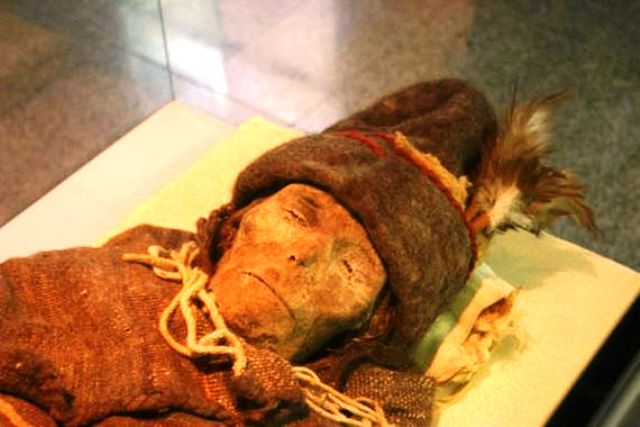
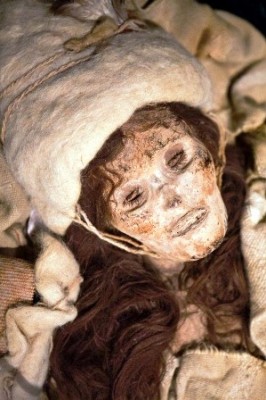
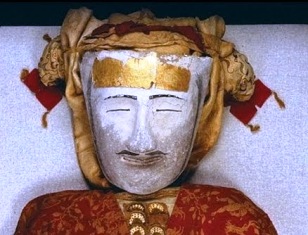
In the Tarim basin ", in the Xinjiang Province of China, Takla Makan desert lies, in which discovered mummies with eyrwpaϊkacharaktiristika.
The mummies are almost 4000 years, After going back to 2000 e.g.. Because of their color, they have been named "white mummies». Because of the desert drought, many of the mummies retain their characteristics, While there are several garments. The results of scientific investigations are impressive, as proving the existence of immigrants from Europe in the wider region of Tarim.
The mummies have no eyes and Chinese are taller than Asians. The color of their hair has mostly blonde and Auburn and the person bring «corners». The clothes that have not been tampered with, and some burial artifacts refer to European peoples. At times, has recorded the presence of Europeans in the region. The Roman Emperor Claudius had received some reports about the existence of human beings in the Tarim basin ", they had hair anoichtokitrina, blue eyes and a height much bigger than that of Asians. References are not historically substantiated and are not safe source, However reinforce the view of researchers.
*Lived Greeks in Tarim area;*
The Chinese historian priest's wife Shima has recorded in the file of the story of the Emperor's Ambassador Wu, The Priest's Wife Zhang, who was sent to the West to search for allies against the Huns. During the trip, prisoner and when he managed to escape, Takla Makan desert found, where he met the
«Ntaϊoyan» (conjectured Greeks even when they bring). The described, White, with beard, no Chinese eyes and reported that they had in their possession horses, beautiful buildings and objects and statues. The area in which it is alleged was inhabited Alexandria eschate, one of the towns that had been founded by m. Alexander, so if the guesswork, the people who described the priest's wife Zhang, were Greeks. When the emissary returned, He talked about people who met the Emperor, which was mainly for horses. Thus began the contact and the exchange of.
Based on these data, It is possible the existence of Greeks in the region. The attire of the Mummy points to Europeans of the time the results of the investigations show that the mummies, have diverse
ancestry. This is justified by the "mixing" of peoples or by other tribes for commercial reasons. The mummies discovered, create a political issue in the city, Once in the past, the inhabitants of the region, they had asked their independence, arguing that there are Chinese.
The survey results indicate that they may have right.
The identity of the Macedonians as Greeks, other well-known adiapseystwn historical data (inscriptions, discoveries of archaeological sites, ancient Greek historical texts, Jews, Romans etc) confirmed by an inscription of 267 e.g.. (Photo of which I sent Mr. Stavros Hatzis, Retired Policeman, that tracks the theme of Macedonia) which is found in Egypt and refers to sports competitions, made in twelfths Royal birthday.
Athletes who reported that struggled, characterized by their place of origin (Thrax, Macedon, Samios etc.), i.e. from the single Greek geographic area. Therefore, only by the fact that listed among other Greek athletes and four Macedonians athletes, confirms that the Macedonians are Greeks.
George Robinson, to the issued the 1899 in New York his book written: The ancient Egyptian civilization galoychithike for three centuries of Greek culture and trade developed in the highest degree, but not altered by the Macedonian conqueror (Ptolemaeus) in religious and language elements of, that's why many inscriptions found, It is etched in the Egyptian (hieroglyphic or vulgar) language and in the language of the Macedonians» (i.e. the Greek).
Apart from the above items adiapseystwn, the identity of the Macedonians as Greek, confirmed and mentioned in my recent letter to the Syrian Ambassador in Athens, i.e.:
(a))From the old testament, stating that "the Hellen King will defeat the Persian King». In the book of Maccabees refers that: "The Alexander of Macedon Philip's son Darius enikise".
(b)) The Apostle Paul ((P) 9, 10) refers, that the 50 a.d. visited the cities FILIPPOYS, THESSALONIKI and VERIA, IE cities that had centuries before the 50 a.d., Since then and until today, these Greek names, confirming the identity of Macedon as Greek.
(c)) The Apostle Paul ((Q) 4, 12) in Thessaloniki and Veria met Greek and Greek women, that Christianity.
(d)) The Apostle Paul spoke and wrote letters to the inhabitants of Thessalonica and Philippi in Greek.
(e)) 356 University professors of American and other countries, co-signed a letter to President Obama and seeking to revoke the decision of his predecessor,. George Bush (son), who in the aftermath of the second election of, He named the Republic of Macedonia as "Republic of Macedonia" and overturned the established u.s. policy on Macedonia, as was outlined by the circular of the Minister of Foreign Affairs Stettinioys the u.s. 1944 and the Truman doctrine. Mr. Bush also reversed an earlier Declaration of, that the 1946-1947 the US helped the Berlin and Greece to maintain their freedom. The u.s. President k. Bush is neither historian, Neither archaeologist and like other leaders, but Governments, been misled by advisers and named the Republic of Macedonia as "Republic of Macedonia".
(f)) End, the designated by the United Nations,. Nimitz, as mediator between Skopianwn and Greek, for the name of the FYROM, in meeting with the Pan-Macedonian Association of America, He admitted the historical truth and said that Skopianoi is of Slavic origin. The information is reported and the reporter (c). Fotiadis in "ADESMEYTO TYPO" the 20th April 2011.
The UN must announce all the historical truth, to cease the issue of Macedonia to reviled in the UN. Macedonia can name the State of wishes, provided that they do not involve the word "Macedonia". I suggest that the "Republic of PAIONIAS", because when came the Slavs in Macedonia, part of them settled in ancient Paeonia.
The English historian NGL HAMMOND, who wrote books about Macedonia, in his book "Alexander (a genius)"notes on page. 268, Ch 5: "The campaign of Illyria and the Macedonian forces»: "End of summer (335 e.g.) Alexander led his army into the country of Several (around present-day Sofia) and in the area that was inhabited from Paeonian (around today's Skopje». THE N.G.L. Hammond, in his book "history of Macedonia" (Volume 2, SLE. 126), reports: "The Paeonian were not Greeks».
The historical truth is that Lenin the 1923 at the 5th Congress of the Communist International, for the first time proclaimed the slogan "Independent Macedonia – Thraki». This policy followed and the KKE and the 3rd extraordinary Congress of Mrs e. (Newspaper RIZOSPASTIS, 14.2.1924) unanimously proclaimed "on an independent Macedonia – Thrace». The 6th plenary session of the 1934, the Pair underlined "The GREEK COMMUNIST PARTY supports the right of the aytodiathesews of the population of Macedonia and Thrace and their parting in a separate State.
Tito, in August 1944, with Stalin's assent, renamed South Yugoslavia (Vardarska) in Socialist Republic of Macedonia and its inhabitants Macedonians.
The Stettinioys, U.s. Secretary of State 1944, with the Encyclical of 8. 868014/24.12.1944 to the ambassadors and Consuls of USA reported: "The American State Department has marked ascending semi-formal statements and propaganda, on autonomy of Macedonia. The American Government considers any discussion of Macedonian ' Nation ', on "Macedonian homeland", on Macedonian ' conscience ' unjustified demagoguery, without national or political personality and resemble aggressive predisposition against Greece. The specific policy of our Government is to oppose any revival of the Macedonian, that implicates the Greece. The Greek region of Macedonia inhabited largely by Greek.
The Greeks they, have no intention of aytonomisews and are opposed to the creation of the Macedonian land. Our Government will hold responsible any Government or groups of States which tolerate or encourage threats or aggressive actions "Macedonian forces" against Greece. " The Kiro Gkligkorwf, After the breakup of Yugoslavia in the UN Assembly, has achieved recognition as an independent State, the "Socialist Republic of Macedonia».
The historical truth, that Skopianoi have nothing to do with the Macedonians, confirmed the 15 leaders of the EEC in June 1992 at the Summit in Lisbon, where unanimously decided to recognise the Republic of Macedonia, If the name does not contain the word "Macedonia". The issue was raised by the then Macedonian President of the Hellenic Republic Konstantinos Karamanlis, who from 3.1.1992 his letter, where is stated that Macedonian, He wrote that: "The recognition of aytoapokaloymenis" Republic of Macedonia "has fundamental importance for Greece and I know better than anyone else since I myself am Macedon.
This Republic nor ethnically, Neither historically has the right to be called Macedonia», and added: "The Seychellois population of this country consists of Albanians, Turks, Gypsies and Slavs, which have nothing to do with Macedonians», and that: "It is inconceivable that with the end of the cold war to historical legitimacy given to Tito and Moscow, who named the Southern Yugoslavia in Macedonia, for output in the Aegean, detaching the Macedonia from Greece».
Pope John Paul, with the Encyclical 1981, proclaimed "The persons born in Thessaloniki Greek brothers Monks (Methodius and Cyril) Celestial patrons of Europe ".
The pyramid of Amfionos is probably the most subversive modern archaeological discovery! The finding revealed a world forgotten, a culture that puts in a new theory of the pyramids, leading the Greeks to claim another major trophy. The wondrous world of Greek history confirms again the greatness of!
The literature on the pyramids and the pyramidal buildings in Greece is widening in recent years along with the monuments that disclosed or investigated anew, historical, morphological and functional. In particular the pyramidal monuments of Argolis, for which we'll talk para down, considered beacons (buildings in which they lit fire to impart a message off) or quartering areas and, However, the time the determination was, in’ all, with exogenous historical criteria, i.e. the arbitrary condition (Note that pyramids and pyramidal buildings schon Greece were unthinkable before the expedition of Alexander the great in Egypt, the "cradle" of pyramid construction!
THE DISCOVERY OF TWO IROON TAFOY TIS ELLINIKIS MYTHOLOGIAS
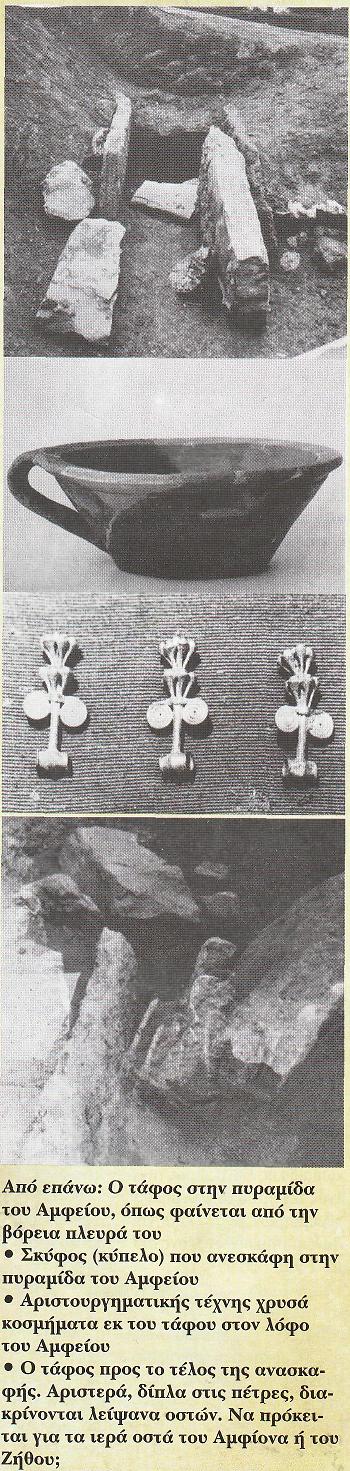
Morphological and chronological aspects of the pyramids of Greece even in tethi new basis in the investigation of the monuments of architectural space of Amfeioy, Thebes in Boeotia. Specific, with the excavations demonstrated that the Hill on which, According to the legend, they had buried the Thebans Dioskouri, the Zithos and Amphion, study on graded by had pyramidal monument!
For the topography and the naming of the hill that there were reasonable and safe recordings of ancient tradition. The tragic poets of Athens of the 5th and 4th century BC., who raised issues of dramaturgy from the so-called Theban Cycle, i.e. from the tragic fate of the House of Labdakidwn, by topografisan’ points of natural necessity and monumental environment of Thebes, in the context of which evolved the action heroes of their tragedies.
First Aeschylus, in his dramatic masterpiece Seven against Thebes, left us a brilliant description and a reference to the natural landmarks of the Acropolis-the Kadmeias thibaϊkis- but at the gates of the wall of the. In front of these walls were lined up the seven lochagoi of Peloponnesian campaign against Thebes, in order to install on the throne of the ekdiwchthenta Labdakidwn Polynices.
THE HUGE IMPORTANCE OF ANAKALYPSIS TIS ELLINIKIS PYRAMIDAS ' GREAT '
Our age is unquestionably the era that the Mesanatolikokentrikes God mesoyranoyn and impose the control effects and their parameters in too many areas of everyday public and silent.
But in today's obscurity Thiva, just at the point where the ancient tradition but also all written testimonies of the place, was about thirty years ago by the archaeologist Theodore Spyropoulos an important discovery kosmoϊstorikis, that however remains unknown and paragkwnismeni, Although you may change all the up to date historical-and not only- data: Found the ancient tomb of Dioskouroi, Zithoy and Amfionos, According to all sources were buried together!
But why this discovery is so important;
Not only because the visitor today can no longer touch the same national Memorandum where were two heroes of Greek mythology! Thing that means that these heroes actually lived and with them played out Ali thina events, some of us have become accustomed to consider as a omichlwdoys time events, in which place persons in situations virtually nonexistent or very much symbolic!
But beyond this shocking confirmation exists and something else, even more unsettling: The Tomb in which found the tomb of heroes, It is the last section-the top i.e.- a huge degree of pyramid midwtis, which is the whole current Hill of Amfeioy! And this Hill is traversed by endless-and unexplored- underground galleries of five metres, sculpted in the rock!
Maybe, However, the syntaraktikotero is that this large Greek Pyramid, can be dated securely around 2700 e.g.! Thing which means it is clearly older than the great pyramid of Khufu, but from the earliest Egyptian pyramid, that of Zozer!
In a nutshell, the pyramidal shape is a Greek invention and from here "exported" in Egypt, but throughout the rest of the world! Of course the topic has even greater ramifications, After this same pyramidal shape presupposes and implies pre-existing religious, policies, social and other similar structures!
We understand well how much stuff spilling the amazing quest of anakaly (I). Spyropoulos… Greek mythology becomes, with exhibits and artifacts, Greek history and even one and a half Millennium earlier than they want to exhibit some agony! One smiling now, When thinking how to officially dating another Greek pyramidi party construct, the famous pyramid of the Greek: Need, says, to build after the era of Alexander the great, Since then only the Greeks came in contact with Egypt to replicate the midiko pyramid shape! And it's called science…
At the same time, We understand and why the kosmoϊstorikis importance of Amfeioy archaeological revelation remains completely aposiwpimeni and let the indifference and ignorance (at the same time that the theories of m. Bernal l. x. yperproballontai…), to the point that today the place that can bring up and down world history is almost a dump…
Here of course it is not n’ develop the thorny problem of monumental topography thibaϊkis regarding the antiquity of the wall of the Kadmeias and the seven gates, to which even the seven igitores antistoichithi of infamous SC Secretariat staff should always ekstra, considered that took place before the Trojan.
Whether Aeschylus refers to the original gates of the Acropolis or kyklwpeioy wall and gates of the city wall of broader historical times, It is an issue that goes beyond the framework of this topic. Moreover, This is an issue exhaustively developed in studies of eminent researchers in the thibaϊkis monumental topography, as Fabricius, the Willamowitz and particularly Keramopoullos, Antony. The latter, in the monumental textbook of Thibaϊka, in Archaeological Bulletin 3 (1917), developed all relevant issues, without-fear- to always results in secure identifications.
In what,but in terms of topographic position of Amfeioy, all the scholars and the Theban line investi can agree that it is a hill that is located to the North of Kadmeias, from which separates a deeper initially-richoteros today due to silting- neck, Once in this position there is no other natural landmark point, that corresponds to the reports of the tragic. Especially Aeschylus writes (Seven against Thebes, 526):"And fifthly n t, I say / prostachthenta borraiais pylais pemptaisi / by tymbon’ This diogenoys Amfionos».
C ' Borraiai Pylai» Aeschylus did not supervise may be placed elsewhere, except at the north end of the oval Kadmeias, which narrows at the end this. However, endless nanti from these gates there is a natural and monumental milestone: The Hill and the tomb of Diogenous Amfionos, who bears the name Amfeion. Everywhere around the milestone that lies the fertile plain of Thebes, the Territory Aonion.
Aeschylus in addition record the Hill and the funerary monument of Thiva Dioscuri, as Meteor-i.e. high milestone- the tragedy and the Suppliants, 662, When he writes: "Tanks (d)’ vehicles (I) / Amfionos enerthe semnwn threads» (see. and: "Besides the Zithoy ' amfimnima / Evripidou The Phoenician Women, 145). This verse indicates the Hill and, on the top of the tomb of Zithoy, which bypassed the Parthenopeus to highlighted at the gates of Kadmeias, the so-called Borraiwn or Wgygiwn Portals, that in the works of all the Tragic are linked to the Hill of Amfeioy.
This well researched natural Hill at the beginning of the 20th century. Antony Keramopoullos,, thereby establishing the testimony of Pausanias 9,17,4: "Zithw and Amfioni in Earth soil is common th mega». In this way, the traveler of the 2nd century. a.d. on the other hand’ a rescued the tradition that they were buried in Dioskouri Thebans common gravesite, on the other hand’ then eyewitnesses described it as the Tumulus of mnimatos as "common Earth soil th mega».
Fri’ but the whole Keramopoullos, EPI assured with the research of the small height of the Mound in the top of the Hill (3 measures approximately over the Hill, It has a height of approximately 35 measures), failed to identify the common grave of the Dioscuri, which we have brought our systematics research during the period 1970-1973!
So, the "mythological" tradition of a Sima ntikoy and venerable monument of the prehistoric culture of Greece, was entirely accurate!
But our research has not stopped here. The Tumulus covered the common grave of the Zithoy and the Amfionos, It was seen that there was dirt simple, but colon shape Romanian construction cone with Adobes, in the northern part of which had become the great-of course common-CIST grave of two heroes. A monumental burial installation with IE kalyptiria huge plate and double door on the north side of close!
The sylimeno grave diataragme to found skeletal remains and three gold Orna Mata krinopapyrwn EUR 0,033 m. (33 mm), with double spiral on the basis of oppositional anthers and strain that resulted in mounting yoke. Of Course, There were a lot more members, one or possibly two necklaces, which anadeiknyan the I WOR and priestly Office of two Princes. (Something similar are the flowers of KRI mind-Papyrus, the bearing and the Prince of the "achaean" Knossos in the famous toicho PHY Prince with the lilies, strating that anadei, in general admission, the priestly office…)
The gold jewelry, the nicest of the Greek area and the findings of the Tomb (It, skyphos) date the pitchers of the tomb and the Mound that covers, in the Prwtoelladikoys II times, i.e. in the period 2700-2400 e.g.!
Despite the objections and the attempt by the scholars to taxes katabibastei hrono λογία and gold jewelry and the Mound to the next Elladiki Period (2000-1700 e.g.), our dating is generally accepted today and is the starting point for the dating and the spatial distribution of the shape of the mound in Greek, but the European space!
Briefly, the princely epitaph Tumulus of Amfeioy is not a known sample and process type Kurgan burial Mound, It is found in Central Europe, the Eurasian zone and South Balkan (Albania). The tumuli are Kurgan burial monuments multiple burials (multiple burials) and their offerings are different from those of the Amfeioy and other tumuli of Greece, in which I encouraged burial jars, bronze objects and pottery typical Greek-Mediterranean and not "European". This undoes the attempt to link the elladikoi tumuli with the bodies of their presumed use mound Kurgan and IndoeyrwpaIoys stakeholders that then, supposedly, for the first time (PEII / IP III period, 2200-2000 e.g.) entering Greek territory… However, Neither the archaeological, Neither the legal sense picture of the Greek area support such theories, as we will see below.
The Tomb is indigenous epitaph shape and signal, evolved from small-slip knots tym of Neolithic times and taking monumental dimensions and monumental form from the Middle Bronze age, proportional to IOS Office of igemonos-deceased. The latter apathanatizetai in memory of the nation and with the epitaph tymboeides bulge, that Homer describes as "Trade Mark" tilay, compatible with the nature of the Mound as commemorative of the glamour of the deceased ruler.
THE TYMBOS THRYLIKOS
But our research has not stopped here. The Tumulus at the top of the Hill stood at the end of a section of the Hill, which had koloyrokwniko shape (cone with two webs, up and down) and a height of approximately 4 m. from one surface to another.
On the basis of this part of the Hill was purely a perimeter zone, a stomach ache, they tried to interpret the Keramopoullos,. Of Course, He is right, of course-!- considered that it was artificial and not natural.
Hypothesized, well, that the stomach ache that was a processional Street ' rituals '. Such rituals suggest the Oracle of Bakidos, a seer from the Arcadia of the archaic times. According to the Oracle it, the Thebans had to guard the tomb of the inhabitants of Tithorea, who, When the Sun was in Taurus Star Agency (May), attempted to steal sub soil from the Amfeion and the post bear home. The soil it carried in tomb of fwkoy, who was the wife of Antiope, mother of Lioskoyrwn of Thebes.
Pausanias used the verb "yfai reisthai" to describe the action of the inhabitants of Tithorea: "YfafeIsthai (d)’ ethe loysin re’ This land in the Fwkidi Tithorean nots ".
The Keramopoullos, contemplates any factual meaning of the term and wondered if this was normal Hill format, ther. Fri’ all these, made the mistake to classify as Byzantine aqueducts some of tunnels in the Hill, which seemed when he visited the tarmac road Athinon-lamias…
” Eventually, our research showed that the "yfaireisthai" of Pausanias was one of the two parameters of the Amfeioy pyramidos, i.e. its internal tunnels!
” The other parameter is the same configuration of dwti Hill bathmi, with such carving, in order to get the tribathmo shape, on top of which built the Tomb and the tomb of Zithoy and Amfionos common, that gave the name of the Hill, «Amfeion» or «Amfion». (see. Xenofontos Greek, 5,48: "and for the Amfeion thesthai agagontes ekeley being weapons», Arrianoy 1,8,6,7 and Plutarch on the sprite Iwkratoy, 4: "The Arch'ias Theokriton and now the kalesas Lysanorida prosagagwn long time ekneysas own speaks of the road under the Micron Amfion»).
The discovery of the pyramid-shaped Hill experiences started from the finding that a few meters below the Peridromo, at the base of the upper cone of the Hill, There was also a second similar km/by stomach ache, who was fthe'i by pachytates katakaly form, trees and bushes, that made it invisible. The APO also revealed that peridromoy cover and even a koloyro Cone, While, as per our skafi, It seemed and still a third principle. The latter though, It is virtually katachwsmenos, In addition to the East side, where there was a bed of Chrysorroa. And even further East, There was the city of the historical Market, but not the Roman Empire railroad, times, the ending of which stipulated the ancient theatre.
The cones of the Hill were measured as follows (imputed value):
* the Tumulus 2,20 m.
* the first cone 4,40 m.
* the second Cone 8,80
* the third Cone 17,60 m.
ROUTE INSTRUMENTS in amazing tunnels of a hill
The Hill of Amfeioy has laxeyetai recommendation psammoli thiki and relatively easily, but the citizenship of epifa undergoes weathering the weather. However, This does not apply to the inside of, where the tunnels perfectly rithikan in-depth maintain your speed over 20 m. The main access to the Interior of the Hill made from vertical shaft, approximately one meter diameter, which was revealed at the perimeter of the plinthinoy mound, his large Tomb borei as the top of the Hill.
A second well on the western slope, slightly oblique, served the ventilation and lighting of the Interior, as is the case in the underground Egyptian monuments memorandum.
The tunnels inside the Amfeioy project is diligent and sophisticated. From the Central shaft leads, East one, in a trifylloschimi notch of the rock, West does not, in an ashlar scale, that puts the Po level of tunnels. These tunnels run throughout the Interior of the Hill in straight segments, right angles which form a maiandroeidi Grill around the Interior of the Hill! The height of tunnels is 5 measures and the creatures description 1,80 m., While the roof is arched!
At irregular intervals, bifacilal, opened in rock alcoves EUR 2,5 m., kamarwtes up, the largest amount of which has been wrapped by pieces of rock.
Our path inside of the Hill was an exciting transfer in the world of legend. The twenty meters depth of kata koryfoy our shaft brought daily with a Clipboard lifting mechanism in the bowels of Amfeioy and in the elaborate tunnels of, which run with individual guard and awe, tethered with cords in order not to perish in the unexplored daida Luce!
The scientific search stirred the human curiosity, the admiration for the amazing structures and our emotion, which was so deep, and the depth of shafts and tunnels that bring us to the mysterious world of the dead, trying to discover the eternal dwellings!
But unfortunately it has left us! Not even had time to run all the underground tunnels, to the design and the photo grafisoyme…
However, our experience, Although short, It is always shocking and magic” the Interior of commercial Amfeioy is the amazing underground monument of Greece that must be investigated and given to the public! And this is very easy from the lateral exits of the tunnel, located next to the existing roads! The legendary and the magic have taken monumental under stop inside the Amfeioy and from coverage of underground tombs is the vindication of our Tradition and our own-atelesforwn, Unfortunately- research efforts and.
THE OTHER GREEK AREA OF GIZA
For the remaining pyramids of capadocia indications are atelestates. In the author's book Word Axios and researcher Chris Lazou, Pyramids in Greece, ekdo tions Aeolus, recorded seven pyramids:
1. The pyramid of Hellinikon
2. The pyramid of Ligoyrioy
3. The pyramid of Dalamanaras Argolida
4. The pinnacle of Caterpillar, New Epidaurus in Argolis
5. The pyramid of Sicyon
6. The pyramid of Neapolis in Laconia (Biglafia)
7. The pyramid of Amfeioy in Thebes
The author briefly describes the dismal condition of most of the monuments are in his article "we pyrami view in Greece!» in Focus magazine, vo 35, January 2003, SLE. 98: "The pyramid of the Greek is the best preserved, with approximately nine masonry structures found style (6-7 measures).
Is she in Ligourio, flattened, of which there are very few saves only its lower stones, especially in the downhill. The pinnacle of Caterpillar survives on little ruins, mainly the front side with the entrance and the pyramidal angle of. The pyramids of Dalamanaras, of Sicyon and she in Biglafia had been destroyed, with the difference that the last saved only the moat that surrounded. End, the tiered pyramid of Amfeioy, Thebes, has undergone so many interventions and disasters, It is difficult to discern the shape of».
In the latter case, the author obviously refers to the installation of a system of Scouts on the pyramid with the permission of the State, Although he had already anakaly application have been referred and the Tomb in Thebes and the Dioscuri gradient formation of Hill.
On the other hand the Hill meanwhile was Grove and was planted with pines, the roots of which cause damage to the surface of monuments th. Among the pines, Digger cleared a narrow area to discover the Hill gradient formation in pyramidal monument. Distinguished, from the bottom up, the rungs 1,2,3 and the two intermediate sections, While at the top of the Hill stands the-invisible in the photo- "tumulus" with the common grave of the Zithoy and the Amfionos.
Gradient shape has until now only the pyramid of Amfeioy, While the rest look Beauti encouraged to belong to the type of normal sided pyramidos, with smooth surfaces and construction of surfaces, epimelesteris or ypotypwdoys sculpt. The pyramid of the Greek has among large surfaces and smaller stones, a technique known in prehistoric buildings in Greece, not only in the cyclopean walls, but in oldest built apartments and construction, as the prwtoelladika ' mounds ' of Kwpaidas.
The u.s. study of the Irich Karstedt (Per Kopaissee im Altertum und die «i minyschen» Kanale, Arch. Anzeiger, 1937, SLE. 1 JV) grammisei that the Sub had walls of prehistoric structures in any way is not a presumption of their exact dating. Other researchers do not, have emphasised that, from the ancient walls, those who stand out for their manufacturing peculiarity are the walls of the buildings (mainly naϊkwn) of geometric times, distinguished with the "mikrolithiki" the structuring (steinekeinigkeit). Therefore, the chronology of the pyramids with only the criterion of their Builder is risky and futile.
Only the excavations and the application of modern methods of dating can determine the chronological horizon construction of these unique monuments, keeping the expectation to grow numerically with the progress of the investigation. However, Despite the possible survival of an original shape, It is obvious that the pyramids of Greece (but also of Egypt) expressions of culture and practical approach of an era, a cultural cycle that the «discovered», the structured and mopoiise used for his own needs and his own philosophy sees or worldview, fact essential for interpretation and their dating. The final use and sending more powered almost undisguised. For Pausanias the Greek Midas pyramid was burial polyandrio.
As written by Xr. Lazos (as above, SLE. 9: "Pausanias called the pyrami view polyandria (the Greek and Dalamanaras), meaning the tombs of many individuals and not a. The small forts were polyandria that hosted a limited number of soldiers. The Arvanitopoulos argues that this was the emblem of the Greek tomb and that beneath the hill there is a probability that is the grave of a prominent person. As a polyandria-forts consider the pyramids of the Lord, Wiegand, Fracchia-he believes that defence towers were some of Andalusian-while Leake, Ross, Vischermi Clark agree with Pausanias, that was a funerary monuments. However, no bones were found in the pyramids… Most likely, or equally likely is the view that considers buildings beacons, broadcasters Pty fwtei messages with the method of pyrseias, which support the Cirtius, Donaldson, Tsountas and Manatt. End, the team of the Academy of Athens supports the very terms that promote thimeni likely to be astronomical observatories).
It is obvious that it is full sygchy point! The Xr. Lazos writes that pyramid in Biglafia of lakonia "had become an obsession for me and I tried to locate ten times. Eventually I found the 1995. All that survives from this is the moat that surrounded ". But nobody has explained to us what serves a moat around one pyrami da, for which the Lazos suggests "different architecture" and notes: «located on a rectangular base, surrounded by a wide moat and saves only its lower stones must be rectangular stones, as we distinguish the various stones that come from’ This and have used the surrounding folds» (as above, SLE. 9.
Pausanias, as we all know, considered this Midas pyramid tomb of Kinadwnos, Master of Menelaos. For the wide moat that surrounds the pyramid of Biglafiwn and memory pitha restore original shape will syggrapsoyme special study. It is obvious of course that each Monument requires its own research and interpretation, and certainly the exact dating.
So will only prove their potential diachronic, the possible survival of shape and any destination or the initial integration of all in a cultural and’ contains chronological horizon, that for us is the most likely version. We believe such a horizon, the early and middle age of hull technical, the period of the minyakoy culture of Greece, the Millennium of burgeoning culture tion of Minywn in Greece and beyond (2700-1700 e.g.). This State, the cultural agency that has, for us, invent and promote the pyramidal shape not only in Greece, but the wider area.
But what is the purpose, What is the starting point and the operation of these buildings; The tomb was clearly Amfeion. On top of the grave of Rulers, the Dioskouroi of Thebes, Zithoy and Amfionos. The Tomb he probably was the center of worship of heroes, institutions of the city of Thebes. In anereynito unfortunately, the Interior of the Hill are presumed to be arguably others tombs. There it refers and the reference of Pausanias for tymbw rychwn attempts inside the Hill («yfaireisthai»), and the grave yard of Hill-Monument, as well as pyres of Niobidwn despite the lofon.
So, the Hill and the pyramid of Office like as not only landfills of rulers the Dioscuri of Thebes, and their families, functioned as "polyandrion" and at the same time as their opsimoys irwolatreias space until times of antiquity! From this point of view, the pyramidal shape was not only utilitarian ierarchoyse the graves in which the Office of the dead, but capturing and sanctity of eternal dwelling of Rulers, of heroes.
The pyramid of Amfeioy, gradient Exo inside and poaching internally, It is the most important, After Lacedaemon, our national Memorandum of minyakoy culture.
Unfortunately, the elaborate this grid has not been investigated, because the signer Digger was transferred from the headquarters of the year 1973…
We underline once again the monumental construction, the complicated route of tunnels, the excellent preservation of laxeysewn… Of Course, the Interior of the miatafiki economy Amfeioy served and practice, which reinforces the similarity with the Egyptian funerary monuments of ancient and Middle Kingdom, in which there are also tunnels, scales and niches, as in Amfeio. The elaborate structure of tunnel route correctly interpreted as a ploy to mislead the tymbwrychwn!
This grid of tunnels in the commercial Amfeioy Interior, which of course was known in antiquity, commented-unbeknownst to IOS, probably- Pausanias, with the ' yfafeisthai d conservation parati’ etheloysi re’ This land in the Fwkidi Tithorean nots ", hinting, apparently, action tymbwry tests inside of the monument.
Fri’ the investigation of Amfeioy stayed imite lis and the shaft was closed with cement after removal of the signer excavator, the findings and survey data have been enough to tekmiriw Soun interpretation as a funerary monument of bathmidw of Early bronze age (2600-2400 e.g.. that is the oldest of the great pyramid!)!
THE THRYLIKOI MINYES AND TECHNOLOGIKA KATORTHWMATA SOOOO TOUS.
The Amfeio well, necessarily put us in an important reflection: There was indeed another important culture in Greece before the Mycenaean Culture and, If Yes, What was the starting point, the duration and characteristics of; The research of Amfeioy led the excavator in the dating of the epanektimi colossal project of Kwpaidos from straggistikoy, that tradition was connected with the Minyans of Orchomenus Boetian. The Orchomenos 77(1) already in Homer referred as Minyeios, While slow cially Pindar reiterated the connection with the Minyans in expression: «Bishops ' Minywn Palaifatwn.
Dienergisa excavations, so in mounds of drainage canals of kwpaϊdikis basin, and in ther parties of "great Ponor»,, that is the main water artery of the diverter kwpaϊdikis Lake to Larymna via an artificial tunnel length 2,5 km, with Professor S. Lauffer, University of Munich, witnessed that the huge drainage work had all paid and work in the Sun of the Millennium b.c..
This was another indication that before the Mycenaean era, Greece became experienced a high technological culture, which in turn presupposed proportional administrative organization. These items, however, were very disturbing to scholars those, He promoted the theory that the mycenaeans founded the oldest culture in Greece and faced with prejudice or even contemptuous indifference, but they can cancel, Since these are based on archaeological data!
Buildings ' palatial ' character of the early Bronze age front, i.e. of the third millennium b.c., revealed in Greece, Thebes (arched building) lerna (State of residence), in Akkobitika of Messinia… Last even, apokaly dismissing Thebes, the "seat" of Amfeioy, palatial building and relic wall of Kadmeias, as well as great "tumulus" from mud bricks-bricks. All the above assessed in prwtoelladikoys times chronolo, so it finds contemporary GE of Amfeioy pyrami. The conclusion is self noito: the Greece enjoyed before the naϊko and one of myki’ just as thriving and, I believe, akmaiotero culture, the duration of which covered the third and the beginning of the second Millennium b.c., virtually an entire MI CADE (2700 until 1700 e.g.)!
The culture he had administrative palatial organization and monumental burial architecture and high technology, hydraulic start and not only! Not particularly brilliant, During this period there was the metallurgical technology, as shown by our own per skafes in the village of Agioritika and the Strait of Tegea, two spaces which currently represent the most important and archaiote RI metallurgy, not only in Greek, but throughout the Mediterranean and the euro ence at national, European space!
We we featured this culture "Minyako» and the period of time of development" ("Minyan") period "of proϊstori technical culture of Greece, covering the Millennium 2700-1700 e.g.. This is included in the Millennium and the so-called early Helladic Era (2700 until 2100 e.g.) and the first two subdivisions of Μεσοελλαδικής era awaren legome (With I and II), After the third tier of, the ME III, There is archaeological and historical "», but lying or rather is the borderline between two cultural circles: Of the minyakoy and of the Mycenaean civilization.
Now it is worth researching and jobs the minyako meleti Millennium culture 2700-1700 e.g., as a substantive high culture istic circle, in all aspects and ekfan tions of.
Follows, will distinguish from both the long neolithic culture of Greece (7000 until 3000 e.g.), and shall the x, the Mycenaean civilization (1700/1600 until 1100 e.g.), by the end of which consistent sympi and end the so-called prehistory of Greece. Why the minyakos account of Greece culture emerges as the standard by which our culture was the Mycenaean, in terms of political organisation, Tomb architecture mnimeiwdoys, technology, worship, but literary oyrgias standar, as we develop our other Mele timata. THE PROBLEM OF CHRONOLOGISIS
The dating of the pyramid of Amfeioy in the third millennium b.c.. several issues anekinise Mata, Although scholars aren't recorded the starting point of the new da kypse reflection after the announcements and our dimosiey ments… The investigation centered on the reaction of the well-known pyramidos chronolo in Greek of Argolis, which was considered Hellenistic times, According to the dating proposed by the American archaeologist Lord (Hesperia 1938,481-527).
The new date was based on a new excavation investigation of the monument and in application of the method of thermoluminescence. Researchers of the monument, teachers Theoharis and Lyritzis, witnessed that the pyramid of the Greek dating to the early third millennium b.c.. With this survey was the ancient chronological setting of the pyramids of capadocia, as was shown by the excavation and study of the Amfeioy of Thebes stepping pyramidos. So, the pyramids of Greece – at least two of the most important, both the step, and the schema tetrapleyroy- is not of Hellenistic site, but the prwtoelladikwn years! There were works of the third century but of the third millennium b.c.!
The discoveries and these findings defeat all the mainstream of our time, but it was compatible with ancient Tradition, which usually describe as "mythological", aplopoiitika and generalizing. The "mythology" of these two monuments rescued much later touring ' literature ' of Pausanias. The pyramid and the tomb of the Amfeioy tradition of Thebes, He was rescued by Pausanias, the link with the common grave of Thiva Dioscuri, which compound contained in Homer as the first built wall in Kadmeia (Odyssey, (l) 260).
"The first Thibis edos built eptapyloio
pyrgwsan t ', Although th apyrgwton epe'i c’ nanto edy
spacious Thibin naiemen, kraterw CA’ eonte»
Recently discovered relics of promikynaϊkoy (kyklwpeioy) This wall in Kadmeia, near Amfeio, and he has headed the chronolo prwtoelladikoys times, that is the same time as the formation of Amfeioy in gradient pyramid!
And not only found the wall that, that is mentioned in the Odyssey as the eyrima of Kadmeias archai otato, but a specific add-on, palatial, contemporary menu in the adjacent wall and building, a real citadel house, as announced by archaeologists of the Inspectorate of Antiquities Thebes in recent Conference organised by the competent Committee in Thiva!
And the former Pausanias and the Keramopoullos, I noticed the shape of the Hill of Amfeioy in gradient pyramid, but the first two and left a verbal comment and a reference to attempts by observing tymbwrychias, "Shin d'etheloy yfafeisthai re’ This land in the Fwk'idi Tithorean nots ". The Keramopoullos,, with education and acumen of wondered: "That “yfafeisthai” dynomai not to noisw or as otherwise seeking unto the whole principle of the mound, unto him that is the natural lofon… ignoei Pausanias or fine bws says neither Hill nor nature eswterikin the whole thereof pistin» (Arc. Deltion 3,1917, SLE. 387-.
The research of Amfeio opened a new reflection on the use, sending and dating of railroad buildings pyramidi capadocia, but the research of hydraulic works, which we first chronologisame in the third millennium b.c.. and we felt works of minyakoy culture of Greece. It is now certain that the progress of the investigation will be constantly knyei him anadei culture, the Golden Millennium of our prehistoric past and prosgrapsei all of the katakti ments and achievements, which yfirpase the Mycenaean civilization. This well I’ the new component effec brilliant chapter of archaeology and science…
The pyramid of Amfeioy arose as a memorandum he meiwdis construction, which proϋpe thete analogue and modern administrative health Union, an administrative system, which s he oyrgise a monumental architecture before the middle of the 3rd millennium b.c.. This upset the established theory that in Greece there were no monumental burial constructions and monumental administrative-palatial buildings before the Mycenaean Times (1550-1200 E.G.).
The bodies of the Mycenaean Culture were considered-and still considered- the descendants of Indoeyrwpaiwn, who-allegedly-entered in Greece at the end of the 3rd millennium BC., of course, there is no archaeological or linguistic support of relative theory. Besides, nor is the movement of Kurgan tumuli solved the issue, because elladikoi tumuli evolve independently and are not offered as a presumption of tribal movements from the European or Eurasian space in Greece.
THE PYRAMIDWN AND ARCHETYPIKO OF THE FACTORS DETERMINING THE
In what,What concerns the morphogenesis of pyramid structures and spatial that the afe, things are competitive and exciting. Who ' anakaly ' took the shape of pyramidos; The alleged "cradle" of, Egypt, or Greece ("minyan"); The great antiquity of English pyramids would be indefensible as a single phenomenon and product, If you couldn't make with a modern, multi-faceted cultural infrastructure and State Organization, that ekfra he elsewhere and here with high-grade products and technology.
Without the existence of State and minyakoy culture minyakoy, Greek pyramids would stay more curious construction (curiosities) and metakinoyntochronologika from the "prehistoric" until the Greek Natur compliance with its times, sometimes with RIA research tekmi, sometimes in’ Yours sincerely. But despite gwga, works and monuments of a particular culture and a particular time duration and this determines, indirectly but imputed, the dating of Greek pyramids, the Greek creation of architectural culture of minya Golden Millennium (2700-1700 e.g.,)!
The Egyptian pyramids are the true thesteres polypli, but, now, not the oldest! Greek pyramids short numeric residues, but this probably is symptomatic (subject to the "chance of discoveryw/probability of discovery), but already claiming not simply taytochronia, but greater antiquity than the oldest Egyptian, dating on the 2700/2600 e.g..
However, the archetypal of the pyramids is determined not only by the culture that produced, but from the mission and their use. The pyramids are not only burial monuments, which are mainly the Egyptian pyramids. Modern research has yielded another character and using in the great pyramid of Cheopos, which investigates as astronomical station or legal proceedings projects, with convincing arguments! Of returns is not accurate gaiwdesia and "beneficial" effect on the maintenance of organic substances covered by the ' shell ' of!
Instead, the remaining, as far as I know, and the "classic" gradient pyramid of Zozer (2600 e.g.. about) they had burial progress higher, as the ypogei s polydaidales or adjacent burial and their respective facilities devotional. The premises where you were intended to ensure the body-snatchers and parapla serving the multiplicity of ethimotypiwn faith and practices developed in the main trait of Egyptian priestly Hierarchy and every stwtikis.
Burial destination had clearly and the pyramids of Amfeioy and Greek of Argolis, as shown by the findings and the inner tunnels of Amfeioy, but the tradition that he wanted and the one and the other pyramid to have hosted the graves branded heroes of both regions (Zithos and Amphion, Proetus and Acrisius respectively).
THE HONORARY HEAD OF ARCHAIOTITON D. TRIANTAFILOS APOKALYPTEI
Until the 1980 they were discovered 269 tumuli in Thrace, from whom 70 In Rodopi. The most important is that of Small Doxipara Evros, While so far only 35 have been explored to some extent in the Rhodope region and specifically breast, There were lathroanaskafwn cases and so I started from the 1992 the excavation of tumuli Interview Dimos Mpakirtzakis / Tribute: Archaeological / Tumulus Breast area monuments speak for themselves and reveal moments of history.
So I made with the tumulus of Amphipolis. So would become if the excavation on the tarmac about 350 tumuli of Thrace who keep buried secrets. Most of them have visited the archaiokapiloi, long before the archaeologists, have brought about major disasters and have removed interesting facts. The fact is that their raids the confirming, the Honorary Curator Diamantis Triantafyllos. The man who brought to the surface, a unique archaeological find. Five Roman carriages and important objects found in the tomb of 6-7 m. with a diameter of 55-60 m. It was the most impressive of the findings uncovered in Small Doxipara – The Evros area. The excavation began in September 2002 and brought to light valuable findings that still await the special Spotlight and their residence permit Mr. Triantafillos spoke in the "x" for the tumuli of Thrace during a very in-depth interview. Revealed that until 1980 they were discovered 269 tumuli in Thrace. Total 70 In Rodopi, 54 in Xanthi and others 145 in Evros. The most important is that of Small Doxipara, While so far only 35 have been explored as a degree. Excavations in Amphipolis have sparked their interest and tumuli of the Rhodopes and Thrace wider. There is evidence for our area; -We can say that we have two categories of funerary tumuli: those located on the outskirts of the ancient Greek cities, such as Abdera and Maronia in ancient Peninsula of Molivoti peninsula. And there is a second category of tumuli, is free in room tumuli, IE does not have a direct relationship with a settlement, is at greater distances, and such we have many mainly in the Northern Evros. Why this site has more tumuli; -Why were there at the time of the Roman Empire – most dating to the 1st and 2nd century. a.d.. There were many landowners, who at one time had acquired wealth from agriculture, from livestock and were able to build such memorials, who needed a big expense. It was namely for ordinary people, who in all seasons were buried in simple pits, in cemeteries. There Are 350 tumuli only in Thrace; -Yes, and above.
About 150 they were the ones who had counted in the Prefecture of Evros only. There are also in Puebla in the region of Eastern Macedonia and the Parent at Xanthi near the Abdera. The archaeological hoe with these tumuli, What has made this whole time; -Start of the Ebro. There was a tomb excavation program, because we had many cases of lathroanaskafwn. Went with hoeing machines and were trying to find their graves. Others find them with drills. We find such residues in tumuli. So, though, identified only box-shaped, they say that is constructed with stone slabs or carnivorous, When pounding the arida on the stone. If it is a burning dead, It is difficult to diagnose. We Started, well, a program in the Ebro, every year to dig into one or two tumuli, Depending on the time you take the excavation. Most of them are Imperial Roman times, but it also found very few of the 4th and 5th century. e.g.. Unfortunately most sylimenoi found, but interesting pottery and we've recovered many cremations found apeiraktes. So, We have many funeral gifts, vessels, glass, stoneware, iron, copper objects. In this category belong and the tumulus of Mikri Doxipara Zone, where of course the rich found these findings, the carriages, horses etc. In the area of Rodopi, in the area of breast, We had lathroanaskafwn cases and so we start from the 1992 the excavation of tumuli. Found and stone sarcophagi and tombs with box-shaped plates that denontan each other with iron links, but of course this was sylimenoi. We've Recovered, though, interesting pieces of ceramics and pottery sygkollisame, as the only white lekythoi, that is in the Museum of Komotini, the skyfoi of Ag. Valentine and other interesting findings not interested treasure hunters or looters. Namely the archaiokapiloi interested in what, What is in gold; -More interested in gold and metal objects, but undamaged. The way, though, intervening, usually causes destruction in sensitive ones, even from metals, objects. It not only needs, of course, are gold and thither directed their interest. In ancient Maronia had done the excavation. From there found and finds at the Archaeological Museum of Komotini; -Yes coming from the mound where I had done excavations.
In the ancient city continued the d. Terzopoulou and now continues the excavation program in collaboration with Princeton University. Implemented this year for the second year and will continue on Tuesday and of course can be renewed and the license and for more years. It is fortunate that started this excavation with expenses mainly Americans and is big issue of identification of the city there, because there are many opinions. We continue to believe that this is the ancient Maronia, but of course you have to prove with facts and findings, mainly with inscriptions that can give us such items. There are even tumuli has not entered any archaeologists; -Yes of course, most. Why is this, It's so big the cost; -It costs too much, because one such excavation can keep to a common tumulus, not very big, and two and three months, and depending on the findings may hold and above, as he kept the excavation of Doxipara. Need and money and people, to say that such a program will continue excavation of tumuli. The expenditure is large enough and of course now in these days we need to be very impressive find, to have similar interest of the State. The tumulus of Paradimi presents some interesting; -Differs from the burial mound. There is the term, better to say tuba, It's prehistoric settlement, that with the continuous habitation-after the disaster that is this happen often with a village fire- Why was again set in the same place, so over the centuries created this artificial An. These are the prehistoric mounds, have no connection with the funerary tumuli. Source: http://www.xronos.gr/detail.php?ID=94411
By continuing to use the site, you agree to the use of cookies. more information
The cookie settings on this website are set to "allow cookies" to give you the best browsing experience possible. If you continue to use this website without changing your cookie settings or you click "Accept" below then you are consenting to this.