The Kerkini of yesterday and today

Exakontizomaste with the help of faster transport of mind, almost 20000 years before today, was then the last glacial period that saw our old continent, the glacier melt away in the Rhodope Mountains and the terrifying water volumes resulting rolled from the mountainsides as down low in a plain that much later transformed in the plain of Serres who know.

One was located in the southern part of the plain and the called historians “Kerkinitida” ή “Kerkoyro” and the other was in the Northwest and had the name “Prasiada”.
The centuries passed, the River with the torrents have continued their work separating again and again the Lakes, as the 20th century came found under aplwta baltotopia and innumerable small lakes, two were the greatest: achinos East and Kerkini, in place of the ancient Prasiadas. The Kerkini to the period of the Ottoman rule was known as Mpoytkobo, was clearly most small from Lake achinos and several have even been times when completely dry up, all this world cheer water life forms, vegetable and animal.
However, the river has not always been a blessing for the residents of the place. Dynamic and unguarded, not at all times remain within limits of spread furiously, flooding villages and crops, reaching almost as the root of the mountains and hills. The situation for residents was really very nasty especially after the Balkan wars the catastrophe and the installation in the area of refugees, then the Earth was valuable because it was necessary.
The 1928 the Greek Government assigns to the company John Monks-Ulen & Co from the USA the work of conversion of the plain of Serres "... tens of thousands of acres of fertile fields of ...'' six years later, the foreign company that became known in Greek as Oylen, terminating the project had, Lake Achinos Brooks and several marshes, the Plains were settled with mounds of Struma, and a barrier was erected in 1932 near the village Lithotopos, the first he block the flow of the waters of the River was the beginnings of the creation of Lake kerkini as artificial water savings as we know it today.
The purpose that created the artificial lake was threefold: to tackle floods, the increased demand for irrigation of crops and the containment of materials that convey the Struma.
However again the river filled with debris on the Lake, the 1952 forced to raise the levee, again the river outside of the limits, the Lake was filled with deposits of fertile land that people wished to cultivate, and the 1982 Opens the new dam, but River, still exists and sets differential by humans, Maybe pushes us to confront the situation with another Visual, This coexistence with nature and not this binge of exploitation of.
As was next, all changes in geomorphology and hydrology of the site the appropriate adjustments followed by plants and animals, which with vigour and determination over the deadlocks. So the Kingdom of water could be maintained as ΄΄paradeisos on Earth ΄΄me invaluable natural riches, How did this happen; the present Lake is located on the ancient wetland site, from the heaven of ancient aerinos also a passing corridor that follow birds migrating.
The Lake is relatively shallow with rich aquatic and riparian vegetation and mild slopes bas-relief in the North and Northeast, It has uninterrupted power supply from the River in both water and nutrients but also because the Lake periodically presents high productivity. Because of these conditions in other ponds do not apply, It was possible in a human project to provide stronghold and refuge life unique example reservoir live in our country.

The path inside the time

As every river, so the Struma, believer in the role of, millenniums carrying materials that methodically piling on the plain of Serres. Over the mountains and the hills ploytainoyn from plants and animals, ancient writers, as Herodotus, cite crowded pine forests, Oaks , Chestnut and beech trees. When the 480 e.g.. troops arrived, constructed to pass the Struma, a wooden bridge based on boats. Present-day historians, studying the remains of ancient Amphipolis, support that had to be cut from the surrounding forests 12,000 trees for a huge bridge that lifted the endless Persian army. Amid the lush vegetation indicate, also, the ancient geographers that lived many large mammals : Deer, wild boars, bears, Bulls, but lions, leopards and leagues !
Major changes with great impact began in the early 20th century following the intense historical changes in the Balkans. In the 1920s, and after the Asia minor catastrophe, 85000 katatregmenoi refugees, arriving in the region of Serres and villages close to wetlands, informed that the place is karperos and ponds have fish, here people have pinned hopes for their future, doyleytarides as was, the hard work is not the were shocked, were shocked, though, Malaria really decimated their, unusual as it was in this relentless disease. The same decade the Greek Government incorporates the region into a drainage program which main objectives had been to acquire arable land and irrigation of, coping with floods and combat malaria, so, the 1932 completes the construction of the first dam of Struma.
The dramatic changes in the nature and landscape of the wetland begin, around the Lake, in a radius of 10 kilometers from the shores of, have been developed 21 villages, remnants of ancient structures and ancient customs rooted one encounters in them, as the wall in Mandraki and the celebration of Anastenariwn, every year, in the village of Kerkini. Some of the villages had strategic importance for the Greek forces during the Balkan wars, as the Vyroneia where he had installed the Greek HQ, Here the Venizelos and Barry worked for the terms of peace, an inscription on a plane of the railway station testifies to the fact.

The deluge of Deucalion's era that some, (Kaftantzis 1972) place him in 1796 e.g.. must consider a real event for the region of Serres, paromoioys ΄΄kataklysmoys '' Strymwnas often caused. According to Homer the Paeonian originally resided in the Valley of Axios and then moved to the area of Strymon took part in the Trojan war (about 1200 e.g.) with the side of the Trojans. As Herodotus was sex related with them and of course Greek-speaking as the Trojans, It also refers, Hector's campaign in the area of Strymon, before the Trojan to help friends of the THRACIANS who was also on Trojan war allies.
Hesiod is the first (round in 750 e.g.) the River with the name Strymwn, When Euripides son of Strymon ΄΄kalligefyroy΄΄ typically Thracian King Rhesus was who took part in the Trojan war and was killed by Diomedes.

In the Pseydoploytarcho the teleytis ΄΄akoysas on the Struma Risos... Ford Palaistinos erripse unto himself , son of Poseidon and also King of Thrace. ΄΄echwn war ... the Haliacmon stratigon epempse son and the propetesteron fighting anirethi, on do not ... Palaistinos. akoysas.. Ford Konozon erripse unto itself that this Palaistinos from wnomasthi΄΄. The ΄΄Strynonia΄΄ arrived on Earth and the mythical Hercules when performing the tenth labour was trying to take his Seizing the oxen, then apollodoros, Former ΄΄Strymona mempsamenos River when the Kennel emplisas petrais aplwtwn poisen΄΄ waterway.

Himself a hero serving the Sylea a bad form of Fyllidas ampeloktimona raged along the river and turned toward their vineyards which kataplimmyrise. At the junction of Aggitis in the former Lake Achinos place some ΄΄Nission pedion΄΄ from which Pluto grabbed Persephone in the bowels of the earth when the last stretched out her hand to cut a Daffodil. Must be considered certain that DIS­tant that season when his lands were Pedioy΄΄ ΄΄Nissioy mechanical behavior of very pricey by today's. Beneath the surface there is a thick layer of silt ground, until 40 and most measures, in this mire after a few years to sink and found in the arms of Pluto not merely a Persephone but a modern earth-moving machine.

kerkinitoday.gr

Making money from our rich monuments

Cyprus is not alone in investing next to nothing in cultural heritage conservation. It is paradoxical that countries with the longest ancient histories – with probably the richest and most impressive archaeological and other monuments – pursue ' development ' policies and budget allocations which put culture way down the list of priorities.

It is said that monuments are not a ' productive sector '. Historical monuments and ruins from our past are invaluable, cannot be replaced, relocated, removed or reconstructed. Still, very little money is invested in heritage conservation. A recent Report by the Global Heritage Fund (GHF) confirms this apparent anomaly.

A recent World Bank Report on the financial neglect of monuments and heritage in general, coined the term ' client crisis ' to draw attention to the same issue. When money is not channeled to monuments, likewise monuments do not generate any money.
Heritage and Economy

Money and monuments have a complex and elusive relationship which becomes far more awkward by the approach and practices pursued by public authorities at various levels, which, in their sincere pursuit of high science and scholarly knowledge, divorce monuments from the hard realities of public policy and market economics.

Proactively, economists have developed a keen interest in heritage and culture that goes beyond the traditional attachment to value as an outcome of quantity focusing equally on the money value of quality. More than this, economists have succeeded in developing methods of capturing money flows created by conservation investment to support financial policies for sustainable heritage conservation.

Two principles

The early economic studies of important heritage projects undertaken mainly by the World Bank (City of Split, Croatia, Fez Medina,

Morocco, Petra in Jordan, Bulgarian Christian Monasteries, etc.) have produced impressive results strengthening the methodologies for the valuation and monetisation of benefits of heritage conservation helping to justify significant increases in conservation investment as a result.

These and many other later studies have established two important principles that underpin much of the contributions economists make in heritage conservation.

First, the historical and scientific value of monuments is too abstract to capture the attention of public policy makers as an economic priority. Second, to mobilise funds for conservation, economists propose a social approach to value based on the tangible benefits of conservation accruing to real people as citizens, residents, visitors, consumers, producers or scholars. Value can only exist in a social context.

Many heritage specialists of various backgrounds, however, continue to question whether historical monuments and cultural areas can be said to have a ' market ', or even if they are meant to have a ' market '.

Economists are quick to clarify that what they mean by ' market ' is all of us who derive satisfaction from conservation, similar to the satisfaction we enjoy when consuming something we value and spend money; who enjoy the pleasure of the sight and knowledge of the history of a monument; who are enriched by the experience of a visit to a monument.

This is essentially what economists call the ' services ' of a monument. It is true that monuments are of various types, with different potential relationships with the market. A castle is different from a museum in this sense. What they have in common, which is of particular interest, is their powerful role in urban regeneration, employment growth and municipal finance.

A particular brand of economic studies applied to the field of heritage, collectively known as impact studies, specifically popular with decision-makers responsible for budget expenditure allocations, measure with considerable success the income and employment benefits of heritage conservation investment.

The recent studies reported by David Throsby of the Old Bazaar of Skopje and the Old Town of Tbilisi in Georgia illustrate well how impact studiers can be used to generate solid evidence for the diverse regeneration impacts arising from investment in heritage areas.

Job creation

Let us take a look at the famous Guggenheim Museum in Bilbao. Until recently it was talked about mainly in connection with the impressive architecture of Frank Gehry. An economist at the University of Bilbao, Beatriz Plaza, reported that the museum paid for itself in nine years — a world record.

When it opened, tourism increased immediately. The number of hotel stays rose by about 62,000 a month producing an additional 740,000 hotel stays a year.

The museum has generated about 1,000 jobs and support 4,500 more in occupations such as translation, library services, and handicrafts. It has increased the demand for knowledge of foreign languages, tourism packaging, advertising, marketing, film production and business management.

As we speak, there are serious studies under way for the development of Guggenheim Museum in Helsinki, a 12,000sq.m museum with 4,000sq.m of exhibition space.

Scenarios have been worked out for the expected number of visitors, the consequent revenues and the part of the operating costs they will cover. It is estimated that visitors will be about 500,000 yearly likely to generate about €6.5 million from museum operations.

The expected economic impact of Guggenheim Helsinki in terms of spending in the City of Helsinki will be significant likely to increase by €4.0 million yearly while visitors to Finland extending their stay as a result of the new museum will generate an additional €2.9 million annually.

Monuments and money is becoming a new linkage in the economics of heritage and this synergy promises to be an even more important agent of city regeneration with far reaching impacts on urban as well as cultural development.

At home now, the development of the New Archaeological Museum in Nicosia, much needed for both economic and cultural reasons, is being abortively debated in the corridors of various departments for years without any real willingness to involve the private sector and its interests in the development process. Without money there will be no museum and, for the same reason, without a design that makes financial sense money will not be forthcoming, leaving Nicosia and our cultural education and competitive strength with yet another minus.

http://in-cyprus.com/making-money-rich-monuments/

Syria, the "Little Macedonia»: Amphipolis, Dion, Pella

Report with 300 and more photos from Syria, a "definitively lost" world, inaugurated on 6 February, in Thessaloniki of NBG cultural centre.

The ' greeting ' in ' Syria ' filtati had started much earlier. From the start-almost- the civil war (the 2011) in the Middle East sparassomeno, in one of the oldest countries in the world, with history 7.000 times.

The Syria was "another Greece» of Seleykou, the "Little Macedonia" in the descriptions of Strabo. Had 50 Greek cities, that brought city names of Macedonia (Dion, Pella, Edessa, Veroia, Amphipolis, Seleucia, Antioch, etc.) and prospered in the Hellenistic, Graeco-Roman and Byzantine era.

Just last December, the The United Nations Institute for training and research (UNITAR) announcing that about 290 Heritage sites or monuments in Syria have been damaged by the ongoing civil war, as can be seen from satellite photographs.

«… For the fishermen of purple and merchants of phoenice.

… For the Bedouin, the Druze and the Kurds who live in the ancient ereipiwnes.

.. For the dozens of uninhabited Byzantine villages.

… The afternoons in Simeon the Styliti, when blush stones, the dyseis in the desert, the nights on the Euphrates, the Golden Dawn in Palmyra.

… For the metropolises of five Christian denominations in Aleppo and the heavenly gardens with jasmine and lemon trees behind the fence of the House gerikwn.

… For the Romanos the Melodist and Ephraim the Syrian.

… For the Hannah Mansour, that we said John Damascene…».

Are excerpts from the "dedication" of curator Marianna Koromila in "big" and "filtati" only in Syria-introduction multi-faceted photographic exhibition, titled "Hail, Oh filtati Syria – Photos of theophilos Precursor from a permanently lost world», developed by the 6 February, in Cultural Center of Thessaloniki of the cultural foundation of the National Bank.

Lighthouse prwtergatis of Greek culture and Christianity, Damascus «spoke» Greek on 10 centuries: From the 300 e.g.. until the 705 a.d., so the Caliph Al-Walid abolished the Greek as the official language of the State ", that was until then.

300 photos from 3.000 shots

… "To relive and share our biomes. To not lose Syria from our eyes. To stay this great cultural cradle in our memories and our own memory to become domain…»

The 300 and now photos (of doctor – amateur photographer Theophilos Baptist– furious traveler, older, and "lover" of images of threatened with complete destruction the country) selected through more than 3.000 shots and compose longer-combined with the texts of Marianna Koromila- brilliant travelogue in long-suffering Syria.

"While keeping a close eye the tragedy unfolding in the Middle East, the plight of millions of people, the destruction and pillage of important monuments, the report is purely cultural, without references to recent events» Showjumping organiser and continue…

The mechanisms of memory

"With the lens of theophilos Baptist history texts and Marianna Koromila unfolds a genteel world, deeply civilised and very intimate in the historical memory of Hellenism.

Among the extremely important information that will give the lecture of Professor Iota Asimakopoulou – Atzakas is illegal export of Syrian mosaics, through the black market, by Tzichanistes.

The objective is to mobilize the mechanisms of memory, thinking back not just the thousand years of the Hellenistic, Greco-Roman and Byzantine history in the place (333 e.g.. until 636 a.d.), but it also ties and influences between Greek and Syrian culture from the bronze age until today».

Damascus spoke Greek for 10 centuries

The Syria was "another Greece» of Seleykou, the "Little Macedonia"in the descriptions of Strabo. Had 50 Greek cities, that brought city names of Macedonia (Dion, Pella, Edessa, Veroia, Amphipolis, Seleucia, Antioch, etc.) and prospered in the Hellenistic, Graeco-Roman and Byzantine era.

Lighthouse prwtergatis of Greek culture and Christianity, Damascus «spoke» Greek on 10 centuries: From the 300 e.g.. until the 705 a.d., so the Caliph Al-Walid abolished the Greek as the official language of the State ", that was until then.

There-and then in Baghdad- became the first Greek book translations in Arabic, that rescued many of the works of the ancient Greeks.

The exhibition is co-organized by the Archive of Panorama cultural society (APAN) and the Cultural Foundation of the National Bank.

"It is quite the poems of Cavafy, inspired by Syria, that "exposed" and those (in sound playback, but also in texts hanging on banners) in the space of the exhibition. On the occasion of de, the exhibition hosts in its premises, the NBG issued two little tomidia: "The Syriac poems of c. p.. Cavafy "and to" tropic of cancer "by Marianna Koromila.

Lectures with importance

The exhibition is accompanied by a series of lectures on the topic, school visits and seminars for educators.

The first lecture was set for Thursday 12 February, at 19.15, in NBG's bookstore (Tsimiski 11) with theme: «Historical geography of the Middle East"and speaker historian Marianna Koromila.

At 25 February, the Professor of Classical Archaeology at the ARISTOTLE UNIVERSITY of THESSALONIKI, Iota Asimakopoulou – Atzakas will give a lecture at the Museum of Byzantine culture in Thessaloniki for "The mosaics of Syria». Among the extremely important information that will give the illegal export of Syrian mosaics, through the black market, from the Tzichanistes.

Numerous mosaics now showcases great graces and regional museums in the USA and in Europe, While parts of rare mosaics, as archaiokapilias products, kept in several private collections around the world.

Only within a month were stolen and sold 18 unique style mosaic with scenes from the Odyssey from Northeastern Syria

The exhibition will be open to the public until 19 April.

With RES and "ethnos" newspaper information

thetoc.gr

Where can be found the secret entrance of the funerary monument of Amphipolis;

Judging from the recent article about the imitation of the enclosure of the tumulus of mound Kasta Cleopatra Moon, probably followed the same tactics of concealment of the true entry in Amphipolis!

Graphic1

The Kingdom of Ptolemy, probably knew the secrets related to the great tumulus of Amphipolis and applied the same strategy. So possibly the sign be located outside the precinct, in the land that surrounds the Tomb!


Προσεγγίζοντας το μυστήριο του χώρου ταφής του Μ. Alexandrou

Mystery Files – Alexander the Great

After his death, his body became one of the most sacred objects in history. Pilgrims, from the common man to the most powerful emperors, visited and knelt before the remains of their god-King. And then in the space of a generation, all trace of his tomb simply disappeared. What happened to Alexander's body? Was it destroyed by a tsunami? Did Christians intent on stamping out all trace of other religions destroy it? Or, as one historian believes, does it still exist, renamed and venerated as a saint in one of the most glorious Christian basilicas in the world? With no archaeological evidence indicating the location of the lost tomb we are forced to examine ancient eyewitness accounts of people who visited the tomb and place it in Alexandria.

Η Αρσάμεια παρά τον Νυμφαίο

Nymphaios Arsameia

Η αρχαία πόλη Αρσάμεια παρά τον Νυμφαίο (για να ξεχωρίζει από την Αρσάμεια παρά τον Ευφράτη) ήταν πόλη του βασιλείου της Κομμαγηνής, which was built near the Nymphaion River (Today Kahta çayı), a tributary of the river Euphrates.

Founded during the late Hellenistic period from the Armenian Arsami, παππού του Πέρση βασιλέαΔαρείου. Eski Kahta district is located in Turkey, 50 kilometers east of the city of Adiyaman.
The area was inhabited until medieval times…
The Kingdom of Commagene was an independent State from the 164 e.g.. until the 72 a.d. so enslaved to Romans.
Later it passed to the Byzantine Aytokatoria and το638 a.d. It was conquered by the Arabs.

The most striking findings in the ierothesion of Arsameia Mithridates I Kallinikos (109 e.g.. – 69 e.g.), which was made by his son Antiochus I, which self-proclaimed “God”.

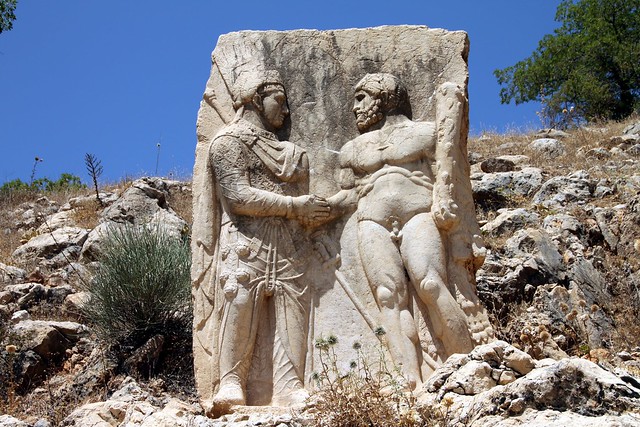
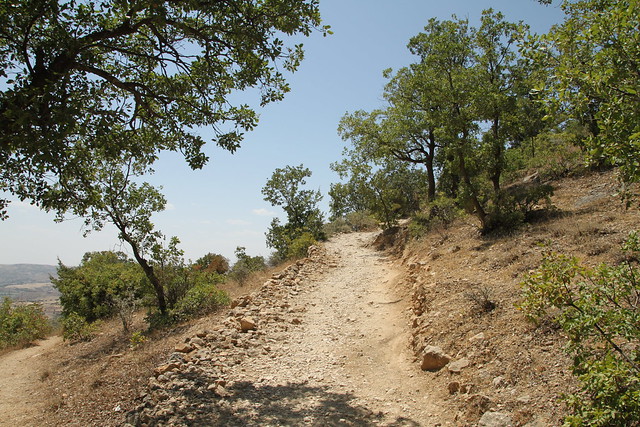
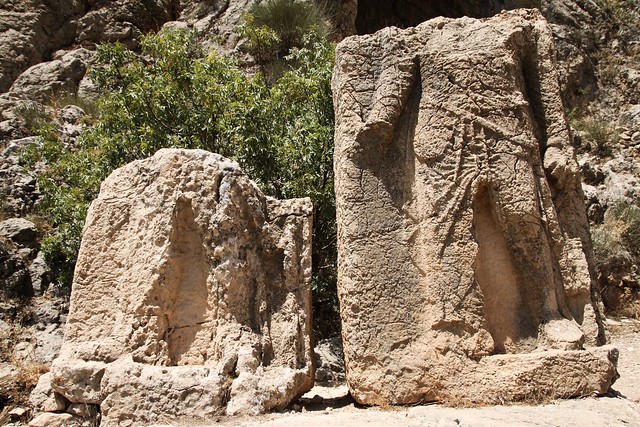
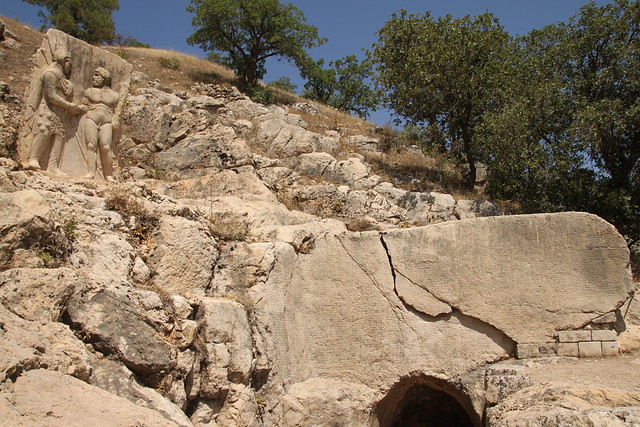
Processional route, which ran from the river Nymphaion lead in hillside, where there are three reliefs with representations of functions (handshake).

The tombstones of the classical era in Greece, the handshake symbolized the farewell to the dead. The show gave a general departure and loss message. In the case of Mithras, enter another element: The Mithras is the patron of the agreements and of Justice, so very often portrayed as God “giving hand”. Does the reliefs depict some of God's reconciliation with the dead;

In the first in the series of relief, only the form of Mithras – Apollo – Sun. The second form must have been either the Mithridates (a)’ Kallinikos, either his son Antiochus I Theos.

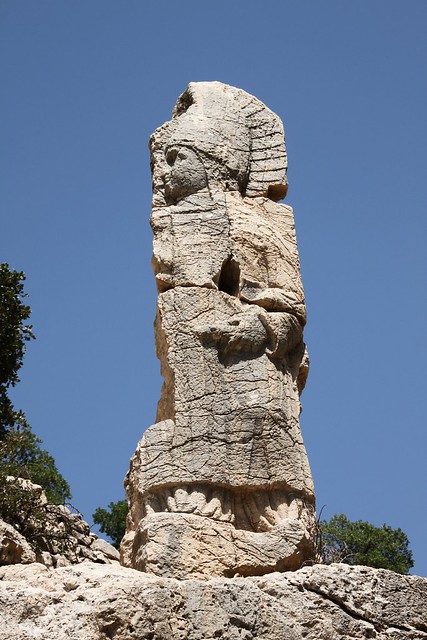
The form of the statue towered over the Valley of the Euphrates…

The second glyph, of which only parts survive, represents the Mithras and Mithridates’ or Antiochus I.

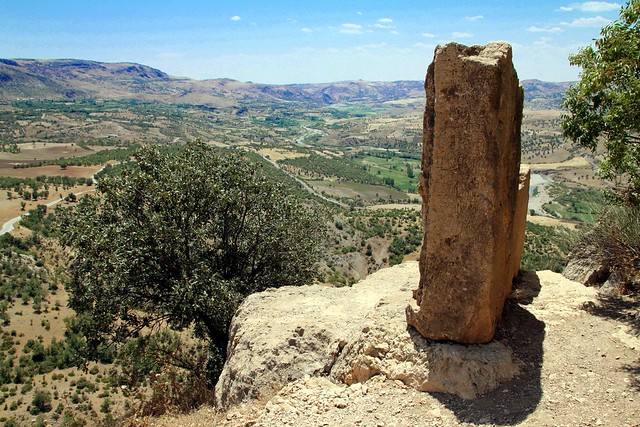
The bas-relief is located in front of the so-called “Stone room”, which is sculpted in the rocks of the Hill…


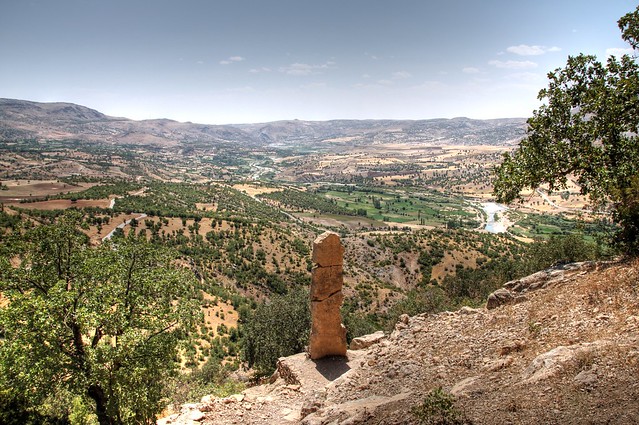
…and has this amazing view to the Valley.

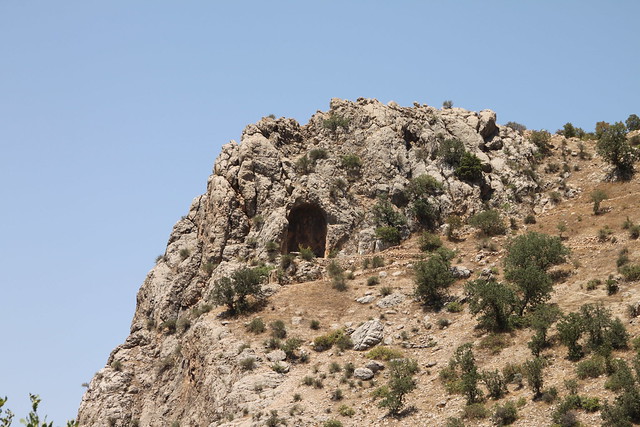
End, the third bas-relief (copy – the prototype is in British Moyseiosto London) Mithridates I Callinicus depicts Hercules – Artagni and is positioned near the Greek inscription, which is carved above the entrance to the cave, whose use is undefined.

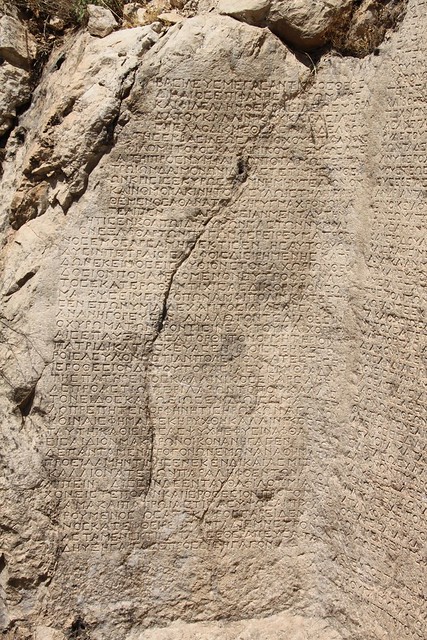
“KING ANTIOCHOS MEGAS THEOS DIKAIOS FILORWMAIOS AND FILELLIN EPIFANIS…”. The inscription, which is the longest inscription in Anatolia, mentioned the name of Arsameias, which led to the identification of the city… The inscription was in Greek, as Antiochus I Theos was a descendant of the great Alexandroyapo on his mother's side, Laodikeias… From the beginning of his reign, Antiochus realized that they could not oppose the power of the Roman Empire. On the other hand the Romans had realized that the Kingdom of Commagene was very important for the protection of passageways of the Euphrates River, as very close extended the Parthiki Empire… So, Although the 61 e.g.. Antiochus became a vassal of the Romans, very quickly, the 59 e.g., given to him by the Senate periporfyros robe tinRwmaϊki (toga praetexta) and the title of his ally King.

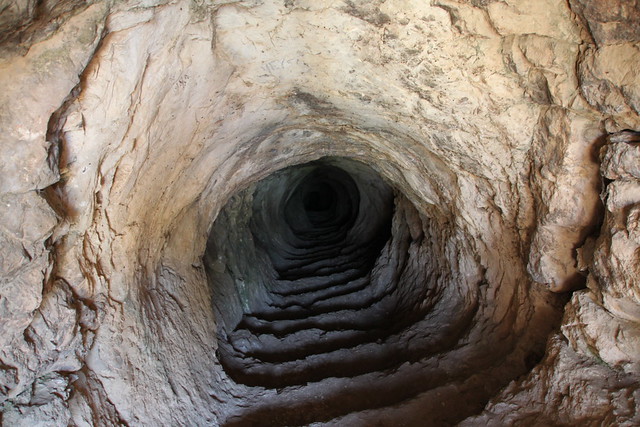
The stairs of the cave, whose entrance is beneath the inscription, descend to depth 158 measures… Can the cave to express the birth of Mithras, who was born in 25 December than a Virgin in a cave… (The adoption by Byzantium in subsequent years of 25 December for the birth of Jesus was to be easy the proselytism of the followers of Mithraϊsmoy, which was, those years, the dominant religion in the Roman Empire).


The archaeological site of Arsameias is located within the protected national park of Nemroyt, in which there are rudimentary tourist facilities… The city came to light by the German professor at the University of Münster, Karl Dörner, the 1951.


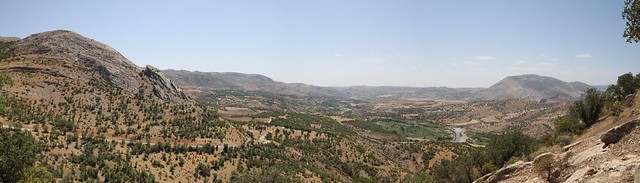
The view to the surrounding areas are unique and apparently was the key factor in selecting the position…

On top of the hill there was a mausoleum Mausoleum of Halicarnassus equivalent, of which survive today only some ruins and mosaic floors from two ceremonial spaces. According to the manuscript of the 12th century, the stones of the mausoleum were used by Michael the Syrian, Patriarch of the Syrian Orthodox Church of the 1166 until the 1199, for the extension of the monastery of Barsauma.

http://erevnw.blogspot.gr

Nine Roads, Agnwn, Amfipolis and Rhesus

The bloodless capture of Amphipolis by the Athenians, for whom “Go non-Athenian ison barbarian”
0000004

Ἀttikin ἀpoikian igagen oIkisai Ἅgnwn boylomenos odoys of kaloymenas tas Ennea priest in Strymoni; in Ἀthinaiois logion toionde and gar; ktissai polypoyn meneaiete tipte news chwron, kouroi Ἀthinaiwn; thewn he ἄter ymmin chalepon. worst esti thesfaton gar, If komisit ' ἀpo before Troiis ἀn eyrontes kalamin patrii Risoy de t ' krypsit ' eyagews; ἀroyri then if then kudos d ' ἄroisthe. CONTINUE THE READING

Daughter of the Nile: We already have natural historical copy of the mound of Amphipolis from the 6th year a.d.!!

Let us approach the little story that pops up.

THE Ptolemaic Dynasty was a Hellenistic Royal family, who ruled Egypt for about three centuries, from the 305 until the 30 e.g.. Ptolemy, the strategist Megalou Alexandrou, He was appointed Supreme ruler of Egypt after the death of Alexander the 323 e.g.. in Babylon and the dismemberment of the great state of. The reign of Cleopatra VII (69 e.g.. – 12 August 30 e.g.) marks the end of the Hellenistic and Roman period in the Eastern Mediterranean.

Cleopatra VII Philopator the

30662-egypt-cleopatra CONTINUE THE READING