Oops! It appears that you have disabled your Javascript. In order for you to see this page as it is meant to appear, we ask that you please re-enable your Javascript!

12 Great Facts About Alexander the Great

  1. The day he was born was a big day

Alexander_the_Great_mosaic

The day Alexander was born, his father (King Philip) was off preparing a siege on the Greek city of Potidaea. On the same day Alexander was born, his father got news that one of his generals (named Parmenion) had defeated the combined armies of Illyria and Paeonia, and that his horses had won at the Olympic Games. Strangely, the Temple of Artemis (one of the seven wonders of the ancient world) apparently burned down on that day. One historian mused that this probably occurred because Artemis herself was off attending Alexander’s birth.

  1. He had a serious crush on his horse

When Alexander was 10, a trader came to see King Philip. He offered to sell the horse to the king, but when people tried to mount the horse, it fought, refusing to be mounted. Philip, a busy King, ordered the horse away. However, Alexander asked to tame the horse, correctly thinking that the horse was afraid of its own shadow. Eventually, he succeeded, Philip bought the horse for him, and Alexander named it Bucephalas, meaning “ox-head.” When the horse died (of old age at 30 years old), Alexander named a city after him – Bucephala.

  1. His childhood tutor was Leonidas

Sorry, not that Leonidas. Image from the 300

This was Leonidas of Epirus, who may have influenced Alexander’s later conquests. Once, when Alexander threw large amounts of incense into the fire as an offering to the gods, Leonidas told him to be more sparing unless he had conquered the country where the incense came from. Later, after conquering much of Asia, Alexander sent his teacher 600 talents’ worth of incense.

  1. He learned from Aristotle

Yes, that Aristotle. When Alexander turned 13, his father looked for a tutor for young Alexander. In return for his services, Philip rebuilt Aristotle’s hometown Stageira (which Philip had destroyed) and repopulate it by buying back all the people who used to live there, but had been sold as slaves.

  1. The first thing he did in power was repel an invasion and found a city…named after himself

When Alexander was 16, his father left for war against Byzantion and left his son in charge. The Thracian Mahdi revolted against Macedonia, and Alexander reacted quickly, driving the Mahdi from their territory and filling the area with Greeks in a city which he called Alexandropolis.

  1. His relationship with his father was…complicated

Image by Ny Carlsberg Glyptotek

King Philip was not a very good father. He was often away at war, leaving young Alexander behind in Macedonia. Things seemed to look up when Alexander helped his father defeat the combined armies of Athens and Thebes. However, after his father united Greece (except for Sparta), he remarried a woman named Cleopatra Eurydice, ousting Alexander’s mother Olympia, and by extension, him. Should Philip have had a son with Cleopatra, that child would have been a more legitimate heir than Alexander. He and his mother were forced to flee Macedonia until a family friend reunited father and son.

  1. Alexander took power at age 20, and it was not easy

King Philip was assassinated in 336 B.C. at his daughter’s wedding. Shortly after, Alexander was named the king. This led to many people dying. These included threats to his power (three Macedonian princes who could have contested his claim), his mother-in-law Cleopatra and half-sister Europa (his mother Olympia had them burned to death) and the leader of Macedonia’s advance guard into Asia, who was considering defecting to Athens. Beyond those specific deaths, several city-states, on hearing of Philip’s death, took the opportunity to rebel, forcing Alexander to retake each.

  1. Alexander had hecklers

Your mother was a hamster.

During the revolts, Alexander stopped in Thermopylae, where he was met by many noblemen and dignitaries. However, one man was missing – Diogenes of Sinope, a famous philosopher who was unfazed by the arrival of Alexander. Alexander went to meet him, and asked him what he wanted, to which Diogenes replied something to the effect of “for you to step out of my sunlight.”

  1. He just couldn’t seem to catch a break

From the beginning, Alexander seemed to intend to invade Persia. After retaking many of the city-states in Greece, he was given the authority to do so on behalf of the members of his league of city-states. Before he could do so, however, he needed to march north and conquer the Thracian Triballians to secure Macedonia’s northern border. After he had accomplished this, he found out that the Illyrians and Taulantians were in open revolt, forcing him to march to reconquer the groups. Then Athens and Thebes rebelled again, making him march south. Only after razing Thebes did he finally turn to Asia.

  1. He was generous to the families of the fallen

Alexander rewarded his own fallen soldiers’ families with immunity from taxation and obligation for public service. Alexander also erected statues and honored the fallen soldiers of his enemies.

  1. After invading Persia, he picked up some Persian habits

While invading Persia, Alexander began a policy of adding the native Persians to his existing army. However, this was not the only pro-Persian change he made. He also took the Persian title of “King of kings,” began dressing in the Persian fashion and began having his subordinates either kiss his hand or prostrate themselves on the ground before him. To the Greeks, these were troubling signs, especially making his subordinates prostrate themselves before him – to the Greeks, this was sacrilegious, as a person was only supposed to prostrate themselves before a god.

  1. He may have been poisoned

Alexander’s death is shrouded in argument. Accounts differ, but they either say that Alexander fell ill with a fever or had a sharp pain after drinking undiluted wine, before falling to weakness and dying. Several historians, given that Macedonians often died due to poison, possibly fingering a recently removed Macedonian viceroy named Antipater.

phactual.com

25 Ancient Greek Cities that No Longer Exist or Are No Longer Greek

Εικοσιπέντε Ελληνικές πόλεις που δεν υπάρχουν πια ή δεν ανήκουν στην Ελλάδα τη σημερινή εποχή.

By taking a look at the world map today you would never believe that Greece, which is nothing but a small country, currently known as a beautiful tourist destination in southern Europe, had once dominated and colonized most parts of the then-known world. For those who love history though, Greece is without a doubt one of the most significant and influential nations of all time with amazing contributions to human culture including philosophy, various sciences, architecture, the Olympic Games, and democracy just to name the most prominent few. ΣΥΝΕΧΙΣΤΕ ΤΗΝ ΑΝΑΓΝΩΣΗ

The Apotheosis of Homer

Στην “αποθέωση του Ομήρου” (1827), που βρίσκεται στο Λούβρο, ο Όμηρος στέφεται ως αθάνατος. Στα πόδια του διακρίνονται, η  Ιλιάδα (με κόκκινο) και η Οδύσσεια. Γύρω του, αποτίουν φόρο τιμής μερικοί απο τους μεγαλύτερους δυτικούς καλλιτέχνες και συγγραφείς, συμπεριλαμβάνοντας τον Πίνδαρο (με τη λύρα) και τον Σοφοκλή (με τον πάπυρο)

In The Apotheosis of Homer (1827), on display in the Louvre, in Paris, the bard is crowned as immortal. At his feet are figures representing The Iliad (red) and The Odyssey (green)

Άρχισαν οι αντιδράσεις στη FYROM για τα Κιτς “μνημεία” (που επιβαρύνουν βάναυσα τη φτώχεια τους)

Macedonian Protesters Say No to Architectural KitschProtesters encircling the GTC in Skopje on December 29 (photo by Vasilka Dimitrovska/Twitter)

Two nights before New Year’s Eve, more than a thousand Macedonians gathered in the snow to hold hands and form a ring around a large shopping mall in the capital city of Skopje. That may sound like the beginning to some strange joke, but the crowd was assembled in earnest, to express its love of the modernist building known as GTC, and to protest a government plan to give it a new, baroque façade.

ΣΥΝΕΧΙΣΤΕ ΤΗΝ ΑΝΑΓΝΩΣΗ

Archeologists discover mythical tomb of the god of the dead in Egypt (Osiris)

Archeologists discover mythical tomb of the god of the dead in Egypt

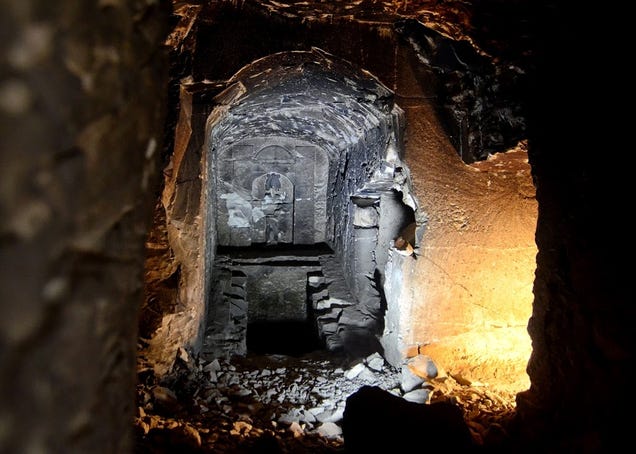
A reproduction of the mythical Tomb of Osiris as described by Egyptian lore has been discovered in the necropolis of Sheikh Abd el-Qurna, on the West Bank at Thebes, Egypt. The complex includes a shaft that connects to multiple chambers, including one with demons holding knives.

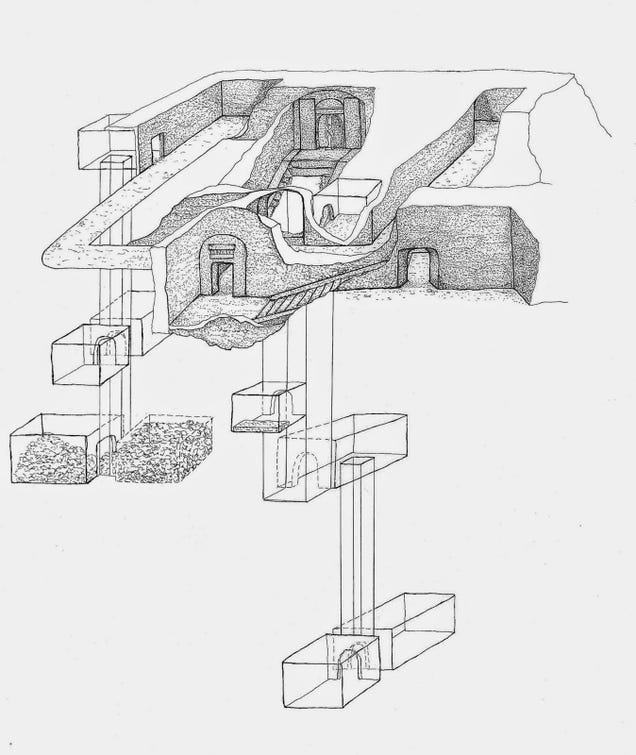
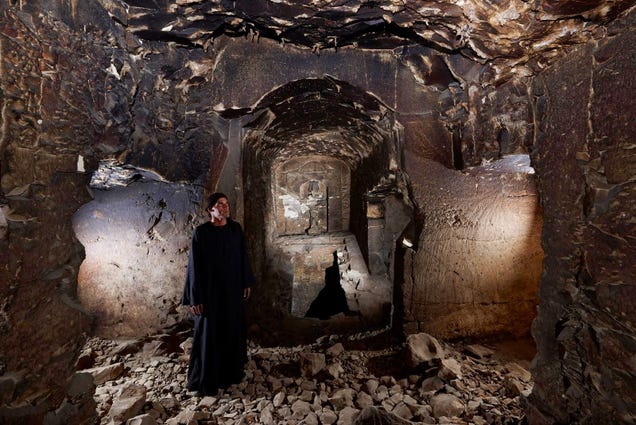
The tomb—which was built following the descriptions of the Tomb of Osiris, like the Osireion in Abydos, one of the oldest cities of ancient Egypt—is centered around a statue of the god of the afterlife, Osiris. The emerald skinned deity is sitting in a central vaulted chapel facing a staircase with a 29.5-foot (9-meter) shaft in it. The shaft (in the center in the diagram below) connects to another room with a second shaft that goes down for 19.6 feet (6 meters) into two rooms.

Archeologists discover mythical tomb of the god of the dead in Egypt

Drawing of the tomb’s architecture made by Raffaella Carrera, of the Min Project.

The funerary room with the reliefs of demons holding knives is located west of the central chapel (on the left in the picture above.) It’s connected to a 23-foot (7-meter) shaft right in front to another empty room. At the bottom of the same shaft there are two rooms full of debris.

Talking to the Spanish news agency EFE, the leader of the Spanish-Italian team that has uncovered the tomb, Dr. María Milagros Álvarez Sosa, said these demons are there to protect the body of the deceased. According to Alvarez Sosa, it’s a tomb of “great importance”:

It’s a unique tomb in the Necropolis of Thebes because it embodies all the features of the mythological Tomb of Osiris.

Archeologists discover mythical tomb of the god of the dead in Egypt

The main chamber. You can see the statue of Osiris at the back, with the stairs and central shaft going down.

Archeologists discover mythical tomb of the god of the dead in Egypt

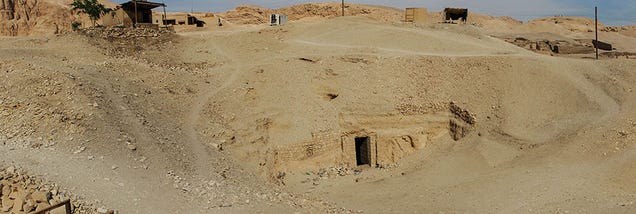
The entrance of the main structure of the tomb.

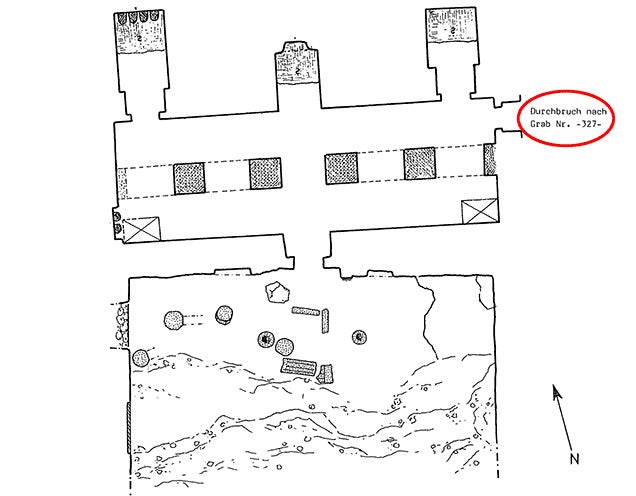
The tomb was initially catalogued by Philippe Virey in 1887. Later in the 20th century there were some attempts to draw a plan of the main structure. Tomb Kampp -327- however (marked in red in the plan below) was never described and published. Álvarez told EFE that her team will start revealing the chambers during the next archeological campaign, in the fall of 2015.

Archeologists discover mythical tomb of the god of the dead in Egypt

Archeologists discover mythical tomb of the god of the dead in Egypt

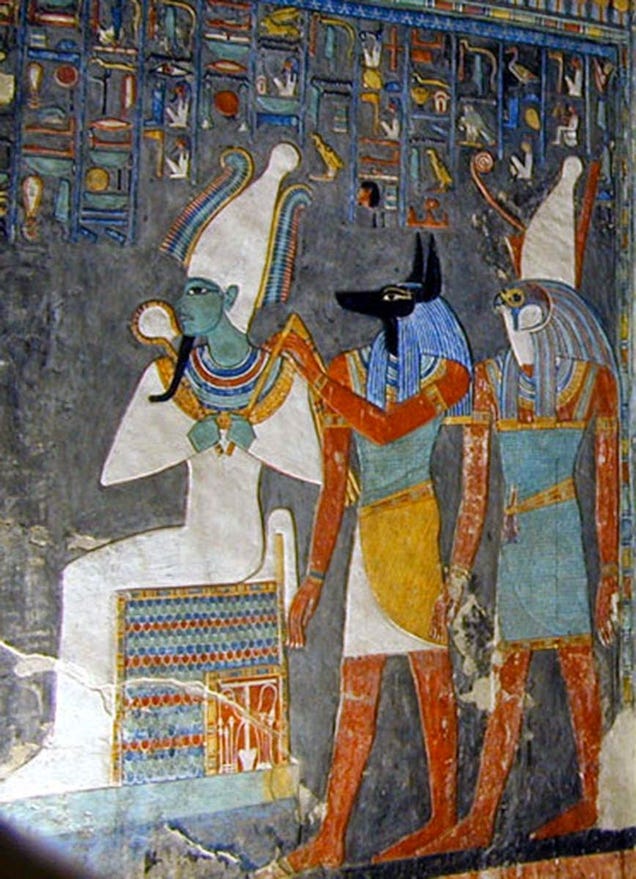
Included for reference, from left to right: Osiris, Anubis—protector of graves—and Horus—god of the sun, war and protection.

http://sploid.gizmodo.com

Η μυστική ενέργεια των αρχαιολογικών χώρων

PA051455

Ένα αρχαίο μνημείο μας προκαλεί συνήθως μια αίσθηση θαυμασμού. Έχετε όμως σκεφτεί ποτέ ότι θα μπορούσε να αποτελέσει κι έναν πυρήνα ενέργειας, που εξαγνίζει και αναζωογονεί την ψυχή μας, αλλά και ένα μέσο προς την ενόραση και την ανακάλυψη του εαυτού μας; ΣΥΝΕΧΙΣΤΕ ΤΗΝ ΑΝΑΓΝΩΣΗ

Pointe-à-Callière presents the largest exhibition on ancient Greece ever produced in North America

`pointe-2
MONTREAL.- Pointe-à-Callière, the Montréal Archaeology and History Complex, is presenting the world premiere of the original exhibition The Greeks – Agamemnon to Alexander the Great. The exhibition spans over 5,000 years of Greek history and culture and takes visitors on an exceptional and fascinating journey back to the origins of the cradle of Western civilization, its heritage and the traces it has left in the hearts and minds of the Greek people. The exhibition begins its North American odyssey in the country’s leading archaeology museum before continuing to the Canadian Museum of History in Gatineau, The Field Museum in Chicago and the National Geographic Museum in Washington. It brings together more than 500 priceless artifacts from 21 Greek museums, co-ordinated by the Hellenic Ministry of Culture and Sports. For Pointe-à-Callière, this achievement is another in the series of great international exhibitions it has produced over the years, including Archaeology and the Bible – From King David to the Dead Sea Scrolls and Japan, introducing Montrealers and visitors to some of humanity’s most impressive treasures. A fascinating period Greek Antiquity is a rich and spell-binding period, a time populated by mythical heroes and historical figures, under the watchful gaze of the gods on Mount Olympus. The exhibition is divided into six zones that introduce us to this great civilization and showcase rare and priceless artifacts. Visitors will meet many famous characters in Greek history, from Homer to Aristotle, Plato, King Philip II of Macedon and King Leonidas of Sparta. The heritage of ancient Greece, which we can still see all around us today in our politics, philosophy, arts and literature, mathematics, architecture, medicine and sports, is clearly illustrated in the exhibition. Visitors are invited on a tour of Greek history, starting in the 6th millennium BCE, explaining all these roots. From Agamemnon and the siege of Troy… We learned about the exploits and adventures of the heroic and legendary figures in the Trojan War through Homer’s epic poem the Iliad. Led by Agamemnon, the Greeks sailed a thousand ships all the way to Troy, where the Trojan Prince Paris was holding Helen captive. After laying siege to the city for ten years, the Greeks left an unexpected gift outside the gates: a giant wooden horse, filled with Greek soldiers. The unsuspecting Trojans brought the horse inside the city walls, leading to the fall of their city. In the 19th century, German archaeologist Heinrich Schliemann, convinced that the accounts in the ancient Iliad were historically accurate, found “Royal Tombs” at Mycenae containing the remains of ancient elites and their fabulous grave goods. Schliemann was in no doubt that these remains were in fact those of Agamemnon’s. The exhibition showcases objects from the tombs of the Grave Circle A, including two magnificent golden burial masks originally attributed to Agamemnon. One of them, the original golden mask, has in fact never been shown outside Greece before. To Alexander, larger than life The exhibition takes us all the way up to the days of Alexander the Great, a larger-than-life figure who was only 20 years old when his father, Philip II, was assassinated. But Alexander was ready to succeed him, thanks to his education, his training and the formidable Macedonian army. Within barely a single generation, the ancient world was transformed from a series of independent city-states into a unified empire under Alexander the Great. The young prince who became king, emperor then god in the eyes of the world, died of a malignant fever at the age of 32. But his legend survived, as did Greece’s extraordinary legacy to the Western world. The Golden Age of Ancient Greece Between these two crucial figures, the exhibition focuses on the Golden Age of ancient Greece, in the 5th and 4th centuries BCE, when philosophy, theatre and the visual arts flourished, particularly in Athens. This was also the birthplace, under Pericles, of Greece’s greatest gift to humanity: democracy, government by the people. For the first time, citizens could express themselves, debate issues and vote. The exhibition also looks at the founding of the Olympic Games in 776 BCE, when athletes converged in Olympia from all Greek city states to take part in the Games. Treasures of humanity Among the highlights of the exhibition are a number of items never before displayed outside Greece: gold offerings from the royal tombs of Mycenae, including the mask that Schliemann first associated with Agamemnon, as well as a double-eagle necklace worn by one of the deceased, dated to the 16th century BCE. Elsewhere in the exhibition, visitors will be able to admire a marble figurine from the island of Amorgos in Cyclades, dating to the 3rd millennium BCE and a superb ritual vase from Minoan Crete. There also are exhibited bronze helmets with gold funerary masks from the graves of the Bottiaean rulers, not to mention a magnificent funerary vase illustrating the scene of Achilles avenging the death of his friend Patroclus, from the island of Delos and dating to the late 6th century BCE. They will also see sculptures of Homer and other famous historic figures, and a superb votive relief to Asklepios, showing the god of medicine leaning on his staff, around which a snake is coiled, accompanied by his children as he receives the tributes of mortals whom he has cured. Lastly, there is a magnificent gold wreath of Queen Meda featuring two incredibly lifelike branches of myrtle, an aromatic plant, symbol of immortality, associated with goddess Aphrodite. A hands-on experience The exhibition offers visitors a whole range of interactives and items to handle, from a Cycladic female figurine to a reproduction of a warrior’s helmet and a sword. There are over twenty videos in the various exhibition zones, most of them produced by the National Geographic Society, the Acropolis Museum, the Museum of Cycladic Art in Athens and the Canadian Museum of History. Complementing the exhibition Many activities have been organized in conjunction with the exhibition. A free digital application designed by the New Media Laboratory of the Stavros Niarchos Foundation Centre for Greek Studies at Simon Fraser University in British Columbia will keep visitors informed before, during and after their tour of the exhibition. There is also a prestigious publication on the Greek collection, produced by the Hellenic Ministry of Culture and Sports; a catalogue has also been produced by the Canadian Museum of History and the partner museums in the consortium, surveying the themes and the key items in the exhibition. A number of major lectures will be given, at both Pointe-à-Callière and the Université de Montréal in early 2015, looking at major figures in Ancient Greece and archaeology issues. Tours and visitor activities, the Port Symphonies, Greek Independence Day, Greek cuisine on the menu at the Museum’s restaurant and films are just some of the events and attractions surrounding the exhibition.

More Information: http://artdaily.com/news/75445/Pointe–agrave–Calli-egrave-re-presents-the-largest-exhibition-on-ancient-Greece-ever-produced-in-North-America#.VKaDDnuPmdc[/url] Copyright © artdaily.org

Η προσωπική εμπλοκή μου στην περιπέτεια της Αμφίπολης – Σαράντου Ι. Καργάκου.

10384203_305572526303338_6335120286265488843_n

ΤΑ ΟΣΑ περί Αλεξάνδρου είχα να πω, τα έγραψα εκτενώς σε διάφορα βιβλία μου και σε πάμπολλες ομιλίες μου. Αν συνέβη στις τελευταίες συγγραφές μου να υποστηρίξω με πολλά «αν» και «ίσως» και «πιθανώς» ότι ο τάφος του μεγάλου δορικτήτορος, αφού δεν βρέθηκε στην Αίγυπτο, πρέπει να αναζητηθεί στην Μακεδονία και, αν εδώ και μία 15ετία θεωρώ ως περισσότερο πιθανή τοποθεσία την Αμφίπολη, τούτο είναι καρπός μελετών, στοχασμών και επιτόπιων ερευνών. Όπως είπα συχνά στην τηλοψία και στο ραδιόφωνο, και μάλιστα κατ΄επανάληψη, δεν είμαι κρυστάλλινη μπάλα να προβαίνω σε μαντείες. Η ιστορική διαίσθησή μου, επί 10ετίες τώρα, έχει έντονα ακονιστεί ώστε να γεννά μέσα μου κάποιες υποψίες, κάποια προαισθήματα που συχνά – συχνότατα επιβεβαιώθηκαν. Για την ενδεχόμενη επιβολή δικτατορίας στη χώρα μας είχα ειδοποιήσει προφορικά και γραπτά σημαίνοντα πολιτικά στελέχη της χώρας δύο χρόνια πριν από την εγκαθίδρυσή της. Τα γραπτά υπάρχουν. Το ίδιο συνέβη και με την κατάρρευση της γλώσσας μας. Από το 1976 κρούω τον κώδωνα του κινδύνου.
Και σε ό,τι αφορά στις πρόσφατες ανασκαφές στην Αμφίπολη, πιθανώς να έγινα αιτία για να ξαναρχίσουν ˙ όσο για το θόρυβο που έγινε, αυτός δεν έγινε με υπαιτιότητα δική μου. Απλούστατα στο τελευταίο βιβλίο μου για τον Αλέξανδρο γράφω:
« Κατά την άποψη του γράφοντος – ποτέ η υποψία δεν λείπει από την ιστορική γραφίδα – , αν κάποτε ο τάφος βρεθεί – και μάλλον έχει βρεθεί – ο χώρος ταφής θα είναι – και μάλλον είναι – κάποιο σημείο της Μακεδονίας» («Μέγας Αλέξανδρος: ο Άνθρωπος Φαινόμενο» τομ. Γ΄σ. 213).
Λίγες σελίδες παραπάνω στο κυρίως κείμενο και περισσότερο στην υποσημείωση γράφω:
«Η εικασία μου αυτή εδράζεται στην ακόλουθη σκέψη: η Ολυμπιάς θα έκανε τα αδύνατα δυνατά για να φέρει το λείψανο του γυιού της στην Μακεδονία και να τα κάνει έβλημα της δικής της εξουσίας. Η περιοχή της Αμφίπολης είναι η πιο πιθανή. Ίσως ο Λέων που έχει στηθεί (…) να ήταν το επιστέγασμα του τύμβου εντός του οποίου είχε ταφεί η σορός του Αλεξάνδρου. Αν η σορός είχε μείνει στην Αίγυπτο – φυσικά σε ανάλογο μνημείο – θα είχαμε περιγραφή του χώρου και του μνημείου από κάποιον Αλεξανδρινό συγγραφέα. Οι αναφερόμενες επισκέψεις επιφανών Ρωμαίων στο υποτιθέμενο λείψανο του Αλεξάνδρου πιθανώς να ήταν σε κάποιο υποκατάστατό του» (δ.π., σ. 206).
Το γεγονός ότι το τρίτομο έργο μου, που χάρη στην εφημερίδα «Real Neus» μπήκε σε 110.000 σπίτια και έγινε αιτία για την επανέναρξη των ανασκαφών στην Αμφίπολη, με κάνει ευτυχή. Δεν έχει σημασία αν θα δικαιωθώ ˙ σημασία έχει ότι χάρη στην 20ετή εμμονή μου βρέθηκε κάτι θαυμαστό. Κι αυτό μου είναι αρκετό. Είπα όμως σε κάποιο ραδιοφωνικό σταθμό κάτι που πιθανώς να ήταν προκλητικό: Τώρα βλέπω να έχει κυριεύσει τους πάντες Αλεξανδρομανία και Αλεξανδρολαγνεία. Δεν θα λείψουν βέβαια και οι απαραίτητοι Αλεξανδρομάχοι ή Αλεξανδρομάστιγες που θα μιλούν μειωτικά για τον πάντα εν ζωή στην λαϊκή ψυχή αήττητο παίδα. Το σπιθαμιαίο ανάστημά τους ( ανεξάρτητα από το «μπόι» τους) δίνει μεγαλύτερη διάσταση στο μεγαλείο του αήττητου παιδός.
Υπήρξαν και κάποιοι που επιτέθηκαν εναντίον μου. Θα αγωνιούσα μήπως είπα ή έγραψα κάτι κακό, αν οι εν λόγω έλεγαν για μένα λόγο καλό. Υπήρξε μάλιστα και διαπρεπής αρχαιολόγος – ακαδημαϊκός, που εκτιμώ το έργο του και συχνά το μνημονεύω στις δικές μου εργασίες, ο οποίος πριν καν αρχίσει ο διάλογος – και ενώ ήξερε ο συνομιλητής του θα είμαι εγώ – δήλωσε ακόμψως, προτού πει ό,τι είχε να πει, ότι όσοι υποστηρίζουν ότι ο τάφος του Αλεξάνδρου βρίσκεται στη Μακεδονία, λένε ανοησίες. Με αποτέλεσμα να εκτεθεί και μία ελλόγιμη κυρία, η Βαρβάρα Ταβλαρίδου – Μπακάλη, να γράψει άρθρο επιτιμητικό εναντίον του για έλλειψη καλής ανατροφής. Εγώ τον αντιμετώπισα με ψυχραιμία και τελικά ο κ. ακαδημαϊκός υποχρεώθηκε (ήμαστε στην αρχή των ανασκαφών) να συμφωνήσει μαζί μου ότι το μνημείο έχει συληθεί, παρότι εγώ διέθετα μόνο μία φωτογραφία της πρώτης θύρας!
Προσπάθησα σε όλο αυτό το μακρό διάστημα να είμαι ευπρεπής. Λόγω καταγωγής και αγωγής δεν βρίζω, δεν χλευάζω. Σέβομαι και σκέπτομαι πάνω σε όσα λέγονται. Κι αν σε κάτι διαφωνώ, προσπαθώ να διατυπώσω την έντασή μου με την πρέπουσα σε επιστήμονα σοβαρότητα και ψυχραιμία. Διότι ξέρω ότι τίποτε στην επιστήμη δεν είναι σταθερό. Ακόμη και δύο παράλληλες γραμμές μπορεί στο άπειρο να συναντηθούν. Οι αμφιβάλλοντες, ας διαβάσουν τη γεωμετρία του Ρίμαν και του Λομπατσέφσκι. Δεν λειτουργούν όλα στην επιστήμη με την ευκλείδεια λογική.
Από την πρώτη μου συνέντευξη όμως στις αρχές Αυγούστου έκανα μερικές προειδοποιήσεις που είναι χρήσιμες ακόμη. Πρώτον, προτού προχωρήσουν οι ανασκαφές, πρέπει σε όλο τον λόφο – τύμβο να τοποθετηθεί στέγαστρο πολλών στρεμμάτων, για να μη χαθεί αυτή τη φορά ούτε «λέπι» λατύπης, όπως συνέβαινε παλιά. Οι βροχοπτώσεις ήσαν εγγύς και δεν έπρεπε ούτε ένας κόκκος να χαθεί. Δεύτερον, να μην αρχίσουν τα ira και τα studia, διότι αντί, χάρη στο εύρημα αυτό να προβληθούμε, υπάρχει κίνδυνος να ρεζιλευτούμε. Ήδη οργιάζει ένα κουτσομπολιό που μακαρίζω το Θεό, ο οποίος εν τη απεράντω ευνοία Του, άρχισε να με κάνει επιλεκτικά κωφό. Ακούω όσα πρέπει ή όσα θέλω να ακούω. Και τρίτον, να μην είμαστε βιαστικοί. Ήταν λάθος πολιτικού παράγοντα να δηλώσει από την πρώτη στιγμή ότι σε δυο εβδομάδες θα ξέρουμε. Με ευγένεια υπέδειξα ότι τουλάχιστον τα δύο χρόνια θα είναι διάστημα μικρό. Αυτό το είπα από ραδιοφώνου, διότι δεν έχω το προνόμιο να βρίσκομαι κοντά σε υπουργό.
Ο Αλέξανδρος και η λαϊκή ψυχή
ΑΝ ΣΗΜΕΡΑ (3 Νοεμβρίου 2014) χαράσσω τις γραμμές αυτές γιατί επί 3 μήνες η Αμφίπολη μονοπωλεί το ενδιαφέρον του ελληνικού λαού. Μια σφυγμομέτρηση, ακόμη και τώρα, σε όλα τα στρώματα του πληθυσμού θα έδειχνε ότι οι περισσότεροι συμπολίτες μας θέλουν να πιστεύουν ότι το εύρημα στον τύμβο του Καστά (άλλο κομψότερο όνομα δεν υπάρχει;) είναι ο τάφος του Αλεξάνδρου. Αν εξετάσουμε σε βάθος αυτή τη λαϊκή ροπή, θα βγει μια σκέψη συγκλονιστική: Ο λαός μας έπαψε να περιμένει σωτηρία από τους ζωντανούς, που τον κυβερνούν, και περιμένει τη σωτηρία από τους νεκρούς. Όπως είπα σε μία εκπομπή, οι πιο ζωντανοί Έλληνες είναι νεκροί. Και ο πιο ζωντανός από τους ζωντανούς του παρελθόντος είναι ο Αλέξανδρος. Στην ίδια εκπομπή είπα και κάτι σαρκαστικό: – «Γιατί με καλείτε να μιλάω διαρκώς για νεκρούς και όχι για τους ζωντανούς; Ενδόμυχα έχετε πεισθεί ότι κάποιοι νεκροί είναι πιο ζωντανοί από τους ζωντανούς, που, ωστόσο, είναι πεθαμένοι αλλά έχουν ξεχάσει να ξαπλώσουν»!
Δεν είναι περίεργο αυτό. Πάντα τους Έλληνες τους έσωζαν οι νεκροί τους. Κάποτε ο Ιούλιος Καίσαρ είπε στους Αθηναίους καυστικά! «Ως πότε θα σας σώζει η δόξα των προγόνων σας;». Πάντα, βλέποντας το ζήτημα της Αμφίπολης από πολιτική σκοπιά, φθάνω σ΄ένα συμπέρασμα αισιοδοξίας. Φρονώ ότι το εκπληκτικό δεν είναι το εύρημα αυτό καθαυτό. Το εντυπωσιακό είναι πως – παρά την κρίση και την φορολογική καταιγίδα – η αινιγματική υπόγεια κατασκευή επί τρεις μήνες – το ξαναλέω – έρχεται πρώτη στα ενδιαφέροντα του λαού μας. Κι αυτό παρά την επι δεκαετίες προσπάθεια κάποιων πολιτικών και ελληνομάχων διανοητών να εξαλείψουν την ιστορική μνήμη του λαού μας, να σβήσουν την αρχαία παράδοση από τη ζωή μας. Ίσως κακώς έγραψα και μίλησα για τάφο του Αλεξάνδρου. Ο Αλέξανδρος ζη και βασιλεύει ακόμη στην αγνή ψυχή του λαού. Σε χρόνους παλαιούς, όταν η καταιγίδα έδερνε τα βουνά, οι τσοπάνηδες απεύθυναν δέηση στην αδελφή του Αλεξάνδρου, την Κυρά Καλώ, τη βασίλισσα των νεράϊδων και της έλεγαν:
– «Κυρά Καλώ, πες του αδελφού σου του Αλέξανδρου να μη μας κάνετε κακό»!
Στη συνείδηση του απλού λαού ο Αλέξανδρος εξακολουθεί να ζη σαν ένας αγαθοποιός θρύλος. Στις δύσκολες ημέρες που περνάμε χρειαζόμαστε και τον Αλέξανδρο και την Κυρά Καλώ, για να δούμε… καλό! Κι όμως ό, τι έχει μάθει ο λαός μας για τον Αλέξανδρο, το οφείλει κυρίως σε κάποιους εμπνευσμένους δασκάλους, στο ότι κάποτε κάναμε στην Γ΄ Γυμνασίου την «Αλεξάνδρου ανάβασιν» του Αρριανού, μα περισσότερο στην «Φυλλάδα του Μεγαλέξανδρου» και στο «Θίασο των Σκιών», στον κοσμαγάπητο Καραγκιόζη. Δεν θα πω ότι Έλληνες ιστορικοί δεν έπραξαν το χρέος τους. Αυτοί που δεν έπραξαν το χρέος τους είναι οι λογοτέχνες και περισσότερο οι ποιητές. Στα σχολικά αναγνωστικά δεν υπάρχει κανένα ποίημα για τον Αλέξανδρο! Ούτε ξέρω κανέναν ποιητή – από τους γνωστούς – που να έγραψε ένα ποίημα γι΄αυτόν1 . Αντίθετα μπορείς να βρεις ποιήματα για τον Στάλιν, τον Ζαχαριάδη, που για την εποχή τους δεν θα τα έλεγα ποιήματα κακά. Οι Σκοπιανοί έχουν γράψει τόσα ποιήματα για τον Αλέξανδρο που φτιάχνουν τόμο. Αφήνω πια τους γιγάντιους «κιτσοειδείς» ανδριάντες. Στην πρωτεύουσα της Ελλάδος ο ανδριάντας του Αλεξάνδρου χρόνια τώρα παραμένει αποθηκευμένος. Αυτόν τον Αλέξανδρο, ποιος θα τον ξεθάψει;

ΥΠΟΣΗΜΕΙΩΣΕΙΣ
1. Ακόμη και ο Καβάφης αναφέρεται στον Αλέξανδρο περιστασιακά.

Από το βιβλίο «Η περιπέτεια της Αμφίπολης», του Σαράντου Ι. Καργάκου, το οποίο κυκλοφορήθηκε την Κυριακή 7 Δεκεμβρίου του 2014, από την εφημερίδα, Realnews.

Υποστηρίζεται από Tempera & WordPress.
>

By continuing to use the site, you agree to the use of cookies. more information

The cookie settings on this website are set to "allow cookies" to give you the best browsing experience possible. If you continue to use this website without changing your cookie settings or you click "Accept" below then you are consenting to this.

Close