
Alexander – A New Theory on an Ancient Legend

Alexander the Great

Like millions of others I have been enthralled by the mystery of the Great Pyramid in Egypt. So when I read that in the 9th century a certain Caliph Al Ma’mun had literally smashed his way into it, well my curiosity got the better of me and I decided to investigate. I found that the renowned caliph was not alone, apart from the labourers required to dig out the tunnels he had also taken a huge team of highly educated scholars, but why? Surely a man only interested in hidden treasure would not have required such a level of expertise. Goodness! Just imagine the expense he had to go to in employing these experts and at a time when he was busy defending the borders of his caliphate.
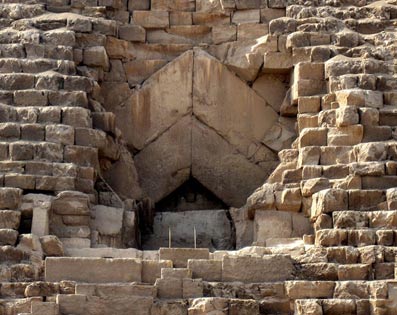
The tunnel made by Caliph Al Ma’mun in the Great Pyramid

The tunnel made by Caliph Al Ma’mun in the Great Pyramid (Wikipedia)

The Great Pyramid had been sealed for thousands of years so how did the caliph know there was something of great value inside? The only way he could have known was if he had read an ancient manuscript that recorded such an item being placed in the pyramid. This is quite likely since his father had built the ‘House of Wisdom’ in Baghdad which was famous across the known world for the collection and study of ancient manuscripts. Such was Al Mamun’s interest in the wisdom and secrets of the past that he was known to trade manuscripts with his arch enemy the Byzantine Emperor Theophilos. But the Byzantine emperor had access to even rarer manuscripts, some say actually taken from the library of Alexandria. He also employed the fabulously intelligent scholar known as ‘Leo the Mathematician’, quite literally one of the cleverest men in the world. Here was a man the caliph was desperate to get hold of because Leo could read and translate Coptic and ancient Greek.
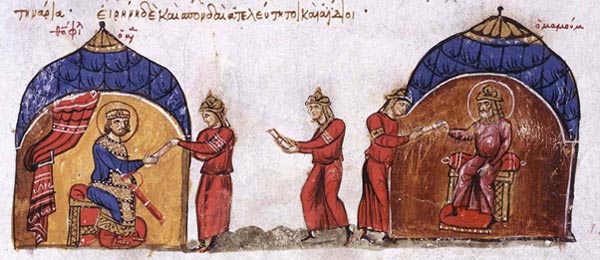
Caliph al-Mamun sends an envoy to Byzantine Emperor Theophilos

Caliph al-Mamun sends an envoy to Byzantine Emperor Theophilos (Wikimedia)

So, what Al Mamun and his team discovered in the Great Pyramid was truly amazing and completely planned for! Ancient legends by a number of Arab historians, such as the 9th century Arabic writer Ebn Abd Alhokim, tell us that amongst other treasures, the caliph discovered a stone statue and that inside was a man who wore a gold breastplate covered in gems. Lying by his side was a fabulously fine sword and shield. On the head of the man lay a huge ruby the size of a chicken egg which shone as the light of day! The statue in which the body was buried was covered in a mysterious writing that no one at that time could decipher. By the way, some have said that the Great Pyramid’s outer casing stone, now missing, was also covered in Greek or Coptic writing.

Egyptians were not usually buried in their armour so who was this great warrior? In the quest to uncover who this may have been, I explored many legends, documents, and medieval paintings. For me there was only one candidate because history said that Alexander the Great was buried in Egypt with his armour on. The only problem was that Alexander was said to have been buried in Memphis or Alexandria. However, reports also suggest he was moved and I believe that he has been buried at least three times.
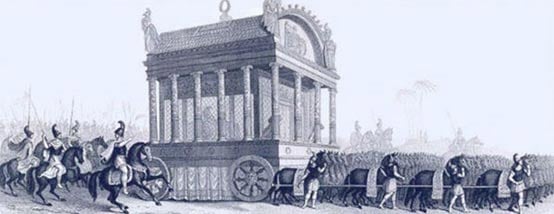
A 19th century depiction of Alexander’s funeral procession based on a description by Diodorus

A 19th century depiction of Alexander’s funeral procession based on a description by Diodorus (macroevolution.net)

Unfortunately, ancient texts written by people who knew Alexander, or who gathered information from men who served with Alexander, had all been lost. However, there were a few original fragments and inscriptions left. One example of original text is The Parian Marble found at Paros. Amongst other information, it records red letter dates in the life of Alexander, including his burial at Memphis in 321/320 B.C.
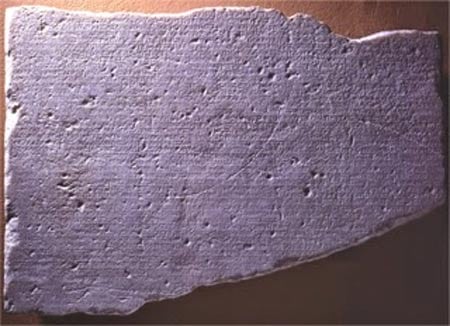
The middle section of the Parian Marble

The middle section of the Parian Marble, now at the Ashmolean Museum, Oxford

Original accounts written by his contemporaries namely Ptolemy, Aristobulus, Nearchus, and Onesicritus have been lost but luckily for us, there are substantial later works based on the ancient writings that have survived. They include Diodorus Siculus, writing in the first century B.C., Quintus Curtius Rufus, mid-to-late 1st century A.D., Arrian 1st to 2nd century A.D., the biographer Plutarch 1st to 2nd century A.D., and Justin, dated to around the 4th century A.D.

In addition, there is the infamous ‘Alexander Romance’ allegedly compiled from a number of stories written by Callisthenes. To confuse the issue further, it is currently accepted that there are a number of authors to this work and the author Callisthenes is referred to as Pseudo-Callisthenes! It was during the first few centuries after Alexander’s death, when a quantity of the legendary material was gathered into this body of work. The text underwent, or so it is claimed, numerous expansions and revisions throughout antiquity and the middle ages. Some say that it contains dubious stories, however because of its popularity and that of its hero Alexander, the manuscript has been translated into many languages. These days, historians do not take this work seriously, but because it was taken seriously in the past, I did take it into account in my research.
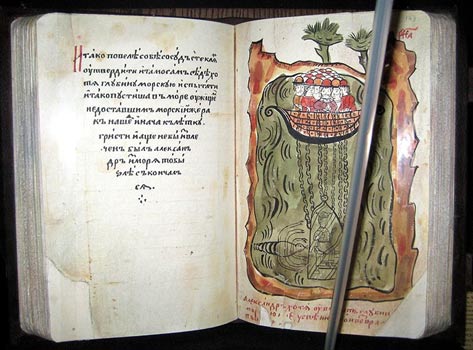
17th-century version of the ‘Alexander Romance’

17th-century version of the ‘Alexander Romance’ (Wikipedia)

The most reliable ancient source on Alexander is considered to be Arrian. He took his stories from Ptolemy and Aristobulus and wrote ‘Anabasis Alexandri,’ Campaigns of Alexander, (The Greek term ‘anabasis referred to an expedition from a coastline into the interior of a country) and is probably the most important contribution to the knowledge of Alexander the Great that we can draw on. Ptolemy I had been a close friend of Alexander’s since childhood and had gone on to become a leading general. After Alexander’s death he became Pharaoh of Egypt. Some have criticized him for exaggerating Alexander’s attributes both on the battlefield and in his private life. He supposedly upped his eulogy of Alexander and his own close relationship with him in order to secure his place in Egyptian history and that of the ensuing Ptolemy Pharaohs.
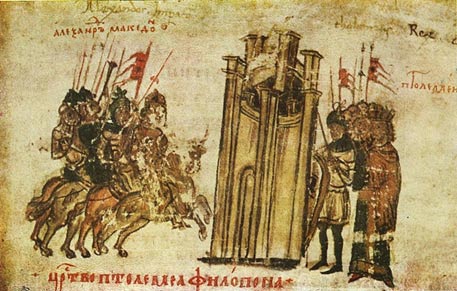
Alexander the Great and Ptolemy I Soter attacking

Alexander the Great and Ptolemy I Soter attacking. Miniature 13 from the Constantine Manasses Chronicle, 14th century (Wikimedia)

The idea that the ancient corpse supposedly found in the Great Pyramid by Caliph Al Ma’mun may have been Alexander the Great is intriguing.

Firstly, if what I have written did actually happen, (the reader must decide having seen the evidence), then Alexander’s final resting place could also be divulged. We would know not only where he was buried now but roughly what year and who buried him in his final resting place. In other words we should be able to trace his whereabouts today because it should lead on directly from the discovery of Al Ma’mun. Indeed, that is the culmination of the story in my book Alexander, A New Theory on an Ancient Legend’, although I did not set out to find it!

Secondly, I have investigated the whereabouts of that huge ruby that Al Ma’mun found lying on the head, (since ancient times a sign of royalty) and I believe the ruby still exists today.
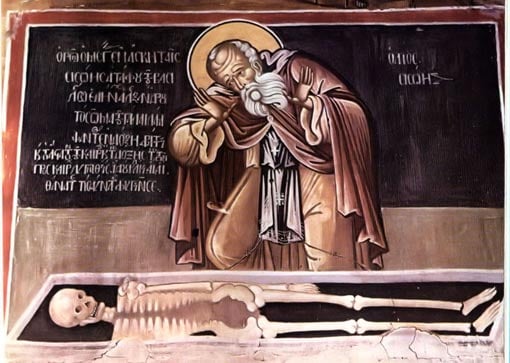
The Astonishment of Saint Sisoes

‘The Astonishment of Saint Sisoes’ shows the saint kneeling before the remains of Alexander the Great (orthodoxwiki)

By embracing the spirit, as well as the law of the letter, admiring the beautiful art as well as studying the context of the written word, I have tried to bring the past and its people into perspective, and I suppose, metaphorically back to life.

Two thousand years may have passed, but our understanding of Alexander’s passion for the glories of both life and death can still fire our imagination and inspire the soul. It can also inspire those of us interested in ancient origins to search out the truth no matter where it is hidden!

Further evidence regarding who may have placed Alexander in the Great Pyramid, the year they put him there, and most importantly, why they put him there, is available in Lucy Caxton’s book, ‘Alexander, A New Theory on an Ancient Legend’ or visit her website at www.lucycaxtonbrown.co.uk.

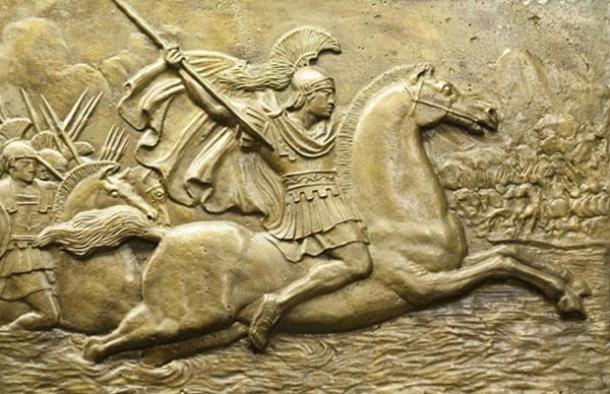
Featured image: Relief depicting Alexander the Great. Source: BigStockPhoto

By Lucy Caxton Brown

– See more at: http://www.ancient-origins.net

British archaeologists in the footsteps of the legendary Trojan horse

Two British archaeologists from the Boston University, Chris Wilson and Christine Morris argue that discovered pieces of the mythical The Trojan Horse, stating that the findings of archaeologists give them ' high probability ' rates are actually parts of the Homeric wooden horse that built the Greeks to be able to invade Troy.

The wooden horse – crypt, construction inspired by Ulysses, It was designed to mislead the Trojans and take as a gift and as a token of peace and goodwill from the achaeans. In fact it was a building that was hiding within the major ancient Greek heroes.

Those, After entering the horse in Troy, came out from him and opened the gates to the other, in order to start the sack of the town.

The excavations by the archaeological team from the University of Boston executed on the Hill of Chisarlik in Turkey, the historic site of Troy, recently brought to light a great construction lengths of almost 15 measures, from Woods which originally belonged to ships, but then used to create a prototype built unparalleled hadn't met again archaeologists. Near the wooden structure was found and a worn inscription on bronze in which indicated "The Greeks dedicate to Athena for their return home».

The findings, that laboratory analyses place chronologically on the 12th and 11th centuries BC, have transferred to the Archaeological Museum of Istanbul.

Source: parapolitika.gr

Lions and the Pride of Amphipolis

I will start by pointing out that English is a complicated language, one of whose quirks is the use of strange collective nouns, for example: a murder of crows, or a pride of lions. Once again I am using this as the sort of pun Aristophanes appreciated, in the sense that Greeks should be proud of both the monument formerly known as The Lion Tomb, and the work of the team there. CONTINUE THE READING

Excavation Of Amphipolis: The second gate in the Northwest did solve the mystery;

The excavation continued today without results

Written by Theodore If. Spanelis

With a steady pace and resumed the excavation in artificial excavation of the third Chamber and up to one and a half measure that has reached the archaeological hoe, has not yet identified any findings. The unique material that has been identified is the strymoniki sand, which increases even more the mystery of what serving this construction, While the absence of any trace of burial, reduces the hopes that this can be a crypt where was placed the urn of a deceased. However remain possible to it is the entrance of a tunnel that leads to the inner apartments, which would hinder the work of Tymbwrychwn or for any impasse sump which sole purpose, you might have, to mislead the would-be grasping...

But does all this monument that has all the features of the Tomb, constructed next to the funeral chamber, but is isolated, in order to serve the memorials and the pilgrimage of the famous dead, but without reaches the burial place of; And this is so you can find the dead for whom build this monument and is the access point;


The second gate

The best responses will give it a few days ago the result of geophysical research, enough of course to expect first learn what Greek University will conduct. Issue that probably will be closed until the end of the week. At the moment you need to settle in so far known data originating from the study which conducted the University of Patras, the 1998, which study though prepared fifteen years back, gave significant results. One of these is the possibility that there is a second gate, which estimated – according to the newest survey data – that is located in the Northwest. For those who have visited the Tomb, is the spot right behind the gate of the construction site, There is also the post of entry.

On this subject Prof.. Lazarus Polymenakos said in a related report in the PROTO THEMA, at 5 October, the following very revealing words:

"The publication of the 2004 had already marked the most important geophysical "anomalies" and their relationship with possible anthropogenic structures inside of the Hill. However, the accumulated experience in the application of seismic tomography (but modern technology) provides the ability to see the image "with other eye». Beyond possible graves, to see items that have to do with the structure and stability of the Hill, elements critical for very difficult internal approach of excavation. Composing anew the old items, and the already existing entries, Configure a new comprehensive interpretation. In a more simplified form, formed the adjacent three-dimensional image of the inside of the estimated Hill (Picture 1), score of painful efforts and critical synthetic thinking.

The picture is very-very interesting. Reveals the configuration of the terrain from the manufacturers of the monument, in order that the Office may accept the structures that have been designed to place there and to "protect". Form (not very deep) dugouts which at some points will accommodate burial or other structures, and then will be "streets" to access to and from these. These roads are chosen to access the Interior from the South, the other from the Northwest. The reason for these guidelines should be important both from the perspective of symbolism, as well as the functionality and manufacturing excellence.

The structures inside are completed and then covered by a terrace with dimensions and volume of similar magnitude occupy the structures at the base of the Hill. But of course to create a monument that will symbolize the importance of content. And, of course, the whole band is "stable profile" and resistant to internal and external forces and aggravating factors in the passage of time ".

LOFOS KASTA BBBBB

In a nutshell the k. Two roads access detects Polymenakos to buried beneath tons of sand, funerary monument. One is he who excavated and the second is in the Northwest where we identified.

How likely is the second entrance gate; Resorting to aerial photos from the video published by the ENA CHANNEL a good observer will see that while the perimeter of the Hill and along the marble enclosure, has been dug the Hill and from the inner side something similar doesn't happen on the northwest side of Mound, where it stops abruptly. It is very likely already have found some stone edge construction, as indeed happened on the South side, There they found the gate with Sphinx.

On aerial photographs shown very clearly that it has stopped the digging around the Mound and part of the northwestern side is left untouched, pending the continuation of the excavation from the side. Would not surprise us at all if confirmed this assessment and identified a portal, which you might as well not have any decoration or some other distinctive – deliberately so as not to draw attention – and is ultimately the main entrance that will lead to the solution of the mystery and the answers we all dipsame to learn.

Kasta Tomb copy

Kasta Tomb 2 copy

anaskafi amfipolis (2)

Source: xronometro.com

The terminology of the archaeologist of Amphipolis!

The excavation of the tomb of Amphipolis brought to our many "new vocabulary" words, unknown until today, from the terminology used by archaeologists.

Mars Mentizi

Journalist – historical researcher

On the occasion of the excavation in the Tumulus of Amphipolis a series of words unknown until today, words archaeological, came in everyday life. The hear, read and many times we use it. Archaeology like any other science has its own terminology. Going for some words, you were loved, as loved lately and the history of the place, as a result many dozens of dusty historical books to "descend" from the shelves and read.

We can say that it is a "small archaeological dictionary", used in connection with the excavation in Amphipolis. Words that for many still remain unknown, even though included in every press release issued for the excavation.

In order to understand what we read, We host, in alphabetical order, some key words that we have come across many times so far in the notices of the excavation.

Bracing: It is mounting a vertical wall which is in danger of collapse. It should be noted that the principle of retaining walls is the so-called ' triangulation ', i.e. adding a diagonal support, as the hypotenuse in a right angle that forms the wall to the ground.

Upper Structure: This is the upper part of an architectural element.

Impairment of cross-section: An expression that we saw in press releases of the Ministry of culture as the characterisation of the situation of the roof of the third Chamber, where observed that briquettes are trickier.

Pigtails: Are curls. The met in the headdress of Karyatidon.

Cornice: Is the famous eaves. That is the part of the roof of a building which overhangs and protects embossed representations or other items below this.

Geodetic methods: These are the methods to determine the exact geographical location using conventional measurements and GPS system.

Geostatic triggers: Are the pressures on a building by the constant shifts of ground.

Black and white decoration: It is the colored painting decorating. More often than not used in depictions of human forms but in shapes and other compositions.

Phrenic Wall: It is the intermediary wall with some kind of opening. In the case of Amphipolis, as phrenic refers and the gate with Sphinxes.

Domos: Is a series of stones, by which consist of a wall.

Boxing: It is essentially the square column constraint and other items, whose recession risk based because based on flimsy ground.

Balancing pressures: The meaning of this phrase in the excavation involves the careful removal of soil from both sides of the walls, so the pressures exerted on the walls of the soil's weight balanced and not in danger of collapse.

Pilaster-Capital: Is the upper part of the stanchion. In the case of Amphipolis, at the entrance of the monument we have decorated capitals with additional terrain that resembles a capital.

Culmination: It is the artifact on top construction or manufacturing

Architrave: Oblong piece of marble that rests on the upper end poles and bridges the gap between them.

Backfill: Is the accumulation of new layers of soil up on older.

Backrest: place the seat where supports the back of he who sits

Eswrrachio: This is the inner curve of the ceiling on the maximum amount of.

Lentigines: the flattened sections covering the nail heads or construction that mimics for decorative purposes.

Crush load: This is the weight that is applied vertically and threatens the joists with snap.

Voussoirs: Is properly shaped stones that make up a curved roof.

Dome: Is the roof of the "lodge", with wooden lattice cross-section.

Doorframe: This is essentially the total input – a door construction.

Scaffold: It is known to all scaffold.

Ilywdis sand: Very fine sand found in riverbeds

Katachwsi: It is the cover of monuments and other items with soil.

Kothornos: Type of shoe with thick soles that was then tied in front with laces and fit in both feet

Daughter: It is basically another name of Karyatidas, Emphasizing the newness and purity.

Molybdochoisi: It is to support two marble parts with intermediate link from pencil, which poured in liquefied form in appropriately shaped holes, as those who are on the shoulders of Karyatidon, in the neck and on the wings of Sphinxes, etc..

Splint: In the case of Amphipolis, the splint basically includes wooden beams with frothy investment limit shifts of tholitwn the roof of monuments.

Ntisilidiko: This is the sculpture tool, as the chisel with which formed the impressive and elaborate details of statues, as the veins.

Fresco fresco: Is the relief decoration and painting technique formed while the mortar is fresh.

Uprights: This is the nested marble lined with marble slabs placed on the outer side wall vertically.

Excavation: part of the soil dug deep

Pilasters: Are the pillars on either side of the doors.

Doorframe: It is very simple for the frame of the door – entrance.

Pessary: It is basically rectangular column. In the case of Amphipolis was used many times the expression ' inherent with pillars "for the caryatids, that means that the statues and pillars are a single body.

Pole: It is a kind of head cover, something like Hat. The pole of Karyatidon in Amphipolis of Amphipolis distinguished under the architrave.

Folds: Is the ripple of cornea in statues.

Tuffstone: This is limestone rock with discontinuous surface, full of small holes.

Rosette: Is the decorative rose to capture a floorplan.

Trench Straggistiki: Is the circumferential Groove for the water runoff of rain.

Movie: It is oblong decorative, color expression.

Masonic symbols: symbols of artificial – manufacturers of the era

Sealing wall: This is a relatively rough stone construction, unrelated to the architecture of the monument, with the sole purpose of shielding from the potential intrusions.

Tumulus: It is essentially Tomb, over whom they have added large quantities of soil.

Coffered: Is the indentation created between cross-beams.

Cheiridwtos: Is the makrymanikos, and used for tunics of Karyatidon in Amphipolis.

Source: xronometro.com

«Gods, Myths, Heroes ' the new campaign of the Ministry of Tourism (VIDEO)

«Gods, Myths, Heroes ' the new campaign of the Ministry of Tourism (VIDEO)
*

The Gods, Myths and heroes of Greece are the key elements on which the production of new communication campaign for tourism, presented by the Tourism Minister Madam Olga Kefalogianni in the context of the international fair of tourism World Travel Market on Monday in London, presence of crowd tourist operators and visitors.

Every Greek destination is birth place of an ancient God, each party in Greece hides a myth, a magical story, the energy that is even today live, the Minister said during the presentation of the video.

In her speech at the World Travel Market Olga Kefalogianni, stressed that Greece is a particularly powerful, Global recognized brand name, Noting the timelessness and the klassikotita of Greek tourism and pointed out the themes that are developed in order to cater to the interests of the modern and selective visitor. "The communication strategy, We keep all the basic features that we have established as a global tourist destination and today we choose to highlight additional components and features that has our region», Mrs Kefalogianni. And he added that "any place in our country, hide a legend, a magical story, the action of which is live until today», highlighted.

[youtube http://www.youtube.com/watch?v=4ab-yQYnOOs&w=560&h = 315]

Source: parapolitika.gr

The Brilliance of Katerina Peristeri

The Brilliance of Katerina Peristeri
************
Marina Schiza asked me to write a short critique about Amphipolis for Phileleftheros, and I did so yesterday. I am not sure when the piece will appear, but it was very easy for me to be critical of the many jealous colleagues whose envy of Dr Peristeri's discovery is eating away at them. I will not repeat what I wrote there, but elaborate on the good work at Amphipolis instead.

Envy is a universal quality to many people suffer from, and over the years I have been repeatedly shocked by how badly some archaeologists behave, in Britain, Denmark, America and almost every country, not just in Greece. I should note that those tend to be the mediocre scholars, envious of those who have skill and talent, mediocrities who try to diminished the work of good archaeologists because they cannot reach such heights themselves.

I do not know Dr Peristeri very well, but her work is of an extremely high caliber. I have known her dig's architect for many years, and he is also one of the most talented people working for the archaeological service (someone from one of the most prestigious American universities asked me last year if I thought he could be lured away from Greece, that is how good his work is). I am not sure which technicians are currently on the dig at Amphipolis, but I was blown away by the amazing work the restorers and technicians working on the slopes of the Acropolis were doing, and their current standard of work is far superior to anything I have seen in Italy, Turkey, Egypt any many other countries. The Chinese have been making remarkable progress in terms of new techniques for preserving archaeological discoveries, for example lacquer found in water-logged tombs, and Greece in my opinion is currently second only to them.

That is why I found it shocking that Dr Peristeri had to defend her work: Ministry of culture and sport – Απάντηση της κ. Κατερίνας Περιστέρη

I generally have avoided reading coverage other than the press releases, because I did not feel the need to read foolish opinions claiming the tomb was Roman, and ridiculous attacks on the techniques used, attacks founded in fantasy not reality as here: Σάλος για την Αμφίπολη-Νακάσης: Δεν έγινε σωστά η ανασκαφή, υπάρχουν κι άλλοι τάφοι

To make it very clear, the team at Amphipolis were not leaking information to me, because they did not need to. They are great archaeologists, and all good archaeologists work in more or less the same way, so it is very easy for me to “read” what they doing and sometimes even thinking of doing next based purely on the photographs and information they release.

The partially excavated mosaic? Yes I think Hades was shown with the features of Philip II, but there was a female arm showing in the first set of photographs, so it was almost certain that the female figure to the right when unearthed would be Persephone.

Do I wish they'd have a little more time to proceed a little more slowly, most of all so that they could have days of rest? Yes. But were they working badly? Not.

The soil fill was obviously all of one date, so the small finds within it would have been plotted and recorded, but there was no need for slow excavation … it was all one ' strata’ or layer of fill, so slowly sweeping away the soil with a brush would have been a ridiculous thing to do. Also tightly packed soil in a closed chamber is impossible to fully sift through inside the tomb, so the soil was bagged up and taken away to be examined by other members of the team in an environment where they would not only have the space to do so, but also the equipment they needed.

Where different techniques were needed, they used them. For example under the blocks in the last room, based on this photograph the various ' strata’ or layers are extremely clear. I have marked alternate strata with red arrows, and the yellowish layer which I assume is the clay with a green arrow:

The stratigraphy is so clear it can be read in photographs, and there are very few other excavations where this is the case. And this photo was only intended to be a general view of where the door was found, not a photograph of the stratigraphic evidence!

To me one of the great joys of Amphipolis is how much interest it has renewed in Greek history and archaeology, with people reading academic articles that would normally only reach a small audience, and discussing them as they form new ideas.

We all have the right to an opinion. I have mine. I disagreed with Olga Palagia’s, but she has the right to express hers, and ideas one disagrees with can push us into better formulating and explaining one’s own. Athanasios Nakasis had the right to his opinions as well. The problem is that he clearly demonstrated that the failure to understand modern archaeological techniques was his, and not made by the team at Amphipolis. In English we call that a Pyrrhic Victory.

I love archaeology and part of my nature is that I love sharing it by trying to explain it to people, and encouraging them to think for themselves about it. But it worries me that several Greek archaeologists, who are teaching Greek students and excavating Greek archaeological sites, seem to be demonstrating so little understanding of the field.

Katerina Peristeri is leading a team doing exemplary work on one of the most important discoveries in archaeology. No amount of ridiculous claims can diminish her, her find or its place in history.

Source: diva

What happens in Amphipolis;

What happens in Amphipolis; Just the Anaskaftikan 25. What lurks in the remaining 133 m.;

The time that the funerary monument of Amphipolis in Kasta strongly resists the Hill to give answers as to the identity of the deceased and the many innovations that distinguish its construction, the scripts find ground to foyntwsoyn and spread with speed.
The first born is what happens at the bottom of the Hill. Its diameter is 158,4 m. and the excavation covers hardly 25 m. in a straight line. In the remaining 133 m. What lies; May lie beneath the Hill Kasta several funerary monuments;
The second has to do with the change of tack that occurs primarily from the excavation team, which although initially talks about sealing the monument construction time, on the basis of new data – the identification of the head of the Sphinx in the third Chamber, the broken marble door and the wear on the mosaic with the abduction of Persephone – considers something many had supported from the outset: that stamping and the walls were subsequently katachwsi the erection of the monument.
The point is though when this happened. In addition it creates fertile ground for even a script that has already found many followers: that the monument was used more than once in different phases and may be visited, at least until the point where the door.
End, the anamochleymeni situation of the floor clearly in the third Chamber allows to formulate the opinion that someone's treasure Tomb robbers in search caused the disaster of the floor and is not hiding something remarkable under limestone.
Mih. Tiberius: Maybe not never know the ' occupant ' of Amphipolis
"I think we are near the end of the excavation", says the scholar and Emeritus Professor of Classical Archaeology at the Aristotle University of Thessaloniki, k. Michael Tiberius.
"I don't believe that under the ground of third Chamber – the fourth area is no other Hall. I do not believe that there is another underground space. I think that from now on there is no something else», notes Mr. Tiberius on developments of excavation work on the monument of Amphipolis which, as we all know, revealed that there was no Fourth Chamber, leading the efforts to have now shifted under the floor of the third Chamber.
"There might be a situation where you don't never know with certainty who was buried in’ This grave ", also he tells us. Tiberius, the who has raised speculation that the monument can be ' hosted ' the General of Alexander the great, Nearhos, or that the grandiose monument can be built for the wife of Alexander the great, Roxanne and their son, Alexander D '. "I remind you that these are all speculations. Only speculation can become ", It establishes the main Tiberius.
For the same, the principal is safe and that the funerary monument dating to the late 4th-early 3rd century b.c.. X. "The fact that the floor of the Tomb seems compromised-, This is due to the efforts of tymbwrychwn that their presence is more than just strong from the beginning that started to reveal this monument», CITES himself. And reminds: "There is no Fourth Chamber have said for too long. I'd say, of course, that does not exist in 95% but because this monument has many new items, Let a percentage 5% to exist».
What can hope, well, now the excavation team; "If the Tomb robbers fled the Larnaca and left bones or bone fragments, then maybe we can learn the sex of a tenant or occupant of the Tomb. Hence, If you found something, This may be in the soil of the third Chamber. We may find there some trace of the dead. Something that had no value for the body-snatchers ".
Truth, will be disappointed if there are no other findings and does not reveal the identity of the resident or residents of the Tomb;"I'm very disappointed because; ΄Isa – equal, others will be disappointed because they did a bunch of scripts. This monument, Thus or otherwise, It is unprecedented for the science of archaeology. ΄Edwse and will give many new items. See, of course, and the results of the excavation. If the excavation is done in a scientific way. Because I highly doubt – when I see mpoyltozes in the excavation – if it is scientific excavation».
Paliadeli: We all have responsibility for expectations that cultivated in Amphipolis
"We are all partly responsible for the rise of expectations from Amphipolis, but this does not diminish the value of finding» Chrysoula Paliadeli said, Professor of archaeology.
The Chrysoula Paliadeli argued that "from the beginning it seemed that the Tomb be tampered, the image was clear» the Professor stressed and added that with you "finish and the investigation into the soil in the third Ward and if you can't find other elements closes the excavation".
For the supposed passage beneath the floor of the third Chamber, Ms. Paliadeli said that "so far all we have is broken pieces without seeing a building leading to the crypt".
"If it is true that the last wall is sealed you have to come to terms with the idea that the monument ends there, This does not mean that the same tumulus no other graves», He said Ms. Paliadeli and added that he hopes will find the Memorial bones and this will give us the possibility to get closer to the identity of the deceased and of the monument.
"If we don't find bones or bone fragments, to substantiate at least the number of the dead, i.e.. If you are going for one or more or for sex, i.e.. If it is male or female, as well as age, then the tomb of Amphipolis is a monument that will be looking for its owner " and hastened to point out that even if the monument is not attributed to a specific historical person, It is anyway unique to the size, the form and decoration of.
Athanasios Nakasis: Made many mistakes in the excavation of Amphipolis-if you look better, you will find other graves
The Honorary Chairman of ancient monuments Restorations, Athanasios Nakasis, estimated that there are other graves in the tomb and added, inter alia, that was not done properly the excavation. Specific, Speaking at the SKAI said that "If you look in the tumulus Kasta, Maybe other tombs found, larger, and maybe Leo to be associated with another monument of Amphipolis».
Indeed, did not agree with the assessment that there may be a vault beneath the floor of the 3rd. "There is no precedent of the Macedonian tomb with underground kamaroskepastoy. I don't think that there is something underneath, to tell you the truth. Is everything,What we see. This assessment was from last week», stressed by Mr. Νακάσης.
"If you do not find an inscription, If there is no Epigraphic given, Maybe not never know for whom he made the monument. The Tomb must have a relationship with someone who lived and raised in Amphipolis», added.
At The Same Time, Mr. Nakasis estimated that there have been multiple attempts at sylisis of the Tomb. "The first picked up the precious and the next were looking for treasures beneath the floors. New mosaic bash and find something. Probably hit the floor and listened to is like hollow pricked does is something hidden ".
"This monument is typical Macedonian Tomb. So is almost everyone. If it's family tomb, should have put others in. We could if we made incisions on the walls, and specifically in their foundations, to find when built each of them. The shells that were there would give the date built the wall. Don't forget that archaeology has gone too far and accurately counts 2 years. So we could speculate who is buried there. Every season is characterized by a layer. When the ancients manufacturers decided to construct the tomb and put soil, This was the first building. It was the same with the body-snatchers and go saying. We could know when it became the first grave robbing. But when soils are removed in bulk, the findings are then muddled and have no archaeological value than commercial. However not extinguished hopes…», stressed by Mr. Νακάσης.
"In this huge tumulus that there should be other and larger tombs. Leo of Amfipolis may not regard this dead but others or someone bigger», He said o k. Athanasios Nakasis. "The mound of Vergina is half of the tuba in kamaroskepastoys and has three Amfipoli graves» added.
Hiding other tombs;
"Logically there must be another Tomb in Tomb, not inside a hill of diameter 158 m. to have covered only the 25 m. "says in the new Professor Emeritus of Classical Archaeology excavation experience. "Even under the tumulus where Philip's tomb was found in Vergina, there were three other graves, two of them had despoiled " Adds.
"The question is how much percentage the tumulus is artificial and how much is natural rock» mentions other specialty academic teacher of the same. "The existence of enclosure, however, leaves open the possibility of going for a clump of graves ' highlights.
From the side of, the Director of classical Antiquities Katerina Romiopoulou notes: "To have a clear answer should become a magnetic diaskopisi, that will show at what point should the excavation team to ' hit '».
Is not, though, the only technology that can speak for the contents of the Tomb. "One solution would be to ' shaved’ the surface of the hill over the precincts, to determine if juts something» continues Ms. Romiopoulou, While the Emeritus Professor supplement: "Like the webs of exeichan road (r.r.: of the runway before entering) This funerary monument».
The question of whether the underground area beneath the floor of the third Chamber, They excavated this time, can hides a crypt full of treasures and responses, Ms. Romiopoulou responds:
"There are no such caches in Macedonian tombs dating at least to the time of the monument, IE at the end of the 4th or early 3rd century. e.g.. Perhaps it is just a downhill or Nestor more soft natural rock. If cache should have walls. If there was a golden Larnax is not going to be spared from the Tomb robbers. If they were wooden won't have nothing left, only studs. However, with so many surprises so far has given this finding should not exclude anything "highlights.
Another question that remains unanswered is whether the Tomb belongs to a dead or if it was polyandrio or Memorial Cenotaph.
"Have another form of such monuments," explains Professor Emeritus University of. "This is usually either a pit or a large hall. But we don't have anything like this in Amphipolis. This view was expressed because of Leo that was considered by the excavators that belongs to the tumulus. But there is no tomb Leo. And Chaironeias and Amphipolis are associated with dead on battlefield, but were not at the top of mound».
The view was expressed in the news release of the archaeologist NERIT Kostas Soyeref, who stresses that "should be checked the yard of the tomb of Amphipolis, in order to determine whether there are other graves».
He recalled that at the tombs of Goats happened the same, While written with the excavation team's view regarding the possibility of a floor in the third Ward and below and new room.
Also, Mr. Soyeref pointed out that in the grave of Amphipolis it may be either the son of Alexander the great, the Alexandros, either the Aristwnas, Commandant of the Macedonian leader.
P. Faklaris: In Amphipolis became parade tymbwrychwn
The tomb of Amphipolis is sylimenos without no doubt, indicates the Professor of Classical Archaeology, Aristotle University of Thessaloniki, p. Faklaris. Indeed, Professor in an interview with Star spoke of "tymbwrychwn" parade.
"From the beginning it was clear that the tomb was despoiled of Amphipolis. By spring I in my classes say to my students that if they found the Tomb will be sylimenos. I appreciate that has looted at least twice and talk anyway for tymbwrychwn parade».
As proof of his tomb sylisis Professor mentions the "disruption" in room two floors but also the damage to Mosaic, which returns to the tymbwrychwn effort to find treasure digging.
Mr. Faklaris also says that there is a third Chamber and are not going to find anything, After the precious objects will have definitely gotten the Tomb robbers.
Note that you will not ever found the name of the deceased in the grave, Since there is no inscription, While States with certainty that it is not buried there King.
Cenotaph in favour of Alexander the great heros
"The empty booths and the impasse in which the excavation was found, strengthens the version on kenotafioy heros in favour of Alexander the great ' estimates by the American archaeologist Dorothy King and adds that "it is a monument that was not used again for any other, as this would constitute a sacrilegious act».
"The booths, probably, used by some worshiping community of Alexander the great, While he waited for the repatriation of the mortal remains of. The objects contained in the Tomb, It should have been removed before transferring the backfill, which was to prevent the collapse of the monument ", staff blog writes the well-known archaeologist.

Defencenet.gr news section

Stamatis Spanoudakis: “A thanks in Amphipolis” (VIDEO)

By posting the great song “He lives and reigns” that is from the first disc of Alexander the great, the great artist wrote : “A thanks in Amphipolis” and “broke” each record in notifications and like.

Stamatis Spanoudakis, Indeed, the continued “Thanks” of, by posting what he had written on the second disc of Alexander the 2008, as a prologue to the second job:

To letter to Alexander:

“A letter to Alexander, op’ opportunity of my second drive’ This: “Roads that are not perpatises”. It is time that you wrote and your tha΄thela to explain why I write again now, Thirteen years after that first, symbolic, for me at least, A letter letter., that gave me a lot of power and went into the streets, that maybe it always was my own, but don't ' Cha figured as then. It took the form of the secret, but your presence so intense, to understand and to go.

It is roads that are too perpatises and others, not perpatises.
These secondary I to thee “pour», walking for awhile now, Mazi Sou.
Internal roads, roads of fantasy and fairytale, roads of the East, roads of the West. The Silk roads, but also of the Byzantine Empire, streets of suspicion of the true God and streets of healthy certainty. Streets of affection, streets of love, roads sweat, pain and blood roads. Streets life, death roads and streets, anastasimoi.
These roads may not find them all in my music, but it's definitely, incised forever in my soul. Because the music is “art "and art and crafts and has unfortunately logic (human tools, in which child hesitate to trust the really important in my life). But soul is true blast, pure and eternal. This listen. And forgive, that in approaching once again and try to get in touch, only with my own weapons, music and my words.
You Know, I live in an age, that the “poetic licence ' tends to be replaced by the “Terminal ' and every historical Moro-neoellinas sees history, as they're dictating the antiquated, and usually self-serving, I think of. So, I feel now, more than ever, the need, to continue to “cuddle with my music and you, But what,What else is really yours and ours.
WHAT,What is, It was and always will be, Greek.
I say our own, Why, Thank goodness, We are many who think so and my hope is that it will become more and more. Because the truth has this. Quietly and secretly gathers around her “real faces ", waiting time, or man, to look.
So, and your opening again for my little soul, to leave, Unfortunately in the hands of people, not in’ loved and not to understand.
But mostly to leave to safer museums on Earth. Our hearts

With much love
Stamatis Spanoudakis 2008

[youtube http://www.youtube.com/watch?v = L9kGlwrL3E8&w = 420&h = 315]

National Geographic: Persephone keeps the "key" for the occupant of the Tomb

The "key" for the occupant of the tomb is the fresco of Amphipolis with Persephone, According to a recent article in National Geographic As reported by the post., Persephone, daughter of Zeus and Demeter, pictured in mosaic, gives a new item "key" in mystery about the occupant of the Tomb.
l_14841-The tomb of Amphipolis, as National Geographic, located near the Aegean port used by Alexander the great to the fleet of. Archaeologists date the Tomb to the last quarter of the fourth century b.c., probably placing the construction of the fractious period after the death of Alexander the 323 e.g.. All this has sparked intense speculation that the tomb was built for someone nearby or relative. The Ministry of culture and sport of Greece announced at a press conference Thursday that the recently discovered the image of Persephone which resembles a similar one found in the Royal Cemetery at Vergina, where are buried the father of Alexander the great. This discovery, made by Lina Mendoni, General Secretary of the Ministry of, connects the tomb of Amphipolis with Royal ancestry of Alexander the great. "The political symbolism is very powerful," pointed out. the new finding raises hope that the Tomb will add another chapter in the tumultuous history of the ancient Macedonian Royal House. "Without a doubt," said archaeologist Katerina Peristeri, principal investigator of the Tomb Amphipolis "the deceased was extremely important person."The figure of Persephone is identified when the Peristeri and colleagues of cleaned the floor of one of the Chambers of the Tomb. The Peristeri was reluctant to make any guesses about the identity of the owner of the Tomb by these new data. However the Jan Goyorthnigkton, classical scholar at the University of Missouri, in Columbia, believes that it is likely that the Tomb belongs to a woman, After the mosaic presents a woman who is driven to the underworld. If this proves, added, the tomb is likely to host the Roxane, wife of Alexander the great, or the mother of Olympiad. both women sentenced to death when one of the generals of Alexander, Kassandros, took over the throne of ancient Macedon according to Worthington however, We don't know for sure which of these two women may lie in the Tomb. classical texts which survive indicate that Cassander murdered Roxanne and her son in Amphipolis the 310 e.g., so it is very likely, He said Worthington, that could be the tomb of Amphipolis. From the other, There are other elements that suggest strongly to the Olympiad. Alexander was meant to proclaim his mother goddess, as the female goddess in chariot of Hades. Extra, the Olympics continued to hold important political force, even after the death of Alexander. Although murdered by cassander and his allies could be honored with such a grave.