The skeleton is almost integer – The genetic material will be examined by a specialist workshop – Found in a coffin found in Tomb within the funerary monument of Hill Kasta
Climaxing the agony for the impressive discoveries found in the funerary monument of Amphipolis. In briefing journalists announced that found skeleton, almost integer! The genetic material will be transferred to a special lab for testing in order to obtain the first information about the identity and age of precise calibration.
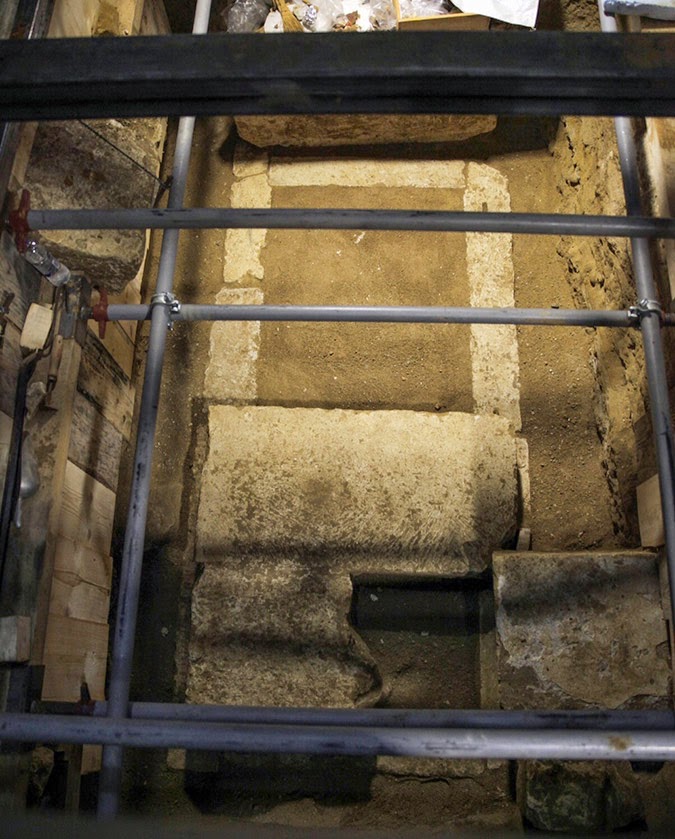
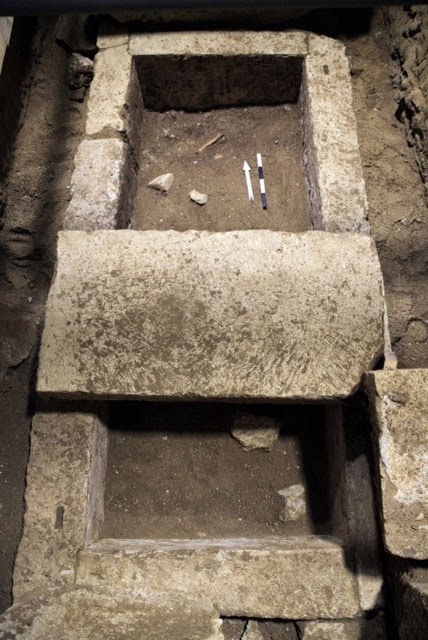
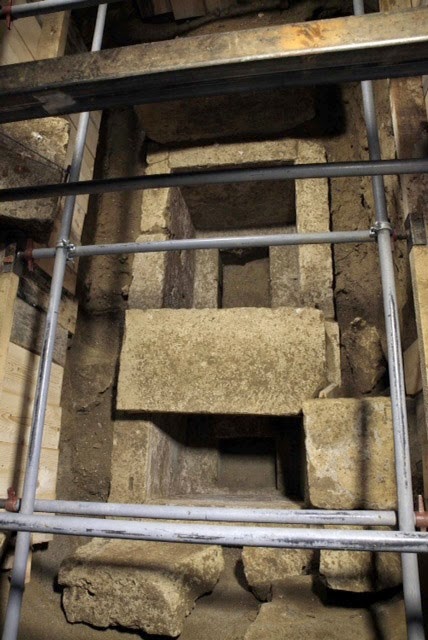
The third Chamber, specifically, at a depth of 1, 60 m. from the saved stones of the floor, revealed large CIST Tomb, made of limestone.
The external dimensions of the tomb is of length 3, 23 m., width 1, 56 m. and saved EUR 1 m. However, found, during excavation, stanchions from the reconstruction of the Tomb, that allow us to believe that his height reached at least 1.80 m.
Within the Tomb created a deepening of width 0, elongate 54zn. and length 2, 35 m. This is the position in which it was placed a wooden coffin. Found, scattered, iron and bronze nails, as well as bone and glass ornaments of coffin. Note that the total amount of the third Chamber on the top of the canopy to the bottom of the tomb is 8, 90 m.
Inside and outside of the Tomb, found the skeleton of a dead. It is obvious that the anthropological material will be examined by specialists. Is, equally, obvious that all investigations will be made which requires modern science.
The burial complex on the Hill is a public work Kasta, that was used for the construction of the largest quantity of marble, that has ever been used in Macedonia. To remind you of the elements of the uniqueness of the: Tumulus of 33 pm, and this ep᾽ the pedestal with the oversized lion, totaling 15,84. The Sphinxes, the caryatids and the wonderful mosaic with the abduction of Persephone, but marble painted epistylia, which, at the moment, maintained in the laboratory of the Museum of Amphipolis. Note the unprecedented level of construction set.
According to the announcement of the Ministry of culture, This monument is a unique and original composition varying characteristics. It is a highly accurate construction, the cost of which is obviously unlikely to have undertaken by private.
Probably, This is afirwϊsmenoy dead monument, i.e., mortal whom were devotional figures from the society of his time. The dead was a prominent personality, only thus explained the construction of this unique funerary complex.
At 22 November, the Minister of culture and sport,. K. Tasoylas will give an interview in the Museum of Amphipolis, on one afternoon on the findings and the next phase of work on the tumulus Kasta.
At 29 November, Sabbath day and time 11.00 will be presented the results of the excavation period in Hill Kasta, from Serres, curator. Peristeri and its partners, in Athens, at the Auditorium of the Ministry of culture.
"Wait a little, then a little patience», answered by Anna Panagiotarea on enthusiastic reactions of journalists and added that the anthropological material will have seen in a few days.
As announced, the third Chamber, found large Tomb built by self-made porolithoys, 1,60 measures under the floor of the third Chamber.
Also within the tomb was observed elongated bathynsi width 0,54 and length 2,35 measures. When updating of journalists revealed that within the Tomb there was a wooden coffin, something that is demonstrated by approximately 20 scattered iron and bronze studs as osseous and glass decorative of coffin.
afos and the skeleton of the dead that has been buried in a tumulus Kasta came to light from excavations Jamie's Peristeri group according to the new announcements being made at this time by the spokesperson of the Anna Panagiotarea excavation and the SG of the Ministry of Culture, Lina Mendoni in Museum of Amphipolis.
In Particular, According to the official announcement ynechistikan work by the Ephorate of Antiquities Serron, in particular in Kasta Hill and third Ward.
At a depth of 1, 60 m. from the saved stones of the floor, revealed large CIST Tomb, made of limestone.
2. The external dimensions of the tomb is of length 3, 23 m., width 1, 56 m. and saved EUR 1 m. However, found, during excavation, stanchions from the reconstruction of the Tomb, that allow us to believe that his height reached at least 1.80 m.
3. Within the tomb was created a deepening oblong a width of 0, length and 2 54zn., 35 m. This is the position in which it was placed a wooden coffin. Found, scattered, iron and bronze nails, as well as osseous and glass ornaments the coffin. Note that the total amount of the third Chamber on the top of the canopy to the bottom of the tomb is 8, 90 m.
4. Inside and outside of the Tomb, found the skeleton of a dead. It is obvious that the anthropological material will be examined by specialists. Is, equally, obvious that all investigations will be made which requires modern science.
5. The burial complex on the Hill is a public work Kasta, that was used for the construction of the largest quantity of marble, that has ever been used in Macedonia.
To remind you the evidence of the uniqueness of the: Tumulus of 33 pm, and this ep᾽ the pedestal with the oversized lion, totaling 15,84. The Sphinxes, the caryatids and the wonderful mosaic with the abduction of Persephone, but marble painted epistylia, which, at the moment, maintained in the laboratory of the Museum of Amphipolis.Note the unprecedented level of construction set.
6. Therefore, This monument is unique and original composition varying characteristics. It is a highly accurate construction, the cost of which is obviously unlikely to have undertaken by private.
7. Probably, This monument afirwϊsmenoy dead, i.e., mortal in which were devotional values from the society of his time. The dead was an eminent personality, only thus explained the construction of this unique funerary complex.
8. In order to implement the rehabilitation work of the monument, systematically studied scattered architectural parts, which have been identified and attributed to the precinct. This is for 500 about marble members, located in the surrounding area, where today is located the lion, While as withdrawn, a few days ago, the waters of Lake kerkini, discovered more than a hundred members of the enclosure, like cornices, uprights and stepseis. Had been transferred, the 1936 by Oylen, which had taken over the construction of the dam of kerkini.
9. In the context of archaeological research in the tumulus was checking and sampling of sediments, Interior and exterior of the Tomb, as the drilling control of subsoil, in order to determine the geological background. The sediments consist of alternating sand and marl, source limnaias.
10. For in the coming days provided for the completion of the sieving of soils, the completion of the task ypostylwtikwn and the continuation of maintenance work on the monument , but the findings in the laboratory of the Museum of Amphipolis. Special emphasis is placed on maintenance of parts of the missing part of the mosaic.
11. At 22 November, the Minister of culture and sport,. K. Tasoylas will give an interview in the Museum of Amphipolis, on one afternoon on the findings and the next phase of work on the tumulus Kasta.
12. At 29 November, Sabbath day and time 11.00 will be presented the results of the excavation period in Hill Kasta, from Serres, curator. Peristeri and its partners, in Athens, at the Auditorium of the Ministry of culture.
13. Geophysical diaskopiseis
1. The Geophysics diaskopisi will be done by the Aristotle University Of Thessaloniki, in particular by the laboratory of applied Geophysics, which is headed by Professor Gregory Tsoka, After a proposal of Pericles Mitka Professor valid. It should be noted that the UNIVERSITY has put at the disposal of the Ministry of culture not only know-how and resources of the University.
2. For the investigation of the Mound Kasta I used, mainly, the method of electrical resonance, in the development of which contributes the specific workshop. The method consistsin subsoil electrical Imaging, similar to medical tomography. He doesn't get to explore other tumuli- eg. Apollonia, Kilkis, Vergína, Argolida etc.) Results from the examination of Kasta mound in next update.
ethnos.gr