Oops! It appears that you have disabled your Javascript. In order for you to see this page as it is meant to appear, we ask that you please re-enable your Javascript!

The secrets of the Macedonian wreath


More than ten Golden Macedonian wreath, rare archeological finds, the last decade came to light thanks’ an unpredictable combination of excavations, lathranaskafwn and archaiokapilwn action. Eight wreaths found 2008 in the Thessaloniki metro excavation, two the 2009 and the 2010 in Vergína, a repatriated in Greece the 2007 from the Getty Museum and an American found even older, the 2000, farmer's hands, product archaiokapilias thought and came to the Archaeological Museum of Thessaloniki…

Based on these new findings, organized workshop in the Archaeological Museum of Thessaloniki, at 3 June. Scholars and excavators from Greece and abroad will be reported on the use of wreaths and their portrayal in art, technology and their typology.
This is the first time organized a Conference on this topic, as he explains in the «a» Despina Ignatiadou from the Organizing Committee, Head of the Department of Machining of AMTh Collection. "On the occasion of wreaths acquired recently asked the excavators to make presentation of the findings and we take this opportunity to re-evaluate and older», Adds.
According to the archaeologist of P’ Ephorate of prehistoric and classical Antiquities, Bettina Tsigarida, participating in the Organizing Committee and will present suggestions on the workshop, Macedonia is one of the areas of the ancient Greek world who gave a large number of metallinwn wreaths, dating from the mid 4th to mid-2nd century BC.
Made mainly from gold, but also from bronze or silver, with olive leaves, Myrtle, Laurel, Oak Ivy and rarest, wreaths are richer and more elaborate during the second’ half of the 4th century (the era of Philip II’ and m. Alexandrou), While then take shape and simplified.
In any case, the ancient Greek wreaths are objects that captivate audiences and archaeologists, It is sought after by collectors, while hiding many secrets. "There are many issues that we have not even decipher compared with wreaths and especially with their use", observes Ms. Ignatiadou. «Although we find on graves, There are funerary objects. Used in real life, as shown by the minimal information that rescue sources. It was personal belongings which they wore in ceremonies; What were these ceremonies; ITAN rites of initiation; What mysteries; Political, administrative or religious type; It was private or public character; And how plants representing with the gods; Is a lot that we don't know and we are trying now from the sets that have been identified to conclude», notes.
The best-known wreaths
The more barytimo wreath that survives from the Greek antiquity is the Golden oak wreath ((b)’ half of the 4th century BC.) found in the main Chamber of the Royal Tomb of Vergina, inside the Golden Larnax. Consists of 313 leaves and 68 Acorns and weighs 714 grams. The findings of the Royal Tombs of Vergina include two more Golden wreaths of Myrtle leaves and flowers of the 4th century BC.
In the 4th century BC. dating also both gold and olive Myrtle wreaths found in the 1960s on the tombs of Derveni, the gold wreath of olive leaves and flowers found in Stavroupoli Thessaloniki and gold wreath from the tomb of Sevasti Pieria.
Golden wreath of olive leaves of the 3rd century BC. from Amphipolis exposed at the Archaeological Museum of Kavala.
The major findings of the Archaeological Museum of Amphipolis included two gold oak and olive wreaths of the 4th BC. century.
The Archaeological Museum of Thessaloniki has 22 Golden Macedonian wreath, collection that is considered the richest in the world.
TIS CHRYSAS NANOU
Messenger, 17/05/2011

Apostle Paul, from Amphipolis in Thessaloniki

Because every week a group of Korean, Catholics in religion, pass from Amphipolis;

Mary Bellou

As part of his travels for the spread of Christianity, the Apostle Paul visited Thessaloniki, preaching the Gospel and teaching the work of Jesus. According to tradition, leaving hastily, chased by the Jews, 29th on a hill at the foot of Kedrinoy Hill and the incinerator plume cooled by the water of the fountain in a cave. The Holy Apostle Paul-where for centuries the Thessalonians prosetrechan every Monday and on which the priests anepempan greetings- for many today remains unknown.
The place where the holy water provided by contract, at 26 April 1875, from the Greek community in the men's Fraternity of Thessaloniki Filoptwcho (FAATH), with the aim of creating cemeteries. After the liberation of the city from the Turks, codification of Ordinances related to the Greek Orthodox community was recognized ownership of the fraternity at the very.
The brotherhood penned area and decided to build naidrioy in honor of the Apostle Paul, in plans of the architect Xenophon Paionidi. The cornerstone was placed on 3 May 1920 from the venerable Bishop of Thessaloniki Yennádhion, While the rebuild was completed under the supervision of the Committee, which was defined by the Board of the fraternity. The inauguration took place on 10 April 1922, Thomas Sunday. During the 1970s, the brotherhood gave four acres from the proprietary extension to rebuild majestic Temple, who was dedicated to the Apostle Paul and today dominates the area.

Priceless religious treasure
The vision that saw the Apostle Paul while he was in Troas, and Macedon was a man who begged unto Makedonian diabas ", boithison us "made him change his tour. "I went there today want to say it's Macedonia. Passed in Samothrace and thence in Kavala, in Philippi, where he met Timothy. Passed by Apollonia, as we read, from Amphipolis, and came to Thessaloniki. Here say the Acts of the Apostles that stayed three Saturdays and that preached in the synagogue of the Jews. Of course, researchers say that probably passed from the monastery of Blatadwn, that's why there is the step there. Here, in St. Paul, It was the eastern part where I stayed, outside the walls, Paul the Apostle in the fear of the Jews ", says fr. Nikolaos, who performs the functions in the modern Church of St. Paul, in the homonymous municipality. And complements: "The incinerator plume cooled from the source of the mountain and this is why it is and the holy water of the Apostle Paul. From the 1922 and then you can't imagine what happened the day of the feast of. All Thessaloniki was coming, not only the locals ".

"Moral, no economic crisis "
The fact that the very existence of the Apostle Paul remains unknown to many stenachwrei father Nicholas Thessalonians but also members of FAATh. "The work of the Apostle Paul is well-known in the world. Unfortunately, nowadays people's contact with the Church is superficial ", says fr. Nikolaos. Our question what message will be passed today, the Apostle of the Gentiles, see categorical: "To dismiss everyone individualism of, greed, consumerism and the yperkatanalwtismo for himself. To see others, Why through the close pass to God. This pay today: the atomism. This is paid. God does not punish. All Aytotimwroymaste. We are not in the midst of economic crisis. We have a moral crisis. The crisis that passes our society today is a crisis of conscience. Everyone of us does dialogue with his conscience. Blame everyone else outside of us. This is the problem ". The existence of the municipality St. Paul three temples and a very, dedicated to the Apostle of the Gentiles, indicates the traces of Saint Paul's flight from Thessaloniki.

Hermes psychopompos as

THE Hermes or with the epic name Ermeias, It is one of’ the oldest gods with genuine Greek ' popular ' origin. According to mythology was born in a cave in Kyllíni (in today's Mount Ziria) of Corinth, from Jupiter and the beautiful Nymph Midwife, the daughter of Atlas. Homer is mentioned with the name of the oldest Hermes Kyllinios, but with strikers ' eyskopos argeϊfontis ' identifications, «diaktoros», i.e. psychopompos. Homer often used the epithet "chrysorabdos" Hermes, «Messenger» Hermes, While in Hesiod ' renowned preacher of gods "and" protector of shepherds and sheep».

Mythology says that immediately after his birth he invented and built the first lyre and showed, from the infant yet age, the skill of being able to steal even the oxen of Apollon. Hermes, like Prometheus, because he discovered the fire and pyreia, and at the same time the sacrifice, obviously a sacrifice for the dodekatheon, is basically "a competitor of malicious pyrforoy Prometheus '.

Hermes, Although in epic poetry appears to have auxiliary position vis-à-vis the other Olympian gods, very quickly evolved into so multifarious deity that covered almost every event of life. Is the most busy God, as it has many tasks on the upper World: before’ all is the Messenger of Zeus, He is also God of intersections of roads and boundaries (borders) (Hermes Outer or Tetrakefalos), Patron of the doors of houses and gates of temples (Hermes Pylaios and Propylaios), God of literature and rhetoric (Hermes logios), Patron Saint of athletes and games (Hermes agwnios), Patron of merchants (vulgar and kerdwos Hermes) -even protected not only the viewed today as a legitimate, but the random finding, the so-called ermaion, that means "gift of Hermes", i.e. the providential gift (Hence Hermes Tychwn) or the unexpected precious finding or even the product of theft or abduction (Hence filitwn or lurking or anax liistir Hermes). Against giants, wearing the kynin Aϊdos (invisible helmet), He killed the giant Ipollyto, saved Zeus reconnecting the nerves of the feet of, which had cut the Tyfweas and released the God Mars, whom the Aloadae were imprisoned for a year.

Throughout antiquity Hermes was considered the smartest and the most benevolent God (Hermes alexikakos and goods dwtir) and for’ This the most likable and entertaining God of the Greek pantheon, "expression of all the assets and all the vices of the ancient Greek". Throughout its history, however,, the first place had the Chthonic traits and especially known Pan-Hellenic property of psychopompoy or psychagwgoy.

As psychopompos in Underworld serves Pluto and Persephone. Specifically carries the souls of the dead and also attends the Court of Hades, i.e. perform tasks with which acquired excellent location among the gods of the underworld.

Many ancient sources that present mercury coupled with clear boundary between deities, such as Demeter, the Pluto, the Trophonius etc.. «Underground», e.g., call mercury Sophocles, Aeschylus and Euripides. But it is unlikely the property of chthonioy God to came from the other capacity, the Herald of the gods and psychopompoy. So, like a preacher could transmit news or wishes of the Upper world in down or relocate the souls in chthonioys, and therefore it was considered himself chthonios. The Hymns Of Orpheus, Hermes chthonios leads the "immortal souls" to hell and back to the upper World brings (for new incorporations). As an entertainer-also refers to the "Choiforoys" of Aeschylus ((f). 622), Although Orestes expects him not just to forward the wishes of others chthonioys and the dead father, but also to help him in his quest to avenge his father's murderers ((f). 727-29). The divinity of Chthonic testifies and Pausanias, who says that he saw in Cassation Mercury's statue next to statues of other great gods ' ypogaiwn '.

For the excellent position of mercury among the gods of the underworld and Plutarch informs us, as in the celebration of Plataias Eleftheria used first to pray to Mercury and in underground underground Zeus at the sacrifice of a bull and then call to "aimakoyria" the souls of those who had been killed in battle against the Persians, the 479 e.g..

Hermes though, as awesome underground God, the invoked the Greeks during the 5th b.c.. century. and on so-called «katadesmoys» (defixiones), i.e. the invocations to the dead or gods chthonioys, to harm those who loathed. In the archaic period each tomb was dedicated as the "statue" of the psychopompoy God of the underworld. Pindar, a stone sculptural work erected over the tomb the calls "Aϊda" statue. However, noteworthy is the fact that Homer does not mention the porthmea Hermes, After the souls of the dead and in the Iliad and Odyssey put on Hades ' without the help of a floating craft, certainly enough to have burned». As we mentioned in the previous section, the role of porthmea (of peramatari) in the subsequent (methomiriki) time will be charged the Charon (Charontas), which transferred with pleoymeno of the dead on the opposite bank of the rivers of the underworld (mostly terrible Styx) and Lake Acheroysias.

The story of the god Hermes is perhaps most instructive for the development and the constant renewal of the content of all chthoniwn gods. Even the case of Hermes justifies the latest scientific research, According to which-as above- each study or presentation of Greek religion should start from the pre-Homeric Greek religion. In this well the rich ' popular ' religious tradition and ritual, one can detect the abundant each Olympian God payments boundary and record the evolution and gradual renewal, which in some cases are so important, so from the original deity not only survives the name, as l. x. the case of chthonioy God Hermes, in the evolution of which is worth to do a brief reference:

Hermes, in the early years was connected with the roadside lithoswroys that was either graves or "terms" (milestones). And the Greek name Furthermore means literally "one who pleads through the pile of rocks". There was an old habit of the ancient Greek farmer who, When he found in the street a pile of stones, throw another stone on top of, because he believed that some divine power (God-demon) resided in’ These. THE M. Nilsson considers that’ This habit were concealed traces of old litholatrias, and notes that these stones called "Ballast" and the greatest of them-at the top of the heap- called "Mercury". And the W. Burkert notes that various, like the primitive delimitation of areas with phallus, they always had the same deterrent.
The various ones, i.e. "Herma", why rural people used it as a "ododeiktes" for travelers, but as landmarks of fields and private estates, It seems that constituted mosques of chthonioy Mercury, who indeed punished anyone who dared to trample on foreign land. Although the "presence" of the God of the "border" (Hermes) prevent illegal trespass, neighbors seem that our employees moving borders, to expand their own land, as a result the owners of estates to use as landmarks even more prominent upright stones. On top of these lithoswrwn (either "terms" was either graves) stinotan an even larger stone, the "ermaϊki column". Pausanias reports that they were also used as various country borders.

On stone or wood were later "Herma", which subsequently placed at street intersections, in the squares of cities and at the entrances of houses or temples, kept emphasizing the falloi. By the presence of fallwn, symbol of his property gonimikis, Herodotus concludes that mercury was prehistoric God, which the Athenians had received from the Pelasgians. End, the 520 e.g.. the son of Pisistratus Hipparchus proposed to the Athenians the stone form of mercury that later imposed generally.

It is worth mentioning at this point highlight m. Nilsson that from the perception of rural peoples that resided in the stones some divine "power" (a demon) that was in need of exagnismoys and choes, created the concept for underground House of the dead, the dark Hell somewhere deep, under the Earth. Consequently, through the "demonic rituals of rural peoples ', born faith in a God who receives the souls of the dead, to the leads to the underworld or sometimes it will reset in here life. And he was the god Hermes Psychopompos or an entertainer-.

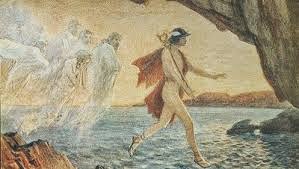
As psychopompos, Hermes, first mentioned in "second-" Odyssey 11 references to receives the souls of the slain suitors and, with gold and beautiful magic wand of, to the leading directly to hell ("in’ kelentha ' eyrwenta) until the asfodelon pasture, «naioysi psychai ibid, kamontwn ' idols and not as reported by subsequent beliefs and show attic lekythoi leads the souls in dinghy («akatio») porthmea's Charon.

The Hermes psychopompos on vase paintings show to return to the upper World Queen of Hades, her daughter Persephone, to transfer the dead Alkmene from Thebes to the Macaronesian Islands and accompany the Priam during transport of Hector for burial. With the same capacity Hermes transports and Helen in Egypt, leaving in its place a fake of. Also, Hermes, is depicted in the famous bas-relief of Orpheus to recalls in Eurydice, holding of slight of hand, that should permanently return to the underworld.

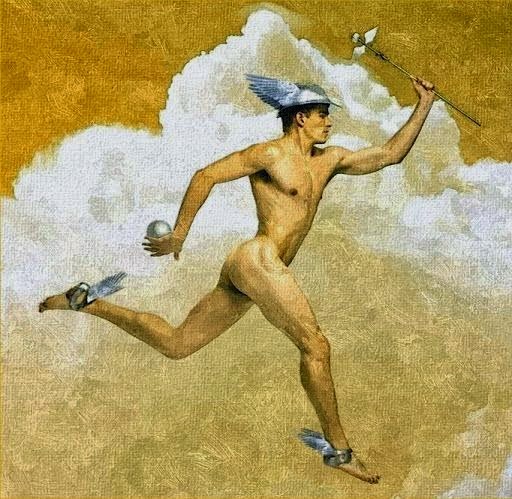
In mythology, Hermes, modified winged gold sandals, with which as a Seagull to slip over the waves, whenever needed, While holding the miraculous rod, that whenever he wants and arresting speech or wakes up from sleeping people. For’ This also is honored as ypnodotis, sleep protector and oneiropompos. When Diogenes Laërtius (8,31) Pythagoras called Hermes ' divine Treasurer of souls», «pompaio» and «portal and underground», because it came with the souls of the dead to the infernal Kingdom through the "Gate of hell", they took care of Hermes himself to gather the clean souls to "higher place", While the dirty be found in "shackles" inextricably with the Furies.

In Thessaly had prevailed the habit in Hellenistic and Roman times to Chase or to paint underneath the name of the deceased, at the bottom of column epitafias, a small ermaϊki column with the words "Ermaoy chthonioy", that meant that the column with the name of the deceased was devoted to underground Mercury. And Plutarch says local residents ' habit of Argos, thirty days after the death of their sibling person sacrificing for mercury, who "accepts the souls of human beings, as the soil accepts their bodies». A similar Memorial for their own dead and the Athenians were in celebration of Chytrwn, the third and last day of Anthestirion, so they sacrificed for the Hermes Psychopomp, and not for the Olympian gods.

Mercury's popularity grew greatly in his later years of antiquity, then complete and the transformation of, multiple properties acquired as completely foreign to its original Chthonic nature. So, by chthonios God of the underworld and the dead souls psychopompos will evolve up to God of fitness and sport, Patron Saint of sports competitions. Many high schools pledged then to mercury in agwnio or enagwnio, which usually venerated together with Hercules. Several high schools have found many votive offerings with the inscription ' Iraklei ' and Ermii, While, as Pausanias informs us, in megalopolis was their common Church for two gods, near Stadium.

Great feasts in honor of mercury, as the patron saint of athletes and sports clubs (Ermaia said) were held in many cities of Greece and Rome, While the fourth day of the month was dedicated to Hermes, as in Rome Wednesday, day of the week. The Romans first transformed into God mercury Commerce, the Mercurius, with full pockets in hand. However, gyms with the long lost its original character of physical education, as to their special halls, after physical exercises and theory classes were. Indeed taught distinguished scholars of the era (especially orators and philosophers), resulting Hermes automatically become patron and letters and rhetoric (Hermes logios).

Also changed radically and the art of expression: While archaic aggeiografoi, by expressing their perceptions of post-mortem era, depicted in white the cheerless underground Mercury vial may be found, as bearded Psychopomp, Venerable, during classical and Hellenistic times paristanotan in particular as nice teen with stunning figure! (praxiteleio) body, as can be seen by the naked statue found in Andros (only one snake that meanders into an adjacent tree trunk, testifies to the underground nature of the). Besides, m’ This form of mercury is made later, along with Eros and Hercules, the God of youth and sport athloymenis. "The praxiteleia this image of mercury is so far from the venerable form of the old God chthonioy, so it seems as though pretending to be another God», Notes o n. Papachatzis.

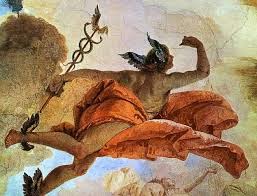
Mercury commonly depicted with winged sandals and wide-brimmed hat, the petaso, symbols of God's Messenger aerinis speed and keeping the magic golden rod, the kirikion, the ancient symbol of pastoral nature and abundance. Other sacred symbols, Apart from the phallus, fertility symbol, is the invisible hunting, the sword and the Drepano, symbols of nature's chthonias, the disk, symbol of the God protector of gymnastics and sports competitions, aulos (Syrinx), the lyre and kithara, symbols of nature's music, and finally the balantion, symbol of the God protector of Commerce and trade.

source: archaia-ellada.blogspot.gr

(A). Gerekou: Amphipolis is treasure, regardless of who owns

On the significance of the findings to the Deputy Minister for culture spoke of Amphipolis Angela Gerekou sidelined her visit at the 55th International Film Festival. Ms. Gerekou stressed the importance of the discovery saying features: "The Greece is full of treasures. One such treasure is and this monument irrespective of what will reveal the continuation of excavations, the discoveries that I discovered and to whom it belongs ".

The Deputy Minister of culture said satisfied that Amphipolis except one very important finding is one reason that our country becomes known to the world for its culture. "I am delighted that the findings across Greece are the cause to all learn and especially children the values of civilization and Greek roots», underlined Ms. Gerekou.

Finally Ms. Gerekou stressed that Greece's is the best place to find fertile ground triptych culture-extroversion-development, especially in the crisis period.

thestival.gr

Spiros Germany. Lykoudis: The truth about Amphipolis

The author SPYRIDONOS GERASIMOU LIKOUDI

In difficult times for Greece, the protective forces of the, from the cosmic environment, because krinane that it's time, thelisane be revealed now, the ancient great Temple of Amphipolis.
Aposbolwmeni humanity, follow the discoveries of the excavations of the site of Amphipolis, and stays ecstatic, in front of them slowly revealed, and that is unique in world archaeological periods.
All the ancient Greek sanctuaries, all sacred centers, that dinane true, the ancient knowledge to the creation of the world, on life and death, and for the purpose of human existence on the planet Earth, have damaged soil until.

Σπύρος Γερ. Λυκούδης: Η αλήθεια για την Αμφίπολη
Have damaged, the sacred places of Eleusis, of Dodona, of Dion, Delphi and all the other excellent construction creation, anepanaliptwn sacred edifices of the ancient Greek world, not only in the main Greece, but also at Thebes, in ancient Greek province of Seiriadas land, now called Egypt.
The various foreigners Tomb robbers, have put the label of world thief in soiled their front, and sadly returning the value of the beast, Once released from their component synoiko, that is the essence that characterizes the actual man, i.e. the intangible, the spiritual, the asarki cause, that is kat'eikona and likeness of the creator, boasting that they are descendants of thieves, that arpaxane from the bowels, for two thousand years Greek tragedy, the Greek masterpieces, and epideiknyoyne the swag, without shame, without contraction, without pride, without a concept of law, and prospernane the path of Virtue, and move the path of Rapture and of dishonour.
So the forces of Greece sympantikes patrons, apofasisane now, in the first quarter of the twenty-first century, to reveal the ancient Greek Macedonian architectural jewel, of Amphipolis.
Is the entire, almost untouched, as originally constructed, to see that it was the ancient centres of knowledge and truth.
Global deniers of truth, International diastreylotes of history, her name on the idea, that something very big, something very true, will be revealed by the excavation of mound of Amphipolis.
All this time, We hear from the media, various << Special >>, to say various welter of words, What is the anaskaptomenos space, with permanent chorus the word Tomb.
Tomb is a place of dissolution and decay of matter, While the space is being spiritual and space is far, from the meaning and content of a tomb.
This sacred space revealed, the didaskotane monument is the great truths, the great spiritual values, It is mystical place in the sense that there didaskotane science, the arts, the letters, why the Greeks Macedonians, apeichane light years away in spirit and knowledge, from the ancestors of today's fences, of public and shrines of the Greek race.
The anaskaptomenos site of Amphipolis, There is a tomb even majestic, It is a representation of sympantikwn give Center from the beginning of creation, until the time of Philip and Olympias, the parents of Alexander the great, so the image of the woman with the red hair is of the Olympiad, and from this image, It seems the similarity of Alexander with his mother, This is the reason that they gave some the wrong initials, and they told us that the picture is of Alexander.
There is a claim adokimos, that the manufacturers of the monument, to the prostatepsoyne, the gemisane sand and soils, no place on Earth, It has been protected by the original manufacturer of the, in this way, This is a mildly funny claim.
The truth is that the gemisane monument with dirt and sand, in later times, those who dioikoysane, to prostatepsoyne from intruders, as alarichos, They destroyed all the ancient shrines in the rest of Greece.
They were true patriots and thelisane to prostatepsoyne the lovely sanctuary, from their conquerors of Greece and Macedonia.
What in the end will be revealed, and I hope to be allowed to be revealed, It is a stunning monument of the spirit, a sacred space, the Olympiad and Philip, in collaboration with the 4.500 Greek philosophers, It was the first masters apokalyptes truths, He taught and didaskoyne mankind, to come out of the darkness, from the lethargy of tholoyras who have lead the eternal lovers, the exploitation of a few people, for the many people of the Earth.
The site of Amphipolis when fully revealed the construction of reality, will give to mankind to understand, Why katastrafikane the large libraries, by overriding the library of Alexandria.
The monument is Greek, but it is also Ecumenical, because the teachings of the Greeks are universal.
Amphipolis in the era that operated the monument, legotane << Nine Roads >> and resided in Greek the Irwdoi sex, then the city flourished, and the many philosophical schools to iche, He was famous.
Once you uncover all the space anaskaptomenos, and shine his glory with all his force, will be revealed and the scientific and philosophical work, Irenaeus in telestirio that of Amphipolis, with proexarchontes teletoyrgoys, the Olympias and Philip, and with exceptional pupil Alexander the great.

portoni.gr

Submarine of Alexander the Great

“The Arab historian Mas’ûdî has preserved (see Les Prairies d’Or, ed. B. de Meynard and Pavet de Courteille, Paris, 1861, tom. ii. p. 425 ff) a curious legend of the talismans which were employed by Alexander the Great to protect the city of Alexandria whilst it was being built, and as the legend is of Egyptian origin, and dates from a period not greatly removed from that in which the Metternich stele was made, it is worthy of mention.

CONTINUE THE READING

VIDEO-“Kalwdiwnoyn” the Amphipolis to learn the secrets of

Without a visible end seems to be the third Chamber of the funerary monument of Amphipolis. The excavation continues with great care and under adverse conditions, role of cold and intense humidity prevailing in the last compartment of the Tomb.

It should be noted that although excavators have reached in depth 8 measures, counting from the roof, There is no indication as to how exactly is the height of the space.

See the NERIT videos

http://www.enikos.gr

By Agamemnon to Mega Alexander

Greek masterpieces in the u.s.

The exhibition will be inaugurated on 12 December in Point a Calliere Museum, Montreal History and Archaeology Complex in Montreal
"From Agamemnon to Alexander the Great", Greek masterpieces in the u.s.

Thessaloniki

"Tour" in the United States start Homer, Agamemnon, Achilles, Herodotus, Leonidas, Pericles, Sophocles, Plato, Demosthenes, Philip, Alexander the great-ones that led to the creation of the historical and cultural background for the development of Western societies.

This is the report «The Greeks: Agamemnon to Alexander the Great» ("Greeks: by Agamemnon to Grand Alexander»), that includes 543 exhibits-masterpieces of ancient Greek sculpture, painting and kosmimatotechnias, derived from all the museums and Antiquities of Greece committees.

The exhibition is organized by the Greek Ministry of culture and the Consortium of Museums with official North American representative of the Canadian Museum of History in Ottawa. As pointed out in the presentation of the report, It is the most representative "Panorama" of Greek culture who has never traveled outside the Greek borders.

The exhibition will be inaugurated on 12 December in Point a Calliere Museum, Montreal History and Archaeology Complex in Montreal, they will remain until the 26 April 2015, to be transferred and presented then in History Museum of Canada in Ottawa, from the 5 June 2015 until 12 October 2015.

Will follow the Field Museum in Chicago (24 November 2015 until 10 April 2016) and the National Geographic Museum in Washington (26 May 2016 until 9 October 2016).

The structure of the report

The central theme of the report, It is divided into ten thematic sections, are Greeks, as forms through the excavation data.

The report starts from the anonymous illustrious dead, continues with a central reference point the mythological Agamemnon and anakta famous aristocrats of the early iron age and closes with eminent personalities of the spirit, like Plato and Aristotle and historical figures, like Philip and Alexander the great.

The chronological framework covers from the stone age to the Hellenistic period, i.e. from the 6.000 e.g.. until the 2nd century. e.g..

Rare exhibits

"The report represents a far-reaching, ambitious organisation, aimed at presentation of the top personalities of Greek history and mythology, nodal role played in the formation of the historical components of culture "identified by the Director General of Antiquities of the Greek Ministry of culture Helen Korkas, representing in the presentation of the report the Minister of culture, Constantine Tasoula.

"Our goal is to revitalize the activities of the great archaeological historical forms of Greece, starting from the beginning of prehistory, with personalities that emerge from the beginning of the legend, as Agamemnon, and finally in decisive for world civilization historical form of Alexander the great "added.

"It's the greatest Greek exhibition ever presented in North America," said Canada's Ambassador in Athens Robert Peck, Noting that "many of the archaeological finds do not have ever been exhibited abroad».

The r. Peck expressed the belief that in a long time that it will take the report, It will attract many people who will want to discover where born democracy, the philosophy, Theatre and the arts. Mentioned, Indeed, and the benefits that can arise from exposure to tourism, Recalling that the next summer the Greece and Canada will be linked to 16 weekly flight schedules.

The Coordinator of the report, Honorary Director-General of Antiquities Maria Vlazaki, He pointed out that the Greek culture is an amalgam of ideas, Customs, knowledge and beliefs that are beginning to emerge in the Eastern Mediterranean since prehistoric times and the tour of the exhibition will contribute to make known the Greek culture and the achievements of the Greeks, during the entire chronologikoy framework covering the report.

Report on the Aboriginal peoples of Canada

Notified, Moreover, that as ' Holy bread ' of the report the Canadian History Museum in Ottawa, with the collaboration of the Canadian Embassy in Greece, will offer, in order to bring in a Greek Museum, one very interesting temporary exhibition, where is the Canadian Aboriginal art.

Those who visit the exhibition, the biennium that will run the tour in b. America, you will learn everything about the Greeks, identified by the Director of the Archaeological Museum of Thessaloniki, Polyxeni Veleni. "The feature of the report is that it is more personified, because of funerary ensembles, many times people branded "said, explaining that "thematic reports have been too many, but the whole panorama of Greek culture through Greek personalities is a report done for the first time».

Excellent featured the report Mayor Thessalonique Yiannis Boutaris, Whereas essentially constitutes an invitation to u.s. citizens to come to Greece.

Special application

In support of the report created the special application for mobile, which will be available to iPhone and Android users, at 12 December 2014, the opening day of the exhibition.

source: tovima.gr
Powered by Tempera & WordPress.
>

By continuing to use the site, you agree to the use of cookies. more information

The cookie settings on this website are set to "allow cookies" to give you the best browsing experience possible. If you continue to use this website without changing your cookie settings or you click "Accept" below then you are consenting to this.

Close