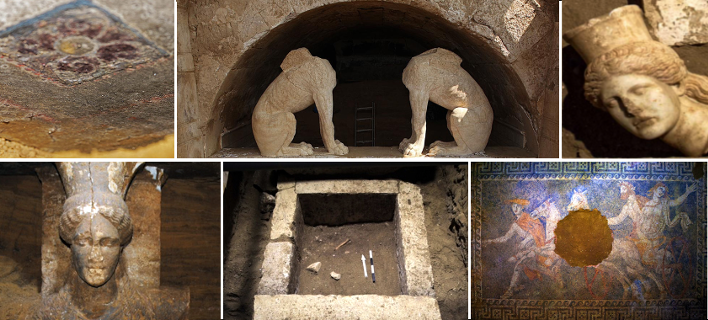
Archaeologists Are Examining Amphipolis Tomb Paintings

l_14986

AMPHIPOLIS, Greece—the Greek Ministry of Culture announced that painted figures have been found on the door frames of the second chamber of the 2, 300-year-old tomb under excavation in Amphipolis. Pictures of the figures have not yet been released. "We are not hiding anything. New findings are revealed slowly as the restoration process continues,"Culture Minister Kostas Tassoulas told Discovery News. The paintings, which are being examined with lasers, may help archaeologists determine who had been buried in the lavish tomb. In the second phase of the excavation, a team from the University of Thessaloniki will use 3-D tomographic imagery to search the burial mound for additional chambers.

Source: Archaeology Magazine

Minister Tasoula on Amphipolis

As I have said before it slightly worries me that people are overly associating me with Amphipolis, and I am happy to explain points, but … I will wait until Katerina Peristeri presents the amazing finds on the 29th, and she reveals Act One of the great Saga of Amphipolis.

Todays press release (here) added this information:

Σύμφωνα με τον Υπουργό Πολιτισμού, with the maintenance work uncovered the first suspected human representations in epistylia found in the third space. At the moment has become the first cleaning of epistyles and will follow and laser processing, and other procedures. “If you hurry up, you risk making errors that can be decisive”, the Minister emphasised, who wanted to say in this way that don't hide something, just the revelations made so slowly anyway and is not just a matter of someone new find, αλλά και η ίδια η διαδικασία της συντήρησης θα συνεχίσει να αποκαλύπτει πράγματα. “Αυτή είναι και η γοητεία της αρχαιολογίας”, reported

The description of the first human representations in friezes in the third room, and that they are being treated with lasers, suggests to me that they were painted. Similar painted figures were found inside the tomb of Hecatomnus, and unlike the sculptures these kinds of paintings can fade and vanish quickly if they are not treated correctly.

Also this paragraph suggest that I may have been correct in my assumption that filling the rooms with soil was partly to stop them collapsing:

Ο κύριος Τασούλας, θέλοντας να δείξει τις δυσκολίες που είχε να αντιμετωπίσει η ομάδα σε σχέση με τις στερεωτικές διαδικασίες, said: “The soil inside the Tomb, during the years, played a role fixative for the monument. The removal of soil affect the support, and ypostylwseis had to be done in such a way as to provide exactly the same support on the walls every time, neither more nor less.”

As I keep saying, the team at Amphipolis is one of the best in the world. In times of crisis, and Greece has been going through a horrible period, it is natural to doubt everyone in authority, but please do not doubt that Katerina Peristeri and Michaelis Lefantzis are doing an exceptional job at Amphipolis.
Source: phdiva

Τα επτά ”εγχειρίδια” happiness of three Greek philosophers

Any sane man, We are advised that in order to get to the desired destination- If we are not sure of the path- You should use, Compass or ...a GPS or even step-by-step instructions of some note. Otherwise we risk to saunter aimlessly and long-term, with an outcome.

But what could be the tools to fulfill the common for all people desire that is none other than to lead to happiness; The great Greek philosophers gave, a wide range of responses and provided all the tools, Depending on the approach each of them, the major question "what is happiness and how it is accomplished".

Concepts such as knowledge and self-knowledge, self-improvement, moral virtue, kindness and good behavior, harmony, acceptance of the natural order of things, freedom and self-control, formed part of their own answers to the big question that we are all to ourselves.

Philosophers like Epictetus, Epicurus and Aristotle we have provided all the tools for the fulfilment of our purpose and our nature has endowed with logic. The extant works of great philosophers, everyone of us can find a road map to happiness.

The survival guide of Epictetus (Manual)

The Acquired (55MX-135mCh) It could could be the "father" of instructions used widely in programmes of 12 steps: "Oh God give me the strength to change what I can, the patience to bear what I, and the wisdom to know the difference between them ".
"Set yourself a character and a lifestyle that would keep either you're on your own or with others". The philosopher urges humans to understand the difference between things that can dominate and what fails. Once you realize that a series of situations beyond his control, you have to educate the mind and not spent on them, but to accept the natural order of things.
Moreover the Epictetus believed passionately that our thoughts are completely dependent on us and the reflections are a kind of practical advice on how you should treat anybody suffering. One of the most well known indeed "students" of, It seems that he was the parasimoforimenos with Medal of Valor, American pilot, James Stoknteil. As has revealed, managed to survive physically and spiritually of the four-year captivity in Viet Nam v. applying the teachings of Epictetus.

"Nobody can be free, If it is not master of himself ".
"Take care to punish your defects, not timwreisai of them».
"People are dismayed not by what happens but by their view of what is happening".

Essentially, the late stoic "imposes" philosophy in psychology, advising those who tested negative emotions in difficult situations: "Filosofise the!”. A tip that managed to survive in Greece thousands of years ...

In this context is achieved when the Acquired serenity and equanimity of the soul which for him was a prerequisites virtue and happiness while the self-improvement and self-knowledge are an important part of the philosophy of.

The Garden of Epicurus (Complete Works- collection of saved clips of books of and about the nature of things of the Roman philosopher and poet Loykritioy)

Epicurus (341eg-270p. x.) has been described as the "philosopher of pleasure" mainly because of the dissemination of rumours from contemporaries on the famous Garden with Orgies?, where it housed the school of. Hence the current corrupt use of the designation "epicurean".
“It is impossible to live pleasantly without living wisely, honestly and fairly and it is impossible to live wisely, honourably and justly without living pleasantly”.
But the philosopher actually focused on mental-spiritual pleasure which leads to the ultimate goal: happiness. Just in contrast with other philosophers are not completely rejecting material possessions. The perceived happiness as an inexhaustible "chapter" spent only in moments of happinesses, After the contemplation of these recommended treatment for difficult or painful moments that will come. Even the most eminent "fans" were the u.s. President, Thomas Jefferson who in his personal letter characterizes himself "epicurean", but in the true sense of the term.
In pursuit of happiness proposed a simple lifestyle, that is distinguished by its kindness to fellow man while necessary components are friendship, freedom and thought.

"We need to find what we will eat and drink, before you find out what you will eat and drink».

"Once we exist, There is no way to yparxoyme a couple of times and I probably won't ever again yparxoyme. And you that you govern no tomorrow, off till the joy. And life wasted with the postponements and everyone dies busy».

"If you want to make someone rich, do not add money, to remove wishes».

For friends argued that what it offers the wisdom, for happiness of life altogether, the most important is the acquisition of friends and without them even the richest man could not be eytychisei. Clung to the ideal of individual freedom and the Garden was not only one commune of the era in which he lived with his students, with an unassuming manner, without many goods but freed from the "shackles" forms of work that do not meet.

Finally the thought was for him the ultimate cure for a series of aggravating emotions while the meditation, singly or in the form of a dialogue with friends was the Assistant, the recommended method for understanding of each problem and the release of the "shackles" of.

The ' Bliss ' of AristotStates (Ethical Nikomacheia, Ethical Eydimeia, Major Ethical, Political)

Aristotle (384eg-322p. x.) urged to search the happiness although the word he used was "Bliss" and exceeds the specific emotions or feelings experienced man at specific moments. That is why the word often translated as "thriving" or "prosperity".
“Bliss is a pleasant mental state resulting from the activity of the soul, If this activity is consistent with the perfect virtue”
As to the nature of the visa, appreciate that each person has a specific function but also a purpose while for everyone there is a specific model of life that best fits the nature of the.
As favored, We have to put ourselves in a process of self-improvement but should not focus only on an individual level as happiness is achieved through interaction in the context of a well organised system. For’ This and the reflections of the Bliss should not interpret cut off from its positions in society, the State and public life.
The correct behavior, They also employ Aristotle and encourages the development of good standards of behaviour but also in cultivating the right emotions at the right time. The moral virtue has a central role in his philosophy and he himself was a fan of "kleovoulos manual track measure».

"Happiness is the meaning and purpose of life»

«K amia ethics does not have innate, given by nature, but formed in humans with the habit, by repeating such behaviour».

"Virtue of man can be repeated good habit with which man becomes benevolent, virtuous».

"Not since all the EV, But meanwhile EV too».

But particularly focuses on use of logic, as an extra tool that leads to happiness which ultimately for him is nothing more than the sum of our achievements, but always with a significant role in the luck factor.

Source: archaia-ellada

What I say tomorrow the Tasoylas for Amphipolis

QUESTIONS FOR THE ANSWERS THAT APPLY TAFO

Undiminished interest for the secrets that are still hiding in the tomb of Amphipolis and for’ This is a very keen interest in the new announcements of Ministry of culture around the excavations on the Hill Kasta, which is expected tomorrow from Costas Tasoula

Source: iefimerida.gr

The weather and the ... skeleton stop excavations in Amphipolis

AMPFIPOLI-ANASKAFES

After the discovery of human bones in the tomb of Amphipolis and completion of excavation, the question that dominates is when you complete the emergence of space. However, as the Secretary-General points out YPPOA Lina Mendoni, what needs to be done is a lot. "Things they want their time, It would be a huge mistake to become thoughtlessly and without having completed the research phase "says features.

"It's a lot of what needs to be done. I believe that neither the excavators have realized just find. Should in principle be a scientific approach, and then to see how we proceed "highlights in an interview to Ana-MPA.

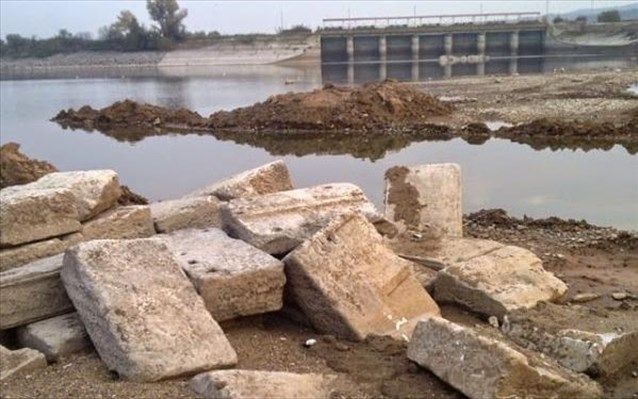
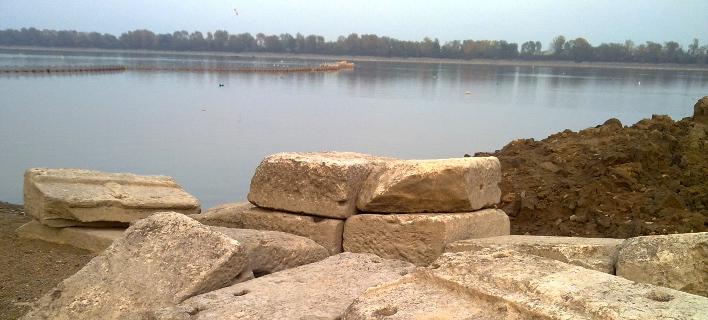
To enhance, de, what gave the example of finding about 150 Members who emerged very recently when water levels fell of kerkini, which belong to the burial grounds of the monument.

"These findings should be studied, be designed, be traced to attributed to a restoration study of the enclosure. Things are not just. In essence we have a monument and an environment which investigated. To become a spotlight should have finished the investigation, at least the basics of points. To reiterate what I have said many times, that andronikos discovered the Great mound 1977 and finally the tumulus of Vergina, so as we know it today, apedothi 2001» fill.

According to Lina Mendoni, the excavation at this stage is in essence completed, While the tasks are mainly relate to the protection of the monument, of coatings, colors etc..

"This Excavation is not any at the moment. Beyond where, how and when will continue depends on the findings of geophysical prospecting, which is underway by the team of the Aristotle University of Thessaloniki (AUTH), under Mr. Gregory Tsoka. This is research that will be done in phases, as the whole tumulus is a huge area, about 20 acres. The first stage concerns the immediate surroundings of the Tomb, that is a sufficient space around the monument, "explains, Noting that the Geophysics will not give points that are data that there has been human intervention, but those that are different from the overall geological environment.

"It is very likely that these points be constructions but is very likely to come from some geological differentiation from other type environment. So there will be excavation sections to see what it is about and accordingly to plan an excavation. We have before us a winter, the area there is difficult. Some excavation sections could be made. An excavation but who wants systematic work of a quarter or semester in winter is difficult» notes.

For the examination of the anthropology material found, Ms. Mendoni indicates that still looking for the appropriate laboratory and the right people that will make, combination necessary, as it says, as it is a matter of both equipment. The examination will be done by Greeks. "The Minister has said that it will be Greek scientists and believe that it is right that. Thank God we have good potential "highlights, While as to whether it will become and DNA testing itself states that this will be decided after discussion.

"Generally the set of tests that need to be done and the results there will be things that will emerge through discussion with the experts. As we have said we will make all those investigations are judged to conform to modern imperative of science» notes.

Amphipolis though has a bet to win. "It's an extremely good chance to see a sustainable model, mild growth in the region, that will preserve intact natural environment and enables and their own residents, but mainly for visitors to enjoy this unique and timeless cultural reserve "underlines the SG YPPOA.
Source: rizopoulospost.com

Delos :Revealed an ancient pottery workshop

Ancient ruins and objects about the sea-to the level it once was, just off the coast of the island of Delos believed that it was the remains of a quay. However, a review led archaeologists to a different conclusion: that in space there is an ancient pottery workshop which once stood on the shore.

6 clay pots and a furnace were found ,embedded anymore , at the bottom of the sea

The ruins, which lie at a depth of just 1,5 until 2 measures on the northeast coast of Delos near the ancient settlement Stage and now it is believed

that are connected with trade or manufacturing activity – in other words, There were found the ruins of an ancient pottery shop and workshop.

The excavators concluded after the discovery of an embedded on the floor but also the provision of miniatures and semi-tended amphoras along with an oven. Similar workshops have been uncovered at Pompeii and Ercolano (Herculaneum) in Italy.
The remains of the Eastern breakwater of the stadium housing
In front of the ruins of the ceramics workshop large stones were placed in a line. The boulders were potentially once part of the Eastern breakwater of the settlement of the stadium.
Other remnants of structural elements, as walls and low colonnades matching, as well as the ruins of the walls along the coastline.
The survey conducted by the Ministry of culture in collaboration with the National Research Foundation of Underwater Antiquities Inspectorate of the Ministry of .


Source: hellenes-romaion.blogspot.gr

Tomb – carbon 250 meters from the Tumulus Kasta

PSIFIDOT-ARXAIO

One of the interpretive keys to the temporal sequence of events which shaped the final image of the monument, like this from …

by Mrs. Katerina Peristeri, Maybe is a nearby Tomb. Just as it was revealed the grave space itself in the depth of the third Chamber on the Tumulus Kasta, at a minimum distance from the much vaunted excavation, There is another, nearly identical CIST Macedonian Tomb. About three hundred meters away from the Hill, in an earlier archaeological survey, It has been revealed the so-called "Tomb III" of Amphipolis. In the prothalamo there is a pebble mosaic with lozenges, which looks pretty with that came to light during the first stage of excavation in the Tumulus Kasta.

TafosIII_01b
The antechamber of the Tomb III of Amphipolis. The mosaic with the lozenges

The sepulchral Chamber of the Tomb III has colored flooring and it is clear that in the second phase after the original burial, There was a snap and break-up of the floor in order to place an extra dead. Then, CIST grave built, who, Indeed, bears and murals. Outside the Tomb found palmette anthemwti headstone from the end of the 4th century. e.g., on the basis of which became and dating the Tomb III.

TafosIII_02
The main funerary Chamber, with the add-on, underground parking

As written by official archaeological guide of Amphipolis, they took care of the basic Digger of Amphipolis, Dimitris Lazaridis and until today is sold at the entrance to the local Museum "in this position extensive research revealed during the 1960 the third of the notable tombs of Amphipolis Macedonian type, Unfortunately sylimeno and partly damaged. It is carved into the soft rock, whose walls covered by large brick pwrolithoy wall. There are only inferior saves only its lower stones of the wall covered with mortars that mimic marble revetment. Comprises vestibule and Deathly Chamber and has an overall length of 9 and width 3,07 m. The flooring of the antechamber is decorated with multi-colored Rhombus mosaic, While the floor of the Chamber divided into three longitudinal belts, with a deep red color and the lateral yellow Middle.

TafosIII_03
Part of the mural from the Tomb III

North zone flooring was broken for the building and the second Tomb, outside of the original, located deep in the Deathly Chamber. The two box-shaped tombs they found sylimenoi. The walls of both are covered by mortar with vivid colors-red, Yellow, Black, grey, White- one does not have high kosmoforo film with decoration of shoots, flowers, birds, vessels, mirror etc. The murals and mosaics-paintings detached and transferred to the Museum of Kavala and in the brand new Museum of Amphipolis.

<>

TafosIII_04
Ornate decorative embossed, piece from the culmination of input column epitymbias

The Lazaridis dated the grave III in 3rd b.c.. century, but Dieter Salzmann, German archaeologist who is considered an authority on ancient mosaics, placed the Tomb in the last quarter of the 4th BC. century, almost at the same time in which build, at least in the first phase, the Tumulus Kasta.

The similarities between the two monuments are what characterize the archaeologists as "parallel", i.e. the correspondence, which often confirms or strengthens evidence for the dating of a finding. And in the case of Amphipolis, Maybe it is not only what is going to be revealed in the next phase of excavation, But what is already known, which will indicate that the Tumulus Kasta was never alone.
Source: rizopoulospost.com

National Geographic: King Alexander lives!

national geographic

The tumulus Kasta, You can hide Alexander the great, It deals extensively in the Greek National Geographic, which proceeded in creating two versions, around this magnificent discovery in Greek, archaeologists.

Already, the first version released, with the title “Amphipolis: May hide Alexander the great;” and presents the findings so far of the tomb of Amphipolis, as well as the theories that have been developed so far.

The first edition, US turns a few months back, in the period detected the first “tracks” This tomb at Amphipolis, presents pictures and sketches of the mound and all that, Stressing that any discussion of the Amphipolis, should be done with full respect for!

The tumulus Kasta, beyond the Greek borders and compares with archaeological “colossal” findings, as is the mausoleum of Augustus in Rome, the great pyramid at Giza, the great Tuba in Vergína.

And a series of questions

In this first version, baring and two just, but basic questions:
Can the ancients to built around this monument to hide inside a so smaller construction;
If Yes, can put the most precious monument site, the pithanologoymeno burial chamber, out out and not as instruments are used;

Asked Alexander the great buried in Egypt;

Another question that must be answered. Alexander the great could have requested burial in Egypt, If you wanted to “consolidate” την “universality” the State of. Also, I knew the apotheosis, as the Egyptians, considered him a child of Zeus!

From the other, the great stratilatis, He was loyal to the Macedonian customs imposed by burial in the Royal Tombs at Aigai. Feared, that if you don't follow the “rules”, the dynasty would be destroyed, as envisaged in the prophecy of the progenitor of the Argead dynasty. Extra, adored Homer and Achilles and a few months before, He had buried with Macedonian prices in Ifaistiwna.

Here are more questions in the first edition of National Geographic around Amphipolis. “Alexander's body arrived in Egypt;”, “Alexander's body was burned in Memphis;”.

And after, the theories…

Regardless of who the dead found in Tomb Kasta, importance is for the version and who gave the order to construct the Tomb. The Tomb, It was created in the 4th century BC, When in Greece, was dominated by the “track measure”… So far in this project has completely lost. So, Alexander the great, It is perhaps the only one who could have ordered something so great, as it disregards the 10.000 talents who had to give, in order to honor a dead of…

Alexander the great lives!

As to’ Winter, Whoever ordered the grave, Whoever is there entafiasmenos, Alexander the great, managed what I always wanted: The glory of surpassing that of Achilles and is still alive, as very few in history.
Source: rizopoulospost.com

Φοβάμαι στην ιδέα ο σκελετός της Αμφίπολης μπορεί να είναι του Μεγάλου Αλεξάνδρου

sarantos kargakos

Written by Dimitrios Katsaros

The historian Sarantos Kargakos, explained earlier why the possibility to be Alexander the great the dead of Amphipolis is not so positive, as we think

Speaking of online telecast of PopI Tsapanidou in STAR, the historian Sarantos Kargakos did review our ability "to do ridiculous serious».

The journalist asked Mr Kargako to talk about the scenario that he wants dead of Amphipolis to belongs to Alexander the Great. He replied that he prefers not to speak with scenarios. Είπε ωστόσο ότι θα είναι ένα μεγαλειώδες γεγονός. At the same time, however, a fact that fills terror. The fear is that history we are not able to deal with an event like this with due severity. On the other hand will theatrikopoiisoyme.

While I disagree sometimes with the historian Sarantos Kargako, at this point I must admit right. The historian said the example of visiting of Alamoyntin Amal in Greece legal where such matter to climb ' Lady on the Hill of the Acropolis because they did not have proper footwear. I without proper footwear I climbed in Ararat before few days» noted with slight irony Mr Kargakos.

Reported to attempted theatropoiisi for the return of the Elgin Marbles by visiting Alamoyntin, "as if in Greece there is no legal capital" to work on the problem of claim of marbles. The historian yielded well all collaboration with the famous legal as another case of geloiopoiisis a serious matter.

This criticism was taken as an overall view of the neo-Hellenic culture. But it could be a straight political criticism to the Government. Ebriskomenoi at a time when the political crisis expressed as content of political speech absent, the words we are working seriously for the return of the Parthenon Marbles will not say much in public eikonoboro. Conscripted well image, visits celebrity lawyers that will help to achieve the objective of repatriation, respectively the Amphipolis, the course of business but also disagreements between archaeologists becomes almost reality show. So, has the basis of fear of Mr Kargakoy for the possibility to be Alexander the great buried in Tomb Kasta. "Tremble at the idea" because he knows that I theatrikopoiithei because the Government will use to increase its popularity. Will become the symbol of the Renaissance of modern Greek, grounded in their glorious past and other such graphics, that make us what we are like very fooling, in our neighbouring countries blakanikes.
Source: rizopoulospost.com