The Lions of Pella and Amphipolis in response to fraud of “man-made climate change”

The excavation of Amphipolis rightly compiles the global interest, as the Tomb gradually reveals our unique Kasta, “Ecumenical” character secrets of the era of Alexander the great. A few decades ago secrets reveal the much photographed enigmatic Lion of Amphipolis, We see next.

Searching the history of law. Serron, one finds a very interesting work, where …
can the page 6 Read more below: “When subdivision of Miocene, in the Sarmatio era, When kataklystike Halkidiki from sea [This] came in and in the deep field of Serres-Sidirokastro-Nigrita and left many sedimentary rocks forming the higher terraces of bathypedoy of Serres. The sea, When Maravelaki, formed pools which accumulated intensive klastiko material, as is all of the colossal Alistratis. When c. Hadjikyriakou, the cavities are derived from the wide range of Lakes apostraggistikan. The cavities, the volcanic rocks and the hot springs in the Prefecture of Serres shows that in this region the indigenous forces have caused major changes in stony bands. The outer appearance of the mountains of Serres shows that suffered large outdoor treatment at various geological eras.
The Lakes during the Mesozoic century filled by sea, freshwater and limnisia water-borne rocks and resulted in the current situation during the tertiary period, with the penetration and withdrawal of the sea. That once the Prefecture of Serres was sea certified by many fossilized corals, shells and other organic remains of marine geological ages that are found in all parts of the
.”

For a moment: scuttled the whole Chalkidiki and the Prefecture of Serres; And what happened to the beach hotels of the era; Oh well, not found a Christian to tell them to stop emitting CO2 and left Serres and Chalkidiki to plunge into the sea; Not one found to warn them that if they go up the temperature a couple of degrees of’ anthropogenic activity It will melt the ice in the Alps;

This single paragraph is indicative of geological processes always take on the planet, regardless of’ the human presence or activity on. And to say today that reducing CO2 emissions to prevent climate change, that is constantly taking place on 4,5 billions of years as us reveals the geology, hubris is a top. Next they will tell us is that maybe they will stop earthquakes, will check the winds, will change the direction of rotation of the Earth; Mercy anymore!

In the same work a bit further down we read: “Herodotus (VII.124-126) assures us that between the Nestos and the Acheloos River at the time of the expedition of Xerxes into Greece lived Lions: "Went [Xerxes] crossing the Paeonia and Kristwniki up the Echedwro River. But as they progressed from this road, pesan lions on camels that carried food. Often Lions i.e. descending from their hideouts and other nothing apart from the camels are not teased, neither people, or alogomoylara, and wonder of their preference.»”

Lions well lived in Greece, like the ones we see in Amphipolis, at Cheronia, in the magnificent mosaic of Pella that we see above, Delos, at Mycenae. And living Lions because the climate was hot, as they lived and elephants and zebras and other animals, Today we find in Africa. Fled from’ the Greece because the climate is colder than’ What,what older, for’ What we do today is not foroyme chlamydes, with the chlamydes you pagwname.

See beside a hunting scene from a mosaic in Pella. And there are other representations of hunting scenes in ancient Greece, before “Once” two thousand years, less than a second in the geologic history of the planet. Let us say the hunters, I go today any Chase so minutes dressed; The difference in dress between then and today is called “adapt to current conditions”. This adaptation is the secret of survival of species, because if you go and build beach hotels in the sand and then to get a tsunami, rather not blame the tsunami …

greeklignite.blogspot.gr

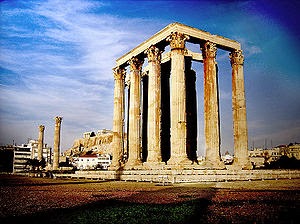
Sanctuary and Temple of Olympian Zeus

Is one of the most important and busiest sanctuaries of ancient Athens, whose synyfanthike luck with the State changes that occurred in the city throughout the centuries. Located southeast of The Acropolis, in the southern part of the city (Ilissos area). North of the mosque passed way with geometric tombs, While in the South of the sanctuary were discovered prehistoric shells as Ms.I ceramics of archaic and classical times.

The indications resulting from the excavations date the origins of the worship of Zeus in the area in early historical times. Within a large, surrounded space rectangle stand up today 15 huge Corinthian pillars inside columns, surrounding the once majestic Temple of Zeus (' Olympieion ').

THE Temple prwtochtisthike rather than the Peisistratos during the second quarter of 6th century. e.g.. Had the form Kiosk Temple and in size exceeded the then Church of Athena in Acropolis, reflecting the pride of power of the ground the Lord.

In IV quarter theh 6th century. e.g.. the Peisistratides implemented the erection of a new grand plan, dimensions kiosk pelwriwn Doric Temple of Zeus, they will compete in volume and imposing huge archaic naϊka buildings of Ionias (the Iraíon of Samos, the Artemision of Ephesus and the Didymaion of Miletus).

Work on completion were interrupted with the fall of tyranny the 510 e.g., When the Hippias expelled from the Athens· then the Temple had stood still in its infancy (He had just reached up to the height of the pillar). After the During The Persian Wars (479/8 and following) part of building material of Olympeion (vertebrae columns) was used in the construction of the East side of Themistokleias fortification.

In the early years of Megalou Alexandrou (g΄tetarto 4th century. e.g..), the Lykourgos, the last Athenian founder edifices, attempted to complete the temple, but his efforts don't Unsuccesful. Work to rebuild resumed in Hellenistic years from the Antiochus Iv the Illustrious (175-163 e.g..), on plans of Roman Architect Kossoytioy; However, the temple was not finished when he died Antiochus, with score to remain unfinished until the season of Roman Period.

After the RAID of 86 e.g.. in Athens, the Sulla transferred columns the Temple in Rome for the decoration of Temple of Capitoline Temple. In times of Octavian Ath (63 b.c.-14 a.d..) made modernizing operations to a limited degree with minor rulers of the initiative dissolved then Syrian Kingdomh (Seleucid Empire), who wanted to dedicate the Temple in genius of Roman Emperor.

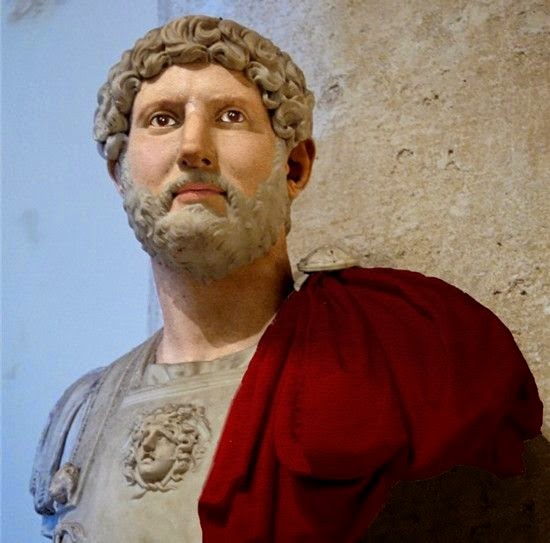
Landscaping the whole area of the sanctuary and the completion of the Temple took over almost two centuries later, during the five years 125-130 a.d., the hellenophile Emperor Adrian.

In its final form the ' building in Corinthian Temple diptero (pteron 8 x 20), by adding a third Colonnade at narrow sides, that Interior was divided into three parts (the vestibule, Cella, rear porch) and maybe brought extra internal Ionic colonnades near exterior walls to support the roof. The cella was kept the colossal chryselephantine cult statue of Zeus and around this statue of Hadrian, They also worshipped as a God in the same Temple.

At The Same Time, a large rectangular precinct, braced with Struts and monumental entrance with porch on the north side of (near the northeast corner), raised protective around the temple.

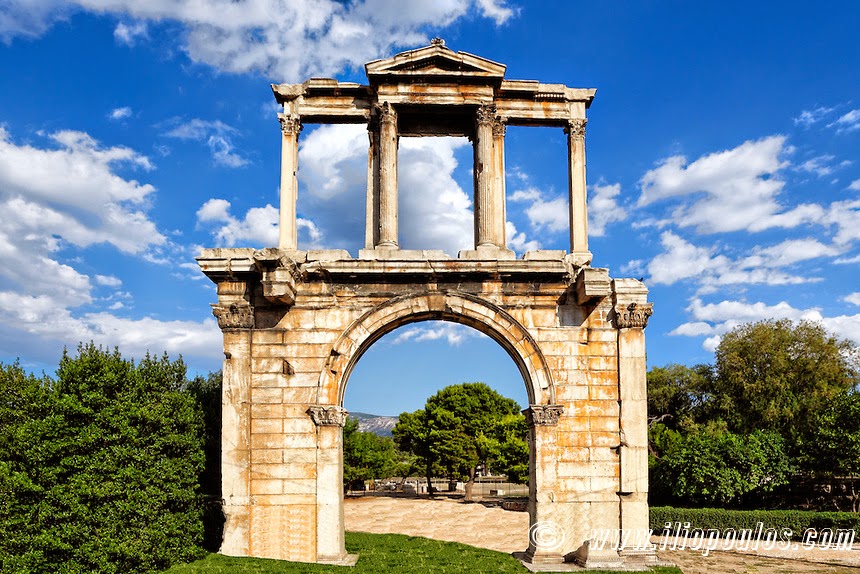
End, in a position adjacent to the temple was constructed by the so-called Hadrian's arch, independent apsidomorfo building that functioned as a triumphant ending bow, similar to those that existed in many parts of The Roman Empire; the building must have completed the 131 a.d., When the Emperor visited Athens to inaugurate the Temple and, as it seems, passed down from the Arch When entering the Temple of Zeus.

The gradual destruction of Olympeion the periods that followed was rather due to natural causes (earthquakes), While the damage caused and sobarwtates Turks, who changed the columns in lime to address housing needs.

In recent times of the Occupation a monk, known as Stylite, had installed onto architrave of dytikoterwn columns of southwest corner of the temple cell of, the ruins of which were visible to the era of Othonos.

http://archaia-ellada.blogspot.gr

«CHRYSWRYCHEIO», THE AMFIPOLI!

amfipoli20112014

Immediate priority to exploitation of the very chic Monument of

The historical excavation ended. The fascinating Monument emerged. Entirely. Came Out, in light. Emits, "global electricity» interest. Dazzle!

The investigation has not ended. Continues. And like all shows will not ARGISOYN new surprises. Right decision, the examination of the skeleton to be done only by Greek scientists. Because from there, the exact reading of anthropology material will come the HISTORICAL response. Waiting for all of humanity.

The IDENTITY of the dead!

Now, though. The tremendous revelation (wealth for the country) raises HUGE claims. Requires all (Government, Parties, Special, dimarchoys, citizens) to AXIOPOIISOYN the Amphipolis. To the support to win the next day's BIG BET. To the World Culture Center ANADEIXOYN!

How will become;

I was surprised the Lady Lina Mendoni. His statement pointing to the right direction. Proposes, a development plan template worthy of the region. Explains, why you should not miss the great challenge for the place. Highlights! "It's an extremely good chance to see a sustainable model, mild growth in the region, that will preserve intact natural environment and enables and their own residents, but mainly for visitors to enjoy this unique and timeless cultural miracle "

Reminiscent Of!

"The Amphipolis we know very well like an important colony of Athens and ancient city, We have the fortification system, the oikodomimata of, recently in the NSRF was high school, now is the restoration of the Byzantine Tower of marmari. Also, There is a tremendously nice Museum that responds perfectly to modern standards. "

And ends:
"All this archaeological site, that is in very good condition, in conjunction with this tumulus, so with the cemetery, can offer something very special in the area and really attract thousands of visitors each year and not only opportunistic level it is now. "

It is unexpected ChRYSWRYChEIO, Amphipolis. Giant responsibilities all to seize the EXEChON monument which has shocked the whole world. Their responsibilities have already entered into countdown!!!

nasostsaganelis.gr

Alexander the Great never spoke and wrote West-Bulgarian

Alexander the Great never spoke and wrote West-Bulgarian Dialects like the language you speak and write in F.Y.R.O.M. / Skopje and we see here below. Everybody can read from independent sources that Bulgarians came in the Balkans from Volga Steppe 1.000 years later after Alexander's death. 1.000 years later!!! Ex-Prime minister of F.Y.R.O.M. / Skopje Ljubčo Georgiewski knows this very well and lives now as proud Bulgarian citizen in Sofia/Bulgaria. Stop play the role of historical clowns. Stop steal the culture heritage of all your neighbors if you don't have and need a new one.

Here some independet sources

http://en.wikipedia.org/wiki/Bulgars

Ex-Prime Minister of F.Y.R.O.M. / Skopje Ljubčo Georgiewski explain Greek history of Ancient Macedonia to his countrymen in Skopje.

https://www.youtube.com/watch?v=FKlkMw_AU5I

Mutter Teresa is from Albanian Ethnicity

http://de.wikipedia.org/wiki/Mutter_Teresa

Tsar Samuel was a Bulgarian Tsar

http://en.wikipedia.org/wiki/Samuel_of_Bulgaria

Cyril and Methodius were byzantine Greek brothers from Thessaloniki

http://en.wikipedia.org/wiki/Saints_Cyril_and_Methodius

Ancient Kingdom of Macedonia in Greece

http://en.wikipedia.org/wiki/Macedonia_%28ancient_kingdom%29

http://landscapes-of-macedonia-greece.tumblr.com

The efibarchikos law of Amphipolis awaits the publication ...

May spent thirty years, but the momentous findings not yet published with the result might not be known to a wider audience, Scientific and non-, the full contents, that gives useful information about the society and the topography of the city.

Mars Mentizi

journalist – historical researcher

Perhaps one of the most important discoveries of Amphipolis, that however is still unpublished and "efibarchikos law" found by the late archaeologist and excavator of ancient Dimitris Lazaridis the city 1984, on the North portico of the city high school. It should be noted that at the premises of high school received the education of adolescents. Even adolescence was an institution in ancient times and was essentially the public organized education of teenagers. Of Course, the contents, the purposes and duration of education differed so much from season to season, and from city to city.

According to the excavator, the great column of law has height efibarchikoy 2,65 m. and include "a major text in 139 lyrics. It is a law of efibarchoy Adaioy efibarchiko Eyimeroy, the items should be codified laws relevant to older teenagers, regulations and Royal Decrees. Dated in the last quarter of 1th century BC, as shown by the Macedonian dating of the inscription, that is etched into the film at the top of the column: year r and k and r. Under the inscription depicted embossed symbols palaestra: monwto vase, olive wreath tied with Ribbon, Palm Branch, stleggida and ball or disk».

From the little information presented at times from Kalliopi Lazaridi, Dimitris Lazaridis's daughter, studying the efibarchiko law shows that it is a unique text 139 the lyrics which gives a wealth of information. At the top of the efibarchikoy law on smooth and outstanding film, as mentioned above, It is engraved the Macedonian dating of the inscription, that belongs to the 21 e.g.. or in accordance with subsequent estimates in 23-22 e.g.. Under the movie of dating, There is a decorative relief zone that contains the symbols of the palaestra.

Note that the efibarchikos law against the excavator, contains encoded older relevant laws, regulations and Royal Decrees, something that looks and by another inscription of the principles of 2th century BC. in the reign of Philip V, they found nearby and is one of the oldest texts uncovered in high school. In this inscription contained oldest decree for registration matches in gymnasiarchiko law.

nomos 01 nomos 02

The efibarchikos law is the work of Adaioy Eyimeroy efibarchoy, and gives information on the education of adolescents, the morals of the era, the axioms the city's social structure and topography of, After reports the existence of a market, workshops, road network, Theatre etc..

The introduction of the text, reference is made to the duties and obligations of the efibarchoy, about the Census of teenagers, the sentencing, the control of the institution by their political rulers etc.

Immediately after, the law refers to the Faculty of the institution, including among them the "paidotribi, akontisti, Sagittarius, pwlodamasti», identifies the training program and the involvement of adolescents with gymnika events and additional activities such as "toxeyein, akontizein, sfendonan, litharizein, ippeyein and akontizein on the "horse".

It should be noted that the law specifies the mandatory participation of adolescents in gymnikoys races run in high school but also their participation in teenage matches arranged in other cities. Finally the law reference is made to the custody and control of adolescent eykosmias, in the course of institution, in costume and their participation in various social events.

In accordance with what they have seen the light, sense causes the fact that from the efibarchiko law absent any reference to non-sports activities in middle school. In efibarchiko law not seen nor trace sophists or orators, neither teachers nor moysikodidaskaloi, but paidotribes, Darter Archer and pwlodamastis. Indicates that the institution of adolescence in Amphipolis was intended mainly to sporting and military preparation of teenagers of the town but not in spiritual education, at this stage at least.

In Hellenistic and Roman times there was no obvious reason for the continuation of the military preparation of adolescents. Though, the military training during adolescence seems to be maintained, While many cities in which he played a major role. Through the military training of teenagers, each city was forming future men, whom supplied with virtues like courage, the militancy, the daring, obedience to the laws, and of course with ' well-being, eykosmia, serenity and diligence ".

Closing, It is worth noting that the athletic-military character of high school is clear and in Amphipolis, as in other cities, which means that in the context of the new morality is clear the coexistence of military and athletic education.

Source: (D). Lazaridis ' Amfipolis», Publications of archaeological resources and Expropriations Fund, Ministry Of Culture, Athens 1993

The "Efivarchikos" Law of Amphipolis awaiting publication ...

One of the main findings of Amphipolis, which however is still unpublished is «Efivarchikos "Law found by the archaeologist and excavator of ancient city Dimitris Lazaridis in 1984, on the north portico of the City Gymnasium. It should be noted that in the premises of the Gymnasium took place the education of adolescents. Indeed adolescence was an institution in ancient times and was essentially organized public education of adolescents. Of course, the content, the purpose and duration of the training differed both from season to season, and from city to city.

According to the excavator, the large column of "Efivarchikos" Law has height 2.65 m., and includes «a major text of 139 verses. It is a law of efivarchos Adaeus Evimeros, where codified laws relevant to older adolescents, regulations and decrees. It dates to the last quarter of the 1st century BC, as shown by the macedonian dating of the inscription, which is engraved on the top of the column ".

xronometro.com

M k Amphipolis in Didymoteicho

Shocking the power of ancient Greek beauty (images)

Another proof of f ollow-up of Hellenism comes from Thrace. Without end is the archaeological wealth of the country our forefathers took care to leave their traces in every corner of the sacred Greek land to rezileyoyn any foreign or domestic Challenger.

And can the Amphipolis to monopolizes the interest, but the last time is not the only excavation team that brings to light findings causing admiration. The same happens elsewhere, with the last example the findings in the town of Plotinopolis located of Didimoticho.

The excavation in the town of Plotinopolis located in progress than the 1996 and every year it gives new archaeological discoveries. Recently revealed the new part of the large mosaic, revealed piece by piece on the floor of the Roman bath. It should be noted that until now have been excavated 90 from the 140 sq.m. the huge mosaic floor.

Etsi, This year, with the gradual removal of soils revealed in mosaic a sea horse with love holding the reins of, One Love thinking, a meander with variant, two birds with floral motifs, a colourful Solomon's knot. The expression enclosed by blastospeires and trailing Ivy, that parapemoyn in Dionysian worship.

The person responsible for the excavation, archaeologist Matthew Koytsoymanis, speaking on the website xronos.gr., reported: "Continued this year, from last July, by S "Ephorate of prehistoric classical Antiquities, the excavation in the town of Plotinopolis located on the financing of the municipality of Didimoticho. Set a new intersection (incision ") to reveal the continuity of the room. Probably, It is typical for the Roman baths triklinio, with the mosaic flooring. The intersection proceeded at a depth of five metres. During the excavation uncovered the subsequent construction phases (6ND ad-7th a.d. century, 4ND ad-5th a.d. century, We refer to the early Christian era).

The excavation proceeded and the Roman phase (inside the 2nd a.d.. to early 3rd a.d. century), so revealed the continued expression of the Central mosaic floor. Also revealed fresco on the walls of the Roman phase. During the early Christian phase (4ND 5th a.d. century) diampereis wall revealed holes in processed quoin, derived from the Roman sewer system. Also discovered four stone wheels and perhaps to indicate that the building (or part of the) to serve in the early years as a pottery workshop. Building dating from the early 7th a.d. century and rests onto natural rock, located west of the building with mosaics, Perhaps it is part of the fortifications of the city the early years. It is certain that the habitation in the town of Plotinopolis located stops at the beginning of the 7th a.d. century, όπως, Besides, report and sources».

On the South side of Central show uncovered sea horse with Love holding the reins of the horse, While North of Central show two sections with geometric pattern in one and in the other the Solomon's knot that is enrolled in peltes. South of Central performance revealed two other sections with birds and floral motifs, which constitute a continuation of birds that were revealed during the excavation period of 2011.

Defencenet.gr news section

ΙΣΩΣ, ΒΡΕΘΗΚΕ Ο ΠΡΩΤΟΣ ΤΑΦΟΣ ΤΟΥ ΜΕΓΑΛΟΥ ΑΛΕΞΑΝΔΡΟΥ

revealing LETTER: 'Yet, He found the first tomb of Alexander the Great "

Ακολουθεί η επιστολή από την ομάδα Υψηλής Αστυνόμευσης

Κίνητρο μας είναι η ανησυχία μας , για τον κίνδυνο , στην προσπάθειά μας σαν Κράτος να βγούμε από την οικονομική κρίση ( ενισχύοντας με κάθε τρόπο το Τουριστικό ρεύμα με την αναθέρμανση του ενδιαφέροντος για τα διάφορα μνημεία μας ) να υιοθετήσουμε « λανθασμένα ιστορικά δεδομένα» …

στην φάση αυτή , που θα προκαλέσουν γρήγορα το παγκόσμιο χλευασμό μας ( αντί τον θαυμασμό ) και θα καταγράψουν σε βάρος μας ΙΣΤΟΡΙΚΗ ΓΚΑΦΑ που θα μας στιγματίσει για πάντα .

Από την μεθοδική και ορθολογική μελέτη λοιπόν , των σχετικών ιστορικών δεδομένων και των ερευνών – μελετών που στηρίχθηκαν σε αυτές , με ζητούμενο , που ετάφη ο Alexander και τη έγινε στην Αμφίπολη και στον Λόφο Καστά , καταλήξαμε μέσα από μια ιδιότυπη αστυνομική έρευνα , στα παρακάτω .

Ξεκινούμε με μια παρατήρηση. Το τι έγινε στον Τύμβο Καστά ( κατ εμάς Μαυσωλείο για τον Μέγα Αλέξανδρου ) δεν έχει πλέον , απολύτως καμία σημασία.

Σημασία έχει ( όπως δείχνουμε ) ότι ΑΠΟΤΕΛΕΙ ΤΟΝ ΠΡΩΤΟ ΤΑΦΟ του Μέγα Αλέξανδρου , ως Φαραώ Νεκτανεβώ ΙΙ

THE M. Αλέξανδρος πέθανε στη Βαβυλώνα το 323 e.g.. Εκεί οι νεκροί κατά τους Ηρόδοτο, Στράβωνα και Στοβαίο δεν μουμιοποιούνταν ούτε καίγονταν αλλά θάπτονταν τοποθετημένοι μέσα σε μέλι ή κερί. Το ίδιο έγινε, όπως προκύπτει και για τη σορό του Μ. Αλεξάνδρου που ενώ προοριζόταν να ταφεί στη Μακεδονία οδηγήθηκε το 321π.Χ. από τη Δαμασκό κατά τρόπο βίαιο από τον Πτολεμαίο Α” στην Αίγυπτο (Παυσανίας, Arrian, Αιλιανός).

Σύμφωνα με τον Διόδωρο τον Σικελιώτη κατά την πομπή μεταφοράς της σορού του Μεγάλου Αλεξάνδρου στην Μακεδονία, ο Πτολεμαίος στα (then) σύνορα Συρίας και Αιγύπτου, έκλεψε το πτώμα και το μετέφερε στην Αίγυπτο και συγκεκριμένα στην Μέμφιδα. Η παραπλανητική πράξη του Πτολεμαίου ήταν , να αφήσει την άμαξα με μια άλλη μούμια ως μούμια του Αλεξάνδρου για να παραπλανήσει τον Περδίκκα …. ( κρατήστε την έκφραση – άλλη μούμια ). Η σωρός του μέσα σε μία μεγαλοπρεπή άμαξα θα ερχόταν στην Ελλάδα για να ταφεί δίπλα στους άλλους Μακεδόνες βασιλείς .

Η πομπή με τη σωρό του Μ. Αλεξάνδρου ξεκίνησε από την Βαβυλώνα προς τον τόπο ταφής, ο οποίος ήταν κατά τον Παυσανία οι Αιγές στη Μακεδονία (Παυσανίας 1.6.3) ενώ κατά τον Διόδωρο Σικελιώτη (18.3.5, 18.28.2-3) ήταν η Αίγυπτος … ( εδώ είναι το κομβικό σημείο που αποπροσανατολίζει )

Εκεί ( στην Μέμφιδα όπου ο Μέγας Αλέξανδρος στέφθηκε φαραώ το 332 e.g.. και αναστήλωσε τους ναούς της) κατά τις επικρατέστερες πληροφορίες τάφηκε στην ιερή αυτή πόλη , σύμφωνα με το Μακεδονικό νόμο ο οποίος προέβλεπε καύση των νεκρών» (Παυσανίας, Πάριον Χρονικόν, Κούρτιος Ρούφος)…είναι όμως έτσι όσον αφορά τον τρόπο ταφής ;;;;;;;;

Οι ιστορικοί έχουν καταγράψει ( λογικό και αποδεκτό ) ότι οι στρατηγοί-διάδοχοι του Μ. Αλεξάνδρου αγωνίζονταν για τα δύο αυτά και πλέον χρόνια ( που η σωρός του παραμένει στην Βαβυλώνα ) για το ποιος θα πάρει το σώμα του και το τι θα γίνει με αυτό. Κάποιοι ήθελαν το σώμα του να ταφεί στη Μακεδονία, αλλά ο Πτολεμαίος, ο οποίος ήταν πολύ κοντά στον Αλέξανδρο, ήθελε να ταφεί στην Αίγυπτο (θεωρώντας ότι αυτός ήταν διάδοχος του προηγούμενου Φαραώ της Αιγύπτου , δλδ του Μ Αλέξανδρου) .

(-Κάτι που το πέτυχε και όπως είναι ξεκάθαρο τον έθαψε ως Φαραώ ( δεν θα πήγαινε κόντρα σε αυτό , αφού και αυτός «έγινε» Φαραώ ) , που σημαίνει ότι πράγματι ΕΚΛΕΨΕ ΤΟ ΣΩΜΑ ΤΟΥ ΜΕΓΑ ΑΛΕΞΑΝΔΡΟΥ .. λέτε άλλωστε να μην γνώριζε που ήταν ; Αφού το « είχε » λοιπόν το ταρίχευσε ,όπως απαιτεί το Φαραωνικό τελετουργικό . ΔΕΝ ΤΟ ΑΠΟΤΕΦΡΩΣΕ

Διάφοροι συγγραφείς και ανάμεσά τους ο Διόδωρος, ο Κούρτιος κι ο Ιουστίνος έγραψαν , ότι ο Αλέξανδρος λίγο πριν ξεψυχήσει, προέβλεψε ή ζήτησε να γίνει μεγάλος επιτάφιος αγώνας μεταξύ των φίλων του.

O Πτολεμαίος λοιπόν , ο τελευταίος επιζών από τούς επιγόνους του Μέγα Αλέξανδρου , ο οποίος τον είχε συνοδεύσει και στην όαση, θα ενταφιάσει το ταριχευμένο σώμα του στη Σίβα τελικά .
Δεν υπήρχε όμως « πυραμίδα » για τον μεγαλύτερο Φαραώ … τον Μέγα Αλέξανδρο και η Αλεξάνδρεια ήταν ακόμα χωριό.

Την ίδια ώρα σύμφωνα με τον Κούρτιο, αρκετά χρόνια αργότερα μεταφέρθηκε στην Αλεξάνδρεια, από απόγονο του Πτολεμαίου, όταν κατασκευάστηκε το μεγαλοπρεπές μαυσωλείο που θα τον φιλοξενούσε, γνωστό ως «Σώμα» ή «Σήμα»..

(- Και αυτό « δένει » αφού ΔΕΝ ΥΠΑΡΧΟΥΝ αναφορές στο ενδιάμεσο για το που έγιναν οι άλλες ΔΥΟ ΤΑΦΕΣ του Φαραώ ( Μέγα Αλέξανδρου ).

Συνεπώς γίνονται δεκτά στο σημείο αυτό ΤΡΙΑ ΜΟΝΟ ΕΝΔΕΧΟΜΕΝΑ .
(A)- ότι το ΣΩΜΑ ΤΟΥ ΝΕΚΡΟΥ μεταφέρθηκε στο Μεγαλοπρεπές Μαυσωλείο όπου κατασκευάστηκε εκεί ( αργότερα ) και στη θέση του στην Σίβα τοποθετήθηκε κάποιο είδωλο του Μεγάλου Αλεξάνδρου ή το αντίστροφο ( παρέμεινε εκεί και μεταφέρθηκε ως είδωλο στο Μαυσωλείο ), ΟΠΟΤΕ ΜΙΛΑΜΕ ΓΙΑ ΔΥΟ ΤΑΦΟΥΣ.

(B)- Ότι τελικά , κατάφεραν να τον μεταφέρουν στη Μακεδονία , ΟΠΟΤΕ ΕΧΟΥΜΕ ΤΡΕΙΣ ΤΑΦΟΥΣ.

(C)- Ότι δεν κατάφεραν να μεταφέρουν το σώμα του στη Μακεδονία και αφού δεν υπάρχουν καταγραφές για τρίτη ταφή σε περιοχή εκτός Ελλάδας αυτή ( η Ταφή ) ΑΝΑΖΗΤΕΙΤΑΙ … αφού ήταν Φαραώ ( βλ επομ )

Στα δυο τελευταία ενδεχόμενα , « χωράει » τάφος του στην Μακεδονία.

Να σημειώσουμε εδώ ότι η Αίγυπτος ήταν γνωστή από την αρχαιότατη εποχή ως χώρα κατασκευής καταπληκτικών ειδώλων Αιγυπτίων πριγκίπων και βασιλέων. (Διοδ. Σικελιώτης) – βιβλίο του Αιγυπτίου αρχαιολόγου Abbas Chalaby .

{ Πάμε να το διευκρινίσουμε ΚΑΛΥΤΕΡΑ . }

THE M. Αλέξανδρος είχε ανακηρυχθεί Φαραώ Νεκτανεβώ ΙΙ στο ιερό του Άμμωνα Δία στην όαση Σίβα με τις αλμυρές λίμνες. Αυτό ορίζει μεγάλη τελετουργική ταφής και μια σειρά διαδικασιών μετά τον θάνατό του, υποχρεωτικής ταρίχευσης με ειδικές παραδοσιακές τεχνικές των Φαραώ που αποδείχθηκαν τέλειες, με τελετουργίες όπως του Τουταγχαμών και πολύ περισσότερο διότι ο Μ. Αλέξανδρος ήταν νικητής και Βασιλιάς όλου του Κόσμου!

Οι μεγάλοι Φαραώ ( και απορούμε γιατί δεν αναφέρονται σε αυτό οι αρχαιολόγοι ) είχαν 3 τάφους, ένα για την Ψυχή στο μέρος που αγάπησαν, ένα για το Πνεύμα στο μέρος που αναδείχθησαν Φαραώ και ένα για το Σώμα με τα προσωπικά είδη και τα κτερίσματα σε κρυφό μέρος επιβλεπόμενο και απρόβλεπτο.

ΕΙΝΑΙ ΑΔΥΝΑΤΟΝ ΝΑ ΔΕΚΤΟΥΜΕ ΟΤΙ ΜΙΑ ΕΚ ΤΩΝ ΤΡΙΩΝ ΔΕΝ ΘΑ ΓΙΝΟΤΑΝ ΣΤΗΝ ΕΛΛΑΔΑ , αφενός και αφετέρου ΑΠΟΔΕΙΚΝΥΕΤΑΙ ότι δεν υπάρχει πουθενά Τρίτη Ταφή.

Την Φαρωνική και πιο σημαντική για το μέλλον ,πλευρά του Μ. Alexandrou , την τίμησε ο Πτολεμαίος ο Α ( the so-called Soter who was a brother of Alexander from Arsinoe and swmatofylakas all his life, and the successor to Pharaoh ) with THREE TAFES in the Pharaonic custom.

1- Of The Soul , στην Αλεξάνδρεια όπου και ο λόφος του Πανός (Τάφος του Ηφαιστίωνα- alter ego του Μ. Alexandrou). Το σώμα του Ηφαιστίωνα μεταφέρθηκε στη Βαβυλώνα, where and cremated in the presence of the entire army and buried . For the construction of the burial pyre Alexander knocked down the walls of the city in an area 10 stages (about 1,8 km) και ανήγειρε μνημείο προς τιμήν του Ηφαιστίωνα αξίας 10.000 ταλάντων

Πρόσφατα βρέθηκε μαρμάρινο και χρυσό Μαυσωλείο στην Αλεξάνδρεια. Μέσα σε αυτό βρέθηκε μία σπασμένη κρυστάλλινη σαρκοφάγος και 37 οστά ενός ενήλικου άνδρα, τα οποία θα εξεταστούν μέσω της ανάλυσης με άνθρακα, προκειμένου να διαπιστωθεί η ηλικία τους. The important finding is dedicated to "King of the Kings , and conqueror of the world , Alexander III "and bears inscriptions mainly in Greek, καθώς και μερικά αιγυπτιακά ιερογλυφικά. Σύμφωνα με τις πρώτες εκτιμήσεις των ειδικών, το μαυσωλείο έχει έναν πολυπολιτισμικό χαρακτήρα, καθώς συνδυάζει καλλιτεχνικές και αρχιτεκτονικές επιρροές από τον ελληνικό, αιγυπτιακό και περσικό πολιτισμό. Σύμφωνα με τις πρώτες εκτιμήσεις, the mausoleum was the 3rd or 4th century AD.,

If indeed it turns out that there are stratilatis , then there is buried the body eventually. So , verified the Kurtius, who says that , αργότερα , μεταφέρθηκε στην Αλεξάνδρεια, από απόγονο του Πτολεμαίου, όταν κατασκευάστηκε το μεγαλοπρεπές μαυσωλείο που θα τον φιλοξενούσε, γνωστό ως «Σώμα» ή «Σήμα»..

2- Του πνεύματος , στην όαση Σίβα στο Ναό του Άμμωνα Δία όπου έγινε Φαραώ. {{ Τον τάφο αυτόν είχε υποστηρίξει στα μέσα της δεκαετίας του 1990 πως ανακάλυψε η αρχαιολόγος Λιάνα Σουλβατζή. Σύμφωνα με την αρχαιολόγο, ο τάφος του Μεγάλου Αλεξάνδρου βρισκόταν (ή βρίσκεται) στην Όαση Σίβα στη Αίγυπτο, στο σημείο δηλαδή που βρισκόταν το Μαντείο του Άμμωνος. Εκεί που ο Αλέξανδρος άκουσε τους ιερείς να του λένε πως είναι γιος του Διός}} Φόβοι για αναζωπύρωση του Εθνικισμού των Ελλήνων ( περίοδο με το Σκοπιανό ) και διατάραξης των Ισορροπιών που θα είχε η κυβέρνηση της Αιγύπτου με άλλα κράτη – πολιτικοί λόγοι δηλαδή – σταμάτησαν την έρευνα πριν τον νεκρικό θάλαμο .

Diplomatic KATAFERE to the Egypt CONVINCED ISChYROPOIISEI that THERE is TAFEI Alexander the great and at the same time weakened the belief in Greece or to share with her .

Έχει σχέση αυτό με τα σημερινά γεγονότα στον Λόφο Καστά ;;
Αυτό που καταγράφηκε πάντως είναι πως τα ευρήματά της στην Αίγυπτο είναι εντυπωσιακά.

3- Της ψυχής ή του «Σώματος» .. ( βλ παρακάτω )

Τόσο ο Μέγας Αλέξανδρος όσο και ο Πτολεμαίος ο Α ο Σωτήρ ήταν Φαραώ, οι τελευταίοι Φαραώ στην Ιστορία του Πλανήτη.

Ο Πτολεμαίος ως Φαραώ εκτίθεται στο Βρετανικό Μουσείο και κανείς δεν μιλάει για αυτό. ( Σύμφωνα με τον Ερευνητή Κώστα Σκουτέρη )

Ο Πτολεμαίος ο Α ο Σωτήρ και ο γιός του και διάδοχός του Πτολεμαίος Β ο Φιλάδελφος προφανώς αρνήθηκαν να στείλουν ένα Φαραώ στην Μακεδονία ΕΚΤΟΣ ΤΟΥ ΦΑΡΑΩΝΙΚΟΥ τελετουργικού καθόσον θα αποδυναμωνόταν η δική τους Αιγυπτιακή ηγεμονία. Για αυτόν το λόγο , αλλά και για την αφοσίωση του στον Μέγα Αλέξανδρο , ονομάστηκε και ΣΩΤΗΡΑΣ.

( Η Ιστορία επαναλαμβάνετε )

At The Same Time , η αναγγελία του θανάτου του Αλεξάνδρου ξεσηκώνει τη φιλοπόλεμη και αντιμακεδονική μερίδα του αθηναϊκού δήμου, η οποία υπερισχύει των συντηρητικών στην Εκκλησία του Δήμου. Οι Αθηναίοι αναθέτουν τη διεξαγωγή των επιχειρήσεων στον Λεωσθένη. Αυτός καταλαμβάνει τις Θερμοπύλες και αρχίζει την πολιορκία του Αντίπατρου στη Λαμία (Λαμιακός Πόλεμος). Ακολουθεί ο θάνατος του Λεωσθένη έξω από τη Λαμία.

322/321 e.g.. Αρχίζουν οι πρώτες συγκρούσεις ανάμεσα στους επιγόνους του Μεγάλου Αλεξάνδρου.
Ο Περδίκκας αμέσως μετά το θάνατο του Αλεξάνδρου αναλαμβάνει, χωρίς να πάρει ιδιαίτερο τίτλο, καθήκοντα αντιβασιλέα, , επιδιώκει την ενότητα της αυτοκρατορίας , αλλά γρήγορα έρχεται σε ρήξη με τους άλλους στρατηγούς. Έπειτα από μια αποτυχημένη επιχείρηση στην Αίγυπτο δολοφονείται από το στρατηγό του Σέλευκο. Ο δρόμος για τη διάλυση της αυτοκρατορίας είναι πλέον ανοιχτός.

Την ίδια χρονιά το 321 e.g., έφτασαν στη Μακεδονία η βασίλισσα Ρωξάνη με το βρεφικής ηλικίας παιδί της και το 311 e.g.. δολοφονήθηκαν από το Κάσσανδρο στην Αμφίπολη, σχετικά κοντά στη Βεργίνα (Διόδ. Σικελιώτης ΙΗ 39, 1Θ 51.4, Στράβων XVII C 794.5-9, Ιουστ. XV.2 4-5) .Η Ρωξάννη και ο γιός του Αλέξανδρου Αλέξανδρος Δ δολοφονήθηκαν από τον Κάσσανδρο στην Αθηναϊκή αποικία Αμφίπολη, κάηκαν και τα οστά τους διασκορπίστηκαν στο μέρος που κάηκαν.

Είχε προηγηθεί ο θάνατος της Ολυμπιάδας , πάλι από τον Κάσανδρο στην παραθαλάσσια πόλη του Θερμαϊκού κόλπου Πύδνα κατά πολλούς με λιθοβολισμό. Σήμερα πιθανολογείται ότι ο τάφος της βρίσκεται στον τύμβο «Τούμπα» στο μακρύγιαλο της Πύδνας, αλλά δεν έχει ακόμα ανασκαφεί.

Η Ολυμπιάδα , seems to be confined immediately after the death of her Son and those who followed , It turned out that many ( e.g. kassandros , που επέτρεψε ή διέταξε τον λιθοβολισμό της και άφησε το σώμα της να σαπίσει ) έδειξαν αμέσως την εχθρικότατα τους . Αυτό σε συνδυασμό με το ότι ο Λέων της Αμφίπολης « δείχνει » άνδρα , οδηγεί στο συμπέρασμα ότι ΑΠΟΚΛΕΙΕΤΑΙ να φτιάχτηκε ένα τόσο μεγάλο μνημείο για αυτήν .

Στην Παλατινή Ανθολογία ο ποιητής , by Antipater of Sidon, ποιητής του 2ου αιώνα π. X, δηλαδή μόλις 200 χρόνια μετά την κατασκευή του τύμβου της Αμφίπολης, ερωτά το λιοντάρι της Αμφίπολης : «Λιοντάρι ταυρόφαγο, πες μας σε ποιανού τάφου επάνω είσαι; Ποιος ήταν αντάξιος της ανδρείας σου;». Η απάντηση σώζεται στο τελευταίο μέρος του ποιήματος – το οποίο υπάρχει και στην εισαγωγή του βιβλίου του αρχαιολόγου Όσκαρ Μπρόνεερ με θέμα “The Lion Monument of Amphipolis” που γράφτηκε το 1941 : «Δεν στέκουμαι χωρίς σκοπό εδώ, αλλά για να είμαι το σύμβολο της ανδρείας του νεκρού, που όταν ζούσε στεκόταν μπροστά στους εχθρούς λιοντάρι».

Είναι ξεκάθαρη η άποψη που είχε σχηματίσει ο ποιητής ότι επρόκειτο για Μεγάλο Άνδρα .

The only QUIET SEASON so that he could take place the construction of a Tomb of SUCH DIMENSIONS and COSTS in Amphipolis , is , until the first two years after his death .

Η μόνη περιοχή στην οποία μπορούσε να γίνει , είναι η Αμφίπολη , After , ο « συνωστισμός » Βασιλειάδων στην Βεργίνα σε συνδυασμό με το μεγαλείο του Τύμβου Καστά , τούτο δείχνει .
The mound-"Tomb" – of Vergina is half of the tuba in kamaroskepastoys Amfipoli and has three tombs ".

H Amphipolis which by 357 e.g.. occupied by Philip, τον πατέρα του Μεγάλου Αλεξάνδρου ,έγινε μέρος του Βασιλείου των Μακεδόνων και παρέμεινε «σταθερά » μέχρι την πτώση του Μακεδονικού Βασιλείου από τους Ρωμαίους το 167 e.g., μετά από τη μάχη της Πύδνας.

O Μέγας Αλέξανδρος, όπως αναφέρει και ο Διόδωρος ο Σικελιώτης, ήταν θαυμαστής της Αμφίπολης και σκόπευε να φτιάξει ένα μεγαλοπρεπή ναό για να τιμήσει την πόλη απ όπου απέπλευσε το 334π.χ. ο στόλος του για την εκστρατεία στην Ασία.

Η εγκατάσταση του βασιλικού νομισματοκοπείου στην Αμφίπολη και η έκδοση πλουσίων σειρών χρυσών και αργυρών νομισμάτων, καθώς και η επεξεργασία πολλών χρυσών κοσμημάτων μεγάλης τέχνης και αξίας , σε συνδυασμό με την λειτουργία ορυχείων χρυσού και αργύρου ,αποδεικνύει ότι η Αμφίπολη ήταν πολύ προηγμένη στη νομισματοκοπία. … ενθαρρύνει όμως ( σήμερα ) μια μορφή , ασυγκράτητης και επικίνδυνης σεναριολογίας και φαντασιολογίας .

Η ακμή της Μακεδονικής Δυναστείας στηρίχθηκε εξ ολοκλήρου στην εκμετάλλευση των χρυσωρυχείων του Παγγαίου.

The goldmines of Philip conduced as anything else in the world domination of the Macedonians while plenty of gold of Macedonia show the famous Filippeioi Quintals "».

Ο ΙΔΙΟΣ ΑΛΛΩΣΤΕ Ο ΤΥΜΒΟΣ ΚΑΣΤΑ , φαίνεται να ήταν στην πρώτη του μορφή ΟΡΥΧΕΙΟ … δεδομένο που θα « τρελάνει » τους Αρχαιολόγους .

Η πόλη φτιάχτηκε ως γνωστό ,από τους Αθηναίους για την εκμετάλλευση των κοιτασμάτων της περιοχής. Ο χρυσός ήταν που την έβαλε στο στόχαστρο των Σπαρτιατών που την κατέλαβαν λίγα χρόνια μετά την ίδρυσή της και ο χρυσός ήταν αυτός που την έβαλε στο στόχαστρο του Φιλίππου.

The CREATION of a TRIAL therefore under , which consisted of powerful symbols and they tied with Alexander the great , I EXASFALIZE the ECONOMIC INTERESTS in the REGION at a time when the Empire will "immediately" after firing over the death of Commander.

Σημαντικό όμως είναι και το εξής :

Οι Ρωμαίοι είχαν ανακήρυξη τον Μέγα Αλέξανδρο ως τον 13ο θεό και ενσάρκωση του Διονύσου . Εμπνεόταν από αυτόν , While , επισκέφτηκαν πολλοί Ρωμαίοι αυτοκράτορες τον τάφο του στη Αλεξάνδρεια .

Σύμφωνα με ιστορικά αρχεία, επιφανείς επισκέπτες ήσαν ο Ιούλιος Καίσαρας, η Κλεοπάτρα, ο Οκταβιανός, Καλιγούλας, ο Αδριανός, κ.α
Σε 199 a.d., ο τάφος του Αλεξάνδρου σφραγίστηκε από το ρωμαϊκό αυτοκράτορα, Σεπτίμιου Σεβήρου, στην Αλεξάνδρεια. Until the 1491 a.d., μπορούμε να βρούμε αναφορά σε συγγραφείς όπως ο Λέων της Αφρικής και της Αλ-Masudi , ότι , επισκέπτονται την Αλεξάνδρεια και ατενίζουν τον τάφο του Μεγάλου Αλεξάνδρου.

Ένα Μαυσωλείο συνεπώς αφιερωμένο στον Μέγα Αλέξανδρο , ήταν ιερό για τους Ρωμαίους …. και « μηχανισμός » προστασίας , απέναντι στην πανίσχυρη πολεμική τους μηχανή.

Θα μπορούσε ΟΜΩΣ ο Τύμβος Καστά να είχε φτιαχτεί για κάποιο από τους παρακάτω , όπως ;;

Ο Αντίπατρος Το 336 e.g., μετά τη δολοφονία του Βασιλέως Φιλίππου ,ο Αλέξανδρος του ανέθεσε την αντιβασιλεία του Βασιλείου της Μακεδονίας

Ο Φίλιππος Αρριδαίος ή αλλιώς Φίλιππος Γ΄ της Μακεδονίας . Πνευματικά ασταθής από την παιδική του ηλικία, ενώ στην ουσία ήταν μια μαριονέτα στα χέρια του Περδίκκα που ουσιαστικά κυβερνούσε .

Ο Αλέξανδρος Δ” (323 e.g.. – περίπου 311 e.g.) ήταν βασιλιάς της Μακεδονίας, γιος του Μεγάλου Αλεξάνδρου και της Ρωξάνης, πριγκίπισσας της Βακτριανής. Γεννήθηκε μετά το θάνατο του πατέρα του το 323 e.g.] . Τάφος του φαίνετε να βρέθηκε 1979 στις Αιγές

Ο Περδίκκας , ήταν ένας από τους Διαδόχους του Μεγάλου Αλεξάνδρου , προήχθη σε σωματοφύλακα του Αλεξάνδρου μετά τον θάνατο του Ηφαιστίωνα. Σ’ αυτόν παρέδωσε ο Αλέξανδρος το δακτυλίδι του πεθαίνοντας .

Ο Πολυπέρχων ή Πολυσπέρχων (360-303 e.g.) Υπήρξε στρατηγός του Φιλίππου και του Μεγάλου Αλεξάνδρου.

Ο Κάσσανδρος ( 358 ή 350 – 297 e.g.. ) ήταν ένας από τους Επιγόνους του Μεγάλου Αλεξάνδρου, one of the prwtagwnistikes figures in the wars of the Successors, who reigned in the area of Macedonia.
The 310 e.g.. – 309 e.g., kassandros murdered Alexander IV and his mother, Roxane, οι οποίοι βρίσκονταν στα χέρια του.

Ο Δημήτριος ο Πολιορκητής θάφτηκε στην Δημητριάδα της θεσσαλικής Μαγνησίας.
Ο Λυσίμαχος που βασίλεψε αμέσως μετά θάφτηκε στην Χερσόνησο της Θράκης.

Οι Ναυάρχοι Ανδροσθένης, Λαομέδοντας ή ο Νέαρχος , έμπιστοι του Στρατηλάτη … και άλλοι του ίδιου βεληνεκούς ;

Οι Απάντηση είναι ΝΑΙ , τουλάχιστον οι περισσότεροι θα μπορούσαν να ήταν ένοικοι τέτοιου Ταφικού μνημείου ΑΡΑ ΚΑΝΕΙΣ .

Κανείς όμως ΔΕΝ ΘΑ ΜΠΟΡΟΥΣΕ από τους ανωτέρω ΝΑ ΕΙΝΑΙ ΕΝΟΙΚΟΣ ΤΑΦΙΚΟΥ ΜΝΗΜΕΙΟΥ ΜΕΓΑΛΥΤΕΡΟΥ από εκείνων στη Βεργίνα και ειδικότερα ΣΤΟΝ ΜΕΓΑΛΥΤΕΡΟ ΒΑΣΙΛΙΚΟ ΤΑΦΟ ΕΚΤΟΣ ΑΣΙΑΣ ΚΑΙ Β.ΑΦΡΙΚΗΣ και τον Μεγαλύτερο που βρέθηκε ποτέ στην Ελλάδα …. in Amphipolis.

« ΤΙ ΕΧΟΥΜΕ ΤΕΛΙΚΑ »

Μια Ταφή χαμένη για να ολοκληρωθεί το Φαραωνικό τελετουργικό , ένα μεγαλειώδη Τύμβο στην Αμφίπολη , τον Μεγαλύτερο έως τώρα στην Ελλάδα – μια διετία ( μετά τον ξαφνικό θάνατο του ) όπου τον έλεγχο έχουν έμπιστα ακόμα πρόσωπα και συγγενείς 1ου βαθμού του Μέγα Αλέξανδρου και , the main economic interests of Macedonians in the region of Amphipolis to "lie" in imminent danger .

But in the same Tomb .

Οι Σφίγγες που οι αναπαραστάσεις τους χρησιμοποιούνταν σε ασφαλισμένους χώρους ως σύμβολα προστασίας στον αιγυπτιακό ελληνικό και ρωμαϊκό πολιτισμό. Τα μυθικά αυτά πλάσματα σιωπηλοί φύλακες στην είσοδο του αγνώστου .

Οι «Καρυάτιδες» που βρέθηκαν στον Τύμβο Καστά , δεν έχουν βρεθεί σε κανέναν άλλον μακεδονικό τάφο. Δεν είναι όμως Καρυάτιδες, αλλά Μαινάδες του Διονύσου» όπως αποκαλύπτονται στα νομίσματα του Παγγαίου, τα οποία απεικονίζουν με ακρίβεια τα χαρακτηριστικά των ιερειών του Θεού της ελληνικής μυθολογίας που ονομάζονται Κλώδωνες. – νύμφες δλδ που παρουσιάζονται ως συντρόφισσες και συνοδοί του θεού Διονύσου.

Ο Διόνυσος λατρευόταν στο Παγγαίο όρος σαν μια θεία μορφή, φωτεινή σαν τον ήλιο, αλλά και σκοτεινή σαν τον Άδη.

(Η Ολυμπιάδα – νεαρή νύφη – ήταν ιέρεια των Ορφικών Μυστηρίων και μυημένη στη λατρεία τού Διονύσου, με περισσότερο ζήλο από τις άλλες γυναίκες )

Η αρπαγή της Περσεφόνης από τον Πλούτωνα, παρουσία του ψυχοπομπού Ερμή.

…δείχνουν μια « μετάβαση » της ψυχής από τον Κόσμο των ζωντανών στον κόσμο των νεκρών.

Describe YOUR RITUAL of the "Burial" of the soul of Pharaoh Nektanebw II , Alexander the great.

The oktafylloi rosettes in wall bearing the first septal, βασιλικό σύμβολο και μάλιστα χρησιμοποιείται ευρέως από την Μακεδονική Δυναστεία … το επιβεβαιώνουν .

Ο πρώτος προορισμός της σωρού του Αλεξάνδρου που ήταν περιοχή της Μακεδονίας σύμφωνα με την πλέον αξιόπιστη από τις πηγές που έχουμε, τον περιηγητή Παυσανία (που αναφέρετε στις Αιγές) και η καθυστέρηση της μεταφοράς της , κατά δύο χρόνια , που δείχνει τον απαιτούμενο χρόνο για την κατασκευή του Τύμβου … το επιβεβαιώνουν επίσης .

Η παραπλανητική πράξη του Πτολεμαίου , να αφήσει την άμαξα με μια άλλη μούμια ως μούμια του Αλεξάνδρου για να παραπλανήσει τον Περδίκκα , ΔΕΝ ΑΝΕΣΤΗΛΕ ΤΗΝ ΔΙΑΔΙΚΑΣΙΑ ΤΗΣ ΤΑΦΗΣ της Μούμιας που είχε δρομολογηθεί , ( κατ” εμάς ) του ειδώλου του Μεγάλου Αλεξάνδρου στον τόπο που Αγάπησε .

Ο καθηγητής Μανώλης Ανδρόνικος , βρίσκοντας τα οστά και όχι την μούμια ( που έβαλε ο Πτολεμαίος ) ορθός κατέληξε στο συμπέρασμα ότι δεν είναι εκεί ( στην Βεργίνα ) ο Μ. Alexander .

Ορθός μας άφησε να συμπεράνουμε ότι στον Τύμβο Καστά , έγινε η Πρώτη Ταφή του Βασιλεύς των Μακεδόνων, του Ηγεμών της Πανελλήνιας Συμμαχίας , του 13ου θεού κατά τους Ρωμαίους , του Αυτοκράτορα της Ασίας , του Βασιλιά της Ινδίας , του Φαραώ της Αιγύπτου … του πλανητάρχη του τότε κόσμου .

Ίσως η σημαντικότερη , εκείνης της ψυχής του.

Σας αφήνουμε να φανταστείτε τα υπόλοιπα.

Με εκτίμηση
ΟΜΑΔΑ ΥΨΗΛΗΣ ΑΣΤΥΝΟΜΕΥΣΗΣ
h.t.police100@gmail.com

source:hellasforce.com

Human remains found in Amphipolis tomb

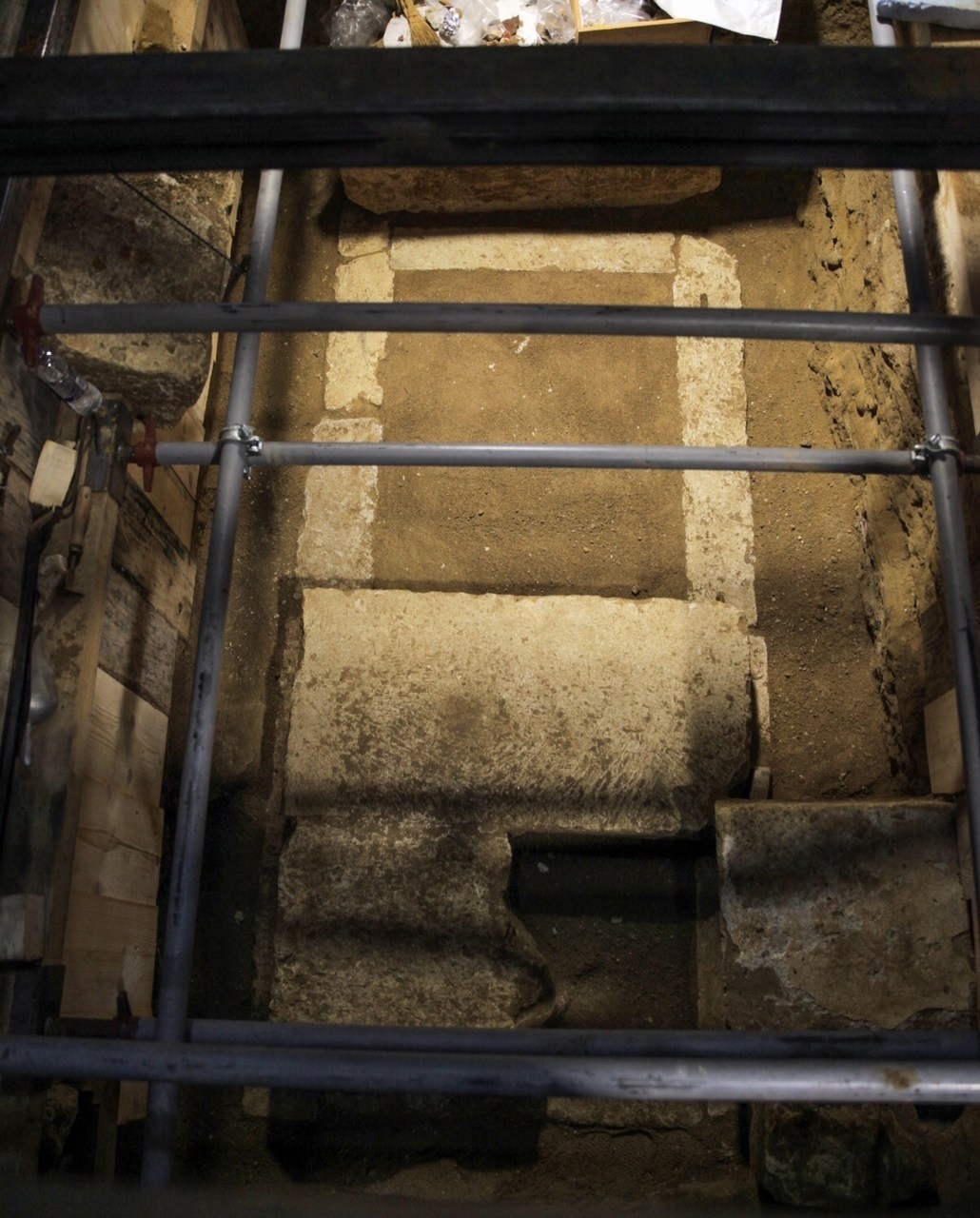
Excavation of the third chamber of the Kasta Tumulus in Amphipolis has revealed a limestone cyst grave containing human remains 1.6 meters (5’2″) beneath the surviving floor stones. The grave is 3.23 meters (10’7″) long, 1.56 meters (5’1″) wide and one meter (3’3″) high, but uprights discovered when the cyst was excavated indicate the walls were original at least 1.8 meters (5’10″) high. Two of the limestone slabs that once covered the grave are missing, and bones were found both inside and outside the grave, evidence the tomb was interfered with by looters in antiquity.

CONTINUE THE READING

3 Staggering months Amphipolis !

l_15245

Few months took, to come to light well-kept secret of the tomb Caste in Ancient Amphipolis. During this time, findings did not stop to surprise us and make round the world.

Just a few days ago, the most important part of the excavations ended, as it was revealed the skeleton of the dead, He was buried at this unique monument.

However, the hardest part now begins, Since anthropologists take the baton by archaeologists, in order to give the coveted responses, about the identity of the dead.

In a nutshell, scientists from the skeleton will be able to draw as much information as they can about the dead. For example, from the jawbone will try to create digital face of the dead. From the skeleton will learn sex, the age, nutrition and the manner and date of death, While DNA will reveal whether there is a kinship with the Royal family of Macedonia, in what tribe he belonged, and if brought diseases.